
 by
by 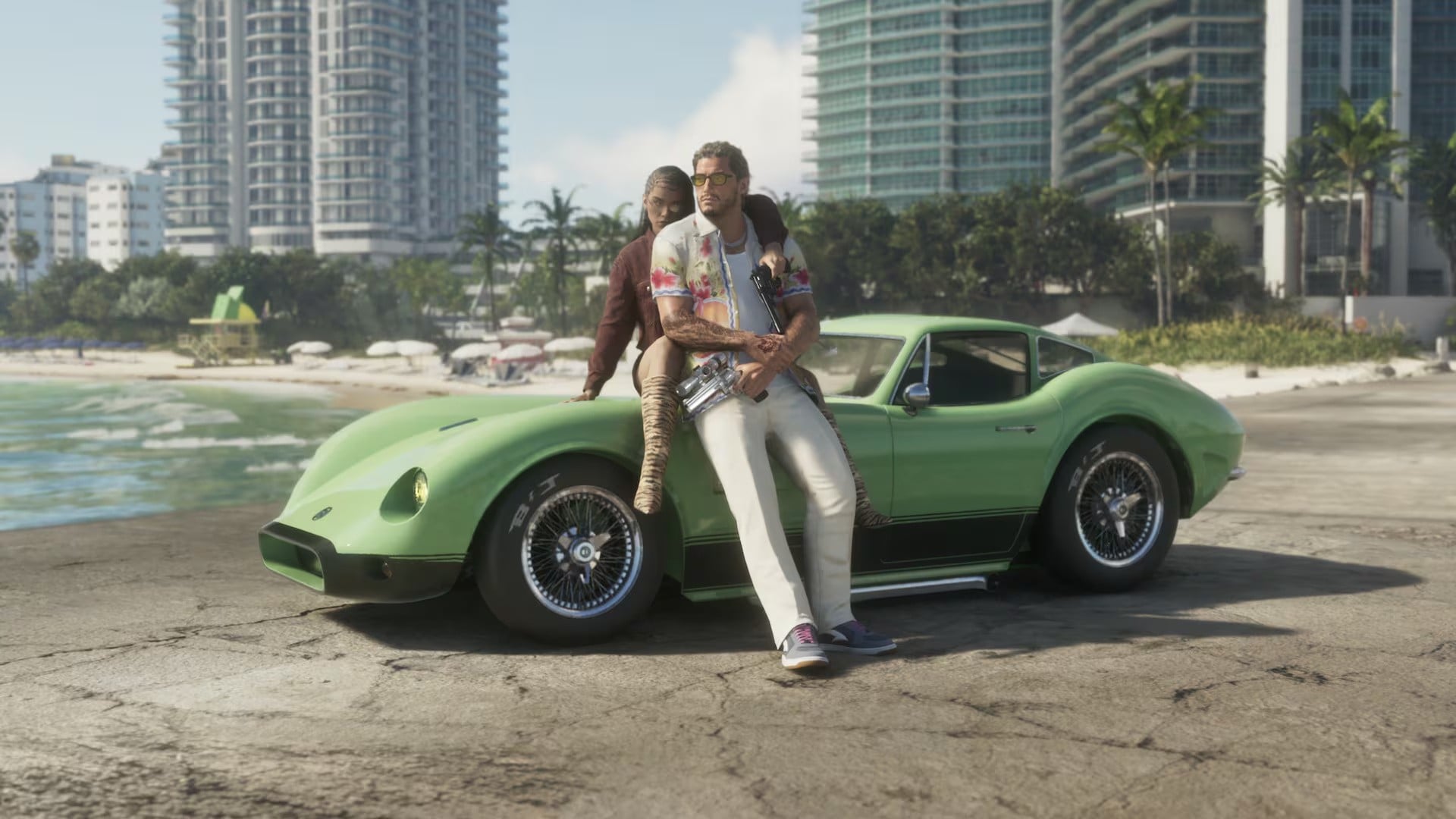
To further fuel the fires ahead of its November 19th release, Rockstar has now unleashed a new batch of 63 high-fidelity screenshots of Grand Theft Auto 6. This blow-out allows for a more granular look at each of Vice City's locales, with each shot gladly free of the blocky compression we're used to seeing in YouTube trailers - and even the quick harbour shot we analysed a few days back. It makes zooming in by two or three times much more feasible for close analysis at Digital Foundry of course - and the inevitable take-away is that there's an unprecedented level of polish going into the game. However, one big visual feature towers over the rest in these shots: ray traced reflections.
In almost every case, ray-traced reflections are put front and centre to the camera as a clear point of pride for the studio. Whether it's the polished steel of Jason's gun, the wet flooring beneath cars, or even the waxed leathering on seats - it's a constant theme. The result is a highly consistent, logical presentation of reflections across a huge range of surfaces. A benefit of this taxing ray tracing approach is that it avoids the issues of screen-space reflections (SSR) - a cheaper method common to many games today that, on its own, struggles to mirror details beyond the player's view. Based on previous coverage, we're still likely to see SSR used as a fallback method in GTA 6, to fill in details where ray tracing cannot. Even so, Rockstar's new gallery is evidently keen to showcase the benefits of ray tracing in multiple scenarios.
A few examples of GTA 6's ray tracing tech truly stand out. Firstly, puddles beneath cars are often conveniently framed to demonstrate how the undersides of a vehicle are revealed by a pure RT technique. Note in the shot below, this vintage car obscures the restaurant seating behind it - and yet we still get that pin-sharp reflection where it would logically sit. Elsewhere, we get a peak at a car's engine purely through the reflective sheen of the underside of the bonnet (or 'hood' for the US audience). No screen space information needed in this case: it's the real deal with rays tracing to areas that we wouldn't otherwise see directly. Elsewhere still, we see fountains and pools deploy the very same trick: each reflects building scenery from beyond the frame. Better yet, the RAGE engine powering GTA 6 is equipped to handle transparent elements - like windows - via the same ray tracing method. As a result, windshields and shop fronts not only reflect nearby scenery back to the player, but these surfaces also have an opaque quality to allow light through. Great stuff.
Even by the GTA series' high standards, it's impossible to not be awed by the fidelity of each shot. It doesn't stop at ray tracing though. Other highlights include the chiselled model detailing on leads Jason and Lucia, each posing in a range of outfits with a hard bokeh depth of field effect. Both characters sport high quality hair rendering, with close-ups showing individual hair strands drawn on their mullets and ponytails - rather than pre-defined, larger tufts or basic 'card' transparencies. It's impressive stuff, and there's even a 'fresnel' effect as light glints against the edges of the hair's outline. Beyond this, we also see a natural interplay between the RAGE engine's lighting, and volumetrics used for fog and smoke - adding a great sense of depth to each locale.
With such a high level of fidelity on show, then, a question still dangles over which platform is actually being used to generate these shots. To be clear, we find it unlikely that these are real-time results on PS5, Xbox Series X - or in the best case on console, PS5 Pro. We'd like to be pleasantly surprised of course, and this will be firmly answered once it releases. However in many instances the combination of pristine image quality, suggesting a native 4K render (or higher), and inconsistent lighting on foreground characters casts doubt over how feasible it is.
Incidentally, these would be easy for Rockstar to generate within the game's development environment, where the framing, character positions, and lighting could orchestrate a perfect shot - irrespective of frame-rate - with all settings dialled up to 11. To be clear, the ray tracing aspect is very much an expected a feature on console - and indeed we have it already in GTA 5 - but as for what's possible on base PS5, Pro, and Series X, time will tell how close real time console visuals actually end up to these images.
Static as they are, these screenshots further pull back the curtain on GTA 6's technical potential. With so much ray tracing on show it's evident developer Rockstar's pushing it as a major feature - one we'd strongly expect to see on console when it releases.