
 by
by Last week, new Microsoft CEO Asha Sharma confirmed that the next generation Xbox operates under the codename of Project Helix and that it runs both Xbox and PC games. More intriguing is confirmation that Vice President of Next-Gen - Jason Ronald - is hosting a presentation at GDC 2026 dubbed "Building for the Future with Xbox". The title of the talk suggests that we might finally get some answers on how Microsoft intends to bring Windows and Xbox gaming together, hopefully with some firm information on what this means for the console experience that so many Xbox gamers crave.
Across this week's DF Direct Weekly (embedded above) and our upcoming Q+A show, we've been discussing the potential challenges facing Xbox but ultimately believe that what we've heard so far from Microsoft is the best route forward. Windows is by far the most dominant gaming platform in the PC space, it's effectively an open platform with Microsoft in a stewardship role, and it's an area where it's clear that Sony and indeed Nintendo have either a diminishing or non-existent presence.
The PC platform is not only larger than console competitors, but it's relatively expensive to buy into from a hardware standpoint. Making an Xbox that is also a PC gives Microsoft a real opportunity at disruption. Instead of multiple components from multiple vendors within a typical pre-built PC, Microsoft can create an all-in-one design.
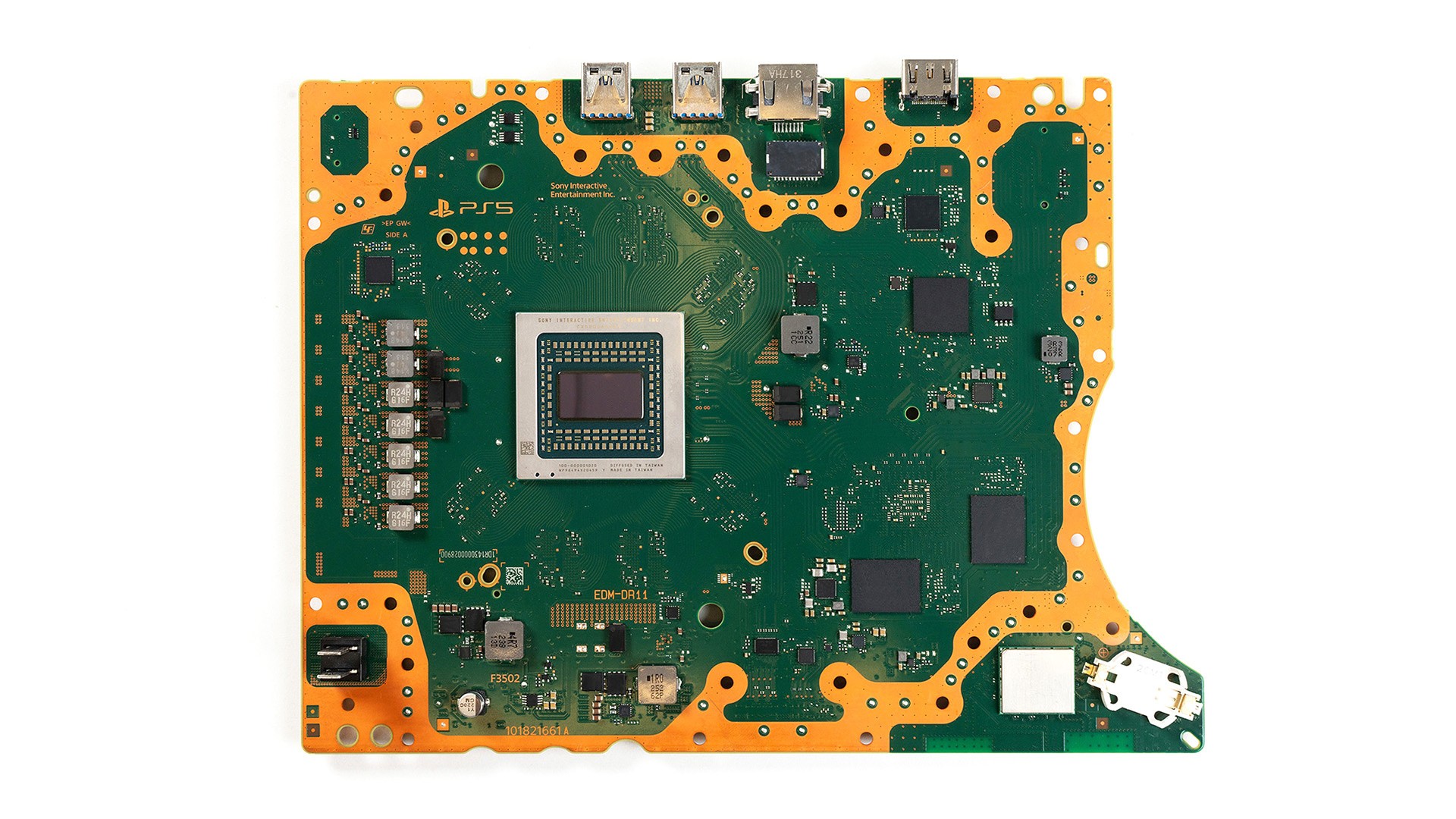
Consider the photograph above. It's the mainboard from the PlayStation 5 Pro. What you're seeing there is the main processor, which contains CPU, GPU, memory controllers and other elements such as media functionality. While I suspect Microsoft will stick to standard M.2 SSDs, the PS5 Pro is also integrating an SSD right there. What you don't see are the memory modules: they're on the rear of the board.
The point is that this is the standard unified console design in terms of its building blocks. Now consider the kind of PC you'd need to build to match it. You'd need a Zen 2 CPU, at least 16GB of memory across two sticks, and you'd need a separate GPU. Something like AMD's RX 9060 XT would be required, likely the 16GB model. Yes, you'll need 32GB of total memory to match the total 18GB of RAM used on PS5 Pro.
What is known of the next-gen Xbox hardware suggests a high-end console, but fundamentally what you're seeing with that board design works in integrating many and varied PC parts into a much more affordable design. And "cost" is relative, bearing in mind how much current PC prebuilts cost with much less capable specs than Microsoft's new hardware. Also, while Phil Spencer may have indicated that the era of the subsidised console is over, you do have to wonder whether some kind of long-term tie-in into Game Pass Ultimate may give some leeway on pricing.
I am not expecting much - if anything - of a specs reveal later this week. And arguably, what Microsoft needs to present is something much more important. How can a console that is also a PC actually work? Is the basis of Project Helix actually Windows 11 as we know it? Even with Microsoft already running an Xbox app on PC, I'd argue that's not enough to qualify as an appropriate console experience. While the concept of an "open" console sounds amazing, the amount of safeguards Microsoft will need to build-in to protect its ecosystem is enough to give pause.
The question is this: to what extent will Xbox want to preserve the integrity and performance of its Xbox games? If Project Helix is similar to ROG Xbox Ally X, it is just a PC with an Xbox app. That's not good enough if you want to ensure the kind of curated fixed platform experience a console provides. After all, on standard Windows, there's every chance that software you've installed may be diminishing performance in the background. What if you've installed malware or a virus? What if you've accidentally left a memory-intensive program running in the background?
And what if Windows is just generally misbehaving? My ROG Xbox Ally X testing was delayed because for some mysterious reason I never quite understood, my older ROG Ally was chronically underperforming, making the Xbox Ally X look like much more of a generational leap in GPU performance terms than it actually was. With all of this in mind, whatever Xbox as a platform is may need to be something quite different to what Xbox PC is right now.
Perhaps of more relevance to the GDC audience will be the relationship between PC games development and Xbox. One would imagine that the best case scenario would be that the PC version is the Xbox version, with minor adjustments made for integration into the Xbox ecosystem: Achievements and the like - which shouldn't be too much more difficult than it is right now for bringing PC games onto the PC Xbox app. The extent to which developers would customise those PC builds for Xbox-specific features then comes into focus - but at the bare minimum, you'd be looking at PC settings auto-adjusted to the Xbox in question.
I'm also curious about how Xbox as an ecosystem interacts with Windows 11. Assuming the Xbox interface stands alone from Windows 11, what happens if the Xbox app on Windows plays a different version of the same game? Would some power users prefer to choose their own settings and use performance monitoring tools like Riva Tuner Statistics Server? Or will the new hybridisation between Xbox and Windows 11 accommodate these kinds of features required by the PC audience?
There are still so many question marks surrounding what the nature of the next-gen Xbox actually is, but I'm excited to see a different kind of console that steps away from direct competition with Sony and aims to do something new and potentially very compelling in the PC space. The question remains of how Microsoft can resurrect Xbox's brand identity in this scenario and there's another challenge here that's perhaps even more daunting: can Xbox truly challenge Steam? And bearing in mind that its PC ports will continue to launch on Steam, does it really want to? And what's to stop a potential Project Helix customer from buying the console and just sticking to the Steam ecosystem anyway?
It's been two years since the Xbox "business update" podcast with the "four games" announcement. Xbox strategy has been difficult to fathom but we've seen massive change since then, with Xbox fully embracing its role as a multi-platform publisher and the effective sun-setting of the Xbox Series console line. Hopefully this week we'll start to understand what the plan going forward actually is.


Comments 9
I do hope Microsoft pull it out the bag. If the new Xbox is indeed a fully fledge console/PC hybrid and is up there with great performance, you can count me in as long as it's no more than £1000. But if not then a new PC it may have to be.
I also like the name Project Helix. Not as good as Digital Foundry but hey hoe
I've always been a big proponent of the xbox ecosystem and I really do hope that this new system can pull off the ultimate aim, I'd be happy with a system that is capable of running xbox console software with the ability to use it in a pc capacity but windows does worry me, I wiped windows off a legion go s and installed SteamOS and wouldn't go back it outperformed the Steamdeck OLED I had previous to it, I wonder if it is possible, how long it will take someone to get SteamOS onto a Helix machine
Wouldn't it be kinda cool if Microsoft would partner up with Nvidia again and essentially relaunch the Xbox? The advantage of DLSS would likely give it superior image quality and performance over any AMD powered competitors, and allow even a modestly specced configuration room to breathe (look at what can be done on Switch 2). There's also the nostalgia factor for farts like me who embraced the original Xbox, only to gradually abandon the brand.
@Tobility I'm never going near anything Xbox in any way shape or form again. The Gamepass lie was the straw that broke the camel's back for me but I do absolutely agree on that desired Nvidia partnership for every console. I'd even applaud an Intel partnership for that matter.
At least the concept is interesting. Windows is very concerning though, one of my friend has built a small gaming pc plugged to his tv and he is hesitating to sell it away because every time he wants to use it something is broken at the software level, and requires some fiddling to fix.
They said all they needed to say after buying Activision/Blizzard, Rare, Bethesda, and a bunch more studios, then their board decided nah.... Lets cancel games, fire people and do the bare minimum. They boasted being the heroes of the gaming industry just to stick a fork in it.
@NetshadeX Whilst I'm not happy at the change of price for Game Pass I still subscribe for now but it will hinge on the long term of the new machine how long I stay with it, I can't say I'm any happier with Sony considering their current foray into dynamic sale pricing so some of use get more ripped off than others, seems both companies are driving everyone more and more towards PC as the best value system
@Langers I wasn't happy with the price change but I didn't blame them for it. I just decided the price (after the hike) was too high for the limited number of games I played on Game pass (I mostly played The Division 2 at the time). What bothers me is that after they got slammed online for the price hike they changed their story to make it seem as though we got it all wrong and the price hike was only for new members. That absolutely wasn't the case. I still have the email stating very clearly that MY price as an existing member (Xbox Live member since the original Xbox) was going up. So I cancelled after getting that email. Obviously after that I couldn't reactivate for the old price. No, **** 'em I'm never getting another machine or subscription from them ever again. People forget but this isn't the first time they backpedaled on a decision. These are the same people that tried to stop everyone from playing used games on their (mandatory online) Xbox One back in 2013. I simply don't trust them anymore.
Its a running theme with both them and Sony that we end up getting screwed somewhere along the line, have to agree with your comment on trusting them as I can't say I trust either platform any longer
Show Comments
Leave A Comment
Hold on there, you need to login to post a comment...