
 by
by 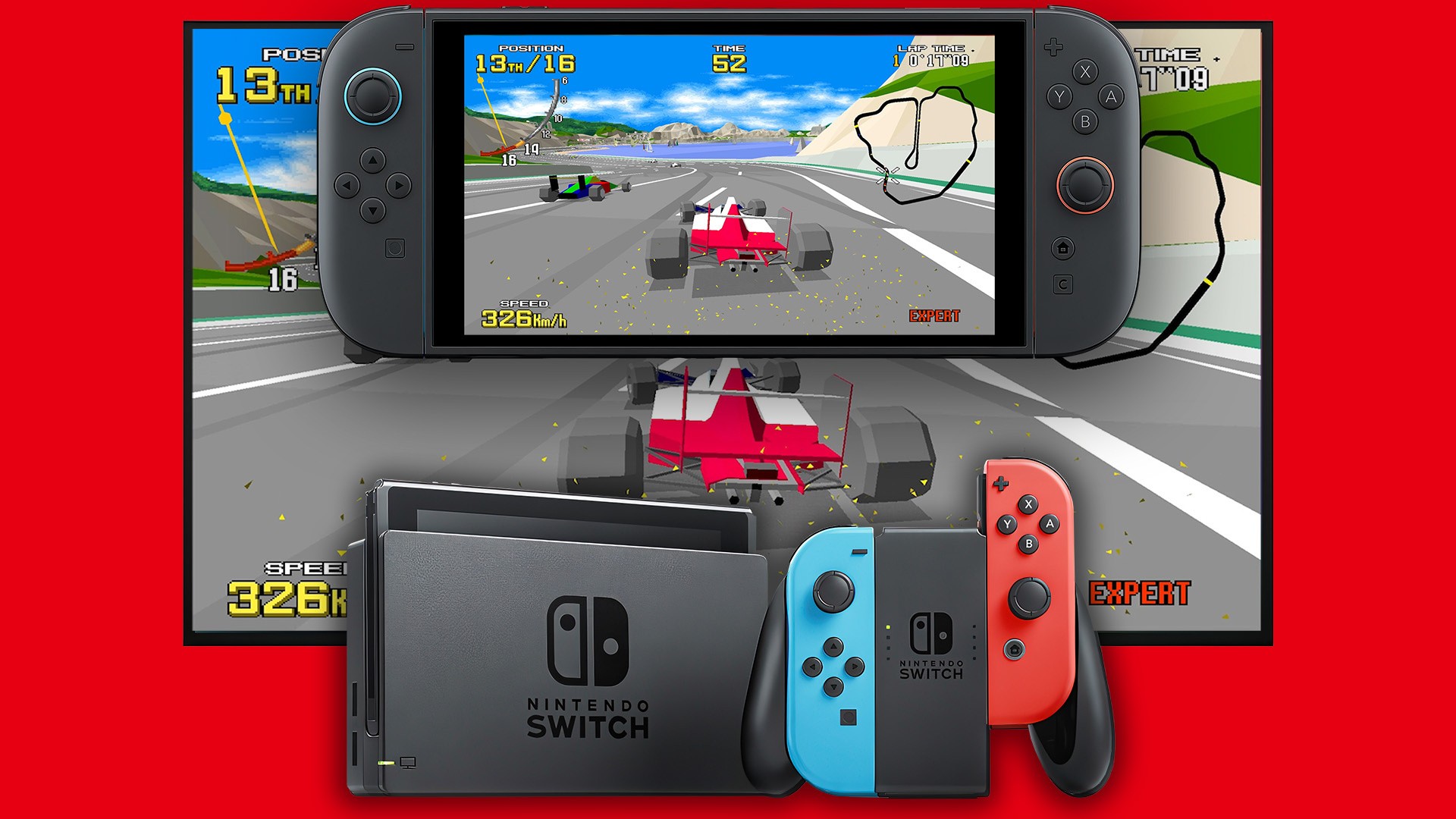
Nintendo's latest system software update for Switch 2 is a bit of a game-changer for those with an extensive Switch 1 library - and comprehensively delivers on a feature we've been asking for since launch. The new handheld mode boost is a user toggle that allows Switch 2 gamers to play their last-gen titles in docked mode while gaming on the go. In effect, by trading in some battery life, you gain all the benefits of the docked experience - typically more stable frame-rates, higher resolutions and additional graphical features.
But there's more: you also get extra performance on top of that, as seemingly the full power of the Switch 2 is deployed on running those old games. This should mean that in most cases, you're hitting frame-rate targets in a way that the original hardware often couldn't.
How games will benefit changes on a title-by-title basis, but in our view, there are several categories of improvement. For many first-party titles or other well-optimised experiences, you may well see games that run portably at 720p now run at native 1080p on Switch 2 - a great match for the new system's panel. So, games like Mario Kart 8 Deluxe and the brilliant Luigi's Mansion are excellent candidates here. That means a pin-sharp, 1:1 pixel match instead of a slightly blurry, scaled presentation.
Then there are games running at sub-native portable resolutions without TAA - very challenging fare, typically. So, examples like Persona 5 Royal and Yoshi's Crafted World would typically run with low internal resolutions on Switch 1 handheld mode. With the new handheld boost options, those games jump to much higher resolutions, cleaning up edges, minimising blurry and accentuating finer details.
Then we have titles using heavy TAA and aggressive dynamic resolution scaling - such as the id Tech ports we saw on Switch 1: Doom 2016, Doom Eternal and the Wolfenstein games. Simply by virtue of the extra GPU horsepower, you get higher resolutions and therefore noticeable image quality improvements. Additional graphical features previously only available when docked - like upgraded lighting on these games - now carry over to Switch 2 handheld. It's good, but not quite as effective as the straight 720p to 1080p upgrades.
But it's the fact that you're getting both docked mode profiles and extra horsepower that adds the cherry on top. To get some idea of the kind of extra raw power available, we checked out Resident Evil 5, which ran with an unlocked frame-rate on the original Switch, around the high 20s in stressful scenes. Running the same software on Switch 2 with handheld boost, we are now running at close to double the frame-rate: in the low 50s. And yes, we verified this from video shots of the Switch 2 display, manually counting the frames.
Since most games are running close to a frame-rate cap of some description, we would expect Switch 2 to hit those performance targets in a way docked original Switch 1 would not. Great stuff.
There are some limitations though, as you might expect. If a Switch 1 game has already received a Switch 2 upgrade, you can't choose between the versions - you'll be booting the upgraded version every time. It's also worth pointing out that handheld boost isn't turned on by default - you'll need to do it yourself. This may well be down to some games that rely on touchscreen support or have other assumptions about handheld/docked behaviour that isn't a good fit. There'll also be a hit to battery life - we've not tested this ourselves but a reduction of around 25 percent has been noted elsewhere.
Even so, this is an excellent new feature that almost works as a remaster of sorts for just about every Switch 1 game - but some experiences benefit better than others. For example, games based around 2D art should see big gains. We can also report that Nightdive Studios' remasters also work nicely with the new feature - and there's a special "shout out" for games like Sega's Virtua Racing and EA's Burnout Paradise that benefit from 1080p "upgrades" that are a perfect fit for the Switch 2 screen.
Although docked Switch 1 games could run at varying internal resolutions, the output was typically scaled to 1080p, often with native resolution full HD UI elements - so in a sense, handheld boost mode lets legacy games target the screen they're actually being played on, as opposed to using the compromised portable profile. We're still not entirely happy about the quality of the screen itself (Switch 2 OLED WEN) but this is definitely a compelling use case for Switch 2 and we highly recommend giving it a go.


Comments 5
This is a very unNintendo like feature and it rules. I've admittedly been using my 3DS a ton and don't really use Switch 2 in handheld but I'm sure people who like the size get great use out of it. It also pairs well with the PS5 equivalent feature of giving headphones surround sound when plugged in.
But Nintendo still needs more dedicated Switch 1 patches. Basically all their games could jump to 1440/60 I would imagine.
Slightly disappointed that the Switch 2's boost mode doesn't turn it into a hoverboard and lets me ride it over to the local 7-Eleven, but boosting Switch 1 games' performance is cool too.
This is a very cool feature, and a sensible one many called out for.
But personally I know I will almost never use it as I barely use my Switch as a handheld. Still glad it exists for everyone else.
I use my switch 2 on handheld a lot and I have an extensive set of switch 1 games. So IAM a happy gamer.
This is the best Switch 2 news since launch. I'm mostly a handheld gamer so for me it's as if every Switch 1 game just got a free Switch 2 upgrade.
Show Comments
Leave A Comment
Hold on there, you need to login to post a comment...