
 by
Grand Theft Auto 6 has arrived, and it's an experience that "targets 30fps" on every platform, from the lowly Series S to the most powerful PS5 Pro. It's a huge departure from other current-gen titles, which almost always offer a 40fps or 60fps mode - even if the 30fps offering is prioritised by developers. As we've spent time with the game, the deep underlying technical demands that rule out 60fps have become more clear, and we thought it would be interesting to round up the biggest reasons that higher frame-rates were never on the table.
At the core of the challenge is the sheer scale of the simulation, particularly regarding the non-player characters (NPCs) that inhabit Vice City and the surrounding area. As designers, you have to consider the worst-case scenario from a performance point of view, and in dense places like airports or beaches, there are dozens of individuals going through their virtual lives.
That baseline behaviour isn't too difficult to simulate, but this is GTA: at some point, a crime is going to be committed. When the crowd starts to panic, the AI load increases substantially, as NPCs turn to fight, start to flee or perform other actions in response. This is accompanied by a precipitous drop in frame-rate, especially on the non-Pro machines, as these CPU-based calculations quickly overwhelm the frame-time budget. It's a similar story when taking out vehicles with a grenade launcher; the first car destroyed this way already causes frame-rates to drop, and subsequent attacks and their accompanying damage calculations bog down the CPU even further.
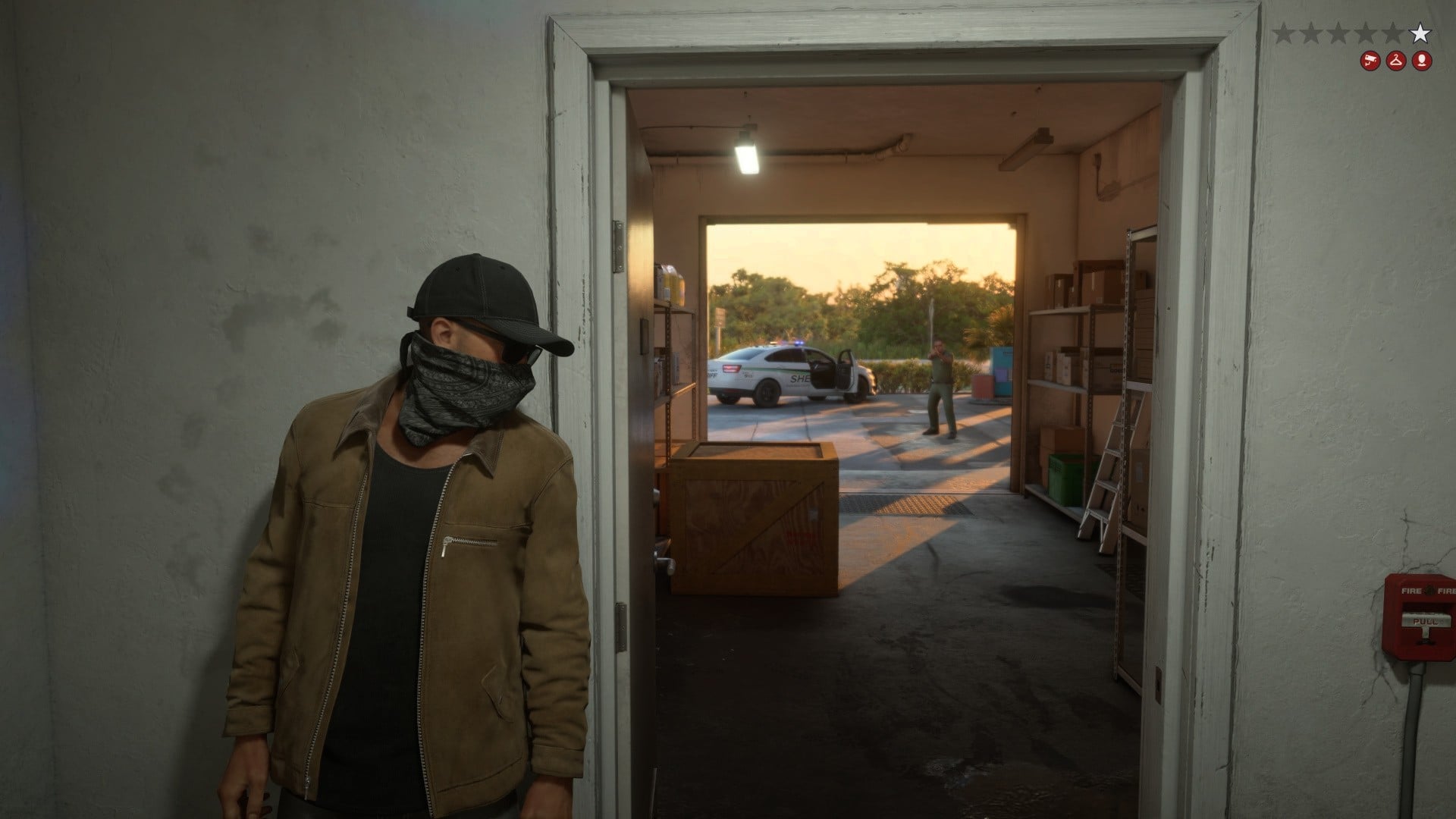
Even on PS5 Pro, it's important to keep in mind that we are fundamentally dealing with comparatively ancient Zen 2 processors, which launched seven years ago in the PC space and have been superceded by three full generations as of 2024. The same silicon lies at the heart of the base PS5 and two Xbox consoles too, with comparable clock speeds and capabilities. That makes it a lot easier to become CPU-limited than on a brand new gaming PC, as GTA 6's unique focus on simulation uses up all available performance. It simply wouldn't be possible to half the performance requirements to get up to that 60fps mark - the complex world of GTA 6 simply can't be shrunk down that small.
Streaming in a vast modern urban environment adds further architectural strain. While high-speed SSDs and dedicated decompression hardware stream gigabytes of geometric data per second without the mechanical seek times of last generation, the CPU is still pegged while organising these incoming assets. High-speed traversal in fast vehicles or aircraft pushes this pipeline hard, frequently producing frame-rate drops as the engine coordinates dense scenery in real time.
Ray tracing creates another substantial processor bottleneck during rapid world traversal. Coordinating bounding volume hierarchies (BVHs) and ray-traced acceleration structures for dense city blocks, moving traffic and pedestrians requires extensive CPU intervention. Previous testing on comparable PC processors in earlier Rockstar titles demonstrated notable CPU bottlenecks under similar RT conditions, showing that such techniques in an expanded open world make 60fps updates inherently difficult.
Visual rendering demands on the graphics processor are equally intense, incorporating hardware ray-traced global illumination, ray-traced reflections and strand-based hair across pedestrian models. Unlike processor bottlenecks, however, graphical strain is inherently more scalable. Resolving GPU limitations typically involves reducing internal resolutions, tweaking ray counts or adopting lower graphical presets similar to those seen on Xbox Series S, meaning the GPU is not the primary barrier preventing a performance mode.
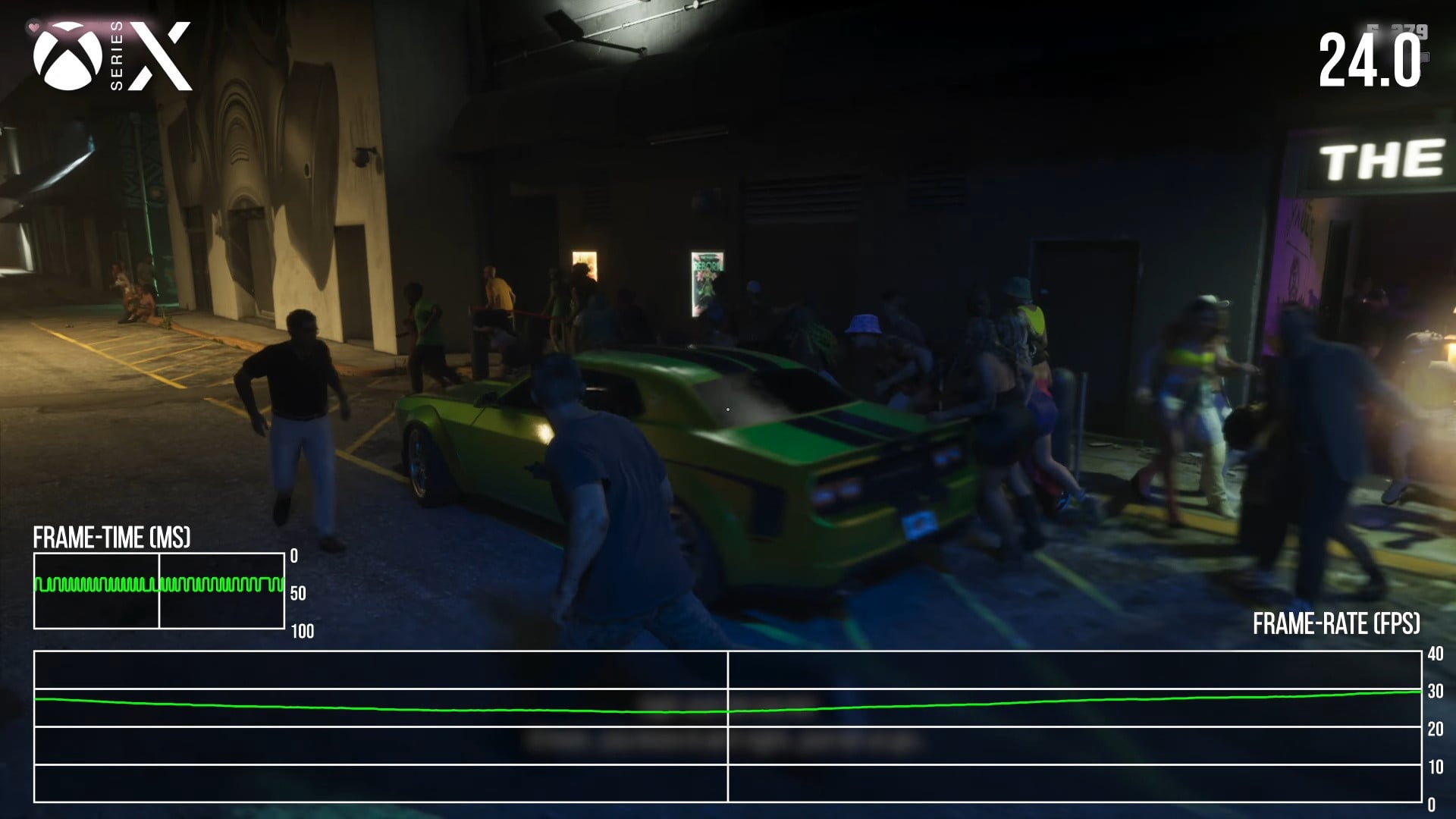
Frame generation represents a theoretical workaround to lift perceived motion smoothness to 60fps, yet practical hurdles render it unfeasible. Generating intermediate frames from a 30fps baseline introduces severe visual artefacts due to large 33-millisecond animation deltas between frames. Furthermore, with base input latency already sitting around 180 milliseconds on consoles, introducing additional frame buffering latency would degrade controller responsiveness to a potentially unplayable degree.
Even looking ahead to high-end PC hardware, sustaining an unyielding 60fps in the most demanding urban encounters may prove challenging. Modern enthusiast desktop processors offer significant uplifts over console silicon, but clearing worst-case simulation scenarios requires massive per-core throughput. When crowd panic and dense streaming converge, the workload scales well beyond simple graphics settings adjustments.
Ultimately, the 30fps cap reflects an intentional design compromise to support unprecedented technical and artistic scope. Grand Theft Auto 6 delivers an intricate world simulation, sophisticated physics and expansive crowd behaviours that fully saturate modern console hardware. While 60fps remains the preferred target across the industry, the sheer ambition of Rockstar Games' latest title provides genuine technical justification for a lower frame-rate.