
 by
After 2024's Black Myth: Wukong, another Chinese-developed triple-A action title built on Unreal Engine 5 is hitting digital storefronts. Phantom Blade Zero from developers S-Game delivers convincing Chinese martial arts stylings and has reviewed well, but how does the game fare across its console outings - and how does PS5 Pro scale the game to a higher degree of fidelity?
Phantom Blade Zero differentiates itself from typical UE5 fare with a focus on animation and motion, with a variety of interactive foliage that bends, breaks and shakes in response to footsteps and sword slices. This is a rarity in some UE5 games, which often animate only at close range, as shadowmap updates can become expensive with moving foliage.
The combat here is far from a Soulslike, instead leaning closer to Devil May Cry with higher action density and less emphasis on evading attacks. Protagonist Soul dresses in loose clothing that hangs freely around the feet and shoulders, creating a visually interesting silhouette and space for secondary animation that underscores the flow of the action and character movement. While normal monsters are interesting to fight, bosses are particularly well realised, with unique moves, imposing introduction sequences and distinct design work. The game features more than 50 of these unique enemies, and the effort here elevates the experience considerably.
Beyond the game's artistic merits, the title uses Unreal Engine 5 in a familiar way, including software Lumen for indirect lighting (at least on PS5) and Nanite models. Phantom Blade Zero's lighting presentation is attractive, with pleasing occlusion and obvious bounce light colouring scenes realistically. There are some occasional missteps, like a reliance on screen-space shadows for some local light sources, which fail to accurately portray lighting past a certain limited tracing distance. This works well enough for grass and other fine details close to the ground, but they prove less effective for main character models and furniture.
The game's structure reminds me of a Souls title or the recent God of War games, albeit a bit more restrained. Vistas are impressive, but playable areas are smaller in scale and linked by branching paths. All told, it's recognisably a second-generation UE5 title, one that avoids the technology's teething pains while not quite pushing visuals as hard as Gears of War: E-Day.
On PS5, the game offers three modes: performance (60fps), balanced (40fps) and graphics (30fps). The largest settings difference between the 30fps and 60fps modes lies in shadow quality, which boast higher fidelity in the graphics mode, alongside a handful of other modest tweaks. Otherwise, the only differentiator is resolution, with performance mode sitting at 900p to 1080p, quality mode at 1440p, and balanced mode between these two extremes - albeit closer to the performance mode. Dynamic resolution scaling is enabled, so shots can vary in resolution significantly. TSR appears to be the image treatment of choice on PS5, and it produces reasonable results.
Frame-rates in performance mode are also refined, with stable frame-rates in typical play. Weirdly, the graphics mode sometimes slips its 30fps cap, while the balanced mode's frame pacing is all over the place. I tried forcing VRR on in this 120Hz-exclusive mode, but it didn't fix the frame delivery problem. For what it's worth, some reviewers have reported more significant performance dips later in the game, though due to time constraints we weren't able to reach these areas in time for review.
PS5 Pro is another oddity. The game ships with the same three modes - performance, balanced and graphics - but a new toggle is added which promises ray tracing for shadows, reflections and global illumination. With the toggle off, base PS5 and Pro look similar, but with it on, it actually looks like the Pro uses hardware Lumen instead of the software path. This provides polygonal reflections instead of SDF-based ones, with less noticeable improvements to GI quality. Direct shadows appear unaffected - though soft indirect shadows are improved.
Image quality doesn't seem substantially different with these RT effects on versus off, nor does performance differ - but the PS5 Pro image is sharper across the board versus the amateur machine. This is particularly evident in performance mode. PS5 Pro looks like it is using PSSR here instead of TSR, though this technique in combination with DRS makes it hard to pin down exact internal resolution figures.
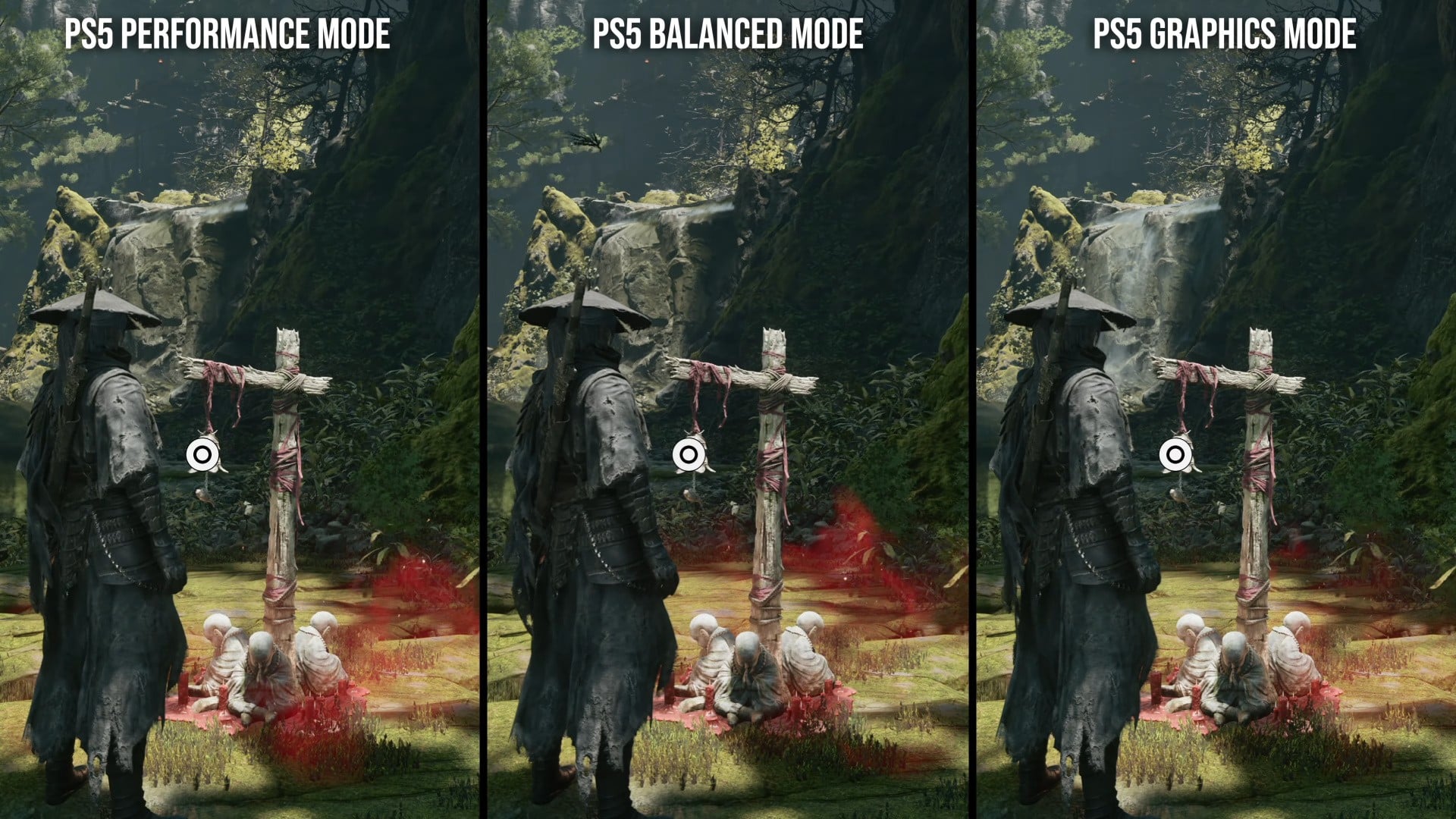
Performance on PS5 Pro is in line with the base machine, with a largely consistent 60fps in performance mode, the same occasionally uncapped 30fps quality mode and a return of the broken frame pacing in the 40fps balanced mode. Once again, expect frame-rates to dip in some later areas if online reports are correct.
On both PS5 and PS5 Pro, I'd recommend the performance mode as a first option. The game's combat benefits significantly from the improved responsiveness, and you're not missing out on any meaningful visual features.
Overall, Phantom Blade Zero is a fun and well-realised Unreal Engine 5 title that sets itself apart with its animation work and dynamic environments, running atop a familiar visual feature set. The balanced mode's frame pacing is the only element that stands out as needing post-launch patching from a technical standpoint, though improving performance in later biomes could also be an ongoing effort. Regardless, the game already delivers a fun take on the genre, and action fans should give this a shot.