AMD's follow-up to the RX 480 is faster than you might imagine. Based on our benchmarks based on the MSI Gaming X version of the card, it's almost as fast as the 4GB version of the RX 480. Of course, this is a premium partner design with a factory overclock in place and improved power delivery, but the bottom line seems clear - the RX 470 may have fewer compute units than the full-fat Polaris 10, but it doesn't seem to have that much of an impact on overall performance. The only issue is this: UK pricing is pretty much on par with the 4GB RX 480.
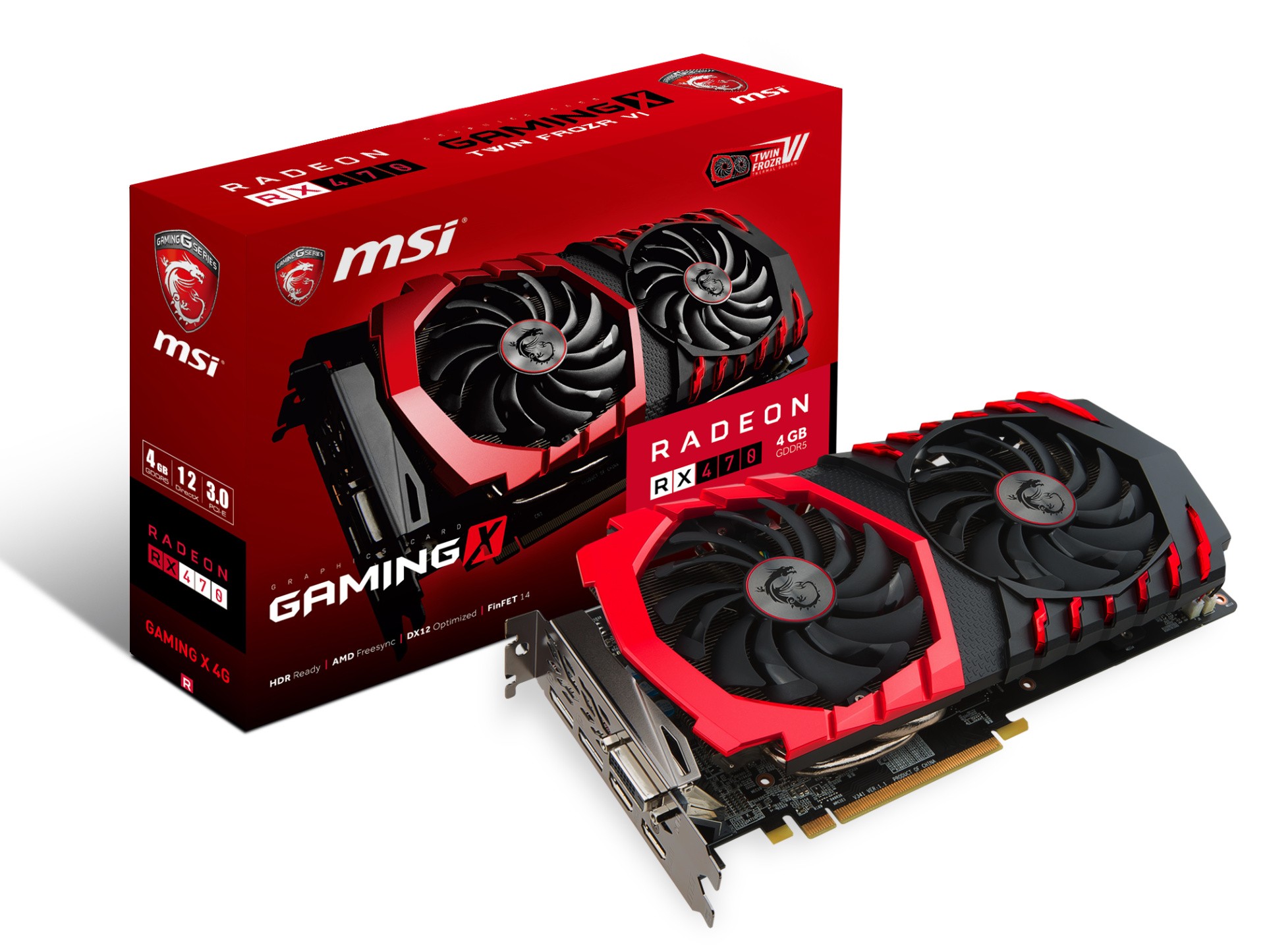
Before we go on, let's start with a bit of background - AMD provided two RX 470s for review, but one of them requires a vBIOS update that only arrived today. And this is a shame as it seems to be based on reference clocks with the standard six-pin power input - in short, the kind of baseline model we'd like to include in our testing. The MSI Gaming X is a keeper though, seemingly engineered to overcome the limitations we saw on the RX 480 reference card. There's a far more accomplished cooling assembly based on the new TwinFrozr 6 design, plus there's an eight-pin power input. Out of the box, the MSI card locks to a 1244MHz clock-speed and it is far more overclockable than the RX 480 we tested.
The results from this model are highly creditable - but based on some very last minute tests, it seems that it's only 1-3fps faster, depending on the game. In the meantime, we should expect to see aftermarket designs for the RX 470 flood the market. In the case of the MSI model, we have a quality cooler, quiet performance, great clocks out of the box and an improved range of outputs - HDMI 2.0, DisplayPort 1.3/1.4 HDR and yes, dual-link DVI - a video link we consider essential on a more budget-orientated card.
AMD Radeon RX 470 specs
Based on the new Polaris 10 graphics core, this loses some clock-speed and four compute units, but otherwise, it retains the full feature-set of AMD's current top-tier GPU.
The RX 480 is scheduled for release at $179 for the base 4GB model, unfortunately translating to a straight £179 in UK pricing, putting it roughly on par with 4GB RX 480s. Expect those to sell out quickly at that price-point.
So let's talk cutbacks. RX 470's Polaris 10 is a salvage part, featuring 32 of the available 36 compute units. Boost clock also sees a reduction, dropping from 1266MHz in the RX 480 to 1206MHz. RAM is also downgraded to 6.6gbps - another spec drop compared to the 7gbps/8gbps models in the 4GB/8GB versions of the RX 480. However, the MSI model we have here is factory overclocked to 1244MHz and crucially, it stays locked to this frequency. The reference RX 480 we have has a much more dynamic clock, fluctuating from around 1150-1266MHz. This may go some way in explaining why this MSI version gets so close to RX 480 performance.
What's been something of a puzzle is the lack of impact the compute unit differential has on overall performance. We're looking at an 11 per cent drop in compute power, yet it seemingly has far less impact on frame-rates. However, we saw something similar when comparing the R9 380 (28 CUs) and R9 390X (32 CUs). With both running at 970MHz reference clocks, 1080p gaming only sees a 2-3fps delta - it was for this reason that most 380Xs also had a decent factory overclock attached too.
It seems that AMD is well aware of the potency of the R7 470 too. We initially expected a $150 price-point here, but the final retail price is $180 - just $20 off four gig RX 480 pricing. Meanwhile, in the UK, prices for the RX 470 start pretty much where the four gig RX 480 left off, at £180. Aside from a Sapphire model, AMD's lower-end 480 model seems thin on the ground, so we do wonder whether the 470 is effectively a replacement part, with very close performance. These 1080p benchmarks certainly seem to indicate that this is the case.
1920x1080 (1080p)
MSI RX 470 4GB
RX 480 4GB
RX 480 8GB
R9 390 8GB
GTX 1060 6GB
GTX 970 4GB
Assassin's Creed Unity, Ultra High, FXAA
48.8
50.4
50.8
48.6
58.2
51.3
Ashes of the Singularity, Extreme, 0x MSAA, DX12
45.2
45.9
47.7
52.1
45.9
40.5
Crysis 3, Very High, SMAA T2x
68.0
68.8
70.1
75.4
78.7
72.5
The Division, Ultra, SMAA
51.3
53.6
54.8
49.8
56.6
50.2
Far Cry Primal, Ultra, SMAA
54.7
57.1
58.7
65.1
65.6
56.2
Hitman, Ultra, SMAA, DX12
68.6
71.4
73.2
75.6
65.8
59.0
Rise of the Tomb Raider, Very High, High Textures, SMAA, DX12
64.1
65.4
66.0
66.6
75.1
69.7
The Witcher 3, Ultra, Post AA, No HairWorks
57.9
60.5
61.2
55.6
68.4
60.7
Bearing in mind the computational deficit, clearly the RX 470 is a great piece of kit. We were initially intent on comparing this new card with the R9 380 and R7 370, but to do so would be a disservice. The MSI version of the RX 470 is capable of matching the four gig version of the RX 480 on several of our test titles, while the deficit is only 2-3fps elsewhere.
It's the comparisons with Nvidia's closest competitors that prove interesting - it's slightly off the pace in DX11-land compared to the GTX 970, but it's still there or thereabouts. And of course, we see the same story with AMD's DX12 favourites: Hitman on RX 470 doesn't just beat the GTX 970, it sees off GTX 1060 too. Meanwhile, Ashes of the Singularity performance is effectively on par with the GTX 1060 - a card that costs £60 more.
One thing to note is that we have re-benched Rise of the Tomb Raider on all cards here following an AMD driver update. It's said to add up to 10 per cent in performance, but our tests see something like a 3fps uplift. This remains a DX12 test where Nvidia remains comfortably ahead.
2560x1440 (1440p)
MSI RX 470 4GB
RX 480 4GB
RX 480 8GB
R9 390 8GB
GTX 1060 6GB
GTX 970 4GB
Assassin's Creed Unity, Ultra High, FXAA
29.6
31.0
33.8
33.7
37.4
32.7
Ashes of the Singularity, Extreme, 0x MSAA, DX12
40.1
40.7
42.7
46.2
41.2
35.9
Crysis 3, Very High, SMAA T2x
41.3
41.8
43.1
48.7
47.7
43.8
The Division, Ultra, SMAA
37.2
38.1
39.0
37.8
39.9
36.1
Far Cry Primal, Ultra, SMAA
39.2
40.7
42.3
46.7
45.0
39.6
Hitman, Ultra, SMAA, DX12
50.0
52.2
55.0
56.8
48.1
41.5
Rise of the Tomb Raider, Very High, High Textures, SMAA, DX12
43.2
45.0
45.8
46.0
49.2
46.1
The Witcher 3, Ultra, Post AA, No HairWorks
41.9
43.5
45.3
42.9
48.2
31.9
The notion of a more budget-orientated card running in good 1440p performance may seem unlikely, but the fact is that with judicious settings control, all of the models benchmarked here can hand in a good experience - something we noted when we downclocked the RX 480's Polaris 10 in order to test resolution scalability at PlayStation Neo spec.
As expected, on the extreme workloads tested here, the RX 470 does lose ground compared to the two RX 480s, and it seems to the case that reduced memory bandwidth is causing issues on some titles. However, the showing overall is still creditable enough - though analysis of the Assassin's Creed Unity bench seems to show memory limitations kicking in at this resolution. Both the four gig 480 and the 470 show stuttering we don't see on any of the other cards - even the GTX 970 - though curiously, the effect disappears once we move into actual gameplay.
From a US pricing perspective at least, the RX 470 offers a straight 10 per cent drop in cost compared to the four gig RX 480, but you lose a fair amount less in terms of performance. It's a good deal there, but UK pricing isn't quite so favourable.
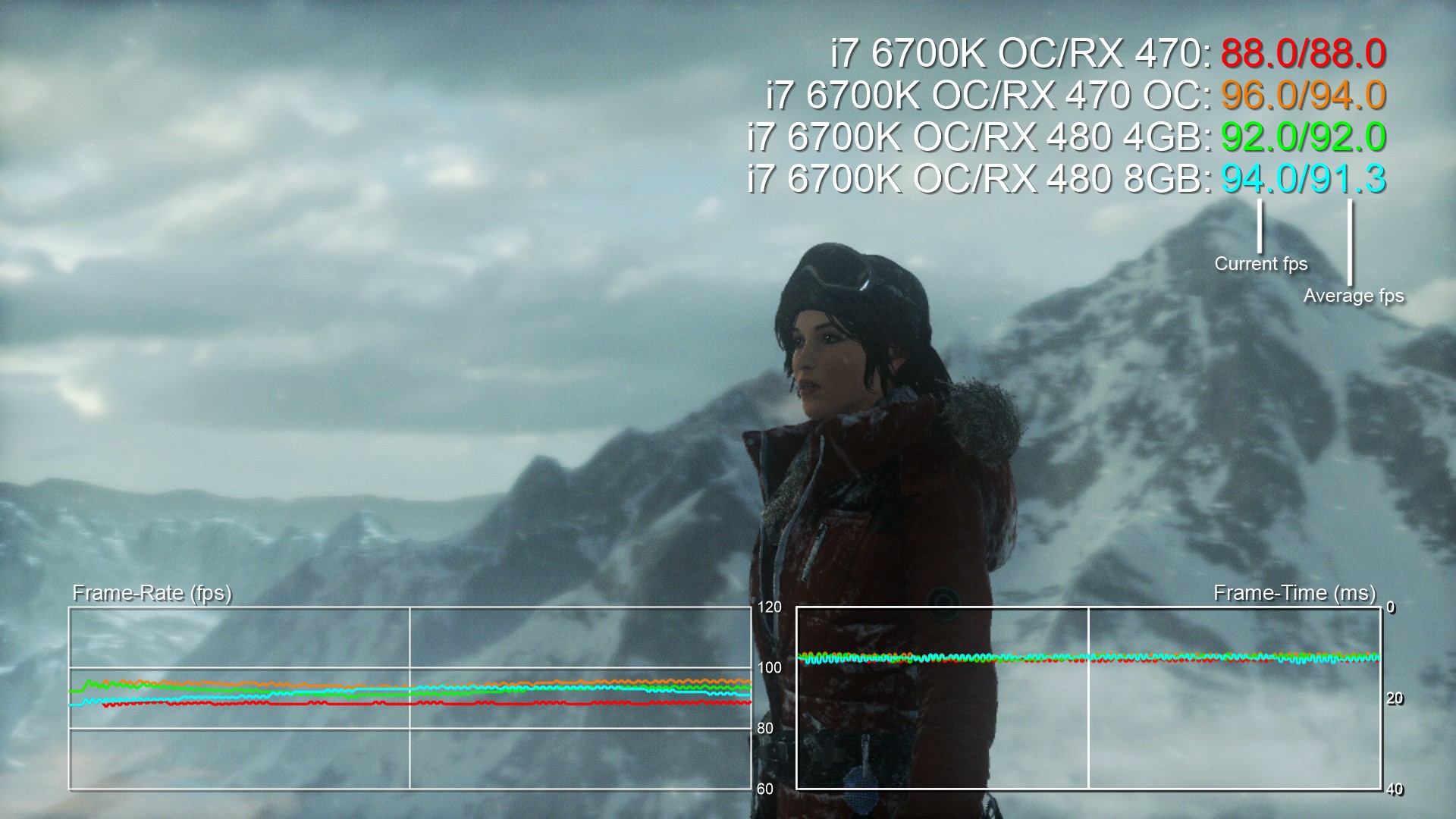
The MSI model is capable of decent overclocking thanks to its power delivery and cooling, meaning we can take RX 470 up to 480 performance, and occasionally beyond.
1920x1080 (1080p)
MSI RX 470 4GB
MSI RX 470 4GB OC
RX 480 4GB
RX 480 8GB
Assassin's Creed Unity, Ultra High, FXAA
48.8
52.8
50.4
50.8
Ashes of the Singularity, Extreme, 0x MSAA, DX12
45.2
48.6
45.9
47.7
Crysis 3, Very High, SMAA T2x
68.0
72.3
68.8
70.1
The Division, Ultra, SMAA
51.3
54.9
53.6
54.8
Far Cry Primal, Ultra, SMAA
54.7
58.5
57.1
58.7
Hitman, Ultra, SMAA, DX12
68.6
73.9
71.4
73.2
Rise of the Tomb Raider, Very High, High Textures, SMAA, DX12
64.1
68.0
65.4
66.0
The Witcher 3, Ultra, Post AA, No HairWorks
57.9
61.8
60.5
61.2
Moving on to power consumption and overclocking, it's safe to say that we didn't get much joy from the reference RX 480 AMD sent us for review. We could only add around three to four per cent to the core, while the corresponding increase in temperature was alarming. With the MSI design, we have several benefits here - firstly, the eight-pin power input means we can easily take more power into the core and secondly, we have a robust cooling assembly that can dissipate the heat without a raucous showing from the fans.
With the MSI model and AMD's WattMan app, we could ramp up the core by nine per cent, taking us up to 1360MHz but we could only increase memory bandwidth from the stock 6.6gbps to 6.8gbps. The end result is that the RX 470 can overclock up to and frequently beyond the reference RX 480 - even the 8GB model with its increased memory bandwidth - owing to the higher power delivery, explaining why our power draw figures are higher compared to the flagship model. In fact, they're quite a lot higher.
We're really pushing it though, and taking the core down a few notches to around 1320MHz won't impact performance too much but will be easier on the card. We re-ran the 1080p benches and you can see the increase to frame-rates above - typically we are only around seven per cent faster, and we suspect that much of this result is down to the factory overclock already in place.
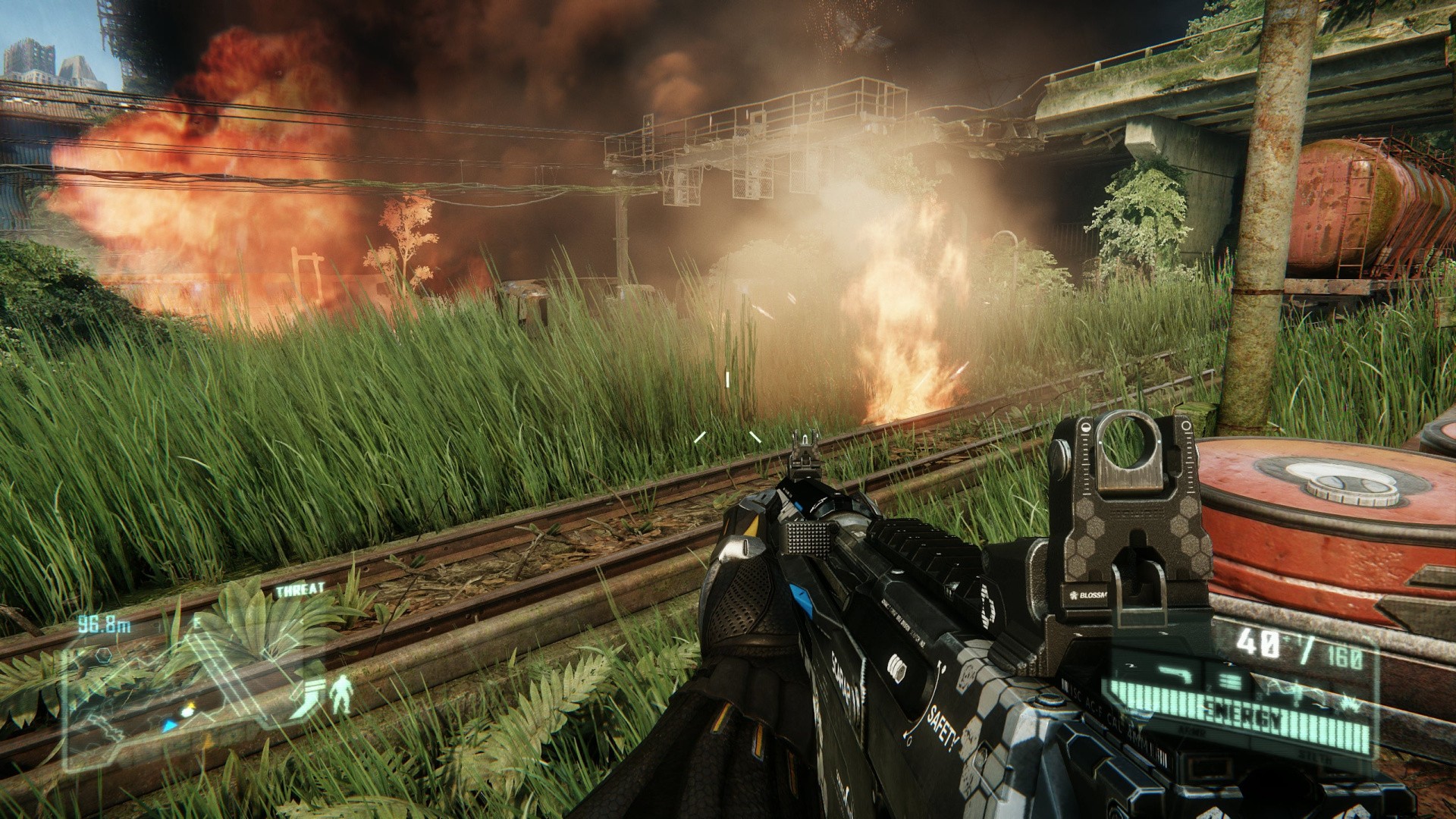
This scene from Crysis 3 is easily repeatable and incurs a heavy, sustained load on the GPU - good for testing overclocks and peak power draw.
MSI RX 470
MSI RX 470 OC
RX 480
RX 480 OC
GTX 970
GTX 970 OC
GTX 1060
GTX 1060 OC
Peak System Power Draw
283W
354W
271W
315W
295W
308W
230W
248W
AMD Radeon RX 470 - the Digital Foundry verdict
There's genuine surprise here at just how fast the RX 470 is, and just how close it gets to matching the flagship Polaris model, RX 480. Perhaps we should have expected it bearing in mind the relatively slight difference between the last-gen R9 380 and 380X at reference clocks, but regardless, this is still a good showing and another good mainstream product from AMD.
Pricing-wise, it's a good deal for North American users at least - it's cheaper than the four gig RX 480 and you don't lose that much in terms of performance. However, the toll taken on PC component prices from GBP's slide in value makes the RX 470 effectively identical in price to the more powerful 4GB version of the RX 480 (while stocks last there, at least).
Regardless, the real life experience of actually playing games is very similar between the two cards, and there'll certainly be more variety of RX 470s on the market. On top of that, in terms of the package outside of performance, the MSI card demonstrates that third party products offer a tangible advantage - overclocking is better, the core can be pushed further and the acoustics are certainly more agreeable.
In our recent RX 480 4GB vs 8GB face-off, we said that while the more expensive card faced a worthy challenger in the form of GTX 1060, AMD's cheaper model was in a class of its own. Well, that's no longer the case - the RX 470 is almost as good and well worth checking out.
Please note that some external links on this page are affiliate links, which means if you click them and make a purchase we may receive a small percentage of the sale. Please read our FTC Disclosure for more information.
Richard Leadbetter is the founder of Digital Foundry and a former Technology Editor for Eurogamer.net. He started work in the games business in 1990 on Computer and Video Games magazine, moving online in 2004 by launching Digital Foundry. The rest, as they sometimes say, is history.

 by
by 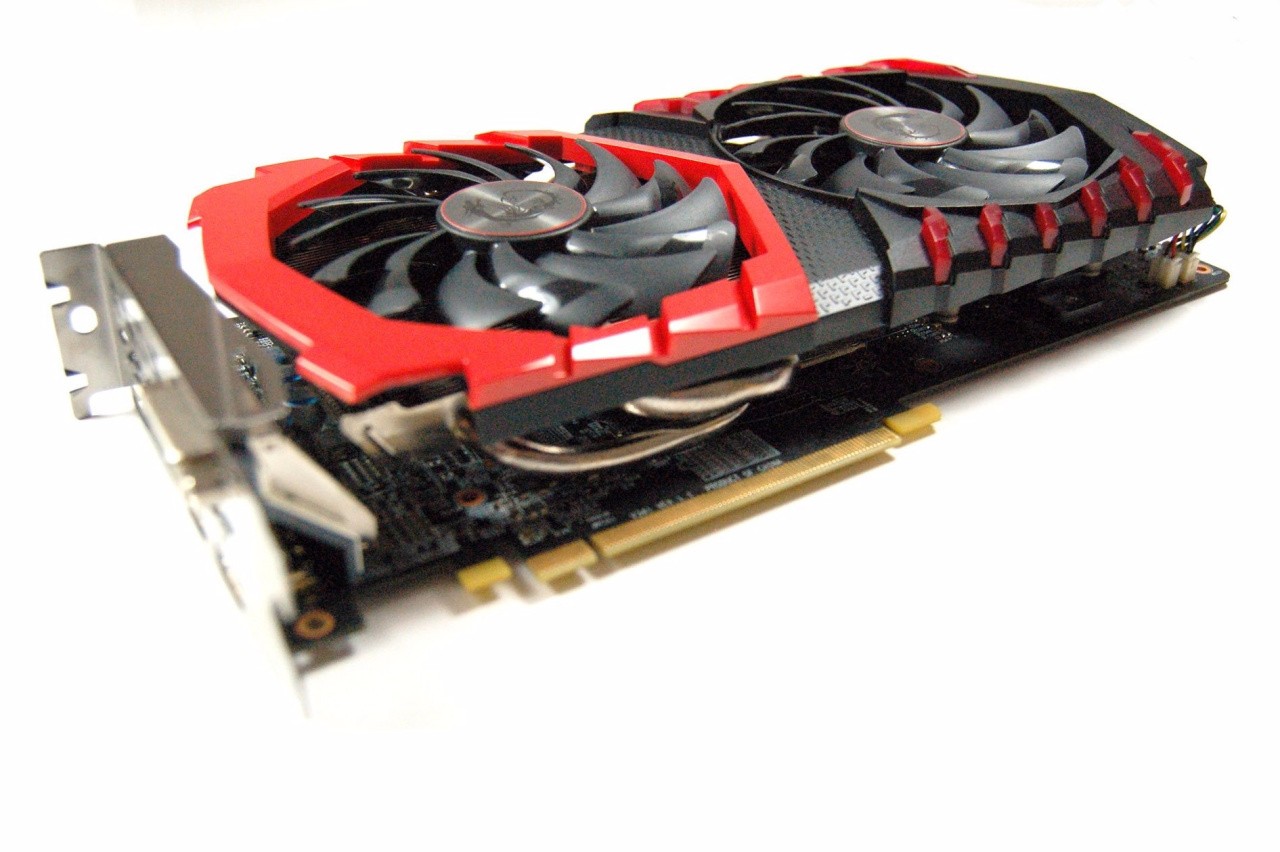


Comments 0
Wow, no comments yet... why not be the first?
Leave A Comment
Hold on there, you need to login to post a comment...