When Microsoft announced that backwards compatibility would be hitting the Xbox One this year our collective jaws hit the floor. Even factoring out the effort involved in mapping the Xbox 360's GPU functions to entirely different Xbox One hardware, the idea of translating the 360's tri-core 3.2GHz PowerPC CPU to six low-power x86 Jaguar cores seems like a herculean task - yet somehow the engineering team has delivered. It's not perfect in several cases, but the fact that the virtualisation works at all is a supremely impressive achievement.
Unlike the spotty backwards compatibility available on Xbox 360, which required a custom wrapper for each individual game, Microsoft has taken a more extensive approach through the use of a virtual machine that runs on the Xbox One as a game in and of itself. This virtual environment includes the Xbox 360 OS features, though they remain unavailable to the user, enabling the software to behave as if it is running on original hardware. The Xbox One then views this "Xbox 360" app as its own game allowing features such as screenshots and video sharing. The emulator supports both digital downloads and original DVDs, though discs simply act as a key, the core data downloading over the internet via Xbox Live.
As part of the preview program, backwards compatibility is still in development and currently only supports a small list of titles. Of the games available, there are reports that only North American and region free discs currently function with Xbox One, regardless of the origins of the console (we used US discs for this piece). Furthermore, Microsoft is still working on a solution to enable support for multi-disc games - something that isn't currently working. While the majority of the initial titles are relatively basic and not much of a work-out for the VM, there are a few more demanding titles on tap including Mass Effect and Perfect Dark Zero. We sat down and put some time into several of these games, the idea being to stress-test the virtual machine's capabilities and to ascertain its strengths and weaknesses.
Straight away we note that image quality on Xbox One mimics the standard 1080p output available on Xbox 360, with a couple of minor differences. Notably, the contrast levels on Xbox One are boosted slightly, in addition to a subtle sharpening effect that produces minor edge-ringing. Thankfully, these differences only manifest when comparing the two side-by-side and certainly don't detract from the overall presentation. Additionally, unlike original Xbox emulation on the 360, there are no additional image quality enhancements available, and there probably never will be.
Kameo
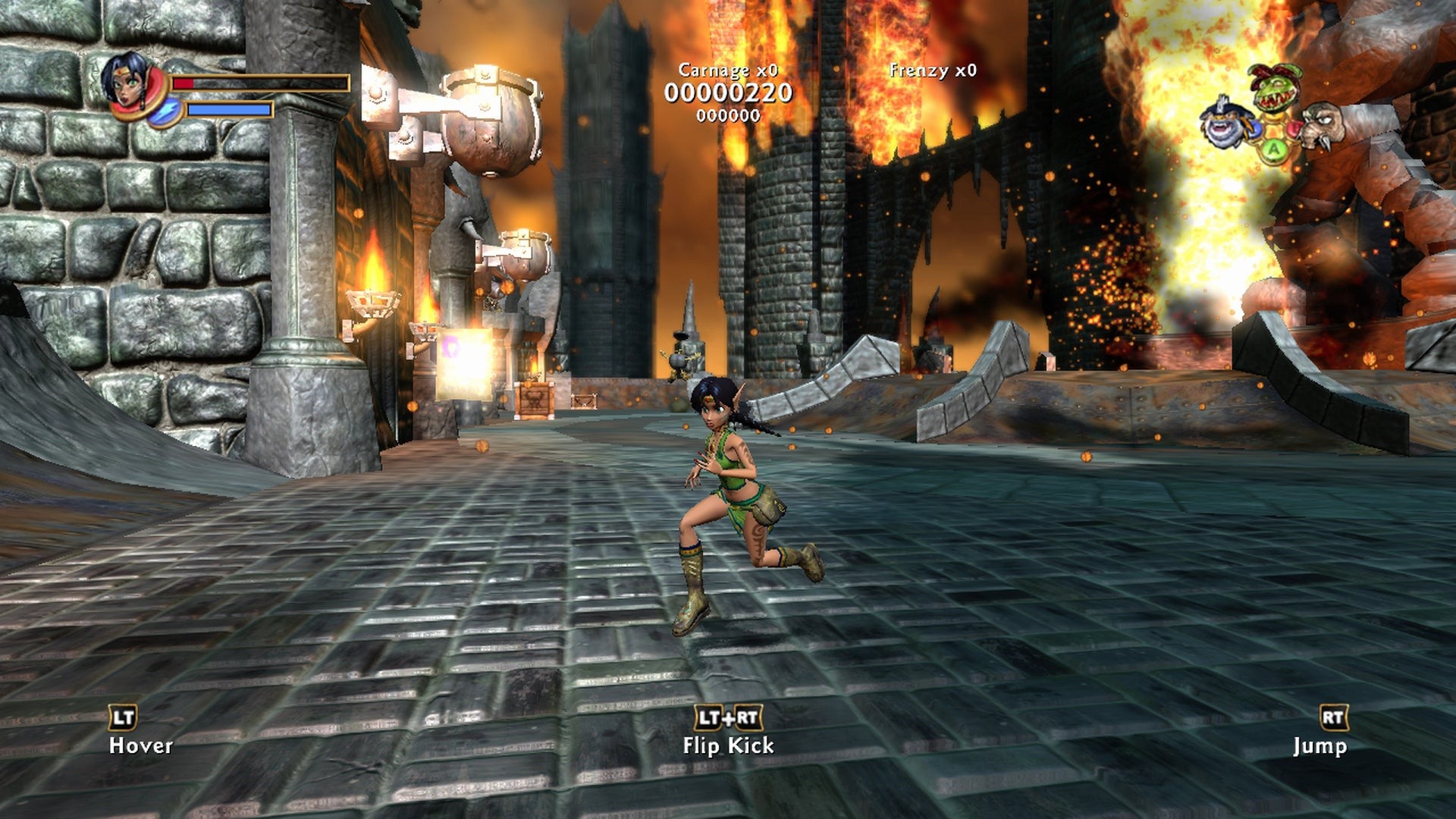
Kameo was one of two Xbox 360 launch titles from Rare and remains a lovely game to this day. It's also one of the best performers in the entire roster of backwards compatible titles, with a near flawless presentation. The frame-rate during our test held rock solid at 30fps, just as we had hoped, and all of the lovely lighting and textures are present and accounted for. It feels every bit as solid on Xbox One as it does on Xbox 360. Of the titles we tested this is the virtual machine working at its best, producing the most accurate 'emulation'.
Status: Virtually perfect.
However, that doesn't mean that other improvements or changes are not possible. For example, a potential boon is the fact that all Xbox 360 games running on Xbox One have no screen-tear whatsoever. Titles that previously exhibited those artefacts now operate with v-sync engaged at all times. On paper, this seems like a killer feature, but there are some consequences to this 'improvement' in terms of frame-rate. In order to better understand the strengths and weaknesses of the virtual machine, let's kick off with some image comparisons highlighting certain differences we noticed (above), before moving on to more in-depth analysis on a per-title basis.
Mass Effect
With such a limited number of games currently available, it's not surprising that Mass Effect was selected for demonstration on-stage at the Microsoft conference this week. As the only Unreal Engine 3 title on the list we were eager to see how this popular tech operates within the virtual environment, especially bearing in mind its high CPU overhead in its early incarnations. It should be noted that as an early title on Xbox 360, Mass Effect suffers from rather egregious tearing, severe texture pop-in and serious frame-rate issues - all issues which were improved in subsequent games. The results on Xbox One are very interesting and a little unexpected.
On the positive side, we note a nice improvement in both loading times and texture streaming performance. Data often loads a few seconds quicker on Xbox One, while textures stream in much more rapidly. We also noted some rather subtle changes both to the way characters are lit and how certain effects are displayed - an example being the transparency alpha effects used during the introduction cut-scene, which are displayed differently on Xbox One.
Then there is performance, and this is where things start to get really interesting. Initial impressions are positive, with the frame-rate during cut-scenes seeing noticeable improvement on Xbox One throughout our testing. As we mentioned earlier, the emulator forces v-sync across all 360 games when played on Xbox One, eliminating all screen-tear in the process. On Xbox 360 hardware, the game employs a dynamic v-sync setup where torn frames are introduced when render-time misses its 33ms target. Eliminating screen-tear sounds great on paper but once you enter gameplay, the consequences become obvious.
Jetpac Refuelled
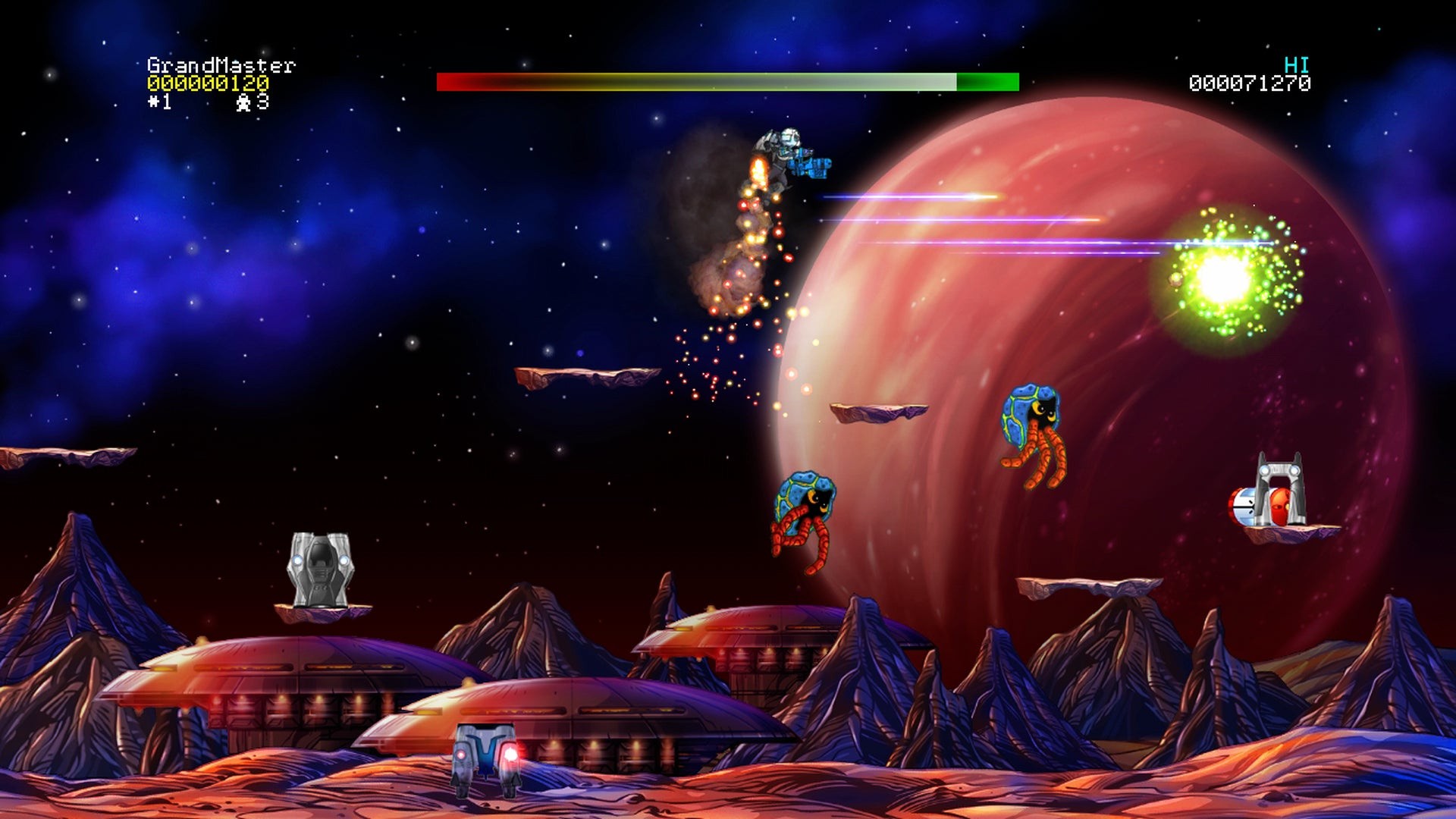
Another basic arcade game, Jet Pack Refuelled is a remake of the 1983 Ultimate Play the Game (ie, Rare) original. Unlike N++, Jetpac operates without any problems in both Refuelled and original modes. Performance is a rock solid 60fps at all times and the visuals perfectly represent the original Xbox 360 version.
Status: Perfect.
As it stands, during both exploration and combat sequences, the game runs upwards of 30 per cent slower on Xbox One with a deviation ranging between 5-10fps at any random point. What was already a sluggish experience on original hardware becomes nearly unplayable at points on Xbox One. During an explosive encounter during the train sequence in the first mission, we encountered dips as low as 10fps. We suspect that forcing v-sync is to blame for the drop in performance, though CPU inefficiencies seen in many early Unreal Engine 3 titles may also be an issue. We'll be eager to see how the virtual machine evolves over the coming months and we can't wait until other Unreal Engine titles become available for testing, but for now, this is not the right way to experience the game.
Status: Sub-optimal and nearly unplayable in places.
N++
One of the older Xbox Live Arcade titles available on the service, N++ is basically a console conversion of a remarkable little Flash title from way back. It's still just as fun and fluid as ever, making it a nice addition to the current list. Surprisingly, it's also one of the titles with the most baffling performance issues. On Xbox 360, the game operates at a flawless 60fps - from the menu and throughout the game, it's always 60fps and it feels great. On Xbox One, this isn't the case. Throughout the experience we encountered a near constant stutter that has a tangible impact on gameplay. Strangely, this only has an impact on roughly half of the stages we tested in addition to the main menu - some levels actually run perfectly. The boosted contrast and added sharpening on Xbox One also become most evident in this game. Aside from that, the visuals are identical.
Status: Playable with performance issues.
Geometry Wars: Retro Evolved
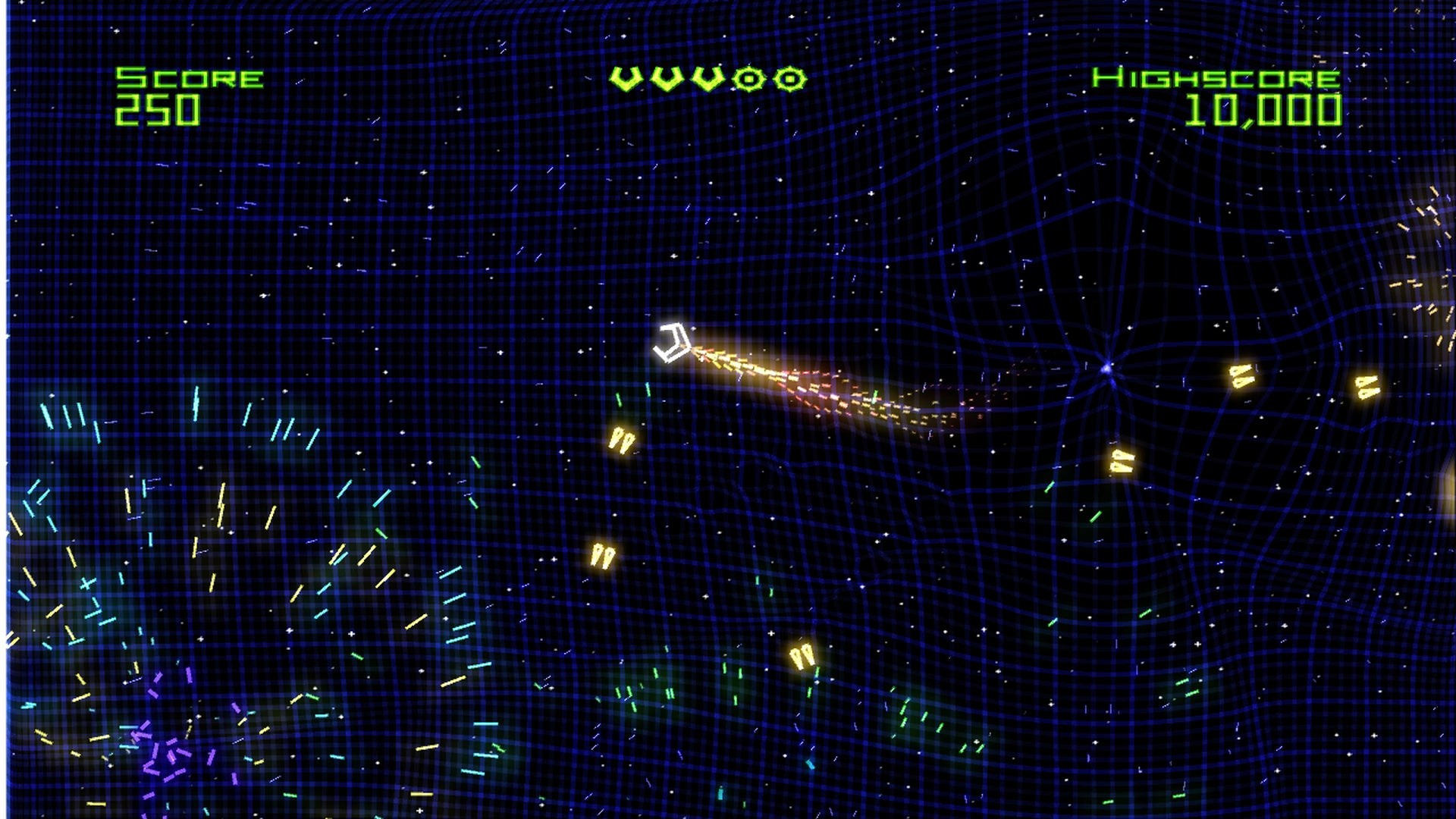
Another legendary launch title for the Xbox 360, Geometry Wars made quite a splash in 2006 with its retro neon vector visuals and amazing gameplay. Thankfully, just like Jetpac Refueled, you can expect a perfect experience here: the game feels just as responsive, without any additional slowdown or issues.
Status: Perfect.
Perfect Dark Zero
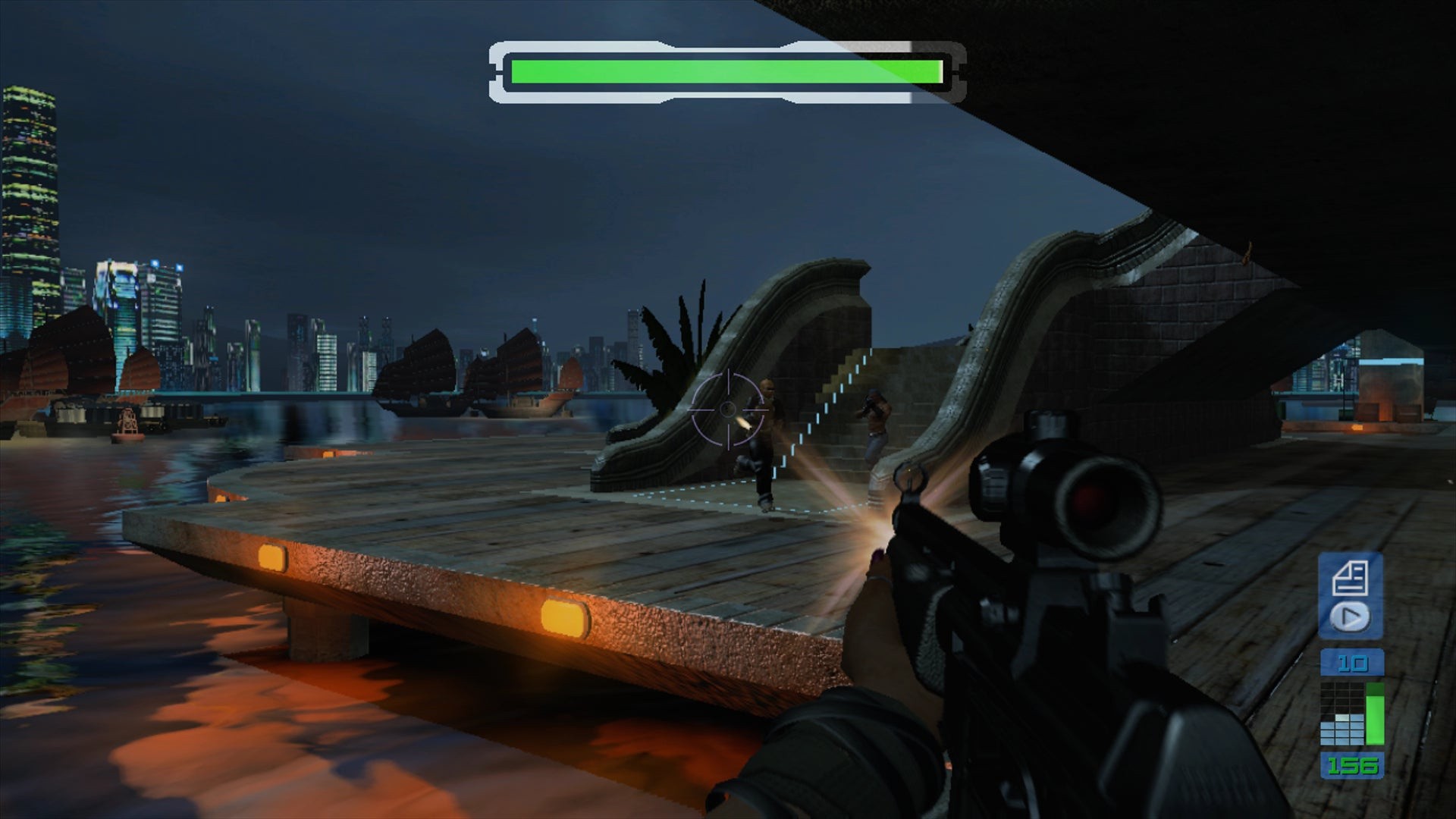
The infamous Perfect Dark Zero - a sequel that unfortunately failed to live up to the original - was the second Rare title released alongside the Xbox 360 launch hardware. To put it plainly, the game always had issues - a low frame-rate with lots of screen-tear, a low 1152x640 resolution with no anti-aliasing, along with a remarkably hideous art style. Despite this, as a title released in 2005, it offered a lot of impressive forward looking features including parallax occlusion maps, high quality object motion blur, and some impressive lighting effects (indeed, it was the earliest Xbox 360 title we're aware of that used deferred lighting). The good news is that the visuals are completely intact on Xbox One.
Similar to Mass Effect, the Xbox One forces v-sync, removing tearing in the process. Now, considering how severe this was on Xbox 360, this is a welcome change. Unfortunately, also in line with Mass Effect, this results in slower overall performance. The average difference this time sits between 4-6fps on average during taxing sequences, but the tearing was so annoying originally that the hit to frame-rate actually becomes worthwhile, with the game simply feeling more solid on Xbox One as a result. We can only hope that the emulation can be improved to enable smoother frame-rate with v-sync engaged as this feature could really transform quite a few titles on the platform.
Status: Lower performance, but a better experience than Xbox 360 overall.
Perfect Dark
The original Perfect Dark received an accomplished re-release on Xbox 360 with improved assets and a jump to a 1080p60 presentation, looking quite attractive bearing in mind its N64 origins. Unfortunately, this game reveals one unexpected issue with the virtual machine - it doesn't yet support internal resolutions higher than 720p. When running on Xbox One, we see the game render at 720p upscaled to 1080p, while the original Xbox 360 version delivers a full HD experience. The lack of jaggies may suggest that Xbox One is actually rendering internally at 1080p, presenting at 720p via the VM, then upscaling back to the higher resolution.
There aren't many full HD capable titles on the platform, but clearly we would like to see this issue corrected in the future. The rest of the game looks and runs as expected, with no additional dips in performance - the slowdown present on Xbox One is also there when the game is played on original hardware. Also noteworthy is that texture filtering quality has taken a hit independent of the loss in resolution, with textures appearing blurrier at oblique angles on Xbox One. If you can look past these issues the game is completely playable.
Status: Playable.
Xbox One backwards compatibility: first impressions
Bringing the library of Xbox 360 titles to Microsoft's new platform is an enormously impressive technical feat, to the point where you can't help but wonder just how the engineers achieved it. We've had a few thoughts about this. Firstly, we suspect that Microsoft's insistence that Xbox 360 developers stick to the DirectX 9 console API played a role in this - it would surely have helped to create a clear route in mapping GPU instructions from one generation of processor to the next (though it begs the question of what's going to happen with later games, that used some highly inventive DX9 code to get closer to the metal).
How Microsoft virtualised the CPU is where things get even more interesting - the notion of replicating a tri-core 3.2GHz PowerPC processor on a hex-core 1.75GHz cluster would surely have been a mammoth challenge. Well, as we understand it, the Xbox 360 CPU has two threads per core, and that threading is handled in a fairly primitive manner, with the processor effectively working as six 1.6GHz threads. If we had to guess, we'd say that the virtual machine assigns a thread to each x86 core and works from there. Hopefully soon, Microsoft will want to talk more openly about how this technological miracle was achieved - our door is always open.
Right now, as you might expect from early preview code, the virtual machine works and the fact that it does work is simply astonishing. However, as impressive as that is, there are a number of issues. Looking at Mass Effect in particular, we can't help but wonder whether the current CPU virtualisation is as fast as it should be. Clearly there is more work to do, but with a full release due later this year, the engineers still have plenty of time to polish things up. Even considering its current flaws, the state of the virtual machine's capabilities is remarkable: those precious few moments when performance actually exceeds the Xbox 360 gives us just a bit of hope that in the long run, we may actually end up with an improved experience in some games. While we don't know to what extent the current virtual machine can be improved, we'll keep an eye on the progress of this remarkable new feature and report back with our findings in the future.
An American living in Germany, John has been gaming and collecting games since the late '80s. John's keen eye for and obsession with high frame-rates have earned him the nickname "The Human FRAPS" in some circles.

 by
by 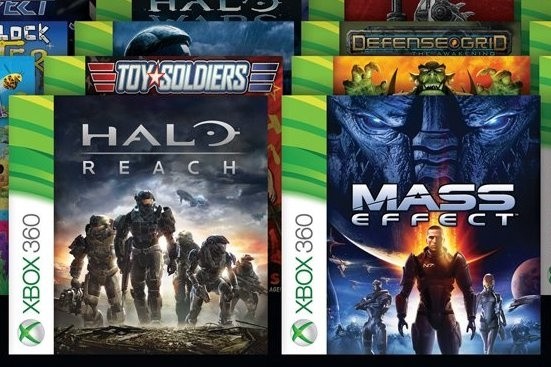

Comments 0
Wow, no comments yet... why not be the first?
Leave A Comment
Hold on there, you need to login to post a comment...