There was a time when the side-scrolling platformer was perhaps the most popular genre in gaming, and when the announcement of a new Sonic or Mario game was met with the same level of excitement that a new Grand Theft Auto or Call of Duty elicits today. But with the transition to 3D gaming, the genre gradually slipped into decline, and despite a recent renaissance fuelled by indie developers, higher-budget retail platform games remain a relative rarity outside of Nintendo's stable.
Enter Sony's Japan Studio division. Game director Gavin Moore recently said that creating something that no-one has seen before is a driving mantra behind the studio and its games, and it seems to have been with this in mind that the developer has jumped into the 2D platform genre with its own fresh, unique take: Puppeteer.
Of course, the basis of any great platformer lies firmly in its core play mechanics and, by extension, the graphics engine performance. A poor frame-rate, unresponsive controls or misconceived jumping physics can ruin an otherwise good production. Sony recently released a short demo of Puppeteer in Japan - dubbed the Rehearsal Version - offering a small taste of these mechanics and a closer look at the technology powering the game, which will be a full retail release when it's finished. Lasting just under three minutes, the demo may be brief, but it reveals responsive controls and excellent visual design presented in the form of a constantly shifting stage play.
The idea of a constantly changing world is one of the core foundations on which this project is built, presenting an interesting technical challenge. Framed by a pair of traditional red curtains, Puppeteer manages to swap entire chunks of world geometry in and out of the scene, completely altering the stage during gameplay. Transitions are complemented by a robust physics engine capable of handling rigid and soft-body objects along with particles. The scissors wielded by our hero are used to traverse the level via a cutting mechanic, allowing the player to freely carve up waving banners, wooden props and sprouting plants.
"Within the limits of the target hardware, the team at Japan Studio have managed to craft an ambitious, exceedingly polished experience."
These props exhibit reasonable accuracy in reaction to the slicing mechanic, with cloth tearing to shreds and chunks of wood tumbling to the ground, and objects regenerating following these actions in order to avoid impeding the player. However, unlike the realistic physics-driven gameplay of the similar-looking LittleBigPlanet, Puppeteer separates player control from the more robust environment physics. While the player routinely interacts with complex physics-driven elements, the core mechanics remain predictable and reliable, affording a greater degree of precision than Media Molecule's efforts.
The dynamic nature of the scenery demands a more robust lighting solution capable of reacting properly to the shifting world geometry. The demo is illuminated primarily via a collection of spotlights, which follow the player through the world projecting shadows throughout. Additional light sources, including that which illuminates your flying sidekick, appear in conjunction with the spotlights, delivering a rich visual composition. It is this high number of dynamic lights and lack of any performance dips which suggests to us that the game makes use of a fixed-cost rendering solution for its lighting, allowing for an almost unlimited number of dynamic lights.
Shadows appear relatively smooth and artefact-free from the selected viewing distance, with extensive use of specular highlights across almost every surface, and the glistening of castle stonework in particular reacting to the surrounding lighting. Gleaming spotlights, dancing shadows and sweeping animations all combine to create an incredibly cohesive presentation which successfully achieves the look of a puppet show.
A fresh take on surround audio
As a virtual puppet show, Puppeteer makes interestingly extensive use of surround-capable audio systems. With the game playing on a 2D plane it wouldn't make sense to use the rear channels for audio relating to the on-screen visuals. Instead, the team puts the rear channels to use in the form of a virtual audience watching you play.
You'll hear gasps from the audience as you make a tricky jump and chuckles as the rafters crumble beneath your feet. Failing to move your character slowly increases the rear channel activity as the audience seemingly becomes bored with your lack of action. After a solid minute of waiting, the sound of the crowd leaving the theatre and talking amongst themselves almost drowns out the game's soundtrack. It's a neat touch that adds an extra dimension to the experience.
Complementing the sweeping animation is the use of full-object motion blur that is liberally applied to each on-screen object. Affecting each object itself rather than the surface texture as in LittleBigPlanet 2, the often-exaggerated animations benefit immensely from this technique and lend an almost pre-rendered feel to some of the more dramatic actions. The PlayStation 3's SPUs are particularly well-suited to the offloading of this type of motion blur and we'd imagine they are handling the process in this case.
In terms of image quality, the engine operates at a full 1280x720, employing selective post-process anti-aliasing that appears consistent with the now-standard MLAA implementation included in PS3 development tools. Coverage is generally good with only specific darker regions lacking proper smoothing. Particle effects, such as smoke clouds, appear to operate with a full-resolution buffer as well. Scene composition is loaded with high-frequency detail but overall image quality is relatively free of aliasing. The final game is expected to include a stereoscopic 3D mode as well, though this feature did not make the cut for the demo - so it's not possible to assess any implications for performance or resolution.
Performance-wise, there isn't much to report - and that's a good thing. Puppeteer targets and successfully maintains 30fps with v-sync engaged. The demo runs so consistently, in fact, that there's not a single dropped frame, so we're unable to assess what happens should the renderer slip over budget. Of course, when it comes to side-scrolling action games there is no doubt that we would always prefer a smooth 60fps but, in this case, the consistent update combined with excellent motion blur still manages to produce an attractive game in motion.
Puppeteer perfectly what it sets out to do: within the limits of the target hardware, the team at Japan Studio has managed to craft an ambitious, exceedingly polished experience. With such a limited sample it is difficult to determine how the engine copes with more complex set-pieces, but we have high hopes, and most importantly we are able to confirm tight, responsive controls and a stable frame-rate, eliminating two of the most significant stumbling points facing any platformer.
With the release date set for early September, it won't be long until we know if the final game can live up to its promise.
An American living in Germany, John has been gaming and collecting games since the late '80s. John's keen eye for and obsession with high frame-rates have earned him the nickname "The Human FRAPS" in some circles.

 by
by 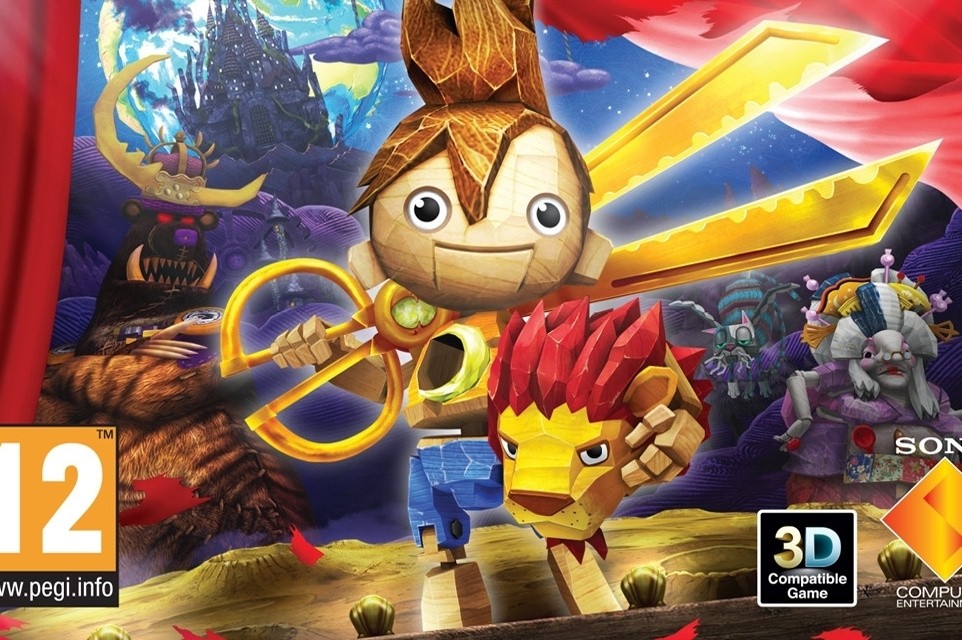


Comments 0
Wow, no comments yet... why not be the first?
Leave A Comment
Hold on there, you need to login to post a comment...