
 by
by 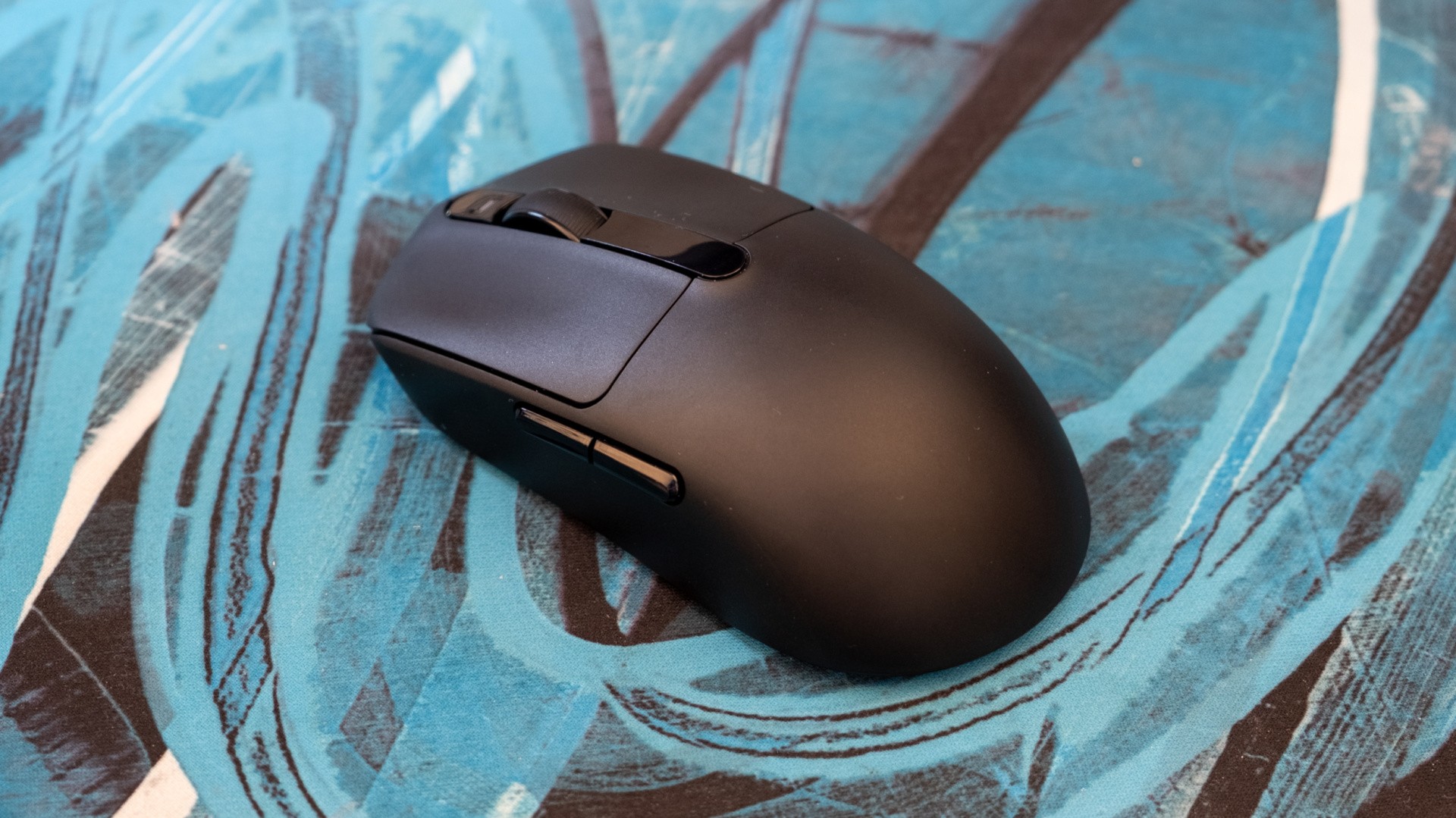
Akko is best known for its mechanical keyboards, but the firm's gaming mice are also right up to date with the cutting edge. The Dash Master is designed to be the tool of choice for smaller hands, offering an extremely lightweight symmetric design, full wireless, Bluetooth and wired connectivity, and high-end internals. For the mid-range asking price of $67/£57, it's a very affordable entry to the high-end ultra-light mouse space.
Chinese boutique mouse brands have always been extremely aggressive on specs versus price, and that's certainly the case here. The Dash Master, the latest of four similarly titled small mice in the Dash family, comes with specs that rival Razer or Logitech flagships at a third of the cost: a 40g weight, 8000Hz polling, and a PixArt 3955 optical sensor capable of up to 65K DPI (for some reason).
The switches are interesting too, with optical Omron switches that are designed to offer faster actuation and an extremely long lifetime - potentially at the cost of the click feel offered by traditional mechanical microswitches. The scroll wheel is a standard TTC gold option, with relatively soft travel. These all felt as expected to use - crisp, snappy - but the side buttons are a bit less endearing, with a lot of extra travel after the click. The Dash Master also comes with rounded PTFE skates already applied, with dot skates included in the box alongside some useful grip tape.
In terms of design, the DM measures 118x61x37mm, with a relatively low central hump. The symmetric shape is similar to the SteelSeries Rival or Aerox mice, as well as Roccat's Burst Pro, just a little shorter and with no DPI buttons at the top. In fact, there's no DPI button at all, with only a BT pairing button at the bottom and a BT/2.4GHz/USB connectivity toggle. That's not an issue for me, but would be annoying for anyone that likes to change DPI regularly or use that button to activate other functions. The shape here feels fine to my 20x10cm hands, probably right on the edge of how small a mouse can become for me before it starts to feel a little undersized.
Like other modern mice, the Dash Master can be customised via web software or downloadable software. I went with the web option, and it works just fine. Pretty much everything is crammed onto a single page, which felt a bit overwhelming, but it was easy to change basic settings like DPI or polling rate.
Where the software experience fell down slightly was in enabling more advanced features like Motion Sync, 20K FPS scanning, ripple control and linear calibration. These are all disabled by default, and there was little guidance to suggest which I should enable in a certain scenario - if any. Additionally, the sensor rotation setting was shown as being set to -30° by default, which it didn't feel like it was, and the auto-sleep setting wasn't translated from Chinese.
Finally, there wasn't an alert that new firmware was available, and the proffered .exe files didn't offer any guidance on how to install the updates - eventually I figured out I needed to separately attach the dongle and the mouse itself via USB to get one working, while the other simply never worked. A few things to improve there, I feel.
Thankfully, in actual use the Dash Master is easier to recommend. While I'm sometimes a bit nervous about implementations of high-end sensors and features on mice from smaller brands, with the potential for performance or battery drain issues, the DM worked nicely and I couldn't detect any flaws. The 8KHz mode with all of the bells and whistles enables results in modest battery life at best - around 28 hours according to Akko - but does allow for easy tracking and precise flicks. The first 8KHz mice could run out of juice after less than 10 hours, so this is a big improvement at least. At 1KHz, the mouse lasts for a reported 220 hours, which I've not had time to test but would just about be doable given the sensor and wireless solution here.
I spent more time than I planned to playing Counter-Strike 2 deathmatch, and the matte surface, small size and low weight combined well to produce a mouse that's extremely easy to pick up and reposition during play as needed. The lack of extra mouse buttons is more annoying in slower-paced and more contemplative titles like BattleTech Advanced Universe or Songs of Silence, where it's often nice to have something beyond the two side buttons to bind to commonly used functions. Still, I can't fault the performance overall.
All told, the Dash Master is a fun mouse that will suit small to medium hand sizes, at a price that puts the bigger Western brands to shame. The only real negative here is the lack of UK stock for British buyers and the slightly unfinished feeling web software. Both of these are eminently fixable problems, and I hope Akko does just that to make this mouse an easy recommendation for more people. As it stands, Razer, SteelSeries and Corsair offer easier mice to customise, but Akko is more than their equal when it comes to performance and value for money.
Akko provided a retail Dash Master unit for review.