
 by
by 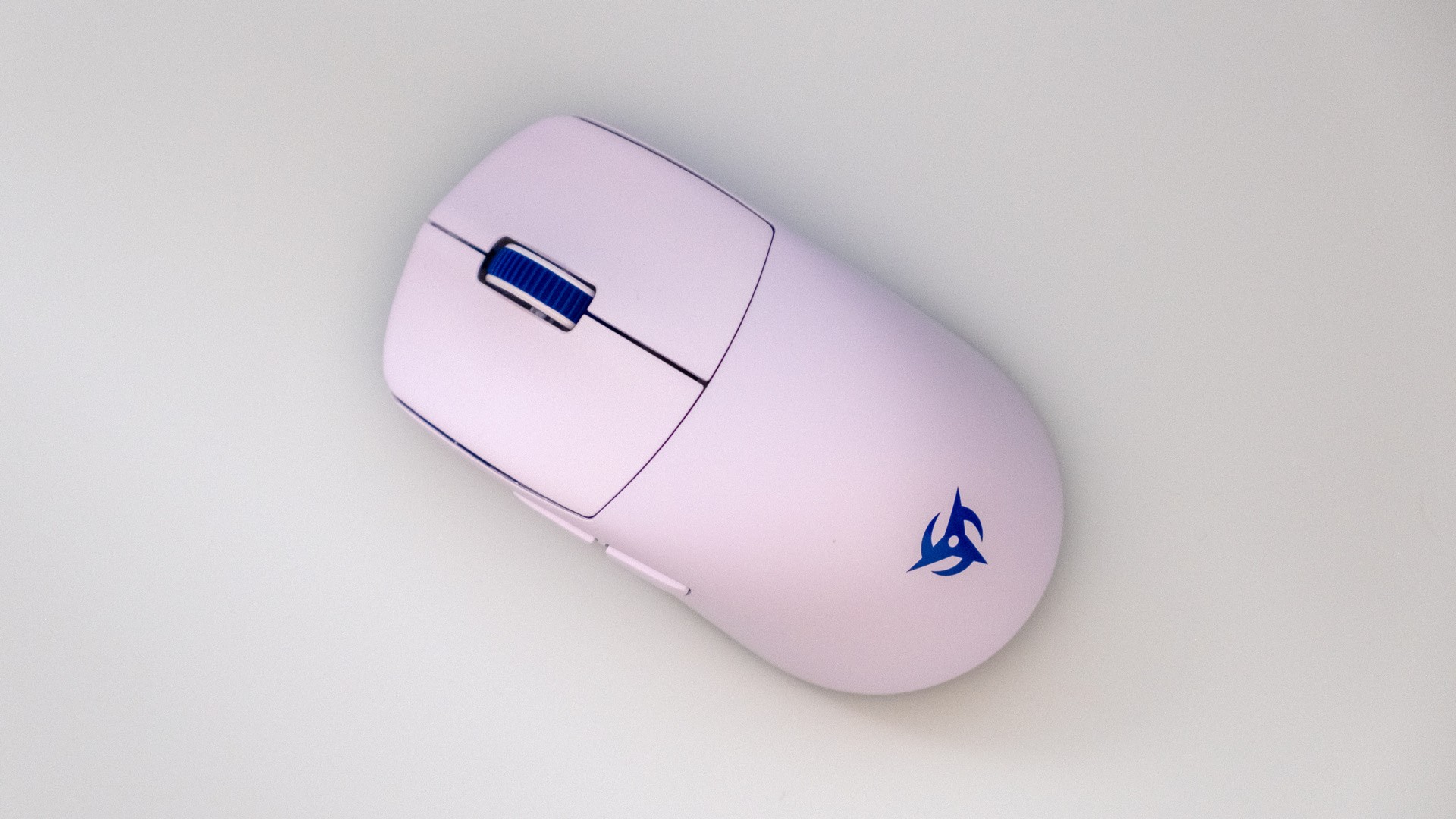
The Ninjutso Sora was the first wireless gaming mouse to break the 50g barrier without holes back in 2022, with a wedge shape that proved popular for claw grip users in particular. A V2 followed in 2024, dropping below 40g with a few shape changes, and now the $120/€110 Sora V3 is here with a huge list of upgrades: improved internal rigidity, an uprated 45K sensor, a fancier scroll encoder, clickier mechanical switches and significantly longer battery life.
It all sounds very promising, so I've been testing the Sora V3 over the past two weeks in games like Battlefield 6, 007 First Light, BattleTech Advanced Universe and Counter-Strike 2 - as well using the mouse for my regular writing and editing work, for which I have slightly different mousing priorities.
Thankfully, the generational changes have had the desired effect: this mouse is better than its predecessors in almost every way, while maintaining a reasonable price point and gaining only a single gram in total weight. That isn't to say that this is a perfect option, but it does come closer than many of its boutique peers when it comes to challenging the likes of Logitech, Razer and Asus for the top gaming mouse crown.
| Ninjutso Sora V1 | Ninjutso Sora V2 | Ninjutso Sora V3 | |
|---|---|---|---|
| Weight | 43g | 39g | 40g |
| Sensor | PixArt PAW3395 optical | Custom optical (based on PixArt PAW3395) | Custom dual-optical (based on PixArt PAW3950) |
| Max DPI | 26K | 30K | 45K |
| Max Polling Rate | 1000Hz | 8000 Hz (w/ separate dongle) | 8000Hz (dongle included) |
| Main Switches | Huano Black Shell Pink Dot Mechanical | Omron Optical | SPDT HyperSwitch Mechanical |
| Scroll Encoder | TTC Silver | TTC Gold | TTC (unnamed) |
| Dimensions | 121x65x37mm | 119x59x37mm | 119x59x37mm |
| Battery Life | ~70 hours | ~8 hours | ~125 hours |
| Tracking Speed | 650IPS | 750IPS | 900IPS |
| Max Acceleration | 50G | 50G | 50G |
The Sora V3 looks very ordinary, with my review unit using a simple white colour scheme with blue accents on the Ninjutso logo and the scroll wheel. It has that characteristic wedge shape, similar to the likes of the Endgame Gear XM2, Lamzu Atlantis Mini or Zowie S2-B, which is quite comfortable for my relaxed claw grip (hand size for reference: 20x10cm).
The bottom of the mouse is dead basic, with a repeated wordmark texture serving as the background and a simple 2.4GHz on/off switch; there's no Bluetooth here, making the Sora V3 a dedicated gaming mouse rather than a proper all-rounder. Interestingly, the mouse comes without skates installed, and you have both full-size skates (for the top, bottom and sensor) and dot skates in the packet.
The 2.4GHz dongle is a little more visually interesting though, with a lozenge shape lit with a mesmerising rainbow wave by default. This can be customised in the NinjaForce web app, along with a huge amount of rare settings - like slam-click levels and multiple modes that trade off performance and battery life - alongside more standard inclusions like polling rate, angle tuning, lift-off distance, DPI stages, macro recording and button remapping. It's a great package, all things considered, and the inclusion of those rarer features shows how well integrated the company is with its enthusiast community.
Given that focus, it's no surprise that the Sora V3 is a tremendous performer. The 40g weight does feel like an advantage, even against the 50g Viper V4 Pro or 60g Logitech X2 SuperStrike, and battery life isn't significantly worse either - though the Viper V4 Pro remains the overall champ here when it comes to 8K polling specifically. Of course, many players are still using mice that weigh 100 grams or more, so it's all relative.
Beyond the weight, the Sora V3's relatively small size and rear hump make it easy to control, with claw grips holding the rear tucked into the cavity of the palm. That makes quick adjustments easier, and I found the mouse easy to grip in both hot and cold weather (for the UK; your mileage may vary). Fingertip grip styles will also work well here, but the smaller size makes it less attractive for a palm grip. There's no real flex under torsion, unless you grip your mouse way tighter than me.
The customised PixArt 3950 sensor feels extremely responsive and impossible to spin out, as you'd hope given its flagship status, and the mouse clicks are audible but not distracting, with good tensioning, little travel and a fast rebound. The comfort curves ensure your fingers are in the right position, too. The side buttons are a similar story, with a slightly deeper report and a little more pre-travel, but they still work well enough. The scroll wheel isn't the most tactile or decisive, but it's fine for FPS work.
Overall, it's a great package that serves as a strong budget alternative to the likes of the Razer Viper V4 Pro and Logitech X2 SuperStrike, lacking the exceptional battery life of the former and the unique haptic clicks of the latter, but otherwise matching these flagships in terms of performance, software simplicity and so on. Highly recommended for the money.