
 by
by 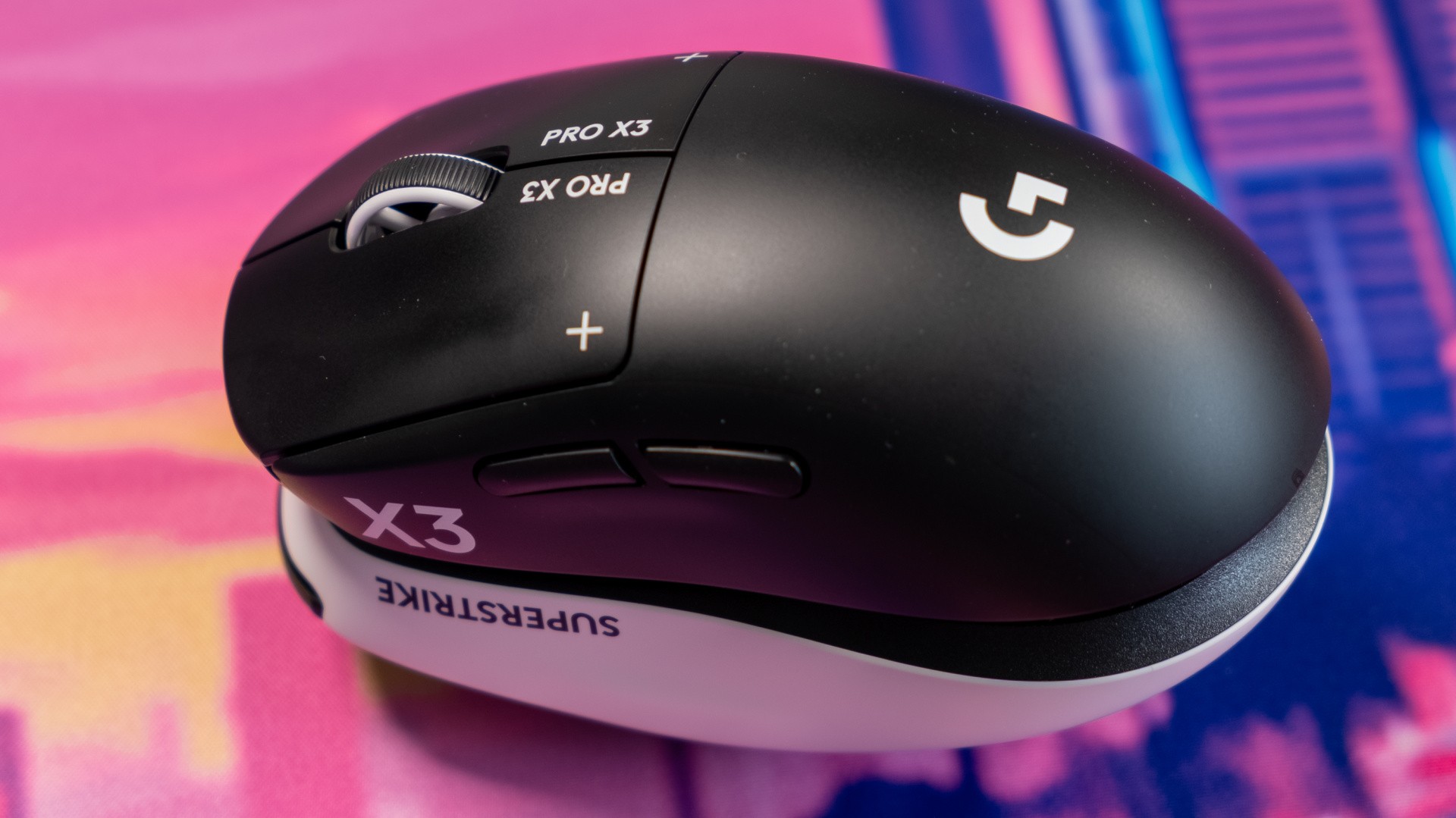
Eight months ago, Logitech launched its innovative X2 Superstrike esports mouse, which replaces the usual mechanical microswitches under the left and right buttons with analogue sensors and MacBook-Pro-style haptic motors. That means you can fire sooner, fire faster and even customise the level of tactile feedback you get. It's a fascinating idea - one that I gave a 10/10 rating to even at a $180/£160 price - but the X2 did launch with a few limitations that the new X3 Superstrike seeks to address.
In short, the $200/£180 X3 is the model that Logitech probably meant to make the first time around - before an unexpected groundswell of support from normally conservative esports pros trialling the X2's extremely rapid clicks prompted a quicker turnaround. It's better balanced, comes equipped with a fancier chipset with support for higher wired polling rates and better battery life, and is lighter in the US or around the same weight but more repairable in the EU/UK.
That is a relatively short list of new features, but added onto a mouse that is already a top choice amongst competitively-minded PC gamers, does it make enough of a difference? And what's the deal with the X2 Superstrike remaining on sale alongside the X3 - is there any reason you'd go with the older option?
| Feature | X3 Superstrike | X2 Superstrike | Superlight 2 |
|---|---|---|---|
| Weight | 59g | 61g | 60g |
| Sensor | Hero 2 (48K DPI, 90G, 930 IPS) | Hero 2 (44K DPI, 88G, 888 IPS) | Hero 2 (44K DPI, 88G, 888 IPS) |
| Wireless | Lightspeed (up to 8KHz polling) | Lightspeed (up to 8KHz polling) | Lightspeed (up to 8KHz polling) |
| Switches | HITS 2.0 (Haptic Inductive Trigger System, refined LRA & broader coil coverage) | HITS (Haptic Inductive Trigger System) with Analog Inductive Sensing & LRA Haptic Feedback | Lightforce Hybrid Optical-Mechanical Switches |
| Buttons | 5 Programmable Buttons | 5 Programmable Buttons | 5 Programmable Buttons |
| Battery Life | Up to 130 hours (at 1KHz) | Up to 90 hours (at 1KHz) | Up to 95 hours (at 1KHz) |
| Wired | USB-C (up to 8KHz polling) | USB-C (up to 1KHz polling) | USB-C (up to 1KHz polling) |
| Dimensions | 125mm x 63.5mm x 40mm | 125mm x 63.5mm x 40mm | 125mm x 63.5mm x 40mm |
| RRP | $199.99 / £179.99 | $179.99 / £159.99 | $159.99 / £139.99 |
The HITS mechanism inside the X3 is fundamentally the same as that in the X2, but just to remind you, it's a two-piece situation. An analogue sensor reads how far the mouse button has travelled, while a haptic motor beneath rumbles to provide feedback that a click has been registered. It's a bit like combining a modern analogue keyboard with the haptic feedback of a MacBook trackpad - and indeed, you can choose how sensitive the button is, or register a click at any point in its travel with the rapid trigger feature, both of which improves click responsiveness much more than higher polling rates do.
It's complicated stuff, but thankfully Logitech's G Hub remains the most newcomer-friendly piece of software that I've ever tested, with a short tutorial that pops up the first time you start it to tell you a little about what you've bought - what options are available, how they work and where they might be useful. Once you're into the configuration area proper, there are also tooltips available to catch you up on anything you might have missed. Too often mice come with software packed with dozens of options with confusing names and zero context, so Logitech's approach is gold - and must result in much better utilisation of the features available. The new addition for the X3 is called pro presets, which shows you how popular esports pros set up HITS on their mouse to get a feel on what config makes sense.
In terms of the actual hardware, the X3 does feel less front-heavy than the X2 did - though I needed to trial both mice side-by-side to feel the difference. This change, along with the slight weight reduction and faster sensor, should result in slightly better performance and eliminates one of the few genuine sore spots in the original design. However, both mice are superb in a fast-paced setting, and testing in CS2, Wardogs and Hades 2 did more to remind me of how good the X2 is than convince me that the X3 was the better performer.
The more impactful change is battery life. The X3 is rated for 135 hours, versus 90 on the X2, which translates into about a week of extra use between charges - or an extra day or two if you're using battery-sapping 8KHz polling. This is less of a big deal if you use a PowerPlay or compatible mouse mat to wirelessly recharge, but for me it was a real quality-of-life upgrade - especially coming off of the excellent dual battery system of the new SteelSeries mice. You can also play at 8KHz while wired, something that the X2 couldn't do.
Ultimately, the X2 and X3 Superstrike mice offer a unique advantage and stand alone - though Razer has publicly announced it is working on its own rapid trigger mouse, Chinese keyboard maker Keychron has done the same and there are already a small number of clones from smaller brands available on AliExpress. Clearly, there's quite some interest in the technology given the advantage it provides to competitive players where every millisecond counts, but it will take some time before a true competitor emerges.
In terms of the X2 versus the X3, the latter is the technically superior mouse, though teardowns suggest it's somewhat less well-built internally with slightly weaker tactile feedback, in service of that refined balance and lower weight. The shape, side buttons, scroll wheel and coating are otherwise identical. If I had the original, I wouldn't upgrade to the latter unless I could sell my X2 for pretty much full price, but if the balance or the battery life of the X2 bothers you then it makes more sense.
However, the HITS tech at the heart of the Superstrike mice isn't necessarily preferable for every player. I've read plenty of posts on the /r/mousereview subreddit from folks that have tried the X2 or X3 and returned them for a more traditional alternative, often due to how the mouse feels to click. For example, we've tested the Razer Viper V4 Pro, SteelSeries Rival/Sensei Pro and Mchose K7 V2 Ultra+ here at Digital Foundry, and each has a similar focus on performance and longevity while retaining traditional mechanical or optical microswitches - often at a lower price that makes them easier to recommend.
That's why I hope that Logitech drops the price of the X2 Superstrike so more people can try out the technology - make it a bit more of a mainstream offering while the technically superior X3 remains the flagship choice. I genuinely believe that this tech is the future, but at $200 for the top option it's going to remain exclusive to professional esports players and deep-pocketed enthusiasts - which is a shame considering what a game-changer it can be. The clones are coming though, so it's up to Logitech whether the first analogue mouse that hits the mainstream is made by them - or not. Personally, I'm hoping for the former rather than the latter.
Review unit provided by Logitech.