On paper, the GTX 950 doesn't look like a hugely enticing proposition - it's a cut-down version of an existing product and it's clearly aimed at the more value-conscious gamer, with performance to match. Indeed, it seems to exist mostly to nullify a tiny niche occupied by AMD's new R7 370. And yet, we rather like assessing the budget cards like this. Reviewing the latest and greatest is all about seeing how fast they are, but at the lower end of the spectrum, it's all about experimenting, tweaking settings, seeing just how much you can get away with in pursuit of great visuals and decent performance. In this respect, the GTX 950 doesn't disappoint.
That said, the cutbacks do look significant. Nvidia's existing GTX 960 was a good product, but not a great one - the GTX 950 uses the same GM206 processor, with a 25 per cent reduction in CUDA core count, dropping down from the maximum 1024 shaders to just 768. Mitigating matters are tweaks to the core and boost clocks, meaning higher frequencies are in play. On top of that, while there is a reference spec, most of the GTX 950s on the market receive custom designs and factory overclocks.
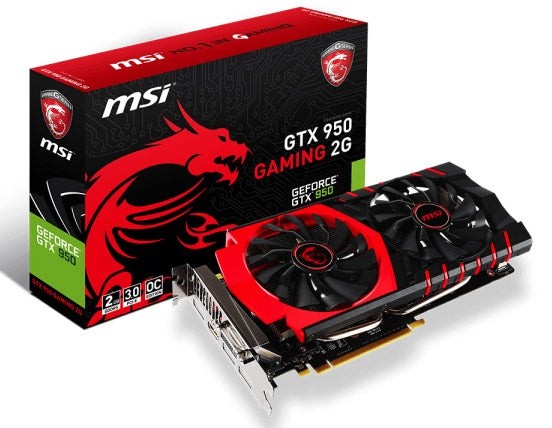
To get an idea of how this plays out in the real world, we acquired three MSI Gaming cards - the GTX 950, the GTX 960 and the Radeon R7 370 - each with their own factory overclocks in play. We also brought in two additional budget cards from the lower price-tier, both of those running at reference speeds: the Radeon R7 360 and the classic GTX 750 Ti. As things stand, the new GTX 950 replaces the 750 Ti (though it does see a price bump) while the older card drops below £100 to take on the R7 360 - something it does pretty well.
Nvidia GeForce GTX 950 specs
A cut-down version of the GM206 chip found in the GTX 960 powers Nvidia's latest graphics card. CUDA core count is significantly reduced, though clocks are more aggressive. All of GM206's media features - such as hardware accelerated h.264 and next-gen HEVC encode/decode are included in the card, and there's HDMI 2.0/HDCP 2.2 support too. The MSI model we're reviewing has a significant factory overclock, but it'll be hard to find any GTX 950 that can't be clocked to match, even with less capable cooling - GM206 is fast and cool and even reference-level examples should boost to 1500MHz.
CUDA Cores
768
Texture Units
48
ROPs
32
Base Clock
1024MHz (1127MHz MSI Factory OC)
Boost Clock
1188MHz (1317MHz MSI Factory OC)
Memory Clock
3300MHz (6.6gbps effective)
L2 Cache
1024K
Video RAM
2GB GDDR5
Memory Interface
128-bit
Memory Bandwidth
105.6GB/s
Texture Rate (bilinear)
49.2 GigaTexels/sec
Fabrication Process
28nm
Transister Count
2.94 billion
Power Connectors
1x 6-pin
TDP
90W
Thermal Threshold
95 degrees Celsius
Suggested retail price for the GTX 950 is £129/$159. In a world where the GTX 960 costs just £20 more, that's a little high in our opinion, but fingers crossed that prices will drop a little in the short to medium term.
While the GTX 950 may lose some of the power of its more expensive stablemate, its feature-set remains intact. GM206 is potentially a superb GPU for a media centre, featuring full h.264 and HEVC encode/decode and support for HDMI 2.0 and HDCP 2.2 on its HDMI port. It also retains a wealth of outputs - there are three DisplayPorts on the MSI model and DVI too. The GTX 960's power efficiency sees TDP drop to just 90W, with extra juice supplied via a single six-pin power input on the top of the card. GM206's overclocking prowess is undiminished too - this accounts for the highly generous factory overclock MSI has added here, and just like the GTX 960, we could improve performance still further with further tweaking, hitting 1500MHz on the boost clock with ease, the GPU remaining cool at just 62 degrees Celsius on an open test bed. Bearing in mind the card's 95 degree thermal limit, cards with less capable coolers installed in tight cases should still be able to achieve very close to that level of peak performance.
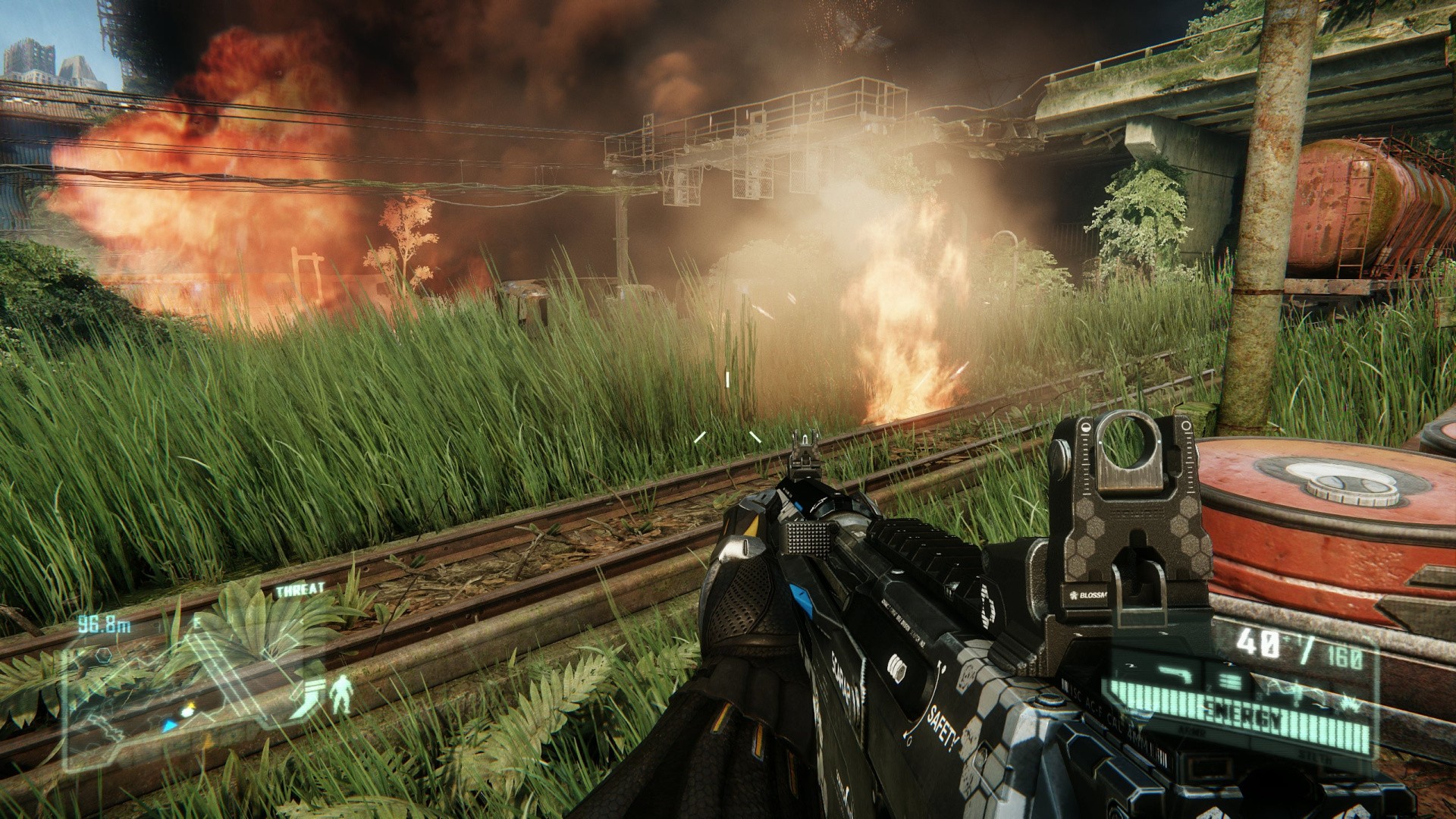
So what can the GTX 950 achieve in a real-world gaming scenario? Crysis 3 remains a solid workout for any GPU, a known quantity, and a game where its more expensive sibling performed rather well at 1080p on high settings in the intensive Welcome to the Jungle stage. We ran through the same gameplay on the GTX 950/960 and the Radeon R7 370, and our objective here is to match resolution and refresh rate with the most popular gaming displays on the market today - and according to the Steam hardware survey, that's the standard 1080p at 60Hz.
Not surprisingly, it's the most expensive card in the test line-up that gets closest to a locked 60fps: the GTX 960 offers the kind of 'perceptual' 60fps you see in many console games - it's not a complete lock, but the dropped frames are rarely intrusive enough to impact on the experience. Following up fairly closely we have the GTX 950 - there are sustained areas of gameplay where the drops are noticeable enough to impact on fluidity, but equally, the majority of the run through the stage does occur at 60fps.
Meanwhile, the R7 370 offers a noticeably lower performance level, to the point where the majority of the run occurs at a sub-60fps frame-rate. If Nvidia set out with the objective of beating the Radeon card, it has succeeded - but we feel that the factory overclock emphasises the differential. MSI has added 103MHz to the base clock here (and a similar amount to its GTX 960 too), and just 55MHz to the Radeon - but then again, this does emphasis that the Maxwell architecture clocks much higher than the vintage 2012 Pitcairn design found in the R7 370 - which is essentially a more highly clocked Radeon HD 7850.
Crysis 3 V-Sync Gameplay
R7 370
GTX 950
GTX 960
Lowest Frame-Rate
33.0fps
35.0fps
40.0fps
Dropped Frames (from 18650 total)
3456 (18.5%)
1431 (7.7%)
452 (2.4%)
Order the graphics cards tested against the GTX 950 from Amazon, with free shipping:
So what can this tier of hardware achieve in our benchmark suite? Both the R7 370 and the GTX 950 straddle two price tiers - entry-level enthusiast and 1080p sweet spot - making the choice of benchmarks to embark upon worthy of some consideration. We opted to go with our budget suite, typically either high settings (one notch down from the max) or where we had them to hand, console-equivalent settings. Our thinking here is pretty straightforward - the £150 level graphics cards can make a fairly good fist of ultra settings at 1080p, but anything beneath that really requires the introduction of realism into quality level choices. And that's not a bad thing actually, the reduction is noticeable in some places (Crysis 3, especially) but not much in others (Call of Duty/Battlefield 4) but regardless, the increase in performance more than makes up for it.
Initial results are impressive. The GTX 950 replaces the older 750 Ti in the same approximate price bracket, bringing with it a mammoth 44 per cent performance uplift. Doubtless a good degree of this comes from the factory overclock (and remember, the 750 Ti itself has a large amount of OC headroom - even our reference card barely breaks a sweat with a 200MHz core boost), but regardless, even if you factor out the in-built overclock, that's still a sizeable increase in performance per pound bearing in mind that the 750 Ti is just 18 months old.
Comparisons with the R7 370 see anything from level pegging on Shadow of Mordor to a huge 20 per cent boost on Crysis 3. The R7 370 holds its own in Call of Duty (we seem to be butting into CPU limits here as the game is running so fast on console equivalent settings) and Ryse, but generally speaking, on aggregate, we see a 10 per cent boost to performance across all nine games. At reference clocks we would assume that this may diminish somewhat. Meanwhile, the GTX 960 seems to be around 15 per cent faster than Nvidia's new card in titles where we are not CPU-bound.
1920x1080 (Avg FPS)
R7 360
GTX 750 Ti
R7 370
GTX 950
GTX 950 OC
GTX 960
The Witcher 3, Console Settings, HairWorks Off, Custom AA
30.5
31.7
38.4
45.1
48.9
52.1
Assassin's Creed Unity, High, FXAA
26.1
26.1
34.1
38.9
42.6
41.8
Battlefield 4, High, Post-AA
41.2
46.0
57.7
67.0
73.5
77.6
Crysis 3, High, SMAA
36.9
45.0
54.0
65.2
71.2
74.0
COD Advanced Warfare, Console Settings, FXAA
70.7
69.0
92.3
96.0
102.9
99.9
Grand Theft Auto 5, Console Settings, FXAA
38.7
43.9
54.8
62.3
68.1
72.2
Far Cry 4, High, SMAA
41.7
40.0
54.6
58.1
63.0
67.5
Shadow of Mordor, High, FXAA
44.7
43.2
61.7
61.3
66.7
69.9
Ryse: Son of Rome, Normal, SMAA
30.5
29.7
44.8
45.3
49.4
52.8
Analysis: Radeon R7 360 and R7 370
AMD has taken plenty of criticism for its 300 series GPUs - all of which are derived from existing 200 series parts, with the Radeon R7 370 actually hailing from 2012 (it's basically an overclocked Radeon HD 7850). In our view, performance takes priority over the age of the silicon and much of the 300 series line-up has plenty to be positive about. The Radeon R9 390 is faster than both R9 290X and GTX 970 - and it has 8GB of RAM, while the R9 380 finally offers the 4GB of GDDR5 its predecessor (the R9 285) really needed.
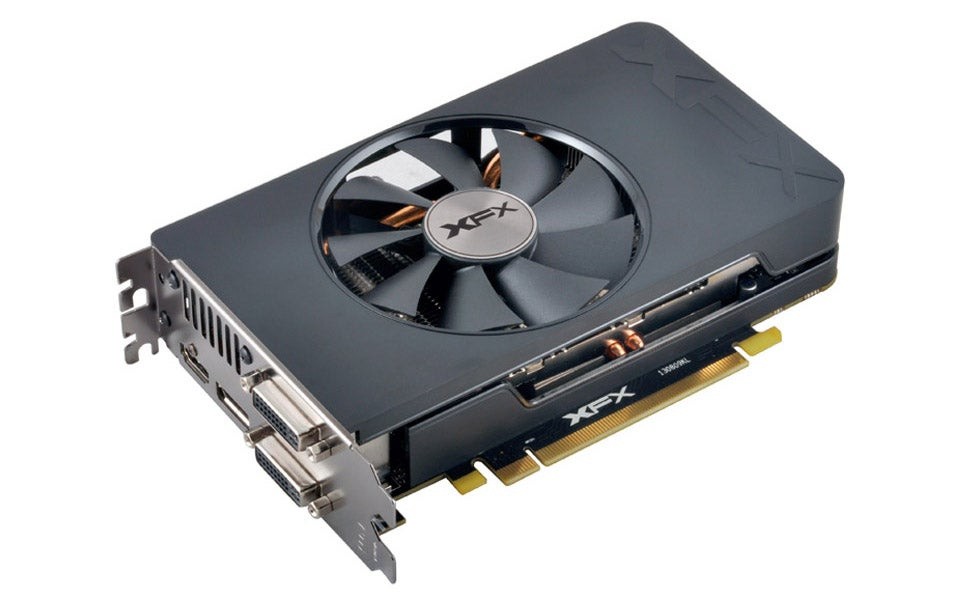
However, the two lower-end parts in the Radeon line-up - benchmarked in this piece - do deserve criticism. AMD told us that the R7 360 (the model we tested is the XFX version, above) was faster than the outgoing 260X, despite losing two of its 14 compute units. In our tests, the older card remains marginally faster, despite the data coming from older drivers. From a purely academic perspective, the R7 360 does have some interest though - with its 12 CUs, it is now effectively an overclocked version of the Xbox One GPU core.
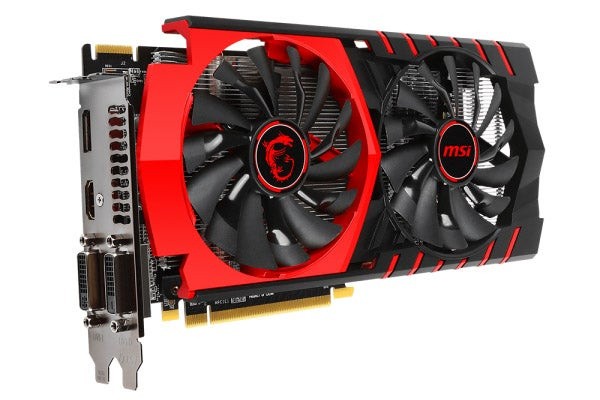
Meanwhile, the R7 370 (pictured above) with its 16 compute units is significantly slower than the outgoing R9 270X and indeed the R9 270, both of which featuring 20 CUs. We overclocked last year's Radeon R7 265 to the same speed as our MSI R7 370 and found performance to be entirely like-for-like - not surprising as it to has the same 16 CUs. The irony here is that if the R7 370 was an upclocked 270 rather than a 265, the GTX 950 would most likely lose its performance leadership in this segment.
All hardware vendors rebrand their products and we have no problem with that, and as we say, much of the 300 series line-up offers tangible benefits over their 200 series brethren, but in the case of the R7 360 and R7 360, replacing good parts with less capable ones comes across as a bad idea - especially bearing in mind that the value market is AMD's traditional heartland.
Now, the problem with benchmarking cards aimed at the budget market is that virtually all tests are carried out using a Core i7 processor - and that makes sense as you are eliminating CPU as a bottleneck and highlighting hardware performance. On top of that, there's usually little difference between i5 and i7 results anyway when you are more frequently limited by GPU performance. However, on a card aimed at the budget segment, we are far more likely to see the GPU paired with a less capable processor - meaning that driver overhead becomes much more important.
Historically, AMD has had issues here. Watch the video above, and we'll see more stutter on several titles on AMD than we do on Nvidia (The Witcher 3 a particular case in point). So what happens when we re-bench the R7 370 and the GTX 950 on a Core i3? Stutter increases on AMD, but Nvidia is clearly impacted too. It's not entirely uniform across every game though - Crysis 3 hammers CPU, yet the R7 370 holds onto its performance just as well as the GTX 950. Also note the frame-time dips seen in Assassin's Creed Unity whether you are running on an i3 or an i7 - this isn't down to driver overhead, but rather the 2GB VRAM limit on both cards. But again note that the latency spikes are more pronounced on the AMD side.
Visualising this kind of information in a bar chart or a table isn't easy - it's something we're working on behind the scenes, but we can tell you the lowest and average frame-rates on both Core i3 and i7 with both cards. Lowest frame-rate is almost as blunt a metric as the average, but it does demonstrate that Nvidia is ahead and holds more of its performance - but again, the videos and the frame-time graphs are much more illuminating in terms of the actual experience. Our takeaway here is that AMD's driver overhead is still higher than Nvidia's, but it looks like improvements made on the 300 series launch driver do produce more stability when slower cards are paired with the Core i3.
1920x1080 (Low/Avg FPS)
R7 370 i3 4130
R7 370 i7 4790K
GTX 950 i3 4130
GTX 950 i7 4790K
The Witcher 3, Console Settings, HairWorks Off, Custom AA
17.0/37.8
26.0/38.4
25.0/44.6
35.0/45.1
Assassin's Creed Unity, High, FXAA
27.0/34.2
28.0/34.1
33.0/38.7
33.0/38.9
Battlefield 4, High, Post-AA
50.0/57.5
50.0/57.7
55.0/65.8
57.0/67.0
Crysis 3, High, SMAA
30.0/53.0
39.0/54.0
32.0/62.2
44.0/65.2
COD Advanced Warfare, Console Settings, FXAA
55.0/81.3
75.0/92.3
58.0/91.7
70.0/96.0
Grand Theft Auto 5, Console Settings, FXAA
30.0/50.0
42.0/54.8
38.0/58.7
46.0/62.3
Far Cry 4, High, SMAA
29.0/52.1
31.0/54.6
39.0/56.2
53.0/58.1
Shadow of Mordor, High, FXAA
47.0/62.1
47.0/61.7
47.0/61.2
47.0/61.3
Ryse: Son of Rome, Normal, SMAA
26.0/42.5
32.0/44.8
36.0/44.4
37.0/45.3
Finally, let's talk power consumption, acoustics and overclocking. In this respect, Nvidia's Maxwell technology is lauded for its efficiency but at load, the GTX 950 drains only 10-12W less power than the R7 370. We should remember though that in addition to consuming less power, we are getting higher performance. It's certainly a big step-up over the frugal GTX 750 Ti, but it may well be the case that the factory overclocks on the more capable cards are biting into their efficiency.
The GTX 950 is certainly cool though - and that translates into an exceptionally quiet level of performance on the MSI Twin Frozr cooler. But again, it would be remiss of us not to point out that the GTX 960 and the R7 370 - both using the same heat sink and fan set-up - provide very, very similar levels of acoustic performance.
In terms of overclocking, MSI add 103MHz to the GTX 950's core out of the box, and we could squeeze an additional 120MHz out of the card in combination with 400MHz (800MHz effective) to the GDDR5 RAM, taking that up to 7.5gbps. This produced an uplift of around 9 per cent - not enough to match MSI's GTX 960 overall, but probably enough to match a less aggressively clocked example. However, you will note from the top table that our GTX 950 overclock did manage to match the GTX 960 in Assassin's Creed Unity and Advanced Warfare - not bad, considering that our GTX 960 is the faster-than-stock MSI Gaming model.
This scene from the tail-end of Welcome to the Jungle in Crysis 3 ramps up GPU load and power consumption higher than anything we have seen in any other game. It's a good repeatable test for ascertaining peak power draw in gaming conditions along with overclock stability.
R7 360
R7 370
GTX 750 Ti
GTX 950
GTX 950 OC
GTX 960
Peak System Power Draw
173W
228W
158W
215W
221W
228W
Nvidia GeForce GTX 950 - the Digital Foundry verdict
Overall, Nvidia has set out to achieve what it wanted - it has a competitive product to the R7 370, offering improved performance and all the advantages of the GeForce drivers and chipset, plus a much more modern multimedia feature-set - good for those looking to build an HTPC with decent gaming performance. In a world where the cheaper GTX 750 Ti has an uncanny ability to mimic PlayStation 4 GPU performance in multi-platform games, the noticeably higher frame-rates you're getting from both AMD and Nvidia products at this price-point represent good value. It's just a bit of a shame that 4GB is off the table with the GTX 950 - Amazon will sell you a 4GB version of the R7 370 for just £12 more than a base price 2GB GTX 950.
The price also feels a little high compared to other GeForce products too: the GTX 960 has gravitated downwards to the £150 price-point and the new GTX 950 launches at £129 upwards. Bearing in mind that the more expensive card is also a great overclocker, it makes sense to spend a little more - or else wait for GTX 950s to naturally gravitate downwards to the £120 mark we suspect it'll end up at. With more aggressive pricing, the GTX 950 would be hard not to recommend, but at £129, the R7 370 is cheaper, while other compelling options aren't that much more expensive.
Overall then, the GTX 950 is a strong enough contender, capable of handing in solid performance on any game you care to throw at it as long as you're prepared to make entirely reasonable compromises on quality settings. Think of it as the modern day equivalent to the stalwart GTX 660, but with all the advantages of the second-gen Nvidia Maxwell architecture. It's a solid, if unspectacular buy - just don't be afraid to overclock to get the absolute best out of it.
Please note that some external links on this page are affiliate links, which means if you click them and make a purchase we may receive a small percentage of the sale. Please read our FTC Disclosure for more information.
Richard Leadbetter is the founder of Digital Foundry and a former Technology Editor for Eurogamer.net. He started work in the games business in 1990 on Computer and Video Games magazine, moving online in 2004 by launching Digital Foundry. The rest, as they sometimes say, is history.

 by
by 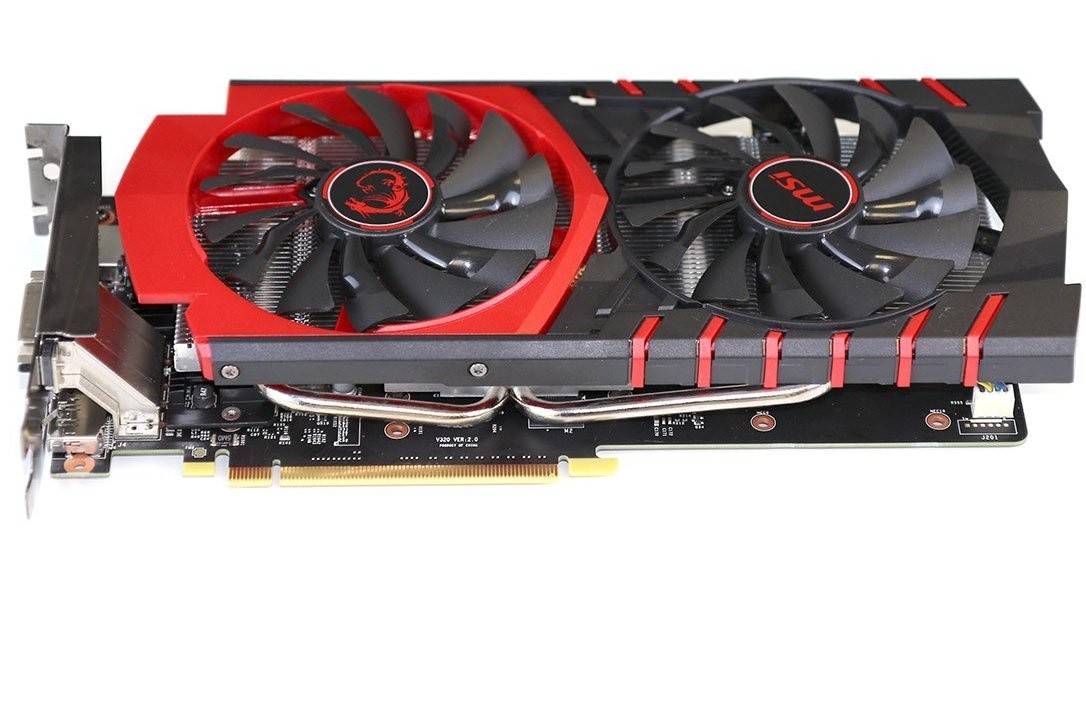


Comments 0
Wow, no comments yet... why not be the first?
Leave A Comment
Hold on there, you need to login to post a comment...