
 by
by 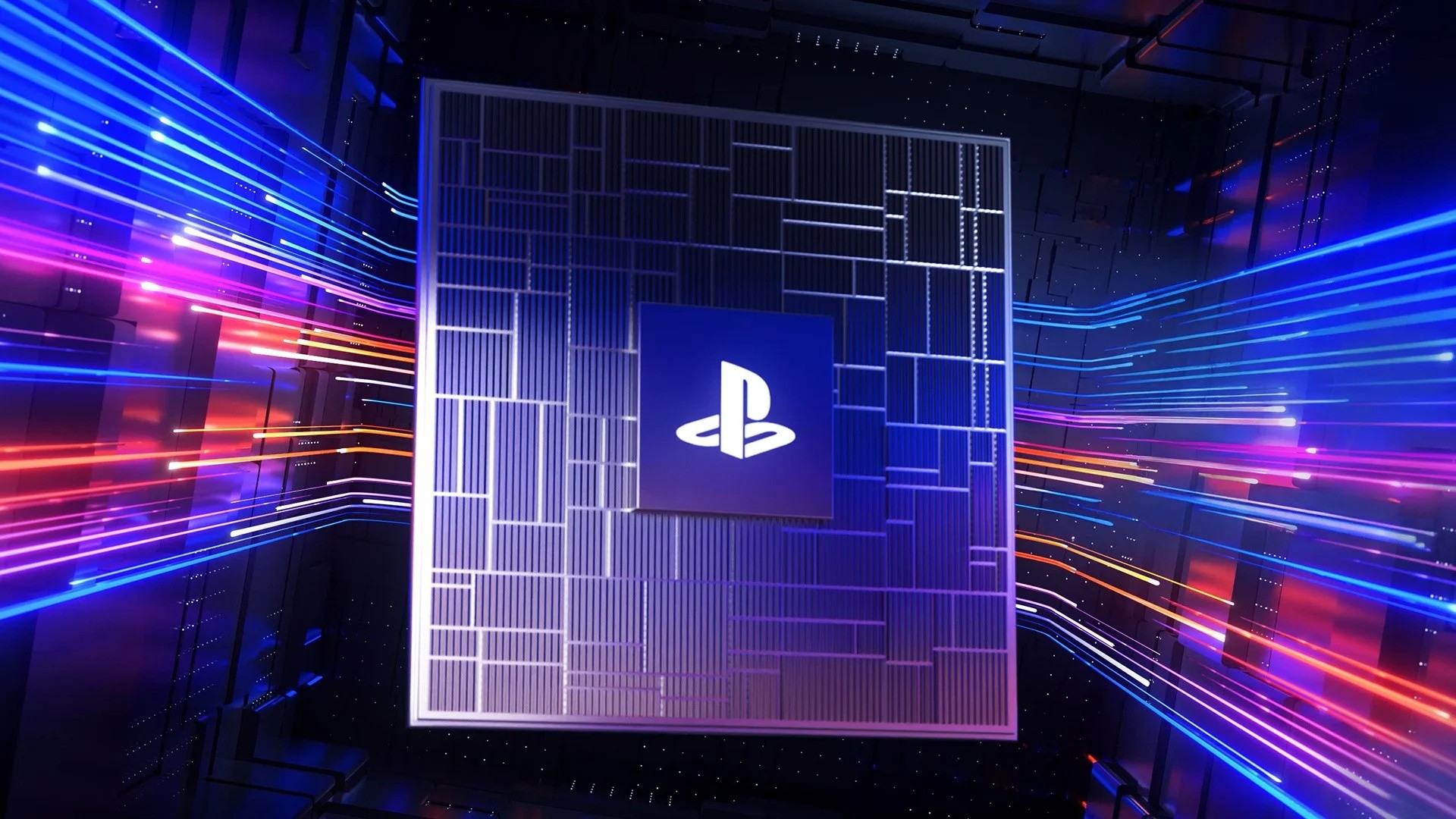
The second generation version of Sony's PlayStation Spectral Super Resolution has arrived, taking centre stage in the PS5 Pro version of Resident Evil Requiem - confirmed to us by Sony. Let's be clear here: this is the real deal - the new PSSR makes good on the idea of bringing a highly competent machine learning-based upscaler to Sony's enhanced console. This new version not only looks great as a developer-integrated feature in the new Capcom release, but will also be offered as a system level toggle to swap out older PSSR implementations in existing games.
Update: Sony has been in touch to say that the new PSSR "is based on the co-developed super resolution algorithm from Project Amethyst, not on FSR 4. AMD has taken the results of the co-development into FSR 4, while we've taken them into the new PSSR."
First up, of course, there needs to be some level of caution in making sweeping statements about the new PSSR. This is just one game we're looking at. Implementations of upscalers can vary in quality from title to title - as seen dramatically in games supporting the first version of the PSSR technology. OG PSSR could look exceptionally good (Final Fantasy 7 Rebirth, Stellar Blade, Ghost of Yōtei etc) but noise and artefacting could be an issue in a range of games. Foliage, fine detail and especially ray-traced content could actually look worse than FSR2 - no mean feat. RT in particular was troublesome: games like Silent Hill f and Silent Hill 2 exhibited unstable lighting and awful processing of reflections.
Mark Cerny announced a while back that the new PSSR would be based on AMD's FSR4, which should in theory bypass all of these issues - so how does the new upscaler look? Well, in Resident Evil Requiem's RT mode, we're upscaling to 4K from a base resolution slightly higher than 1080p. Fine details, such as stitching on character clothing and small text on environmental signage, resolve convincingly on a 4K display. Edge clarity is substantially improved, and the image presents as a legitimately high-quality 4K output at 60fps, aligning with the original promise of PSSR.
It has been noted that the PS5 Pro version does still exhibit some noise in RT scenes - but we can confirm it's not an issue with PSSR itself, but in Capcom's denoising solution. You get the same thing on the PC version even when using DLSS 4.5 or FSR4.
Once Sony confirmed with us that the new PSSR is in Resident Evil Requiem, we got to work in comparing the fruits of this Project Amethyst initiative with DLSS and FSR4. The newer DLSS and FSR4 implementations can still retain more apparent resolution in certain motion scenarios: elements in motion can see a touch more aliasing on the new console upscaler, with the underlying circa-1080p input occasionally manifesting in motion more than DLSS or FSR4. However, each upscaler has its pros and cons. Both FSR4 and DLSS can suffer more from ghosting in specific scenarios - the classic TAA-style faint trails on moving objects. The new PSSR avoids this ghosting entirely in Resident Evil Requiem.
Bearing in mind the FSR4 association with the new PSSR, it's interesting to see these variances. For example, the balance of detail and overall sharpness shifts depending on lighting and content. Sometimes DLSS appears most crisp, followed by PSSR and then a softer FSR4. Text readability suits DLSS, again followed by the new PSSR with FSR4 lagging behind. Elsewhere, distant detail - particularly in Raccoon City - favours FSR4 and DLSS over PSSR. The classic "chain link fence" test also sees the PC upscalers deliver improved outputs.
The thing is, we are applying the same kind of rigour to upscaler comparisons on this console implementation as we do with PC. PC users are typically "lean in" players, in close proximity to the screen, where artefacts are more noticeable. Meanwhile, PSSR is for living room set-ups where the content will likely be viewed at a distance. The first-gen PSSR couldn't pass muster on many games in this scenario, but this new rendition definitely does.
But this is one game and we need to see more, especially on PSSR implementations where the scaler is dealing with sub-1080p input - something that isn't the case with Resident Evil Requiem. And content matters too: dark, horror-themed imagery can obscure differences and smooth edges, making it more difficult to thoroughly test the new technology. Even so, with the limited content we have available, Resident Evil Requiem suggests that the new PSSR is comparable to PC upscalers.
We're also excited about the system-level front-end toggle, an "Enhance PSSR Image Quality" setting in the options. We're confident that we'll see a range of title updates that see developers update their games with the new PSSR, but there are bound to be releases that don't receive the same treatment. Whether they'll be as effective as native upgrades remains to be seen, but again, we're looking forward to finding out.
Ultimately though, from what we've seen so far, the new PSSR - certainly as presented in Resident Evil Requiem - feels like ML upscaling is finally where it should be on PS5 Pro. It's delivering sharp, stable and convincing 4K imagery from around one quarter the native pixel count, it's competitive with PC equivalents and represents a big, big improvement over the PSSR of the past. And the notion that this upgrade may apply to all prior titles that support the older version of the technology is mouthwatering - potentially it's a system-wide improvement to the console's library. As soon as we're able to, we'll report back with impressions across a wider cross-section of games.


Comments 17
Great news, and the results are looking really good. Too bad that base PS5 (and PS5 Pro in 120 fps mode) only got a poor FSR1 implementation, so comparisons with a decent FSR3 or XeSS implementation are not possible.
Maybe Capcom will replace FSR1 in future, would help to bring Xbox Series S in a better position to assess the potential of Switch 2.
I play black ops 7 on my pro with 120hz and vrr on and last night I feel like it looked significantly sharper. Has anybody else noticed this?
This is great news.
I played the PS5 Pro version of Resident Evil Requiem last night on my LG C3 OLED TV and was blown away by how good the game looks visually, especially after hearing that it is upscaling from a base resolution that is only slightly higher than 1080p.
After the initial excitement and then disappointment of PSSR 1.0, I have been eagerly awaiting the release of PSSR 2.0. I was hoping it would be part of the current beta firmware, which I am currently testing, but sadly it isn't.
That PSSR 2.0 can be forced at a system level, I assume in similar way to how DLSS3/4 and FSR4 work on PC, is surely a blessing?
Even if it isn't perfect, it means that we finally have an option to fix all those lacklustre early Pro PSSR enhanced games that were never fixed by the developers. I'm thinking of Star Wars Jedi Survivor and Silent Hill f here.
Also, this may resolve issues with games like Star Wars Outlaws and Silent Hill 2 which were patched with options to turn off PSSR but now may actually look good with it enabled when forcing PSSR 2.0 at a system level.
I expect that most developers will not bother to patch there games with PSSR 2.0 officially as it wouldn't make sense for them to spend money on older games that are only enhanced for a niche console with a small user base.
Fingers cross that this will actually be as good as I am hoping it will be.
Wow, that's really great news, especially the system-level option.
There's a small typo in the article:
"OG PSSR could look exceptionally good (Final Fantasy 7 Rebirth, Ghost of Stellar Blade, Ghost of Yōtei etc)"
Ghost of Stellar Blade the new crossover ^^
This is brilliant, loving that it;s a system level toggle.
@Darren1967 Yes system level toggle should be great. The main issue I can see is that we don't know how much performance it takes compared to PSSR1. Those games that were optimised for PSS1 may not hit the same framerates if the PSSR2 frame budget is more. But in those cases we could always turn it off. But this might not even be an issue. Look forward to seeing more thorough testing in March.
@themightyant - That's a very good point about the potential performance hit of using PSSR2. After all, DLSS4 has a performance hit over DLSS3.
Maybe Sony have considered this and forcing PSSR2 at a system level uses the next preset down but still offers superior results to the higher PSSR1 version?
The system level setting is presumably just a fallback for games that don't get updated and Sony will no doubt be encouraging developers to patch their games with PSSR2 where they have more control over what settings that can use etc etc?
@mrc247 Oops, thanks!
@Darren1967 @themightyant This will be very easy to test when the time comes!
I figured this waa the case, there was some cryptic teasing about the upscaling in the coverage. Good to see some of the benefits of PC going to console.
They're already starting with the off-topic distinctions and the overall approximate weight. So, overall, it's worse than upscalers on PC, right? I figured it out easily: when something on consoles looks similar to PC, it means it's worse, before I get dragged by the neck.
Sharpness on PC is easily changed; RIS2 on AMD is excellent. So the increased sharpness of PSSR2 doesn't exist, and it's possible that it can be achieved using an internal sharpening filter.
These "details" are always skipped, if it's the PS5 that suffers...
Most console gamers I know play two steps away from the big screen, usually placing a chair between the couch and the TV. Who said the average PC gamer is glued to the monitor? All assumptions aimed at minimizing...
But even if that were the case, could one easily argue that certain details on consoles are useless, since what do you want to see from five meters away?
Or does the remote screen hide the flaws but not the strengths?
I think we'll have to wait for another game to really see what this new PSSR is capable of on account of the hefty chromatic aberration, film grain and lens distortion.
It's clear they were aiming for that found footage look with the game. Which absolutely suits the atmosphere but I'm guessing it's also undoing/masking some of the good PSSR is doing.
@MemuAccount
From looking at the output from the one game it is available in now, it is not better or worse than PC upscalers, but DLSS is simply better than anything else on the market in an incredibly consistent way. It seems PSSR2 beats FSR4 in some situations and not others even within the same game, Xess (either native on Intel or running on other GPUS) was better than FSR3 but generally FSR4 is better, other in engine versions differ, from excellent to awful.
If one can run DLSS then that win, almost always also beating native and only really being beaten by DLAA, or something heavily supersampled (KCD2 will run at 16k and downsample to 4k, looks amazing, but unplayably slow).
PSSR2 is optimised for TV viewing distances rather than monitor viewing differences so they will have made different design choices based on where it compromises on output. Until we can see see side by side comparisons it will be hard to tell for sure, roll on the March update!
I don't understand why PS5 couldn't handle RT and global illumination? Many Sony first party games have a balanced RT mode. Capcom should provide a RT mode at 40fps/120hz
It seems like they asked Capcom not to implement this to promote the PS5 Pro/PSSR 2.0
In my case I'll wait for the PS6 version, I don't have the budget for an in between console as the PS5 Pro. The PS6 will come in 2 years maybe? I have time, still have a big back catalog.
As for system wide implemention of PSSR 2.0, great news but don't the developers still have to release a patch for the older games so it can read the system wide setting instead of the pssr in the ingame setting?
Looking forward to seeing this in game.
If this new PSSR 2.0 is competing well with the very latest FP8 and FP4/6 upscalers, that's quite a feat. We should remember that PS5 Pro only supports WMMA INT8 and (maybe) DP4a (unless disabled by shader ISA fallback), so fine details can naturally be lost in an integer-only algorithm. Seeing them maintained here means Sony and AMD have co-developed a very strong alternative to traditional FP-only algorithms and can apply this to future hardware that may not include latest WMMA FP8 (handheld silicon typically forfeits feature sets to save on die-area), while also serving as a baseline for future hardware that does, like PS6.
Looking forward to comparisons between previous awful PSSR implementations and system-wide, front-end switch to PSSR 2.0 in games. Gran Turismo 7 is a 1st party game, so I expect a native patch before this system firmware update launches, but for 3rd party games, it'll be interesting to monitor developer interest - especially as there's a rumored PS Handheld on the horizon.
@Darren1967 Silent Hill removed PSSR entirely from performance mode so they'll need to patch it back in.
@MattGPT
I agree, but I still criticize the lack of consistency when it comes to console-centric games...
Until PSSR started being discussed, comparisons between console and PC upscalers were almost nonexistent. If you look closely, you'll notice they talked more about ML upscalers with the PS5 Pro + Switch 2 than about DLSS in the last 5-6 years.
Until yesterday, on consoles, the distance from the TV hid even 720p, but not anymore. This is consistent with the usual things that are only amplified when they arrive on consoles, like the more present 60fps, SSD, VRR, etc.
Now the sensitivity threshold has been raised. If we need an upscaler that performs like PSSR2 on RE9, meaning it's not wasted, it means that the image quality issues on consoles were downplayed before. After all, a PC only has a little compilation stutter and the discussion begins and ends there. 9 times out of 10, the superior image quality isn't praised, and without a PS5 Pro and Switch 2, cross-checks don't exist.
When the story is better understood by considering what's missing, it's a bad sign before considering the reasons.
Show Comments
Leave A Comment
Hold on there, you need to login to post a comment...