Can a £60/$99 smartphone really provide a decent Pokémon Go experience? On paper, this shouldn't possibly work, yet somehow... well, it does. Perhaps you're looking for a super-budget means by which to sample the game in order to see what all the fuss is about, or maybe your kids are badgering you for a phone so they can join in too. We set out to find the cheapest possible smartphone that meets the required specs, and then to test out the game using it. We went in prepared for a profound disappointment, but it's fair to say that the end results outstripped our expectations.
Our phone of choice is the Oukitel K4000 - one of a number of bargain basement entry-level Android phones available at a super-cheap price-point. It has the distinction of fully meeting Pokémon Go's requirements, which are:
Android 4.4 to Android 6.0.1
Device ships with Android 5.1
Preferred resolution of 720x1280
Check!
2GB RAM
Check!
Strong internet connection - WiFi, 3G, 4G
Support for all three, yes even 4G
GPS and location services
Check!
Intel CPUs are not supported
Device uses quad-core ARM Cortex-A53
Oukitel K4000 specs
Our unit cost just £60 delivered from eBay, though if you're a little more patient, units on auction can go for as low as £52. It's a relatively well-built five-inch phone, let down only by a 10.8mm thickness and a 208g heft. CPU and GPU power won't set the world on fire, but it's fine for a basic phone and there's enough 3D power here to run Pokémon Go.
Dimensions
70.5 x 143.5 x 10.5mm
Weight
208g
Processor
MediaTek MT6735P
CPU
Quad-core ARM Cortex-A53 at 1GHz
GPU
ARM Mali-T720 MP2 at 400MHz
RAM
2GB, 533MHz
Storage
16GB
Memory cards
Micro SD, micro SDHC, micro SDXC
Display
Five-inch 1280x720 IPS panel, 24-bit
Battery
4000mAh, Li-Polymer
OS
Android 5.1
Other Features
Dual micro SIM, front and rear camera, 1080p30 video, WiFi b/g/n, WiFi Hotspot, Micro USB 2.0, Bluetooth 4.0, GPS, A-GPS
Despite its Chinese origins, our device - which we bought from eBay for £59.99 delivered - shipped with a full English Android OS with no crapware, instant access to Google Play and zero issues installing and indeed running Pokémon Go. First impressions of the device generally? 720p resolution actually looks completely fine on a five-inch screen - the panel is IPS in nature so viewing angles aren't a problem, but contrast and blacks are weak. The loudspeaker is a little tinny, which is especially noticeable at high volume, but it does the job. Bottom line: the base spec technology here isn't going to unduly impact your gameplay experience, and the screen is bright enough to work fine outdoors.
Even the build quality is surprisingly good. It's thick at 10.5mm and weighty at 208g, but there's a reason for that - it ships with a (replaceable) 4000 mAh battery. It's rather durable too, with the display using Gorilla Glass 3, resulting in videos like this, where Oukitel staff use the K4000 as a make-shift hammer to repeatedly smash nails into a block of wood. In fact, the more we delved into the K4000's capabilities, the more surprised we were at the extent of its functionality bearing in mind its almost preposterous price-point. Dual micro SIMs? No problem. An additional micro SD card? That's fine - all three cards sit side by side behind the removable plastic rear - no 'hybrid' slot here making you choose between the second SIM or expanded storage.
So how well does it play Pokémon Go? Wandering around town and capturing Pokémon, 3D performance won't set the world on fire, but frame-rates are highly playable. GPS and 4G signals didn't miss a bit during our testing. The only issues we encountered concerned the Pokédex menus, which run at a much lower frame-rate, but gameplay-wise, the game runs well at the recommended 720p resolution.
But while the lion's share of the gameplay experience is perfectly acceptable, there are two compromises. The K4000's spec unfortunately lacks a gyroscope, meaning that the (somewhat tiresome) augmented reality aspect of Pokémon Go won't work - and the game signals you to disable this aspect when confronted with the lack of gyro sensor data. Secondly, 208g for a phone is undoubtedly heavy - let's put it this way, an outsize Samsung Galaxy Note 5 weighs almost 40g less. There's some serious heft to it, so as durable as it seems, it may be too much for younger kids.
However, Pokémon Go doesn't actually need the augmented reality feature in order to play the game, and in fact, many swiftly turn it off anyway as it actually seems to make catching your prey more difficult. Sans AR, the Pokémon appear on a pre-made background instead - no camera or gyroscope required. Not only is it a preferable way to play for many, the extra advantage is that it saves massively on battery life, where Pokémon Go can take a brutal toll on your phone's stamina.
We've tested the phone with Pokémon Go and made sure that it is at least functional in terms of making and indeed receiving calls, running Facebook and surfing the web with Google Chrome, and to be frank, we were rather taken aback at just how much phone you get here for the money. You shouldn't expect flagship quality from the lacklustre camera or indeed the MediaTek MT6735P processor - it only has a 1GHz quad-core ARM Cortex-A53 set-up, after all - but the impression left was positive enough to make us consider a full review. Could this cheapo Android hold up as a daily driver? Or maybe a bargain basement GPS?
That kind of testing will have to wait, but the bottom line is that - yes, a £60/$99 smartphone can run Pokémon Go perfectly well. But in the meantime, if you're looking for an in-depth Pokémon Go guide or tips to reduce the game's prolific battery drain, we've got you covered.
Please note that some external links on this page are affiliate links, which means if you click them and make a purchase we may receive a small percentage of the sale. Please read our FTC Disclosure for more information.
Richard Leadbetter is the founder of Digital Foundry and a former Technology Editor for Eurogamer.net. He started work in the games business in 1990 on Computer and Video Games magazine, moving online in 2004 by launching Digital Foundry. The rest, as they sometimes say, is history.

 by
by 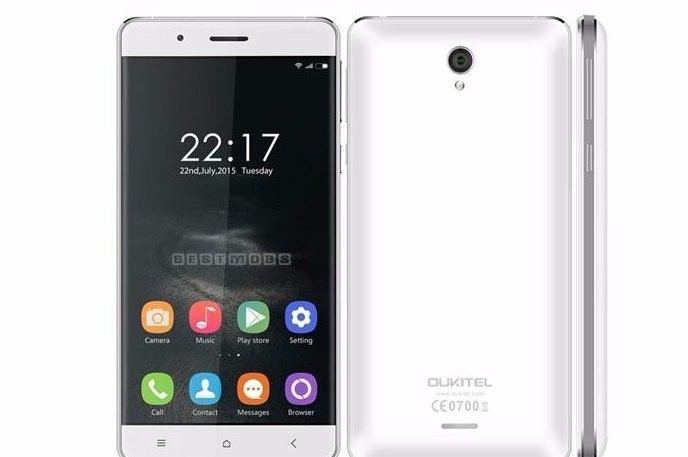

Comments 0
Wow, no comments yet... why not be the first?
Leave A Comment
Hold on there, you need to login to post a comment...