
 by
by 
Death Stranding 2 arrived a full year ago, and it's still a game that's on my mind a year later. Not only did it secure a top three spot in our Best Graphics of the Year rankings, it also ranked on my personal top 10 on the basis of its gameplay. It's a rare kind of game, one that manages to deliver cutting-edge graphics tech while still adhering to traditional craft of game design.
I returned to Death Stranding 2 over the past three months via the recently released PC version, taking my time to really enjoy the experience. It's remarkable how well it holds up on PC with the new ray tracing features, but it's also worth underlining that the game looks rather similar to how it does on PS5 - the new RTAO and RT reflections don't fundamentally alter the overall presentation; supplementation instead of transformation.
And that distinction is key to understanding why Death Stranding 2 continues to impress. Unlike most games this generation, DS2 doesn't lean on ray tracing to create a coherent world, instead, it takes shape through advanced rasterisation techniques, meticulously-tooled lighting and a remarkable level of artistic polish. It's a game that pushes for stable performance and razor-sharp image quality alongside dramatic lighting and world design. It's a game that bucks current trends and shows how much traditional rendering pipelines can still achieve when pushed to their limits.
Have you played Death Stranding 2: On the Beach? (482 votes)
- Yes, on PS5 Pro
- Yes, on PS5
- Yes, on PC
- No, I've not played it
This technical outlook wasn't achieved by accident. Omitting ray tracing from the original console release was a deliberate decision to combat scope creep, according to Kojima Productions:
"We explored ray tracing extensively during development and considered including it in Death Stranding 2: On The Beach. However, DS2 introduces a full day-night cycle and dynamic weather, resulting in a dramatically wider range of lighting and environmental conditions. We also know players place a high value on performance modes, and maintaining a consistent 60fps required giving players the option to turn ray tracing off."
The key word there is range - DS2 continuously evolves as the day progresses, the weather changes and new sightlines heave into view, producing a combinatorial explosion of lighting scenarios. This kind of design space often results in ray-traced global illumination (RTGI), but Kojima Productions opted to prioritise image quality and performance instead:
"To uphold the level of visual quality with ray tracing both enabled and disabled, we would have needed to verify and fine-tune an exponentially greater number of scenarios. We chose to prioritise polishing other key aspects of the game."
In that sense, the decision wasn't about rejecting ray tracing, but choosing a singular approach that would allow them to reach their performance goals for the game.
The result is a brilliant custom GI solution supported by extensive artistic adjustments. The Decima engine relies on a hybrid, artist-driven process to approximate real-world lighting phenomena through clever use of atmospheric scattering and screen-space effects. This ensures visual cohesion across the massive environments, avoiding the noise, artefacts and performance issues often associated with early RT efforts.
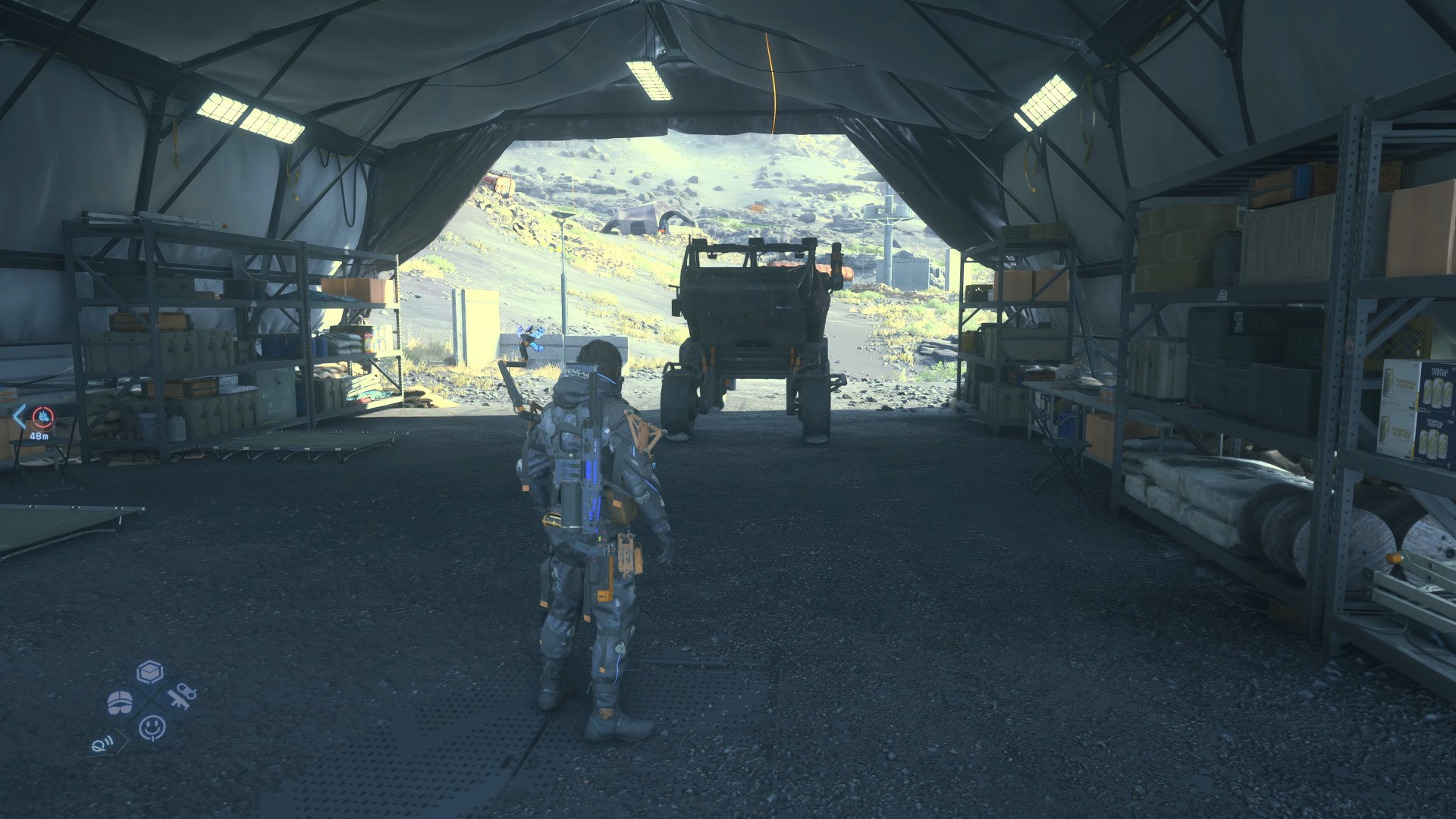
Beyond lighting, the game’s simulation systems excel at communicating a sense of scale. The weather implementation is particularly noteworthy, using specific rules for cloud and fog density to create deep, oppressive storms that loom in the distance. These subtle techniques make the open world feel genuinely grandiose, ensuring that even vast landscapes retain a sense of atmosphere and distance.
The spectacular visual effects, such as fireworks and intricate particle systems, demonstrate a mastery of iterative design rather than constant reinvention. By refining existing engine technology originally built for the first game, the developers achieved special, engaging results. This focus on polishing specific visual elements highlights how effective specialised systems can be when they are honed over time.
This achievement echoes Kojima and his partners' long-standing success in balancing art and technology - you can look as far back as the rain effects on the tanker mission in Metal Gear Solid 2 on PS2 and they still hold up to this day. Yet DS2 retains a clear visual advantage over the original game, with clear technical evolution made possible by launching on the more performant PS5 without the need for a PS4 version.
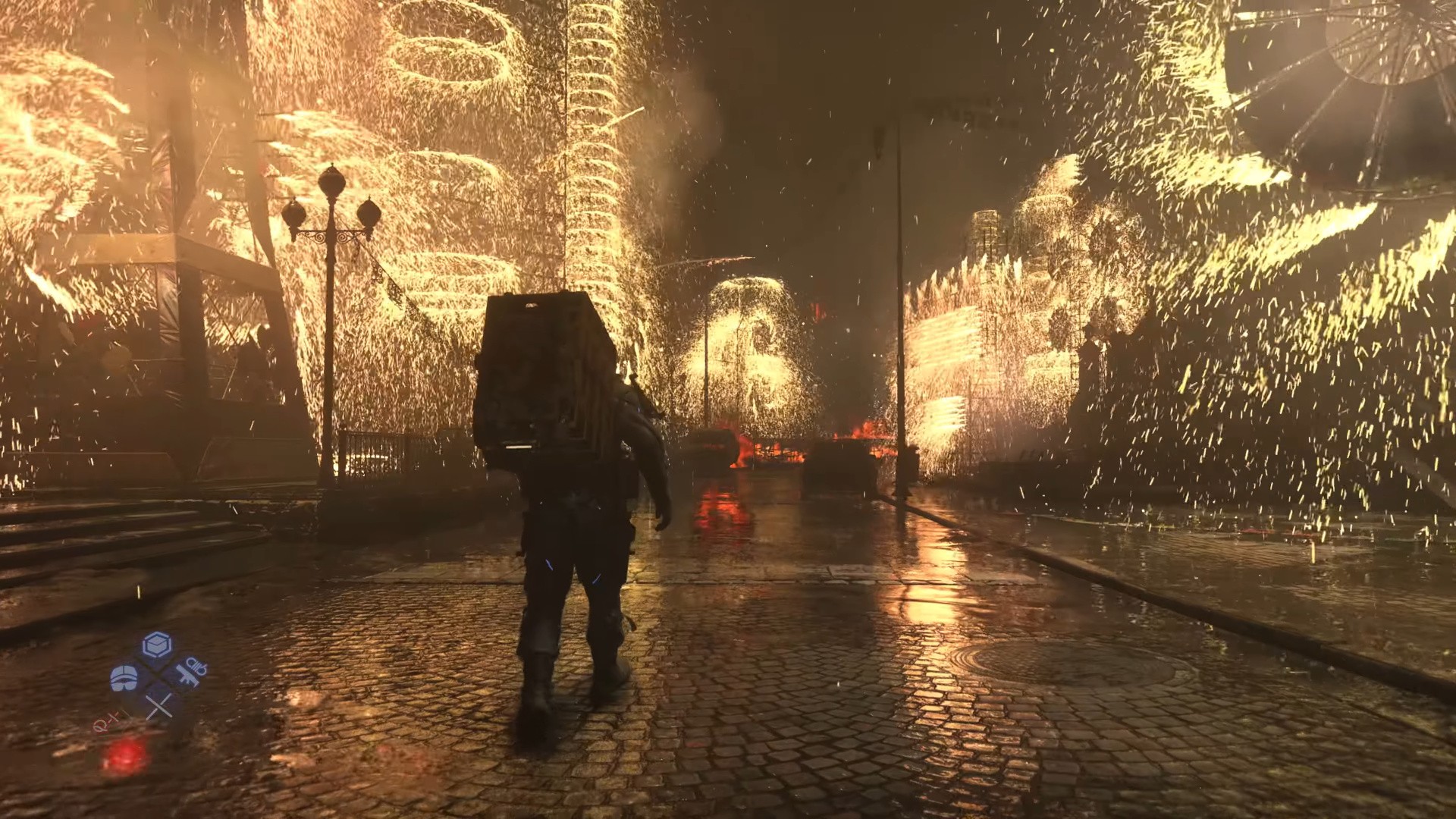
It's interesting to hear that KJP tested but ultimately didn't use the first-gen PSSR they were offered on PS5, as the game already achieved better image quality using its bespoke PICO upscaler - which even rivals DLSS in the PC release.
"We also reviewed PSSR internally. Although PSSR delivered notable strengths, the upscaling technique we had already integrated for PS5 aligned more closely with DS2's rendering requirements and workflow. Supporting two different upscalers would have required additional development resources, so for this title we chose to focus on refining the solution used across both PS5 and PS5 Pro."
Looking back, Death Stranding 2 is a game that walks its own path. As many games seek to use the latest tech, we're all too often left with games that are temporally unstable or lack image quality, problems that are sometimes more noticeable than the graphical features they are the result of. I'm a big fan of modern ray tracing, but I recognise that the sacrifices aren't always worth it.
In contrast, DS2 doesn't lack features, but it prioritises different ones instead. Kojima Productions has focused on delivering cohesive, beautiful lighting without leveraging RT, while also offering a huge amount of interactivity at a high frame-rate with excellent image quality. It's a perfect example of a balanced release - a game designed to maximise visual splendour without going too far.