
 by
by 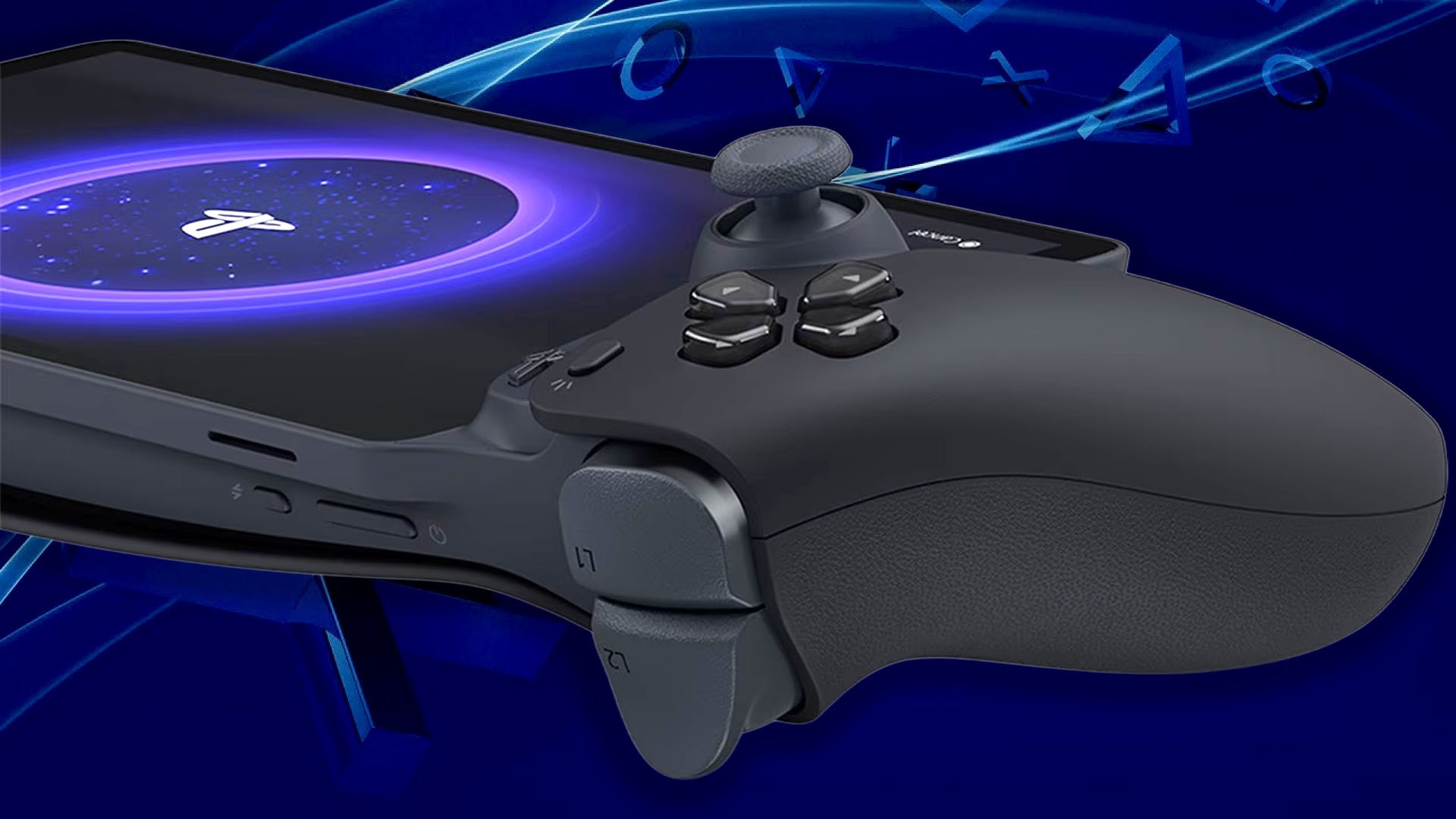
The rumours persist and our own sources concur: Sony is working on a new handheld. Prospective specifications have been leaked, indicating that the machine is very forward-looking, while at the same time potentially offering an exciting range of backwards compatibility options: a portable PlayStation in your hands with access to multiple generations of titles. The opportunity for Sony is immense: select PS5 and maybe even PS6 titles running in handheld form, with the potential for full PS4 backwards compatibility.
From a technological perspective, the most plausible leaks for the handheld come from X and NeoGAF poster Kepler_L2, who has a proven track record for reliable information based on his accurate pre-announcement leaks on the PlayStation 5 Pro's main processor. According to this source, the PlayStation handheld is based on a custom AMD processor codenamed "Canis". It features a four-core, eight-thread CPU cluster based on the Zen 6c architecture, paired with an RDNA 5-based integrated GPU core with 16 compute units.
The processor is expected to operate at a 15W TDP, but with rumours of a USB-C output for "docking" support, that TDP could be bumped up for higher performance when connected to an external display, similar to Nintendo Switch 2.
Again, according to Kepler_L2, the Canis processor features a 128-bit memory interface paired with 16GB of high-speed LPDDR5X, with approximately one third of the bandwidth of the standard PlayStation 5 - which would give a figure of 150GB/s. Memory bandwidth has been a profound limiting factor for handheld systems and based on these unconfirmed specs at least, Sony looks to overcome it with a number of mitigation strategies.
We should expect to see the "Universal Compression" system Mark Cerny talked about in the recent Project Amethyst update, which will be augmented with 16MB of MALL cache (known as Infinity Cache within AMD's PC processors) within the SoC.
Beyond that, little more in terms of plausible information has leaked, except that the Canis processor will use some form of the 3nm process from TSMC. By comparison, PS5 Pro uses TSMC's 4nm process, with the standard PS5 on 6nm. With 3nm, Sony can squeeze more transistors onto the silicon and improve power efficiency compared to existing hardware. The improvement should be profound.
While the new handheld is slated to use AMD's new RDNA 5 architecture, it should be backwards compatible with the x86 CPU and AMD Radeon graphics technology used in PS4, PS4 Pro and PS5. While PlayStation 3 back-compat will remain problematic owing to its exotic architecture, existing PS1 and PS2 emulators running on PS5 should also operate just fine on the new handheld. In theory then, Sony could create a portable games machine with prolific access to a vast majority of the PlayStation library with the possibility of also running PS6 games.
Here's how Sony's most demanding games could run on a low-power handheld.
PlayStation 5: Is "Power Saver" mode laying the groundwork for handheld ports?
Our information is that Sony is looking for the handheld to run PlayStation 5 games. However, the PS5 itself is simply too powerful for its games to run on the handheld "as is". The firm's recent "Power Saver" mode may indicate how Sony is looking to address this. In both public and developer disclosures, Power Saver is described as a purely green endeavour, with game support only optional for developers. Based on our tests, games are nipped and tucked to reduce the PS5's power consumption by 50 percent. However, it is the nature of the spec reductions that is fascinating.
Based on our own information derived from developer disclosures, Power Saver mode cuts back the PS5's eight core, 16 thread configuration to just four cores and eight threads - a match for Kepler_L2's leak for the handheld's CPU set-up. Meanwhile, bandwidth is cut from 448GB/s to around 224GB/s. This is much higher than the mooted handheld's 150GB/s, but remember that PS5 does not have Infinity Cache, nor does it have the Universal Compression system in RDNA 5.
Power Saver mode cuts back PS5's GPU clock speeds to what is described as their "base" frequencies. What those frequencies actually are is undisclosed. Based on how Sony's first party developers have used Power Saver mode, this appears to offer just over half of the standard mode's performance.
Many of the Power Saver games run at 1440p resolution, which seems very high if this is a dry run for the handheld, but there are a couple of potential explanations: firstly, it could represent the "docked" output of the handheld. Secondly, Power Saver may simply be a halfway step with further resolution reductions introduced for actual mobile play.
Our coverage of Power Saver mode saw the PS5 still consume around 90W-115W of power. This is way too much for a handheld, but this is not a fair comparison with the prospective power draw of next-gen mobile hardware. The handheld uses a far more advanced, much more efficient chip production process than the standard PS5. The GPU architecture is much more advanced. And of course, 1440p resolution may not be the target for the handheld. Even if that's the output resolution, 720p upscaled via PSSR could reduce power draw significantly.
In short, while we don't expect every PS5 game to come to the handheld, we believe that the system is capable of hosting very, very close ports.
PlayStation 4: Access to the entire library of games?
The most plausible screen resolution for the upcoming PlayStation handheld would be 1080p - and full HD became the standard for Sony hardware with the arrival of the PS4 in 2013. This system featured eight low power, low performance AMD "Jaguar" CPU cores clocked at 1.6GHz paired with 18 AMD compute units based on the GCN architecture running at 800MHz. The machine shipped with 8GB of GDDR5 memory.
By today's standards, those specifications are highly modest compared to expectations for RDNA 5 - and there's a good chance that the entire PlayStation 4 library will run out of the box on the handheld. The only defining limitation would be that you'd be reliant on your digital library of games. Obviously, physical discs would be problematic, but existing digital purchases and indeed the PlayStation Plus game catalogue would instantly open up a vast array of games to play. What's genuinely exciting about this is that the PS4 library is absolutely fantastic and would present beautifully on a mobile full HD display.
This is probably asking too much, but you have to wonder if a prospective docked configuration could open up support for PS4 Pro backwards compatibility.
PlayStation 6 game support: could the handheld handle it?
This is where things get potentially complicated. In favour of the concept of PS6 games running on the handheld is that we would expect to see close architectural similarities between the portable and the home console. On the flipside, the performance gulf between them will be substantial, similar to comparing Steam Deck's RDNA 2 graphics with PlayStation 5's. With that in mind, there may be PS6 games - particularly later on in the console's lifecycle - that have no hope of running on the portable machine.
In this respect, we need to place the arrival of the handheld into the expected state of the market it launches into. Games are becoming increasingly more expensive to make. Factoring in support for PC, they are expected to run on an extremely wide range of hardware. More than one key source has told us that we should expect the next generation to run parallel with the current generation for much longer than PS4's overlap with PS5 - an extended cross-gen period, if you will.
With that in mind, our contention is that if a PS6 game also has to run on PS5, the chances are that we'll see those games also ported to the handheld. Assuming there's broad parity in system features between PS6 and the portable, it may even be the case that the handheld's lifecycle extends beyond PS5.
An immense opportunity for Sony
Our information says that internally, Sony is overwhelmed by the success of the PlayStation Portal streaming device. Just recently, the firm revealed that it is by far the most popular Remote Play hardware used by PlayStation gamers. On the surface, that may not be surprising, but it is when you consider that virtually every mobile phone and PC also has access to that functionality. The market has spoken and clearly it wants portable PlayStation hardware.
As with any new piece of kit, the success of that hardware comes down to the quality and quantity of games - and the leaked specifications create a sweet spot for Sony: the horsepower is there to run legacy emulators for the earliest PlayStations, while RDNA 5 will provide full backwards compatibility for the PS4 era. ISA compatibility with PS5 should open the door to adapted titles running on the system with the Power Saver mode perhaps providing some kind of early preview on how developers will need to cope with the reductions in spec.
Finally, looking to the future, the fundamental building blocks of the RDNA 5 architecture - as discussed in the Project Amethyst update - should have much in common with whatever Sony is cooking up with PlayStation 6. Direct ports won't work owing to the massive horsepower differential, but a shared development environment with broadly similar hardware features should allow for the possibility of some games running on both systems.
According to Microsoft's Phil Spencer, Sony won the last console war owing to the vast PlayStation user base with a library of digital purchases that would carry forward to the next generation and beyond. And from a feasibility standpoint, being able to access that library alongside future games in a PlayStation handheld would be a highly compelling proposition. That's what's theoretically possible - and it'll be fascinating to see how the final product matches up.

Comments 13
A PS6 handheld doesn’t make much sense. It will most likely be an independent device, similar to the PS Vita, sharing the same APIs, libraries, and shader compatibility. It might also support cross-buy functionality. However, I doubt the handheld will be powerful enough to scale to next-gen console performance or emulate previous systems like the PS5 or PS4.
It wouldn’t make much sense in the first place for Sony to create a device solely to run console games, since the company and its partners aim to profit primarily from software sales. This device is also most likely being developed with the Japanese market in mind, where Sony has been steadily losing ground in recent years.
Cheers
I'd be impressed if Sony doesn't screw this up with draconian DRM or some exotic proprietary media or memory format.
@facybenbook As I understand the leaks, it wouldn't be emulating the PS4/PS5 games, but supporting them in much the same way the PS5 supports PS4 games. As such, it isn't hard to believe the power would be there, since Steam Deck already (to an extent) has similar performance to a PS4. However, it would likely need to run a different version of PS5 games (with lower resolutions, etc.) which is part of the speculation around the power saving mode added to PS5 recently as mentioned in the article.
I wonder if they would implement some kind of streaming hardware into the PS6 and this handheld to allow higher quality and lower latency streaming between the two, much like the Wii U. The handheld would be great for playing PS4 games and many PS5 games with some tweaking natively, but PS6 could be a challenge, especially as you say later on in the generation. Either way, this would be a nice add, and was something people were wondering about PS Portal when it launched / was announced if I remember correctly? Do you think it would be forward-looking, or redundant? Great work as usual, and really enjoying the new website!
@LooneyMango
Fair points, but here’s why the leaks you cited are optimistic and why the handheld running PS4/PS5 titles by default is unlikely.
Patches and compatibility layers are required
Console compatibility that looks seamless is usually the result of engineering work. If a PS5 game is expected to run on a lower-power handheld, developers must either ship a build tuned for that device or Sony must supply a compatibility layer that translates calls and shaders. That takes patches and testing. It is not something that magically appears without developer involvement.
Different hardware = different constraints
PS5 games are written for a specific balance of CPU cores, GPU throughput, memory bandwidth and ultra fast NVMe I/O. A handheld has a much lower power envelope, fewer effective cores, lower memory bandwidth and much slower storage streaming. Those differences are not just “lower resolution”; they change how the game schedules threads, streams assets, compiles shaders and uses the GPU. Some systems and optimizations simply do not translate without reworking code.
Shaders, binaries and platform-specific optimizations
Modern consoles rely heavily on precompiled shaders, platform drivers and engine optimizations. Moving to a different GPU architecture requires shader recompilation and sometimes reworking rendering paths. That again implies developer time or a robust translation layer with runtime cost.
Steam Deck is not a direct comparison
Steam Deck runs PC builds that are already architected for variable hardware and has a huge PC ecosystem supporting different GPU drivers. Many PC ports are also optimized for x86 CPUs. That makes Deck a useful point of reference but not proof that a PS5 game will "just run" on a low-power handheld with a different SoC and memory subsystem.
Business incentives matter
Sony and third party publishers want to sell software. They will not typically let full PS5 releases run on a cheap handheld by default if that undermines console sales or software revenue. If handheld support appears, expect it via patched or separate releases, downgraded versions, or a paid tier like cross-buy or a specific handheld SKU. Publishers will only agree if it fits their monetization strategy.
Bottom line: it is plausible a Sony handheld could run adapted PS4 or simplified PS5 versions, but only with developer support, patched builds or a fairly sophisticated compatibility layer. It is not realistic to expect full PS5 binaries to run out of the box on a much weaker handheld without tradeoffs or deliberate business decisions.
Cheers
Kids are not interested in having a box that requires a TV, they want something that can be immediately accessible.
All this horsepower for what, grass physics? Like a your casual gamer even cares, lower the res, cut the grass. Bam now it runs on much lower specs
Honestly, if it can just play the whole PS4 library, I'm in. So many incredible games.
The way I see it is the low power mode is the back compat mode and isn't ideal but will get the job done. The device will primarily be a PS6 handheld because it will have access to all the generational features that enable scaling in a more elegant fashion. PSSR2, texture compression etc. They will be able to scale off 640P (or lower) vs 1080/1440P for the PS6. The key will lie in not skimping on memory.
I also think people are underestimating how much the ML hardware will be leveraged in the next generation vs this one. People get tunnel vision over upscaling without appreciating that is the tip of the iceberg. They have talked about GPU compression as a bandwidth multiplier, but there are specific ML patents around texture reconstruction that in essence take full fat textures out of the game install and instead abstract them into something analogous to a vector descriptor for ML reconstruction in real time.
Its this type of generational refactoring that is going to allow something like a PS6 handheld to perform better than what we are currently seeing in handhelds. They lack the efficiency multipliers. Mind you the tech isn't going to be adopted widely immediately, so the handheld might actually not show its true potential for a few years! Well unless 1st party titles showcase the potential deliberately.
If people doubt I just point to Mark Cerny saying even they don't know all the ways the hardware will be leveraged yet by devs. (something along those lines anyway).
In this new world of 'forever' generation I wonder how many system DF will have to test in its reviews :
That's 22 systems, how the heck is DF going to cope?
(semi serious question, of course an answer is to only review the most popular systems, but there is really a massive fragmentation looming)
If performance per Watt doubles over the next 2 years, which I doubt, Than at the expected 15W tdp you're looking at MSI Claw 8 level (37W max) performance. That's very nice performance today but I honestly don't see it running even 1:1 PS5 level games.
I’m still bitter about Sony fumbling the Vita, but glad to see they’re re entering the space. With the state of handheld gaming, I think I’ll just wait to get a steam deck 2, where I can play Sony exclusives on the go without being locked into the restrictions of the ps ecosystem.
In theory, yes, PlayStation could do it, but if it means losing money, they won’t. They were the first to charge for updates and to sell simple remakes at the price of a full original game. So based on that, don’t get your hopes up too much.
"Just recently, the firm revealed that it is by far the most popular Remote Play hardware used by PlayStation gamers.” Lol, well of course—it’s the only dedicated device that does remote play.... . This sentence makes no sense at all. A little critical thinking, please!
I'd love it if they could revive PSP and PS Vita support. Especially the latter was already in the digital era, it would be cool if you could play your owned games.
Show Comments
Leave A Comment
Hold on there, you need to login to post a comment...