
 by
by 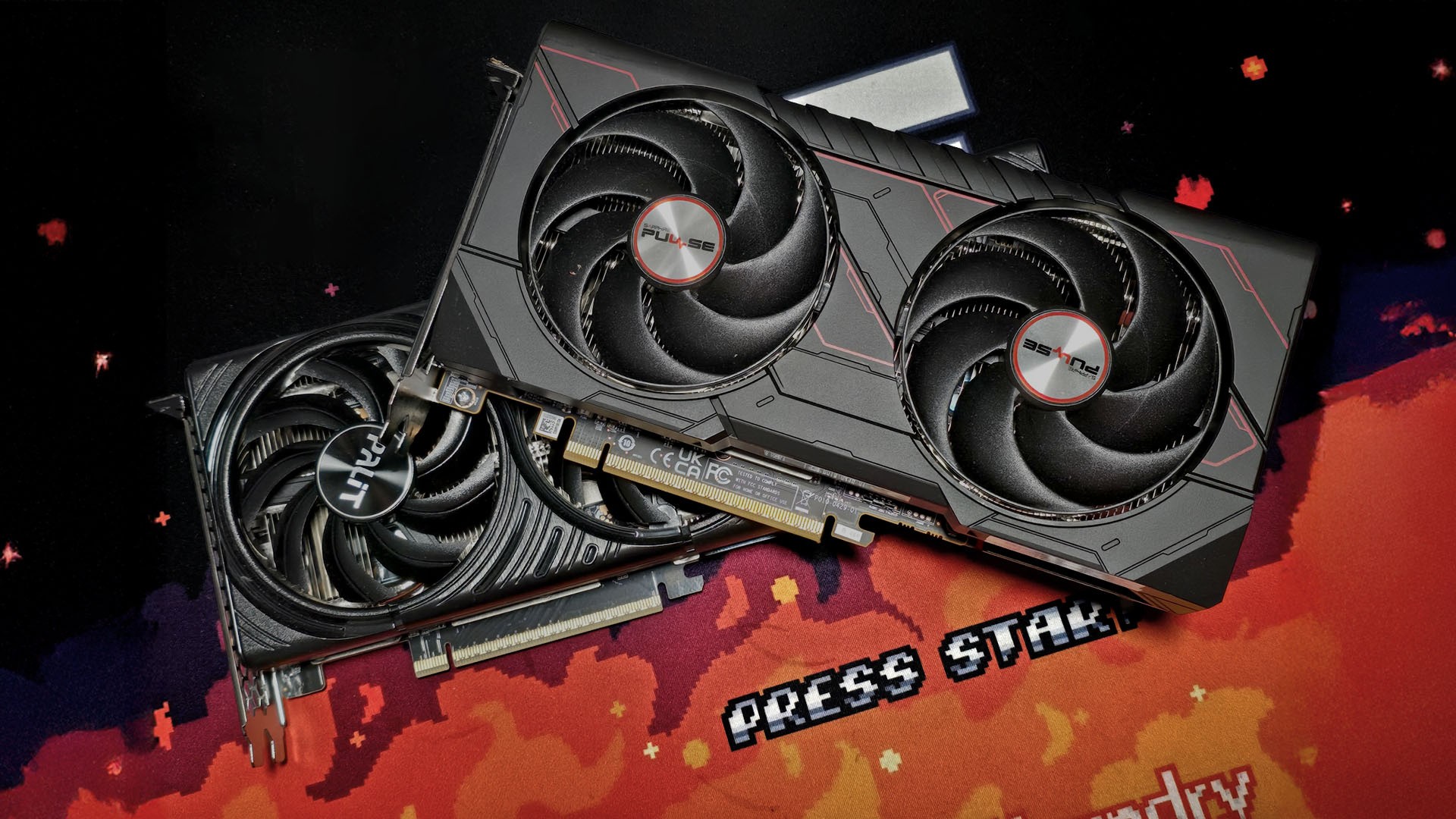
Ahead of the PlayStation 5 Pro's launch in 2025, the console's high sticker price made a lot of pundits wonder: could a mainstream PC match or exceed the output of Sony's new hardware while delivering similar value? Key to the discussion was the choice of GPU, one of the more expensive elements of a prospective PC build. Once the Pro arrived, conjecture gave way to actual testing and if you're looking for Pro-equivalence or better in most areas, we'd recommend the 16GB models of AMD's RX 9060 XT (launch MSRP $349) and Nvidia's RTX 5060 Ti (launch MSRP $429).
The testing methodology used to arrive at this conclusion is fairly straightforward. Over the years, we've delivered a range of optimised settings for PC titles, based on our own observations, comparisons with current-gen console versions of the same games and even input from the developers themselves on the PC-equivalent settings found in their console builds. Where exact settings matches are not available, we have closest equivalents.
Black Myth: Wukong in its launch guise features a performance mode that runs at 1080p with an unlocked performance level. It's hardly the most optimal console port, yet we can run the same internal resolution on both of our favoured GPUs, with overhead to spare in using FSR 4 or DLSS upscaling to hit a 4K output and performance is still higher.
Meanwhile, matching the performance mode settings of Forza Horizon 5 on PS5 Pro on both GPUs also sees them outpacing Sony's console, though it is held back by a 60fps cap we can disable on PC.
Arguably the most telling result comes from our tests of Alan Wake 2, in which we adjust PC game settings to resemble two PS5 Pro modes: a "performance" mode that doesn't quite reach a locked 60 fps, and a "quality" mode that adds ray tracing and sticks more firmly to a 30 fps refresh. In these comparisons, the PCs were able to easily reach a higher refresh rate using equivalent settings to PS5 Pro's performance mode, while PS5 Pro's quality mode beat both PC cards - the caveat being that Pro is using a lower-than-low RT setting we can't replicate on PC.
A straight PC GPU to PS5 Pro comparison also misses plenty of nuance and context. You can't run your PlayStation library on a PC, so options for improving an existing catalogue of games are going to be more limited for console owners. Meanwhile, PC users have access to a much wider range of system features: for example, an RTX 5060 Ti using DLSS 4 multi frame generation can run Cyberpunk 2077 in RT Overdrive mode at an upscaled 1440p output at well over 100 frames per second.
Beyond that though, choosing either of these GPUs has more of a focused function for PC users. They are good picks that tick plenty of boxes, performing well at the popular 1440p output resolution (as opposed to attempting to address a 4K panel as the Pro does) while opening the door to ray tracing features. Both also have superior upscaling support: these days, both FSR 4 and DLSS look good upscaling to 1440p from their balanced presets. Just be sure to opt for the 16GB models. Both of these GPUs have 8GB variants, which is proving restrictive on a range of triple-A PC releases.
Comments 7
After watching this video (several months ago now)… I’m currently running a solid PS5 Pro-ish setup with lower powered 5700x (65W TDP) and a 5060 TI 16GB, total build was ~800 and punches nicely above the PRO - and nvidia specific features on a nice OLED display make for an acceptable spot on the performance - quality spectrum. It is also near silent 🤫
Entrylevel GPU runs circles around premium console
Rich. I was wondering what the full systems specs were of the test rig, that information seems to be absent here.
Either way I suspect it would still be a struggle to hit that £699 budget with a £350 and £400 GPU assuming you aren't Linus-ing it and buying second hard parts. What was the RRP of your build?
@themightyant Hi there, these were GPU tests run on a high-end system (and the coverage isn't talking about anything other than GPU performance vs Pro) but ultimately we are completely GPU-limited in all scenarios there.
I also wasn't making pricing comparisons but with that said, a £699 cost would not be a realistic comparison IMHO. PC games are generally cheaper than console games. You don't pay a subscription for multiplayer features. You get free games regardless from the Epic Game Store. So the value calculation is tricky.
With all of that in mind, Microcentre selling a 7500X3D system with a 9060XT 16GB for $999 represents higher performance and in time higher "value" than a console: https://videocardz.com/newz/microcenter-is-already-selling-ryzen-5-7500x3d-gaming-pc-100-cheaper-than-7600x3d-system
Not that you'd be able to run your PS5 library on it, of course, which is another real world confounding factor in such comparisons.
Thanks @Rich_Leadbetter appreciate the reply. All fair points. I guess my point was if you are naming PS5 as a comparison that naturally invites the other comparisons too. Though as you rightly say value is hard to compare with so many other factors, it isn't just the box price.
That $999 PC is a great deal, assuming they haven't cheaped out on some components. Maybe this will FINALLY be the year I replace my old rig, but i've been saying that for years. lol
Great to see DF have it's own website. Best of luck with it.
I no longer game on PC (because I have no time) and because it's become a very expensive hobby.
With that in mind I traded in my launch PS5 for a pro and have been super happy during to 4-5hrs a week I get to play.
I did recently built my son a new PC from scratch, and even though I spent a lot of time shopping around and stuck to budget parts, it still ended up costing significantly more than a Pro, even at fill price.
Maybe here in Australia we pay a premium for parts (I haven't bothered doing any currency conversions to be sure) but I was pretty shocked with the total spend. Especially considering it was a very budget build.
I settled on a Ryzen 5 5600x, a low end Gigabyte motherboard, a 1tb NVME drive, 16gb DDR4, a 750watt PSU a RX9060xt 8gb, and a fractal case (the case being the only thing I splurged on) and it was not cheaper than a pro.
My son is over the moon, he plays Roblox and Minecraft at 180fps at native 1440p with heaps of headroom for some heavier Minecraft mods and shader packs. But if I had built it for myself to play AAA games, I think I would have been very disappointed regarding bang for buck.
you don't realize your hardware is falling behind with a console as it downgrades quality to give you the same frame rates. A PS5 pro would be insufficient to play games with RT today, so if you had to continue with consoles you would either have to switch to PC or put up with low quality until a new console comes out and then shill out 700-800 for that. But I replaced my 7600 with a 9060 XT 16 GB for which I paid 400 USD, and I'm good to go. Most people will not build a new system but just swap their graphics cards.
Show Comments
Leave A Comment
Hold on there, you need to login to post a comment...