
 by
by Content sponsored by Nvidia, Inno3D and Overclockers.co.uk
In the years since Digital Foundry's epic retrospective on real-time water in video games, our braintrust has plotted doing similar work on other virtual elemental effects. For this holiday season, we've elected to take on snow - as in, any and all 3D renditions of the fluffy, white stuff as found in PC games over the years.
From our perspective, snow in PC games really began to emerge at the same time as discrete graphics acceleration, and that means our tiptoe through decades of frosty virtual environs begins with DirectX 5, then slaloms through a number of rendering breakthroughs before reaching modern-day, realistic-looking frost and powder.
We start with 1997's Star Wars: Shadows of the Empire, which lived within the 3D rendering realities of the earliest PC graphics accelerators. Reaching performant frame-rates was hard enough on affordable GPU options of the day, and that meant snow on this era's PC games was quite limited on a technical level. The game's opening Battle of Hoth level asks players to pilot snowspeeders and tie up massive AT-ATs across a large, snowy battlefield, and its snow was typical for games of the era: single textures, coloured somewhere between white and blue, that stretch across large surfaces with minimal shading and bilinear texture filtering.
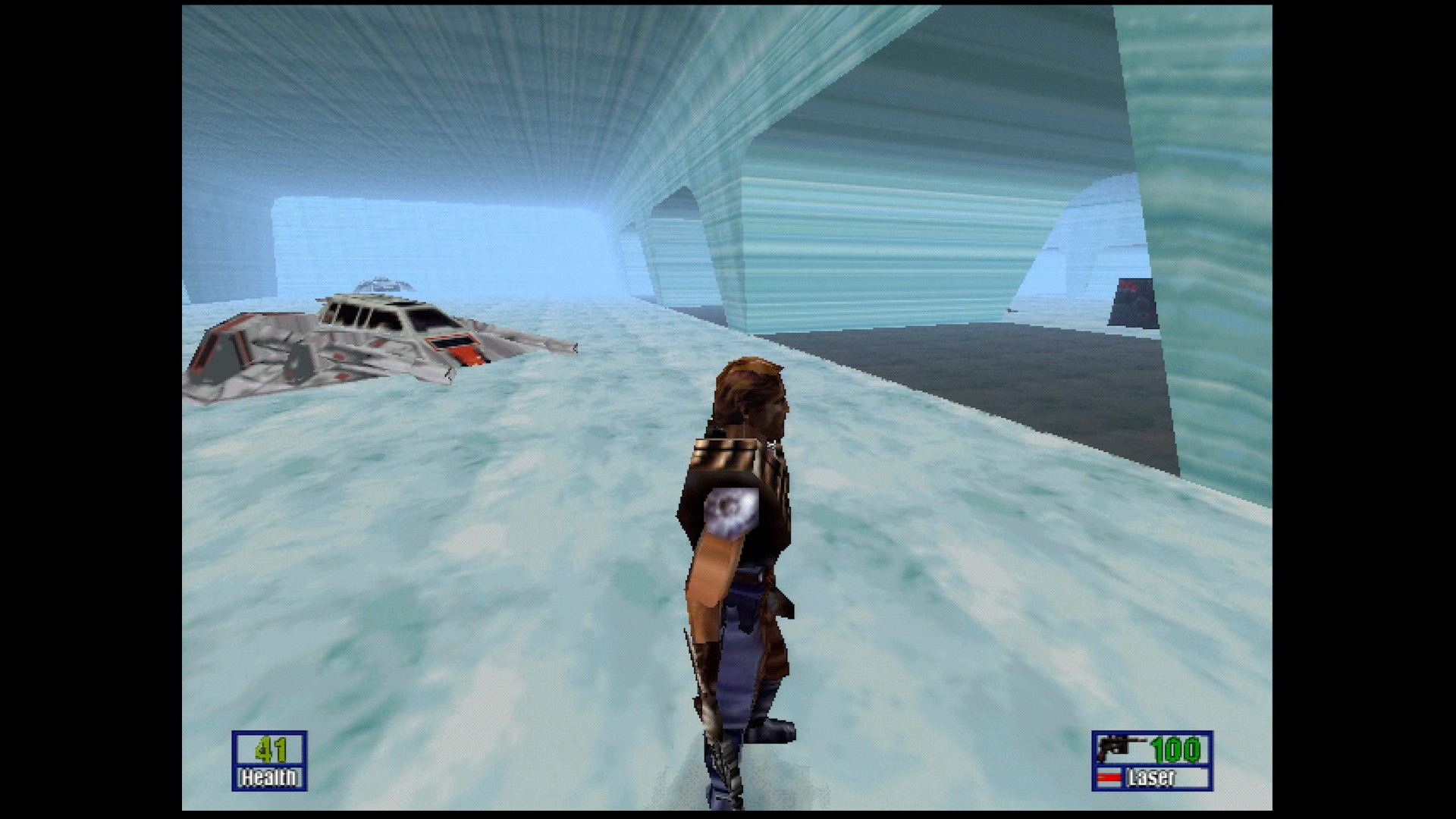
It got the job done, as mixed with later levels' use of blue-tinted hardware-accelerated fog - which both added a sense of snowy atmosphere and reduced a PC's rendering burden of more distant geometry. We also saw clever deployment of blue-streaked textures with striations to delineate snow from ice in later on-foot levels. But geometry complexity was reduced by necessity in PC games like SotE, which meant snowy surfaces were flat, with no variation in height or depth to reflect realistic snow accumulation.
And even with these admitted snow-rendering limits, our era-appropriate Pentium II-233 PC equipped with an Nvidia Riva 128 GPU barely maintains a steady 30fps.
Skip ahead three years to Soldier of Fortune in 2000, and little has changed. Snow mostly exists as singular surface textures, with fog once again blocking out distant geometry under the guise of "snowy" haze. While PC minimums had jumped enough to raise polygon budgets, we still mostly see these snowy textures attached to blocky terrain constructions.
Thus, this simple snow-rendering period persisted for some time in PC gaming - until GPUs were equipped to support pixel shading. We at least saw neat effects in various games during that time. 1998's Croc uses semi-transparent textures to allow its cartoony mascot to peer through blocks of ice and see what's on the other side. And on its snowy racetracks, 1997's WipeOut 2097 (known as WipeOut XL in North America) mixes up its falling snow particles: while sitting still, they're 2D billboard particles, but once your anti-gravity craft moves, they're traded out for textures that have been drawn to look like horizontal white lines, creating an illusion of snow moving past the camera at high speeds.
This era's highlights are arguably 1999's Sega Rally 2, which uses DirectX 6, and Housemarque's Supreme Snowboarding, which scales up to DirectX 7. In the former, driving through slick, slippy winter roads looks the part thanks to a combination of distance fog, falling particulate snow and snowy terrain that's more complex than in previously mentioned titles. Rounded, varied-height snow has accumulated on the racetrack's banks, thus employing geometry in a way that actually looks like real snow formations.
Meanwhile, Supreme Snowboarding includes even more rounded, snowy terrain - so much so that an aggressive level-of-detail (LOD) effect constantly updates how packed its snow appears as your racer speeds towards each mountainous crag and massive jump, in order to manage this game's high demands on era-appropriate PCs. Lightmaps and per-vertex lighting help make this game's snow shading look superior to anything else from its era, as well.
In both snow-racing games, players also leave snowy trails in their wake - and each even kicks up semi-transparent ribbons of geometry during each game's harshest turns and crashes, looking like snow being kicked up by your car or snowboard, respectively.
As one final and fantastic example of snow rendering before per-pixel shading rose to prominence, we have 1999's Outcast from Appeal and Infogrames. This game's snow rendering relies entirely on CPU performance, not 3D accelerators. Instead of rendering snow and terrain with polygons, Outcast ray-marches through a voxel field with some interpolation.
Without polygon density limits, snow can be rendered with micro-details - obvious shifts in lumpiness, colour and individually lit facets - with height variation and detail that are denser than what 3D accelerators could accomplish at the time. Snow indentations from your character's footsteps appear to have 3D depth to them. And the engine's voxel technique also applies to the game's depth-of-field effect for hazy, atmospheric presentation of distant snow mounds.
We'd have to wait at least a decade for GPUs to render snowy worlds with similar, 3D-looking effects, but the obvious cost for this much CPU-exclusive rendering was severely limited pixel resolution that struggles to reach a steady 30fps - even on a Pentium 3 650MHz PC with an Nvidia TNT 2 Pro 3D accelerator.
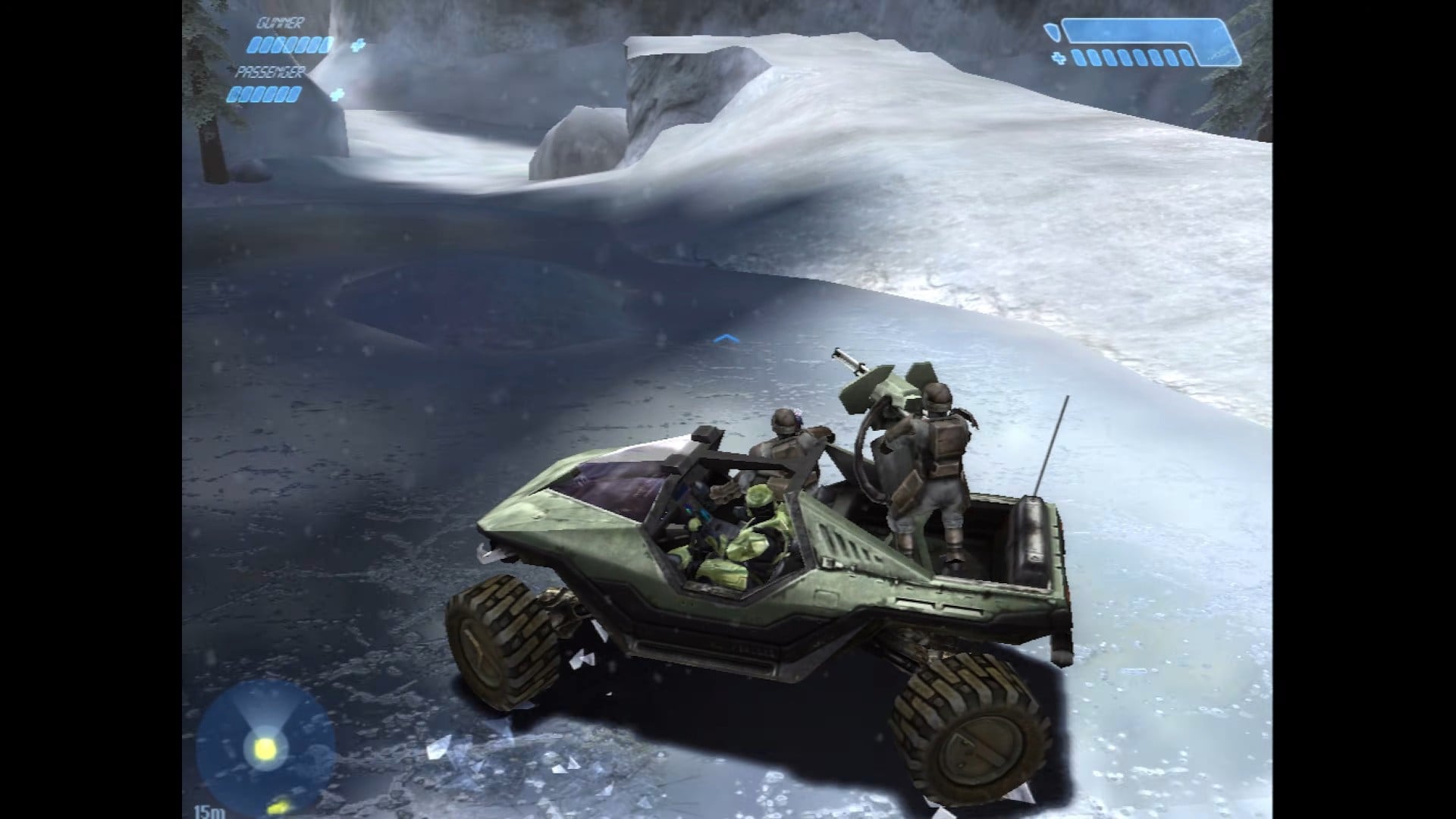
Moving into the era of what was now being marketed as "GPUs," we see 2003's Halo: Combat Evolved. Rather than render endless, expensive triangles, this game employs pixel shaders to make 2D textures on the ground look much more realistic. Effects like bump-mapping and per-pixel shading lent surfaces a new sense of depth as players' viewpoints scanned over surfaces and showed light spreading across them, adding a sense of surface variation and light reflection.
Snow and ice, then, appear more convincingly across the game's colder levels. 2D cracks form on icy surfaces, with transparent geometry sliding across icy roads as Master Chief's Warthog glides across them. And snow could now be lit in a per-pixel manner, making light play across surfaces in ways that resemble Outcast while benefiting from higher GPU-boosted frame-rates - though, admittedly, our Pentium 4 3.0GHz as paired with a GeForce 5900 XT struggles to reach 30 fps in our tests.
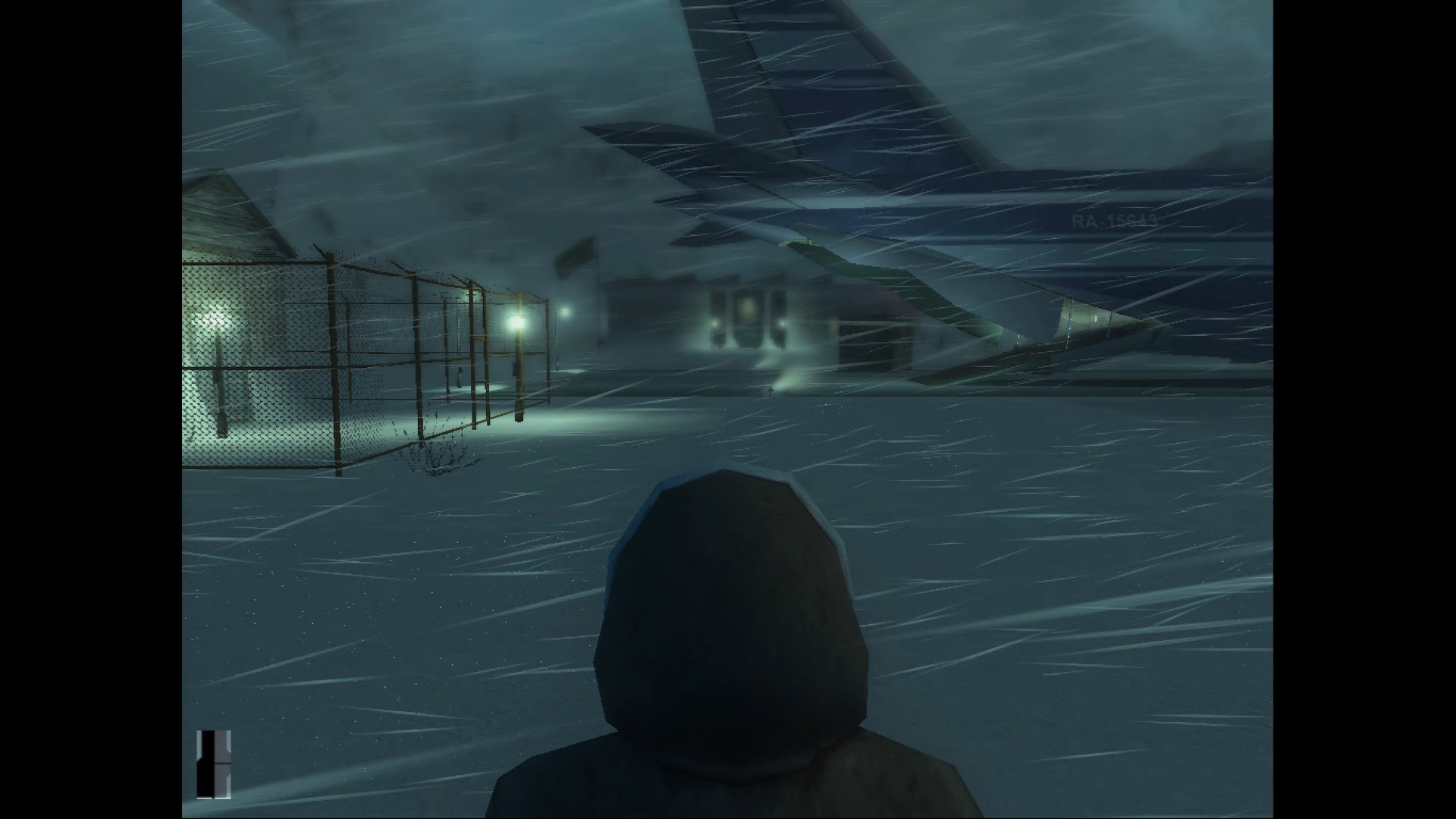
Flakes of snow are admittedly simple in HCE, but that brings one year later to 2004's Hitman: Contracts, which includes incredible blizzard rendering in its Siberia level. Its snowflakes are represented by triangle strips which vary in size and shape as they move, thus offering a seeming motion-blur effect that is rare for its era, while a combination of fog and a pixel-shaded depth-of-field effect obscure distant objects with a compelling white-out effect.
As we move into the DirectX 10 era, Capcom's snow-coated Lost Planet 1 from 2006 is an obvious selection for a showcase of its DX10-exclusive effects - as enabled by a new generation of powerful GPUs. Snow piles up at each step, whether on foot or riding the game's mech suits, in the form of billboard particles - while also spawning ball-shaped geometry to look like snow has piled in the shape of your wake. This spawning and despawning of objects works in part because it moves beyond 2D decals to something with 3D depth.
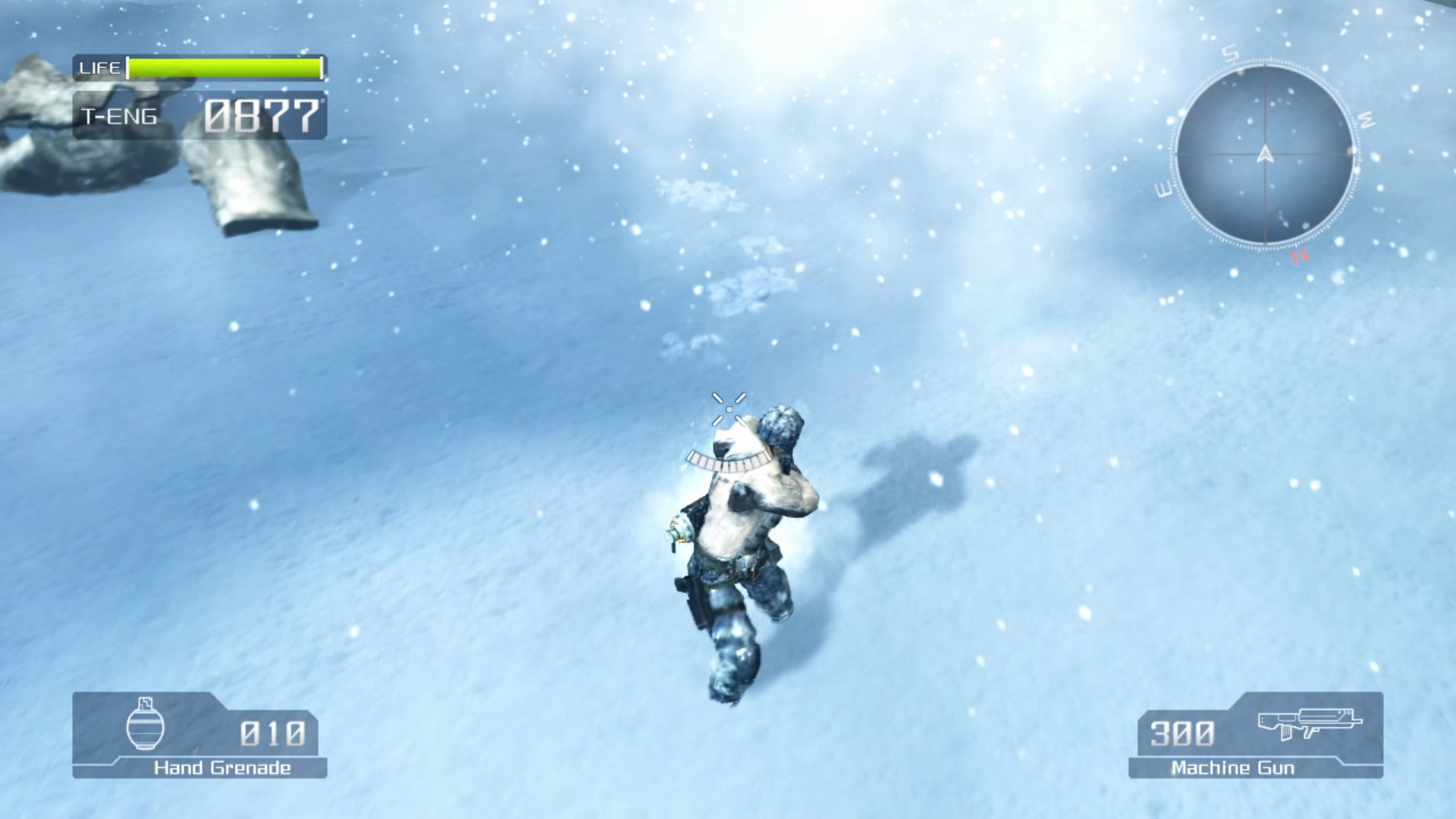
Semi-transparent snow particles of different sizes and density fill the air, along with distance fog and DoF - and while this sounds like some of the effects discussed earlier, they appear in greater quantities and higher precision than early pixel shader-era equivalents. We also see high-level shading to make snow and ice seem more tangible, and parallax mapping creates the illusion of gunshots leaving 3D holes in the snow by way of ray marching within the confines of a texture - all while snowy particle effects burst from the ground upon a bullet's impact.
We also get a cool enemy-death effect of rapidly changing shaders on monsters' bodies, immediately freezing into a thick, icy-blue look as if they've near-instantly frozen in the cold. Similarly, when standing outdoors, a 2D snow texture cakes onto the hero's body, which slowly disappears when he enters a warmer area.
All of these effects are built on top of performance-minding design decisions like static lighting and lower-poly models for its time period, so Lost Planet runs quite smoothly on era-appropriate PCs. In our case, we tested on an Intel Core 2 Extreme Q8650 with a GeForce 8800 GTX SLI setup and locked to a 60fps frame-rate.
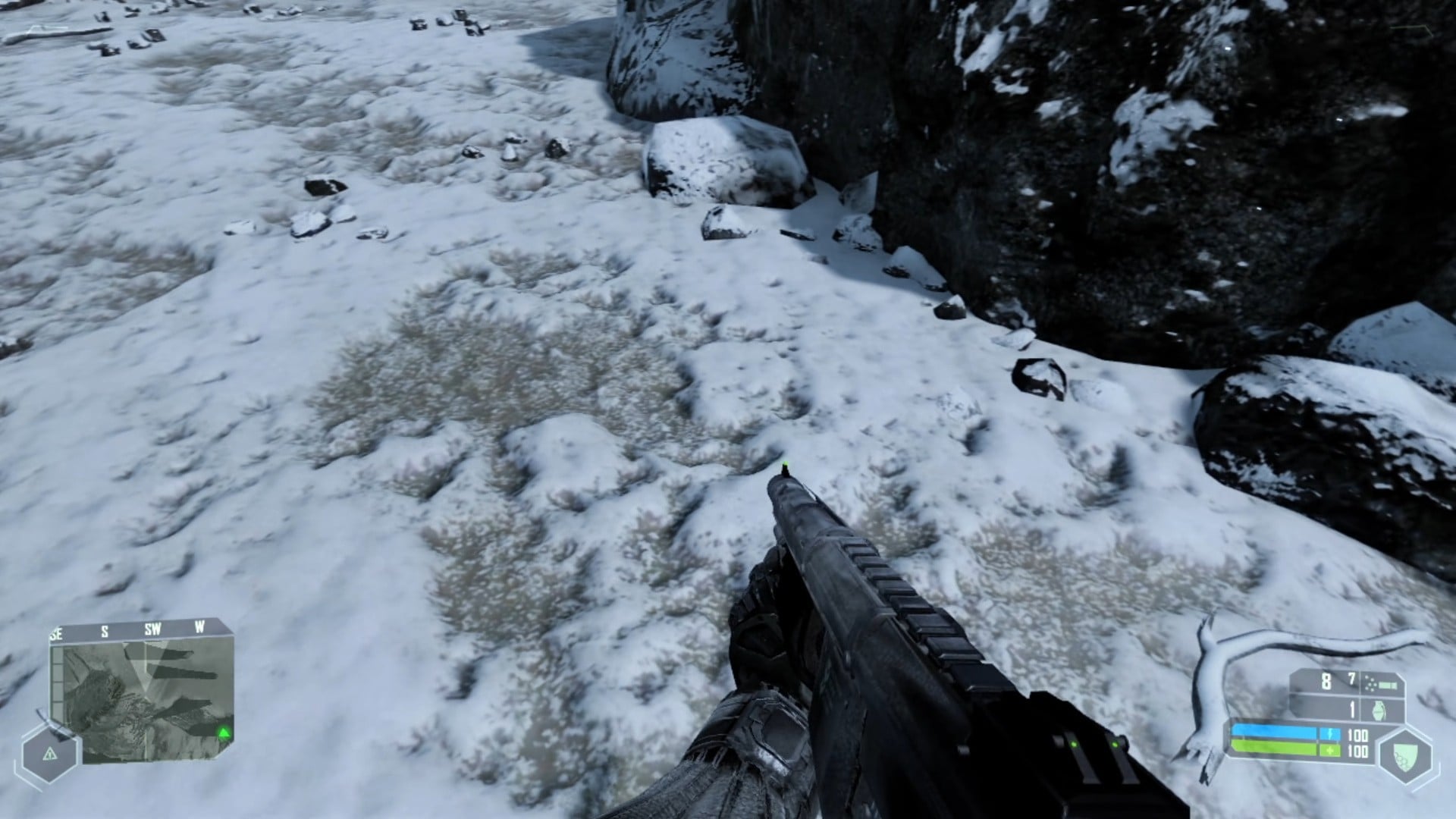
That rig may seem overkill, but we needed so much PC power to test the next snowy game on our list: 2007's Crysis. At a bit over halfway through the campaign, Crysis's tropical environs are frozen over, and its snowy terrain looks right in part because of extensive parallax occlusion mapping along with some high-level shading.
Since GPUs of the era couldn't render the high number of polygons needed for realistic, varied snow deformation, Crysis uses ray marching in the game's textures to add 3D-like detail on the snowy terrain. This approach even includes pixel-perfect self shadowing - a rarity at the time.
Rather than re-art the entire tropical region with new textures, Crysis applies a dynamic layer-shader on many of its original objects to give them a frosty look, including hands, guns, characters and environmental objects. Tiny frost sparkles visible on these objects are thanks to a realistic glint effect that is emulated with an associated texture and shader effect.
The follow-up Crysis: Warhead from 2008 adds an impressive thick-ice shader for its own frozen regions. Again, this title employs ray marching, and it has an appearance of light scattering beneath the surface, where ice's thickness determines how dark or light it is. You can even see how shadows on the ice's surface penetrate below the surface, leaving "deep shadows" visible below.
Sitting in a storm causes your character's visor to freeze over with an overlaid refraction effect until you move your mouse again for it to melt away. And physicalised snow particles that are simulated on the CPU will repel and bounce around the environment, adding physicality and reactivity to the game's virtual snow.
This performance profile weighs heavily on the same Core 2 Extreme PC with a pair of 8800 GTX GPUs running in SLI mode. Even with that much power, Crysis mostly hangs between 30-40fps in these snowy environs.
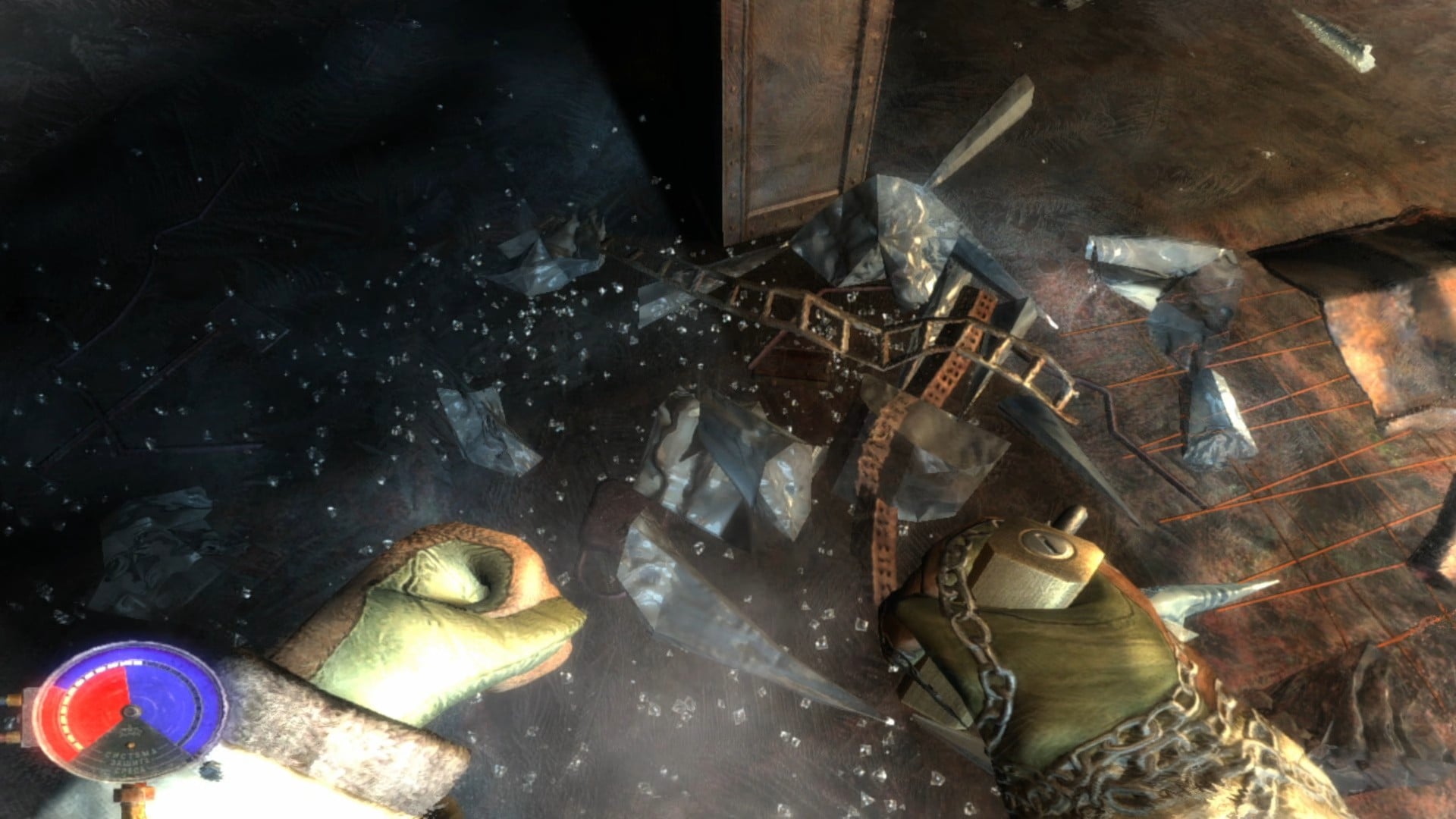
In late 2008, the psychological horror game Cryostasis impressed due to its pioneering, hardware-accelerated physics. It was able to render huge numbers of particles on the GPU to spawn icy weather. Snowflakes of varying sizes drift and careen around objects based on windflow. Shattered blocks of ice break apart into thousands of translucent and refractive shards that can be pushed around.
Heat sources in indoor spaces have the cool knock-on effect of melting frozen surfaces and walls, and this causes shading changes on the wall to look like cascading water, along with physicalised snow drip with particles attached to a fluid simulation. This phase-change effect from ice to water using particles was unique at the time and remains unique to this day, rarely carried forward in modern real-time rendering.
We can see why in terms of performance, as our era-appropriate 8800 GTX SLI rig often wavers between 30-40fps with particles on screen and can even dip into the 20s.
Entering the DirectX 11 era, we finally begin approaching a good representation of snow's surface details and height variation using real geometry, as opposed to the texture tricks like bumpmaps and parallax maps we've seen thus far.
2013's Batman Arkham Origins bridged the gap between past and present. On consoles and lower-end PC settings, Arkham Origins employs dynamic parallax maps. Snowy texture surfaces appear to have depth as if Batman actually pushes snow with his feet - an impressive texture-perspective trick that can look artificial at particular angles once enough snow has been "pushed."
With DX11 geometry tessellation enabled on PC, that dynamic deformation is rendered with real geometry, and it's dynamically subdivided on the GPU. Capable DX11 GPUs were finally performant enough to render nuanced height variations on snowy surfaces.
When examined side-by-side at particular angles, we can see that DX11 Geometry Tessellation has a more convincing combination of geometry and shadowing that parallax maps cannot match. Footsteps can clearly indent the way real feet might go through snow, instead of the "snowplow" look we see in Arkham Origins' parallax maps.
Though the game's high-end PC settings include impressive effects like GPU smoke simulations and waves of GPU-rendered snow particles, its enduring legacy is its snow deformation. GPU-tessellated snow became an incredibly common method going forward on other DX11 fare, so much so that we can skip ahead to modern-day snow rendering. The biggest advancements in the current-day world of snow rendering come from fidelity, shading, and lighting - as opposed to physicalised deformation, which still remains similar to Arkham Origins' method.
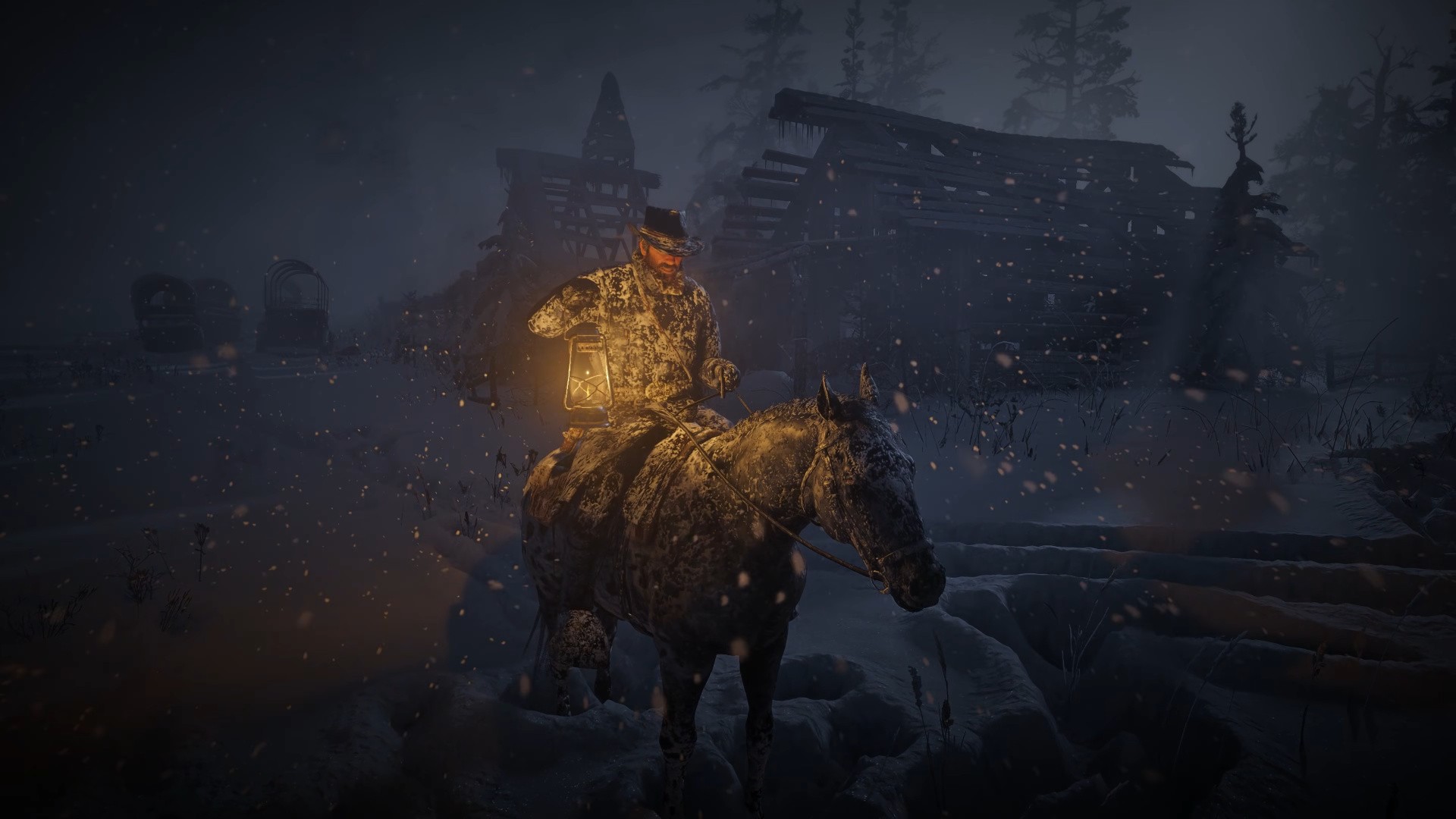
We start with 2019's Red Dead Redemption 2, as it mostly pays forward prior generations' techniques. A caked snow texture is applied over characters and other geometry if they've been in outdoor, snowy regions for a while. Blizzard-like conditions are convincingly presented by combining fog, depth-of-field, and fast-moving particles close to the screen. Snow-surface detail is added via normal maps, a successor to the kinds of bumpmaps seen in Halo: CE.
Plus, tiny glint reflections on the snow surface resemble similar application in Crysis. And GPU-based tessellation deforms snow upon contact much in the same way as Arkham Origins. Yet RDR2 doesn't look dated - in fact, by combining all these techniques and applying higher fidelity and far more triangles, it looks like a next-generation evolution of these old methods. Plus, of course, granular detail and physically based materials makes snow look that much more tactile and real than older games.
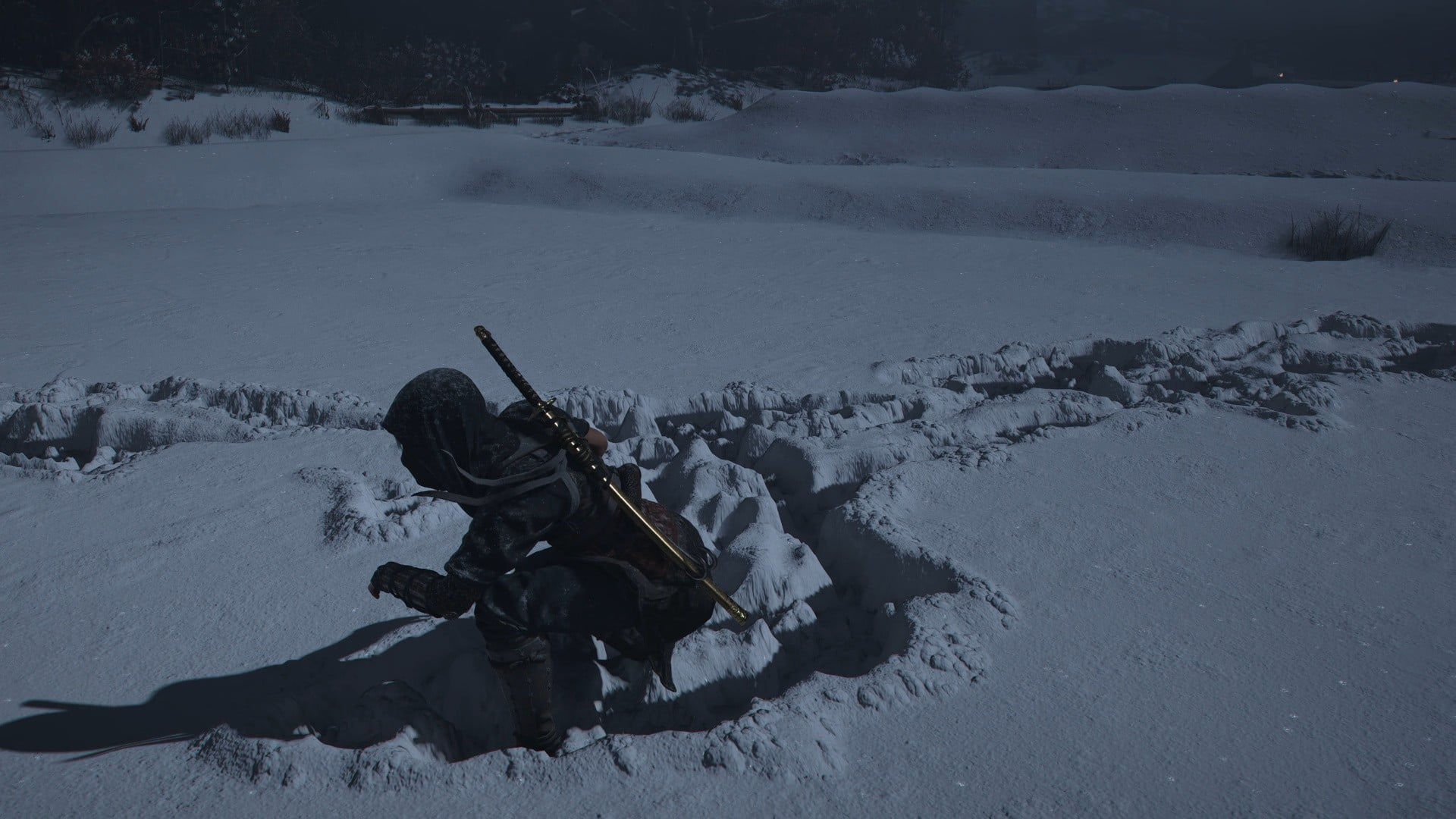
Other games since Rockstar's 2019 standout have pushed the snow boundaries even further. In this year's Assassin's Creed Shadows, snow flakes have a huge amount of volume and physicality, with thousands blowing around any moment of a storm. These particles connect to a fluid wind simulation to push them through a given environment and across and around objects. Snow particles also stretch in length depending on speed and camera orientation, and the resulting, ultra-fast motion-blurred look builds upon what we previously saw in Hitman Contracts.
We're also impressed by AC Shadows' granularity of snow tessellation as your character walks through it. Compacted areas adhere closer to bodies' movements and locations. Plus, edges around these compacted areas show more geometric variation, as if the snow has actually been pushed out of the way.
For an even greater example of current-era snow rendering, we look back at a brief, snowy segment in 2024's Indiana Jones and the Great Circle - the most GPU-intensive snow game on our list. With all ray-tracing options set to their maximums, path-traced lighting on the snow drives physically based materials much more accurately and brings out a real variety in how snow can look in varied conditions.
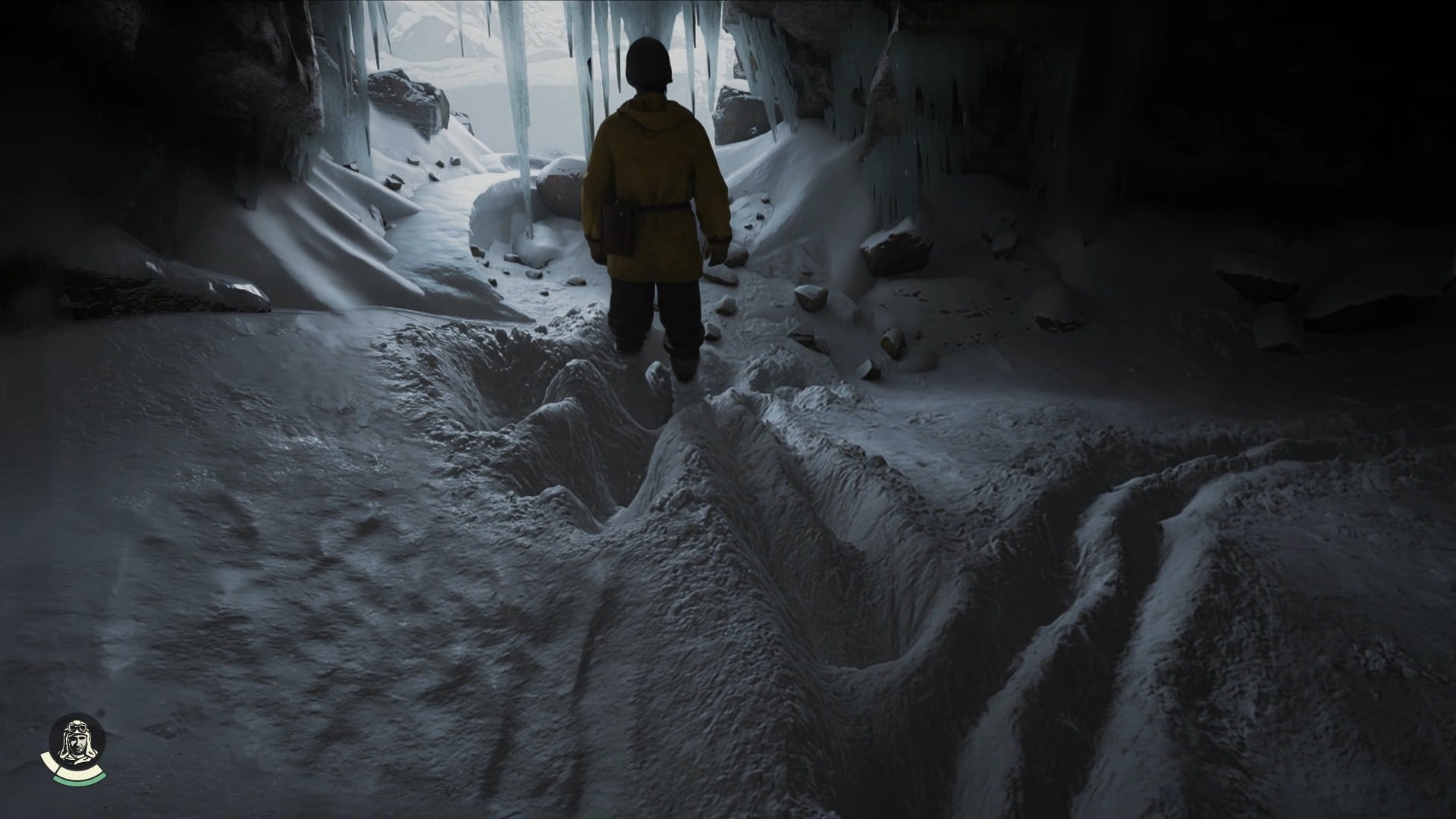
On top of a mountaintop, Great Circle's snow looks powdery and diffuse, as blasted with the light from a full, bright-white sky. Through this game's path-traced lighting pipeline, the result eliminates shadow detail and any evidence of directional lighting. Go indoors into a cave, and Indy comes across more directional lighting, making snow look highly reflective. The snow now picks up sharp highlights on its edges in direction of the light while having deep pockets of shadow in the recessed regions.
This allows us to appreciate how Great Circle has the densest geometric snow deformation to date - meaning, triangles are approaching the size of mere pixels. Additionally, the appearance of ice benefits from accurate bounce lighting via path tracing. Such treatment is crucial for ice's unique translucent-yet-reflective surfaces.
It's amazing how photorealistic snowy games can appear in modern real-time rendering, both in stills and walking-through-the-slush gameplay. Incredibly, we're now able to lean on advanced techniques like ML-driven super-sampling and frame generation to get these incredible effects near a steady 60fps cadence on modern PCs, as opposed to the, er, chillier frame-rates for early snow implementations on their era-appropriate hardware. For PC players huddling by the warmth of their overclocked GPUs this holiday season, it's all a long ways from the likes of SkiFree and Jazz Jackrabbit 2: The Christmas Chronicles.


Comments 2
So pleased outcast got a mention. My years old original review mentioned how much I loved the snow. Also the crunching snow sounds were amazing back then. http://www.activewin.com/reviews/software/games/o/outcast.shtml
While this is a PC-specific article, for Halo: Combat Evolved only its PC version release date, 2003, is mentioned. The original Halo was released for the Xbox in 2001.
The Gearbox's PC port is known for lacking several graphical features seen on the Xbox, such as bump mapping for the terrain. It seems unlikely that the snow rendering was developed any further in the PC version.
Show Comments
Leave A Comment
Hold on there, you need to login to post a comment...