
 by
by 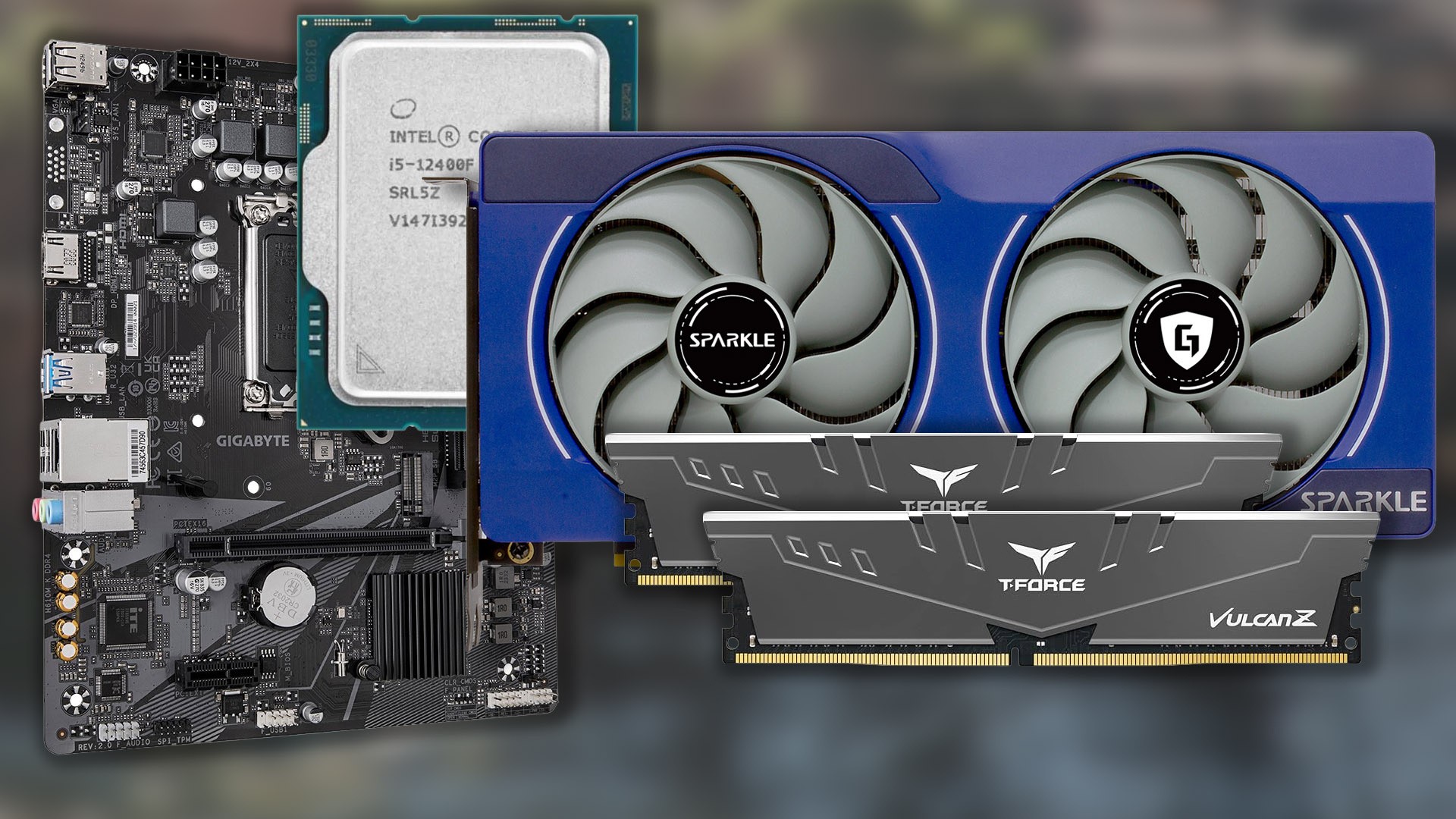
Nobody quite understands the extent to which the PC gaming hardware market will be impacted by the "RAMageddon" shock to the system we're currently experiencing. Memory prices are through the roof, storage prices have increased and all eyes are on the availability and prices of graphics cards - particularly those with 16GB of memory. The impact will start on higher end systems with more demanding specs, but where does that leave the budget PC? Right now, I'd still say it's possible to build a perfectly fine gaming computer that matches or outstrips console performance - but it is going to demand the use of available, but older parts.
Looking at the state of the memory market yesterday while browsing Amazon was a pretty depressing experience, but there was one small glimpse of positivity. It is possible to buy 16GB of Teamgroup 3200MHz DDR4 for under £85, while general prices for similar RAM lurk in the £100 category. Of course, that's on the high side, and I recall buying similar Corsair memory from Amazon a couple of years back for £40 - but the point is that the "price premium" for a budget build rises by a relatively manageable amount. Most gaming builds specify 32GB of memory now, but 16GB is still fine for the vast majority of games.
It's bizarre to start a build around the choice of memory, but I then moved on to PC Part Picker to see what kind of system I could build around that RAM. Perhaps contrary to accepted internet wisdom, I went for an Intel build. First up, the CPU, where I chose the Core i5 12400F - a processor I know well having built a system around it. Looking at the US version of PC Part Picker I was amazed to see that the Core i5 12600K was much the same price as the 12400F. A cooler doesn't come with the package so PC Part Picker flagged the Thermalright Assassin X Refined cooler (it did seem to miss other Thermalright options on Amazon, however.)
Why choose Intel? That's down to the feature set of the very cheapest motherboards. A key requirement for me in the budget range was m.2 storage support (amazing, some budget boards don't have it) and support for PCIe 4.0 for graphics (3.0 won't cut it with lower-end GPUs that don't have the full x16 lanes). I ended up with the Gigabyte H610M K, which ticked all the boxes, though the lack of WiFi support was a touch annoying. Storage? There has been some inflation here, but a Lexar NM620 1TB SSD looked like a relatively reasonable £80.
Next up, graphics, where I'd say that a Acer Intro OC version of the Intel Arc B570 offers unassailable value at £180 - and it has 10GB of framebuffer memory! I'd have preferred a 12GB B580, but it's not worth paying the current circa £280 price for it. The truth is, it's hard to recommend anything else until we get to the circa £520 RTX 5070 12GB and Radeon competitors as it seems that the 16GB versions of the RTX 5060 Ti and the RX 9060 XT are frustratingly overpriced.
Rounding off the build, I chose a Fractal Design Core 1100 and a Corsair CX 750W power supply, giving us a grand total cost of £665.04. If we did want to step up to the next level graphics-wise, an MSI Ventus OC RTX 5070 would take us to £1000.04. Whichever GPU you choose, I'd call that good value. Pick up a WiFi adaptor and an inexpensive Windows license and you're good to go.
But now, for the downsides. A build like this is fine for now, but your upgrade options are limited. The LGA1700 socket on this motherboard can take anything up to a Core i9 14900K - a big increase in gaming and productivity performance over the 12400F. However, higher-end CPUs draw too much power for the boards using the H610M chipset - you really need a Z690 or Z790 board. If some level of upgradability is required, you're best off buying an AMD-based system. I'd recommend the Ryzen 5 5600, 5600XT or 5600T for your main processor, backed by a B550 motherboard. This gives you an upgrade path to the much more capable Ryzen 5 5500X3D, 5700X3D or 5800X3D - but the B550 boards are more expensive than the cheaper A520 line which don't support PCIe 4.0.
However, going AMD with upgradability in mind comes with further costs. The prices for X3D processors are going through the roof. I paid £130 for a Ryzen 7 5700X3D from AliExpress. That same CPU seems to start at £300 now, whether from AliExpress or as a used purchase on eBay in the UK.
The other downside? The whole build I've outlined here is based around the fact that DDR4 memory - entry-level stuff, at that - is relatively affordable right now. All bets are off when it comes to component pricing, especially DRAM. The volatility in the marketplace is frankly extraordinary. We'll be following the situation closely over the coming weeks and months.


Comments 12
Nice article Rich, however it would probably be useful to know what sort of performance we could expect from such a system so we could weigh up the pros and cons of these concessions.
Would this system be capable of 1080p gaming at 60fps with medium settings? If so, it's good value
@themightyant The GPU reviews embedded on the page should help out a bit with that!
@Claw Yes, depending on the game, no problem.
@Rich_Leadbetter Sure, but you usually pair a GPU with a top of the line CPU, RAM, MB etc. in those reviews. As you said in yourself in the B570 review:
It's something I have an issue with on reviews as they are often (understandably) are benched with hardware they will almost never be paired with, and we won't actually get that performance with a lesser CPU, RAM, MB etc. That's a hard nut to crack.
Either way I appreciate the article, nice to see a budget gaming PC can still be built, just about.
Great article Rich! It's interesting how your early review of the 5070 has aged. Still completely true, but I think what I just paid for is the premium of variable MFG. In the states, I was just able to find one at 15% under MSRP just before the holidays.
Considering what's going on, I think my current rig (5800x3d+RTX5700) might be in spitting distance of the PS6 next year. To your point about reaching console level performance.
One question... what games actually require more than 16gigs of ram? I was thinking of going to 32, but Cyberpunk 2077 was reading 85% ram usage maxed out at 1440p. Is there a game that wants more than 16? Moores law talked about 30-40gigs for PS6, right?
After 10+ years on a i5 4460 + GTX 960 I finally bought a similarly priced computer during the holidays. Reused the same case and PSU to save some money and got the similarly recommended Ryzen 5 5600 and RX 9060 16GB. You might not be able to play the latest games at the max settings but it runs well for around the price of a PS5 Pro, and I can play all those games I amassed from EGS giveaways and what not. The PC situation is indeed crap for the fireseeable future but it's still workable with the right expectations.
I am kind of interested in other potential options. Some of these are arguably not viable, but I think one of my first points of interest would be Strix halo With that new 388 chip coming out which is seemingly intended for gaming and doesn’t have the NPU or a ridiculous amount of RAM. I wonder if it might be viable in something like the frame framework desktop if they release a version with that.
We obviously have the steam machine coming which might be compelling though I’m sure that your intentional omission of 8 GB cards would also apply to it.
I’m also somewhat interested in these Intel APUs That seemed to deliver such a good performance though obviously below something like Strix halo I almost wonder if you could put one of those laptop chips in a little mini PC and get a reasonably good Home gaming device plus you get access to XESS.
We are in a very hard position right now with PC gaming because you are paying a bit over $600 for worse than PS5 performance. Meanwhile if you want better than that with a reasonable amount of memory you start getting into the thousand dollar range. Hopefully all of this will blow over sooner rather than later, but in the meantime, I think this was an incredibly helpful guide. I’ve been trying to help some friends figure out how to buy a reasonable machine and it’s not been easy so it’s great to have this type of resource.
Nice! I actually tried something similar and to do it on a budget for around £400. It ended up being around £410ish with a couple of mistakes along the way using mostly used parts from CEX and Ebay.
OS: Bazzite
CPU: Ryzen 3600X - £52
GPU: 8GB RX 6600 - £154.26
RAM: Corsair Vengeance LPX DDR4 2x8GB 16GB 2666MHz - £47.04
MOBO: ASRock B450M-HDV R4.0 mATX with Fan thrown in - £42.04
PSU: MSI MAG A550BN - £39.99
SSD: Lite-On SSSTC SSD 256GB M.2 + adapter = £24.99
Case: CiT Academy Mid-Tower Office PC Case with 500W PSU £39.99
Total: £411.31
So far this is running a fair few games of 1080p high. Games like Trails remake running on ultra at stable 60, and Hell is Us was stable 60 with most things high and stuff like shadows on medium (though I set this up by default because stuff like shadows and RT puddle reflections are really not important). The 256gb ssd is less than ideal, but I have a couple of 512gb sd cards and an adpater kicking around and an external ssd on the way (which inflates the price a bit)
The mistake as such as I was originally gonna build a min spec to test for game dev which was gonna use the motherboard, cpu, ssd and case with the built in psu and my old 1050ti, but looking at what the steam machine is likley to be, I went the full whack. I thought I would pick up the intel card you linked though for my indie dev machine to upgrade my aging 2060... but I checked the price on currys today and it is now £260 rather than £180. Only thing I would challenge DDR4 is it being entry level considering you can get PS5 performance out of it
Richard, this rebuilt from argos is a little more powerful and capable of DLSS? http://www.argos.co.uk/static/Product/partNumber/7752973.htm?cmpid=APP003
@Spodlude Amazing deal while it lasted!!
Did a fictional build yesterday and ended up at EUR. 2,000
for a B780 mobo, 12700K, 32GB DDR4 3600, custom cooler and quality PSU. I opted for the 16GB version of the 5060Ti (only 1 brand was still available since they're unofficially on their way out too). I honestly feel that's the least anyone should aim for building in 2026. 32GB system ram isn't a luxury these days and the 16GB on the gpu is needed to comfortably use frame gen.
Show Comments
Leave A Comment
Hold on there, you need to login to post a comment...