
 by
by Finally, in the comfort of our own testing labs, Digital Foundry can confirm exactly how Metroid Prime 4: Beyond utilises the Nintendo Switch 2's 120Hz mode in both handheld mode and on compatible TVs - and why we think you should play it that way.
Up until now, Switch 2's 120Hz support has been the exclusive domain of 2D games, with highlights including the popular hand-drawn brawler Hades 2 and a quirky demonstration of the feature in Switch 2 Welcome Tour. A game must trigger Switch 2's 120Hz mode in order to run at frame-rates as fast as 120fps, and most Switch 2 titles - even older, simpler 3D games with bespoke Switch 2 updates - do not.
Ahead of the console's June retail launch, Nintendo advertised that Metroid Prime 4 would arrive later in 2025 to show off the console's 120Hz mode. Yet at the time, we didn't realise that by December, it would truly be the sole 3D game to show off the feature. Thankfully, this Retro Studios adventure does a tremendous job.
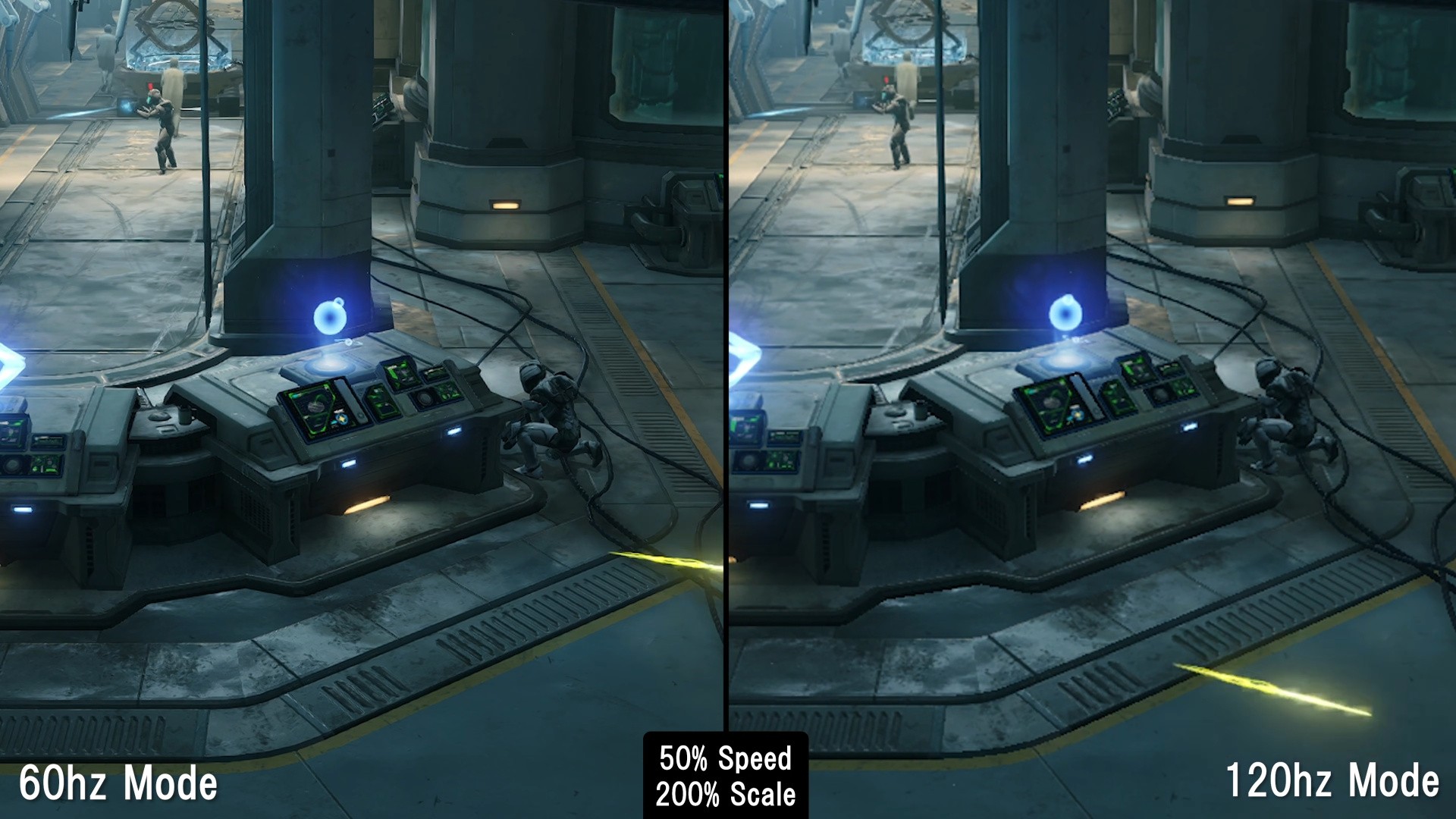
When docked, Metroid Prime 4 offers "4K" and 1080p resolutions, with the former capping at 60fps and the latter reaching 120fps. We'd been wondering whether Switch 2 would be up to the task of reaching that full 120Hz container, and we can now confirm that our dozen-plus hours of Switch 2 play have run at a nearly locked 120fps, all while its base pixel resolution remains fixed to 1080p.
When we say "nearly locked," we really mean it. Without our frame-rate capture process, we would never have noticed the minor hiccups that occasionally emerge while series hero Samus Aran steers a new motorcycle across the game's open-world, between-missions wastelands. As far as we're concerned, Retro Studios has delivered a true 120fps first-person shooter while docked on Switch 2. In good news, the 4K mode enjoys its own nearly-locked 60fps refresh.
Our impressions suggest similar if not identical near-120fps gameplay while playing in portable mode at 120Hz. While we cannot capture and confirm a locked 120fps refresh on Switch 2 in its mobile configuration, our hours spent playing this way appeared identical on a performance basis while capping at a 720p resolution at this frame-rate. Portable players who want more pixels can trade a higher 1080p resolution for a lower, seemingly-locked 60fps maximum.
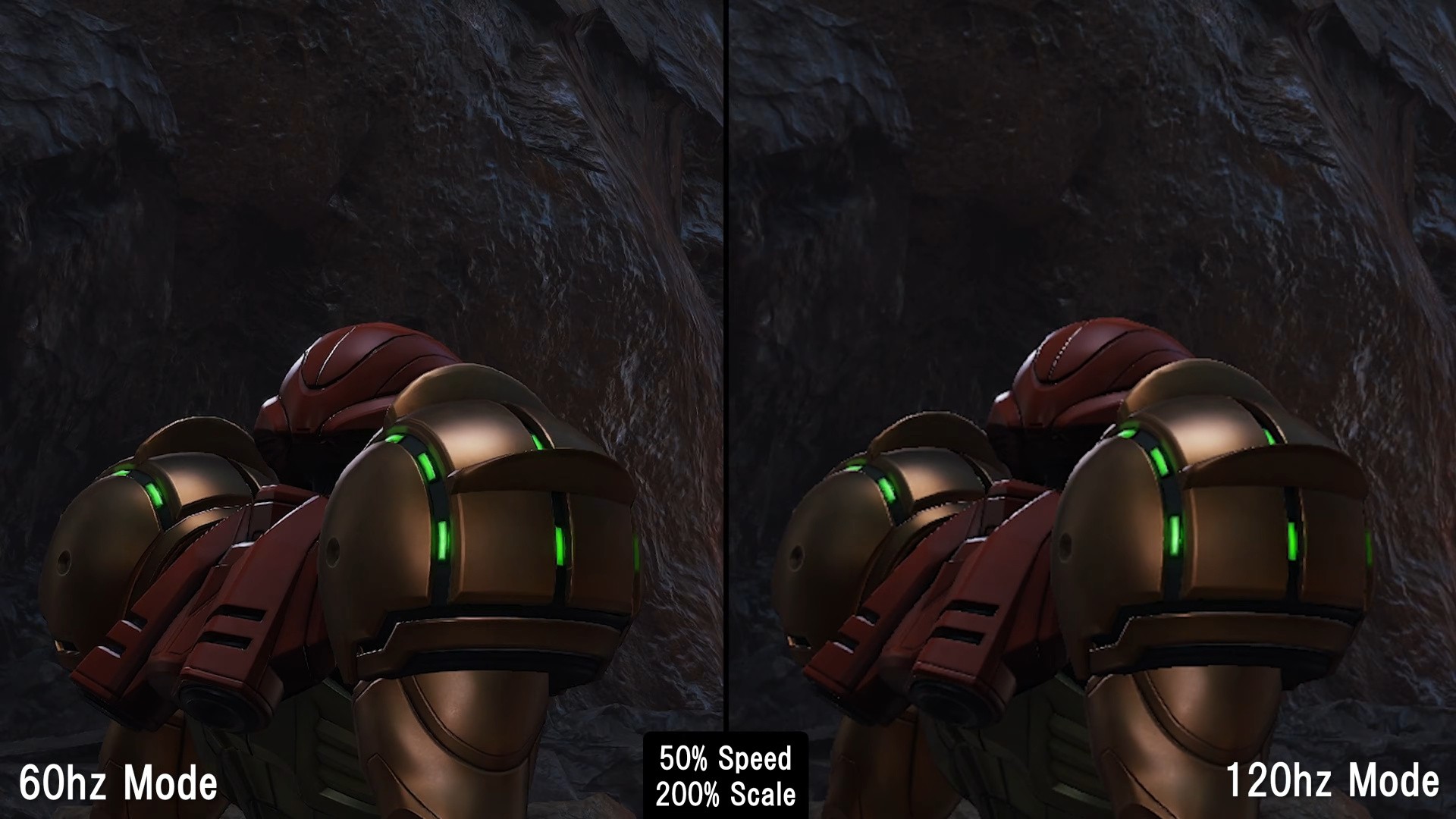
However you play, the only thing you'll trade by selecting a higher frame-rate is lower resolution. Textures, shadows and level of detail (LOD) culling of distant geometry appear to render identically. And beyond a smoother experience, users should also benefit from lower input lag thanks to both the game logic running faster and the display itself running at twice the refresh rate.
For more on the rest of the game's makeup, including details about the actual pixel resolution of "4K" mode and our lingering questions about the game's Switch 1 version, check out our full technical review.


Comments 3
I am looking forward to playing a 3D shooter at 120 fps on a handheld!
Sadly my Switch is hooked up to the AV Receiver that doesn't output 120 Hz. Better visuals seems worth it for a first play theough anyway, maybe 120Hz on a second Hard runthrough where the clarity would help anyway.
Wonderful news. I'll be playing as soon as I get home this evening.
Show Comments
Leave A Comment
Hold on there, you need to login to post a comment...