
 by
by Epic Games' eventual games-industry dominance arguably began with the 3D engine technology that powered the studio's breakout first-person shooter. Nearly 30 years after its launch, the 1998 game Unreal goes under the DF Retro microscope to both chart its original impact and look at its in-development, fan-made RTX Remix mod.
Ahead of its '90s launch, Unreal emerged with a massive level of hype fuelled in part by hyperbolic magazine coverage but also by the technological ambition on display in preview builds. The limits of popular FPS engines like Build and the Doom Engine had become increasingly evident, and the genre's fans craved more polygonal geometry and more special effects - which Unreal seemed poised to deliver, right alongside the equally hyped Quake series.
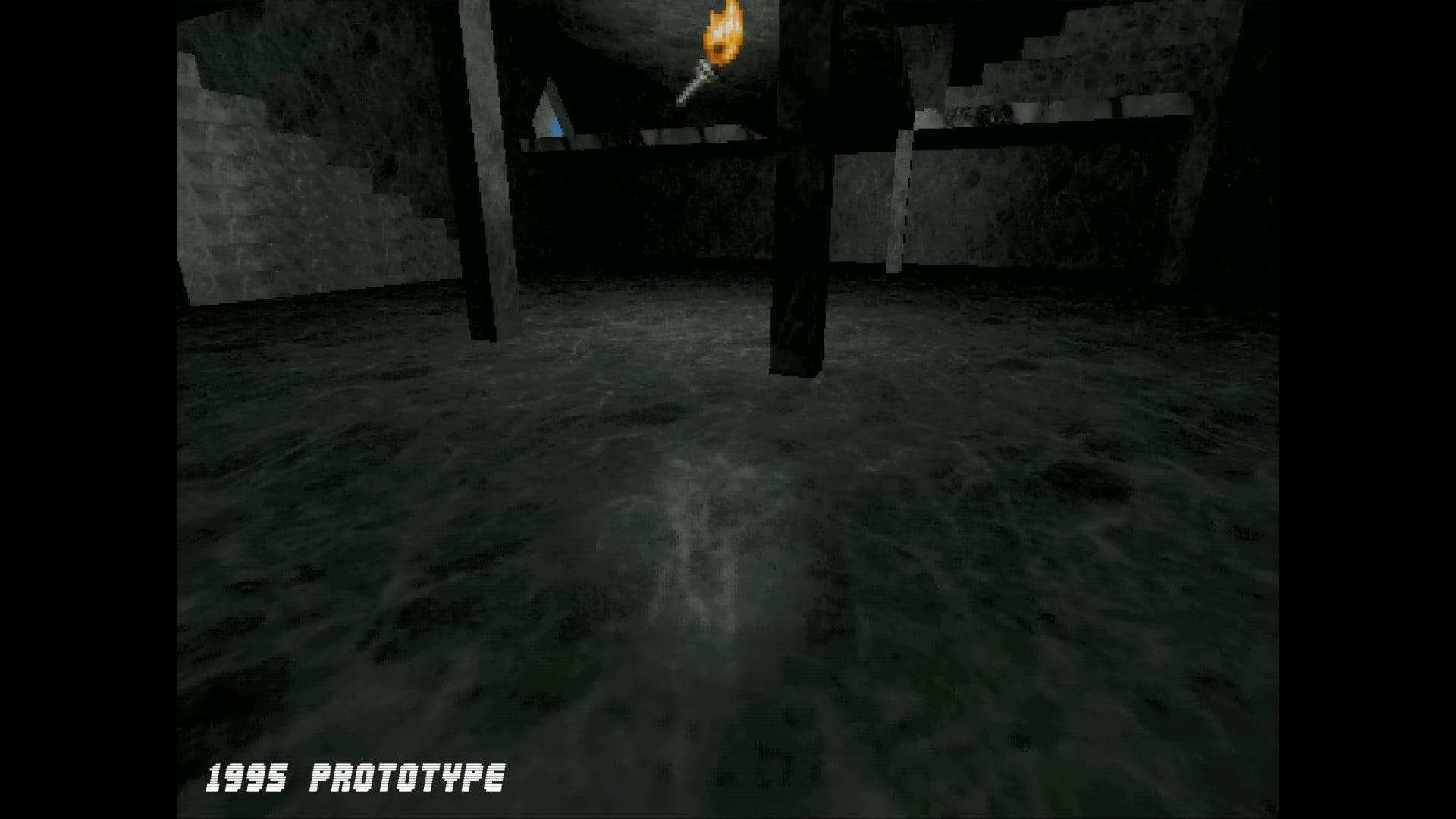
Unreal's path from development to launch has been laid bare thanks to multiple leaked prototypes, and we can chart the game's visual progress from an early, software-rendered build in 1995, through a 3D-accelerated 1997 prototype all the way to the final 1998 product. The 1995 "confidential beta" version is an early and experimental take on 3D rendering, and its zero-combat traversal is marked by rough, simple geometry and a crude specular lighting model on flat surfaces.
The 1997 prototype, tested by games journalists to create previews of the game, looks far more like the final game, complete with working combat and enemy AI. Still, most of the game's elements like maps, weapons and enemies were unfinished or unrecognisable - though select map elements made their way to the final game.
In an interesting technical note, playing the 1997 prototype on a period-appropriate Voodoo 2 system in its software-rendering mode reveals a few wholly different effects. Underwater views warp and distort the perspective of objects, while water surfaces and skyboxes look wholly different than how they're rendered in the final game.
That 1998 release was marked by sweeping landscapes and intense indoor lighting - with cinematic moments like lights going black in a tense corridor or the player's first walk into a fully open landscape with waterfalls and tall cliffs. And with a compatible 3DFX card, the game's Glide renderer delivered full RGB textures in 16-bit colour, vibrant light maps and a colour palette beyond the limits of 1998's Quake 2.
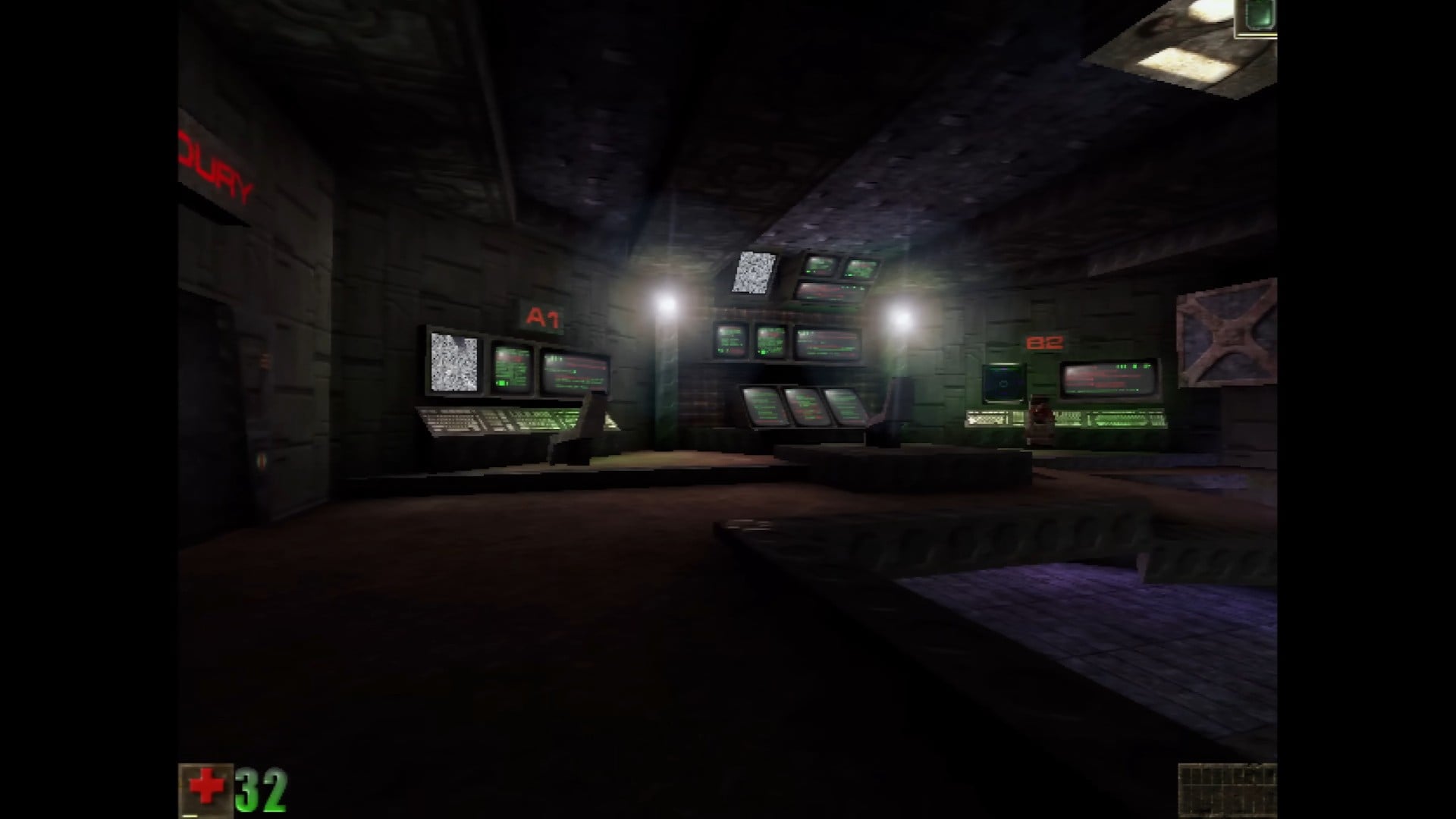
Additionally, Glide supported secondary texture layers that appeared when players stood incredibly close to surfaces to simulate fine details in stone, wood and metal - along with a volumetric fog system that could be placed in specific pockets of levels to build atmosphere. Circular light crowns additionally added cinematic flair by having lens flare effects fade into and out of occlusion just like they might as viewed by a camera. The fluid material system for animated surfaces and torches added life-like motion to water and fire alike, while skyboxes included combined textures that scrolled at different speeds to outdo other games' skies and clouds.
Without OpenGL support in the early wild-west days of 3D accelerators, Unreal players on PC were limited to two other rendering options. The PowerVR-based PowerSGL library worked with that more modest hardware library, and in Unreal, its visuals looked inferior to 3DFX Glide. Muted colours, blockier skies, lower-resolution textures, altered geometry and visual artefacts are apparent in side-by-side comparisons.
Even something simple like grass suffers from reduced texture fidelity and completely different colours on PowerVR systems, while more severe differences like altered distant geometry, shrunken lens flares, inferior water rendering and missing volumetric fog disrupt the game's visual character altogether. This comparison makes Unreal look like it was truly built around 3DFX Glide as a hardware expectation.
Interestingly, the most severe fallback option of software rendering arguably received a purer visual experience than PowerVR, with Epic replicating nearly every effect enabled by Voodoo graphics cards. Texture filtering via software is simplified but produces more Unreal-appropriate textures, while light maps, fog, lens flare and geometry are all generally preserved. Transparencies suffer the most between Glide and software rendering, as these rely on a Sega Saturn-like dithering effect.
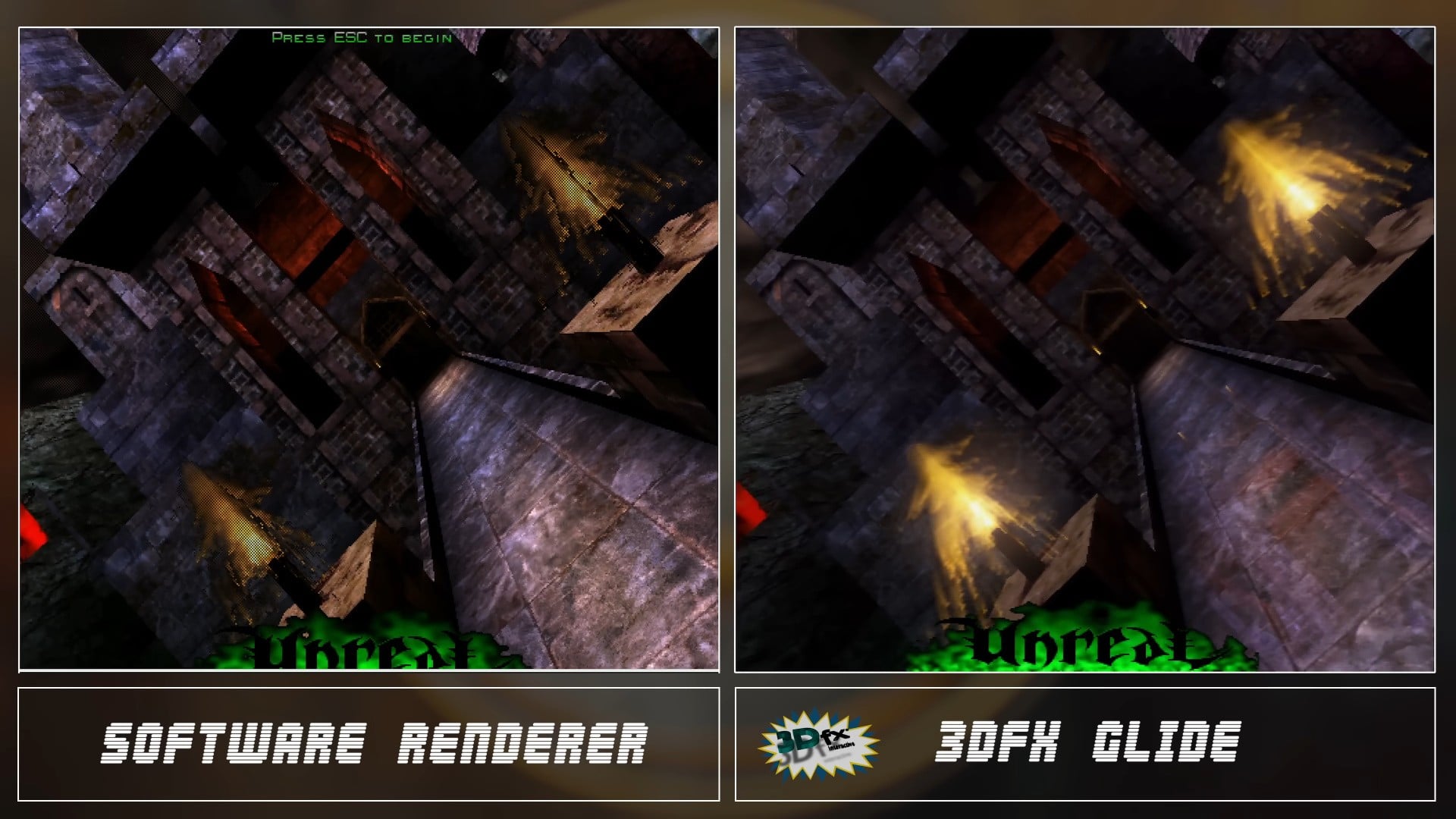
The biggest drawback to the software renderer was its performance impact, requiring high-end CPUs to reach playable levels at resolutions like 640 x 480 - and if your PC had that kind of CPU in the late '90s, it very likely had a Voodoo 3D accelerator to match, anyway.
By the end of the 1990s, Epic had issued downloadable updates to add OpenGL and Direct3D support - albeit those have their own issues with colour and effects rendering not matching the artistic vision portrayed by playing on the original Glide version. The Unreal modding community has stepped up to offer downloadable updates like texture packs and even the XOpenGL renderer, which renders all original Glide effects properly via OpenGL. Unreal Redux also remains in development as a feature-rich, fan-made update to the 1998 game's core.
Unreal RTX, meanwhile, saw an in-development release in late 2025 as an RTX Remix project with support for path-tracing, as built on top of the game's DirectX 9 renderer. Due to the original game's elaborate variety of materials, fans have had to pour in more effort than the RTX sales pitch of plug-and-play - to make sure an overhauled lighting model looks appropriate and realistic. The results are interesting and uneven - and they're worth a spin for anyone who appreciates how refreshing Unreal's own handling of lights and special effects felt decades ago.
Baked texture lights have been replaced with actual light sources, and material-based textures have been newly implemented to pair with the new lighting model - with parallax occlusion mapping to give these new textures further depth. Volumetric lighting is used throughout, as well, expanding upon the original game's pockets of volumetric fog. Instead of mirroring geometry to give the illusion of reflections, we now see full reflections - along with the impact of material properties on reflective surfaces.
Since lighting behaves more realistically, the RTX Remix version's repositioned lights can fail to evoke the same visual mood - as surfaces now reflect and refract light, which means light bounces differently than late-'90s baked lighting can recreate. But it's easy to imagine Tim Sweeney and co. being excited by these kinds of massive changes on an engine level for their 1998 game based on its original makeup. The changes include water-warping effects that resemble Quake 2 RTX, the increased effectiveness of flashlights and torches and shadow-specific touch-ups that eclipse the original game's moving-texture shadow simulations - seen on elements like light pouring through turning turbine blades.
The outdoor environs don't fare as well, as the RTX Remix mod's lighting can look odd, whether thanks to how specular lighting plays across the grass or how distant vistas are blocked out by light's interaction with fog and other elements. Some menu tweaking can let users dial in the RTX Remix's default settings to clear up some of the outdoor environs' issues.
Really, we encourage Unreal RTX players to tinker with the built-in RTX Remix menu system to find their ideal balance between classic visuals and modern lighting updates. More than that, we think Unreal RTX is a fantastic opportunity for 1990s FPS fans to revisit and fall newly in love with Epic's ambitious shooter - whose sense of tension and discovery remain as fresh today as it did in the early 3D accelerator era. Hopefully, the mod's continued development by fans will lead to even better balancing between the original 1998 game's aesthetics and the limitless potential of path-tracing.
Comments 2
I vividly recall playing the original Unreal back in the day. My impressions were pretty much "nice coloured lighting, but why is the environment made of about 12 polygons?". I was pretty unimpressed in all honestly, and I happily went back to playing Quake engine games, and the likes of those amazing looking Splinter Cell games on the original Xbox. I pretty much forgot Unreal existed.
There was a moment in gaming history years later, when the UE3 powered Gears of War came out that the engine really caught my eye and I thought it might be the future, but it didn't last. We were soon deluged with blurry, spluttery, ugly third party UE3 games.
Then we had the infamous UE4 era, the era of the stutter and glow in the dark lighting. Truly a dark time for the game industry.
I'd like to think better days were ahead but so far the UE5 era has been absolutely grim. Lighting is barely any better, stutters are apocalyptically bad, system requirements are far too high, and everything looks like mush.
Can we please go back to getting third party games in id Tech and CryEngine please? Pretty please? When I see the Unreal Engine logo appear when I boot up a new game I know I'm in for a bad time.
I totally glossed over this one back in the days. I think the first Unreal game I played was Unreal Tournament (1999).
Show Comments
Leave A Comment
Hold on there, you need to login to post a comment...