
 by
by 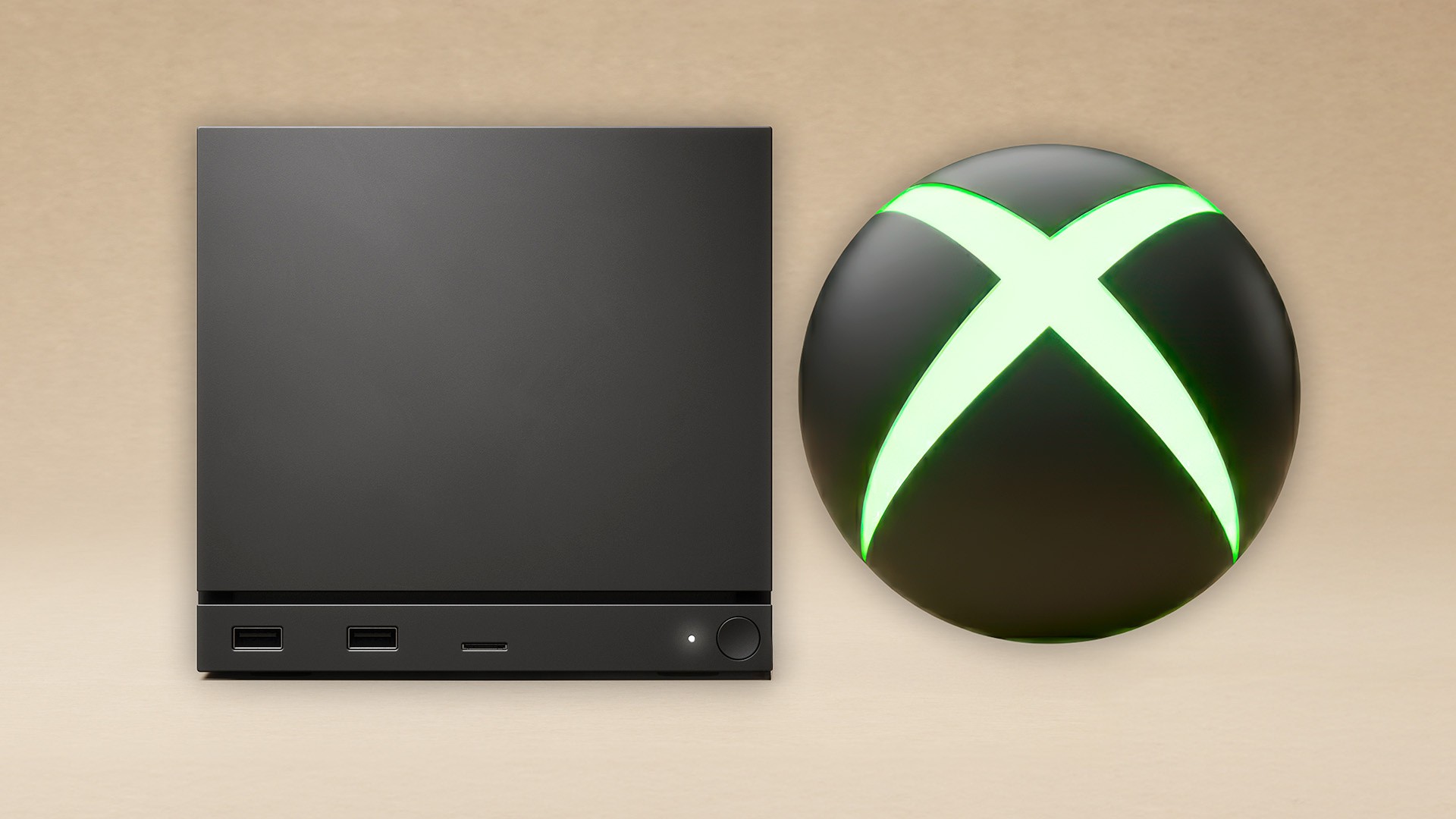
It's been a fascinating week for hardware news. On the one hand, AMD's Dr Lisa Su says that her company is on track to deliver the next generation Xbox processor ready for a 2027 launch. In the meantime, we're now a couple of months into 2026 and the far less capable Steam Machine still doesn't have a price or release date. How long will "RAMageddon" continue and are we looking at a cascade of hardware delays? Can Microsoft really launch a new console when the semiconductor market is in such a chaotic state?
There are effectively two topics we discuss in the latest edition of DF Direct Weekly - our landmark 250th edition! Let's talk about the Steam Machine (and indeed Steam Frame) delays. There's an interesting change in language here, with Valve saying it still intends to deliver the hardware in the first half of this year. However, Oliver has checked his notes from the event in November last year and Q1 was the release date mentioned to us.
Even so, the messaging from Valve is now clear: owing to the continued memory and storage pricing issues, it's unable to set a price for its new hardware. I'm not entirely sure it really is unable to do so - more that the volatility of the market makes setting a sustainable price-point viable. Component prices are fluctuating wildly, which has a knock-on effect to the makers of pre-built PCs, but once a company like Valve sets a price, it'll need to stick with it, at least for the rest of the year.
Meanwhile, the firm has other disclosures. It has doubled down on claims that this is a 4K 60fps machine, using FSR upscaling from a 1080p base resolution. Bearing in mind how many PS5 games can't do this, we still have doubts on whether this is possible - though Alex Battaglia pointedly reminds us that Valve isn't actually promising FSR2, FSR3 or FSR4. Standard FSR is an extremely cheap spatial upscaler built into SteamOS. Even so, Valve mentions that "there are some titles that currently require more upscaling than others, and it may be preferable to play at a lower frame-rate with VRR to maintain a 1080p internal resolution."
Improved upscaling is mentioned (and FSR4 support does seem to be a part of recent Linux developments) while ray tracing optimisations continue. The cool thing about this is that the open source nature of Linux, SteamOS and RADV driver development means we can track all of this as it happens. Valve is simply adding an official stamp to it. Meanwhile, there does seem to be cause for optimism on HDMI VRR support - despite the HDMI Forum blocking open source drivers from using the full feature set of the HDMI 2.1 specification.
Finally, Valve confirms that the SSD and the system memory of Steam Machine can be upgraded by the user, specifying that the unit uses laptop-style SODIMM modules. To give you some idea of how much a meaningful upgrade will cost over Steam Machine's standard 16GB, Amazon UK currently has 2x 16GB kits selling for around £300. The sky-high prices for memory puts into perspective the quandary Valve faces in announcing a price and a date for both Steam Machine and Steam Frame.
With that in mind, where does this leave the next generation Xbox? If Dr Lisa Su says that AMD is ready to mass produce the most powerful console processor ever made for a 2027 release, that gives us at least some good news: that there is provision at chip manufacturer TSMC for 3nm wafers - and enough of them to deliver a console launch. However, with the machine likely using GDDR7 memory, the question is whether Microsoft will have the modules available to get the console to market.
In a somewhat optimistic statement that may come back to haunt me, I do think that 2027 is likely for the next Xbox and I think there are a couple of good reasons to say that. First of all, we need to understand that Microsoft has already said that the new Xbox will offer a premium, curated experience. Premium means expensive. Expectations have already been set for the console that will offer the "largest technical leap" from one generation to the next. Nobody expects a cheap machine in a world where even Series X sells at a premium. Also, the nature of the Xbox business as it stands now, along with its premium nature, means that this is unlikely to be a cost-conscious device designed to sell tens of millions of units.
And I think the positioning of the new Xbox is going to be key. Fundamentally, this is an open piece of hardware you can run other PC stores on. You are not limited to the Xbox Store, but I would expect there will be advantages in doing so (the "curated" experience Microsoft refers to) but the point is that cost comparisons won't be to PS5 or Series X, it'll be to other PCs - all of which also have to navigate the pricing of the memory market. At least by 2027, the volatility in costs should, hopefully, have reduced - even if the prices haven't.
My take on it is like this: the next generation Xbox isn't designed to be cheap. It just needs to be more powerful and offer more bang for the buck than a lot of the prebuilt PCs out there - and it can achieve that by leaning into the design stables that have defined every console since PlayStation 4. Rather than double up on silicon for the CPU and the GPU like a standard PC, both of those components will be integrated into one processor (rumours suggesting CPU and GPU chiplets to mitigate costs). In this way, Microsoft could make a real impact on the PC market while avoiding another direct head-to-head with PlayStation. It would offer value but in a different category of device.
A potent but cost-reduced PC competitor can find savings elsewhere too. Rather than having to provide both system memory and VRAM, there's no reason why the unified memory set-up used in current consoles can't be used. What we're effectively talking about here is a centralised design on a single PCB - a far cry from the mass of assembled components found in today's PCs. There are disadvantages to this approach, however. The upgradability of the PC and the ability to build it to your own specification likely won't be an option. There's always a trade.
Likely based on cutting-edge Zen CPU architecture and next-gen RDNA 5 graphics, I'd expect the next generation Xbox to be a class apart from the Steam Machine which targets today's mainstream spec. In fact, we've built our own Steam Machine mock-up based on similar components, which should give some idea of how the machine will run - we'll have more on that soon. Next-gen Xbox? The core architectures used in that hardware aren't even available yet and while we have some idea of what they are, we're really looking forward to getting some more specifics.


Comments 6
They will want to make a profit on the boxes, especially as if the audience is high end pc gamers most of the software will be sold via Steam. I don't see Steam giving MS a big chunk of their store sale on the box.
Its a very complicated setup, and I don't see any cost efficiency really.
Obviously I don't know anything.
RAM prices are nuts, but it's the speed of change on the pricing that is so difficult to judge. They will likely have to lock down pricing both with suppliers and for us consumers for a time before confirming. Not an enviable task in the current market.
I am intrigued to see what the hardware can actually do outside of the specs, as on paper it doesn't seem to quite match up with their claims of 4K @ 60fps. Although a lot of people are only considering the very latest AAA titles which is a tiny proportion of the (currently) 25,302 games verified or playable for Proton on Steam Deck. The vast majority will work at high framerates and resolutions.
I'm also really looking forward to are reviews on the Steam Controller. Just going by looks I can't imagine it's very comfortable to use all 3 control options with 3 very different thumb positions for D-pad, Analogue and track pad. It looks uncomfortable and unwieldy, but perhaps it's not.
@themightyant I'm getting a Steam Machine for lighter weight PC games and emulation in the living room; as an accessory to my PS5 Pro, where I play most modern AAA games. and for that task, I think it'll be great.
The Steam Controller 2 is also something I'm extremely excited for. As for ergonomics, I think it'll be better than the Steam Deck, but not as comfortable as more traditional controllers like an Xbox Series or a Dualsense.
But the amount of inputs usable is pretty incredible and will be really really fun to have in a lot of games. Been using the original SC since 2017, and while I think the original is gonna be better as a trackpad first design, Steam Controller 2 will have a lot of flexibility.
It's a swiss army knife of inputs, and robust software to enable truly whatever you want. And as someone who's extremely picky about game controls, it'll be a great time in spite of the compromises of having so many inputs.
@Anna_Rae Should be great for that. Enjoy!
Personally I prefer the Steam Deck for emulation because anything before HDMI I think looks better on a small screen than blown up onto a massive 4K screen, those games were never designed for that. Whereas they still look fantastic on a smaller screen, especially Steam Deck OLED.
I still slightly regret selling my original Steam Controller... but I did make good money on it, and I didn't actually use it much.
I am interested in the Machine from a tech perspective but will not be getting one as I already have a better PC so I have no need. I also have no interest in buying the Deck, again interesting tech but I only play games at home on TV or monitor and not on the go so it does not fit for me (my Switch 2 only gets used docked as well). However the Controller looks a great option for when playing with it sent to my living room TV or when some games need a controller either way. The Frame for me though is close to a day one purchase if there is availability. I have been wanting to get a VR headset for a while and all the current offerings seem to have too many weaknesses in different areas and the Frame seems to deal with all of those so I will finally get into VR and also want to use it to go back and enjoy some games in stereoscopic 3D that are old school 3D as well.
The next XBox I just cannot see the point in, it will be more expensive than a PS5/6, much more, but offer nothing over a PC where all it's games will be available anyway and with none of the Playstation exclusives. I just cannot see what the purpose of the next Xbox existing is.
Valve’s vague post about the Steam Machine made me nervous enough that I bought a 16L hp omen prebuilt with a 5060ti 16gb on sale for president’s day. I figured if steam machine is going to creep up to $1000 with those specs, might as well spend a bit more and get something significantly more powerful. Depending on launch and pricing, I may consider it for my tv, but I’ll have to wait and see. At least for now I have a fairly future proofed pc so I can ride out the ***** storm for a while.
Show Comments
Leave A Comment
Hold on there, you need to login to post a comment...