
 by
by 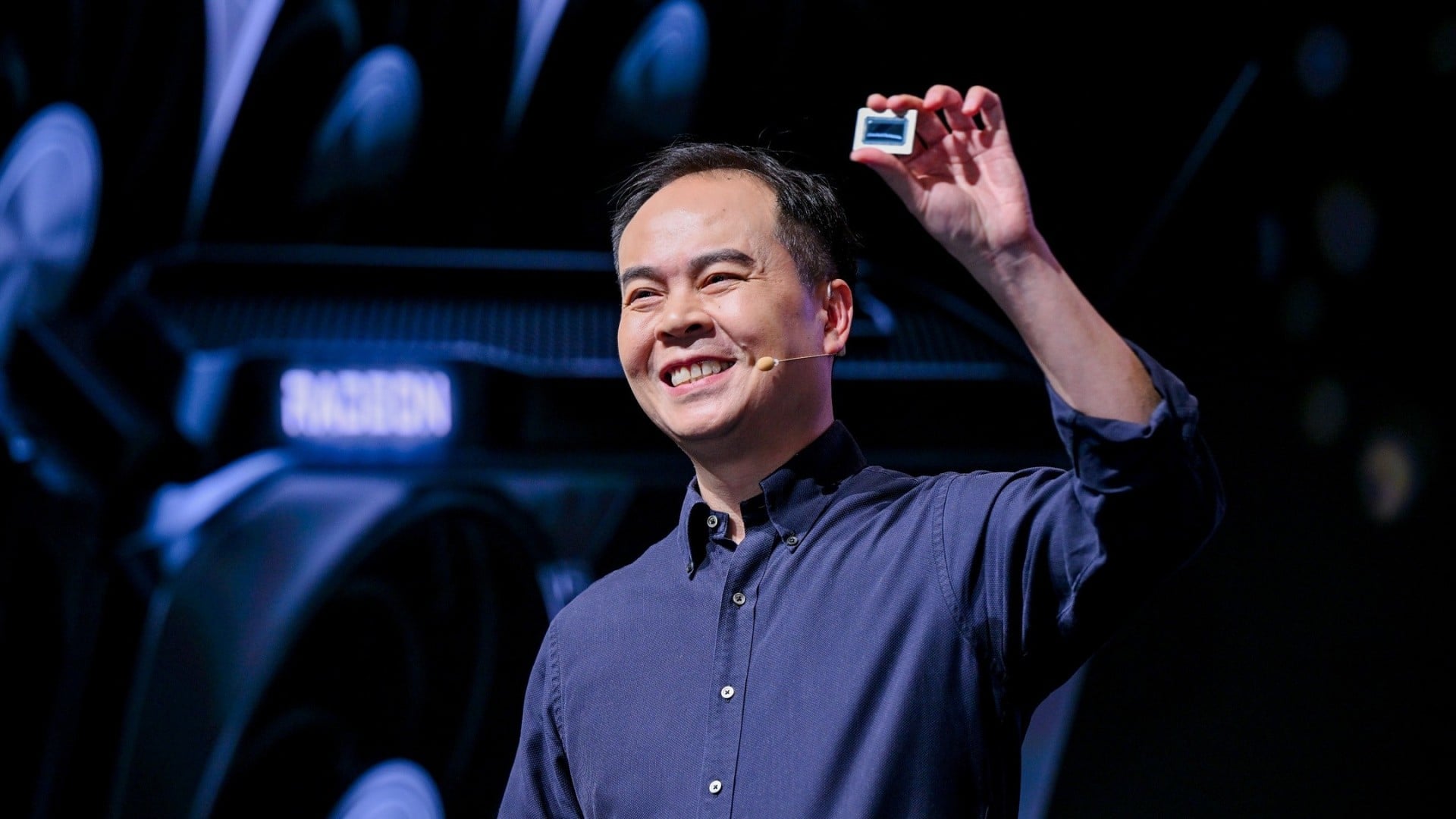
FSR 4 started as a Radeon 9000 exclusive technology when it was unveiled at CES 2025, but community efforts to port the AMD machine learning upscaler to older architectures - including that of the Steam Machine - quickly proved that a wider rollout was possible. The tech hit Radeon 7000 graphics cards in July, with Radeon 6000 models set to get official support by next year. Now, it looks like another square on the bingo card is being filled in, as FSR 4 is officially arriving for the AMD APUs that power gaming handhelds, laptops and mini PCs.
The news comes from AMD senior vice president and general manager of the computing and graphics group, Jack Huynh, who spoke to media in Korea including TheElec.
"We will expand the machine learning AI-based FSR 4 technology, which was first introduced to existing discrete graphics cards, to the entire product line - including APUs, gaming laptops and handheld devices by the end of the year", he said. As well as coming to existing models, Huynh also stated that FSR 4 would be a part of "new product lines."
The new product line would presumably be based on an RDNA 4 graphics component with hardware acceleration for ML-based upscaling, frame generation, ray reconstruction and other FSR 4 components, while existing products will get a lightweight FSR 4 model that is more performant on APUs without hardware acceleration that therefore struggle with the full-fat model. "We have newly developed a dedicated lightweight model that suits the APU environment... we are focusing on excellent game image quality and low latency", Huynh stated.
As we saw with the recently announced QSSR from Sony, such an approach can be extremely effective, establishing a middle tier that offers better image quality and stability than older analytical upscalers like FSR 3, while running faster than full-fat FSR 4.
In an age where new hardware is becoming increasingly unaffordable, stretching existing silicon to support more effective upscaling techniques is one of the few ways to keep graphical fidelity and performance moving forward. These early community FSR 4 ports have already proven useful, so it will be interesting to see how the official AMD implementation surpasses them - if at all.