
 by
by 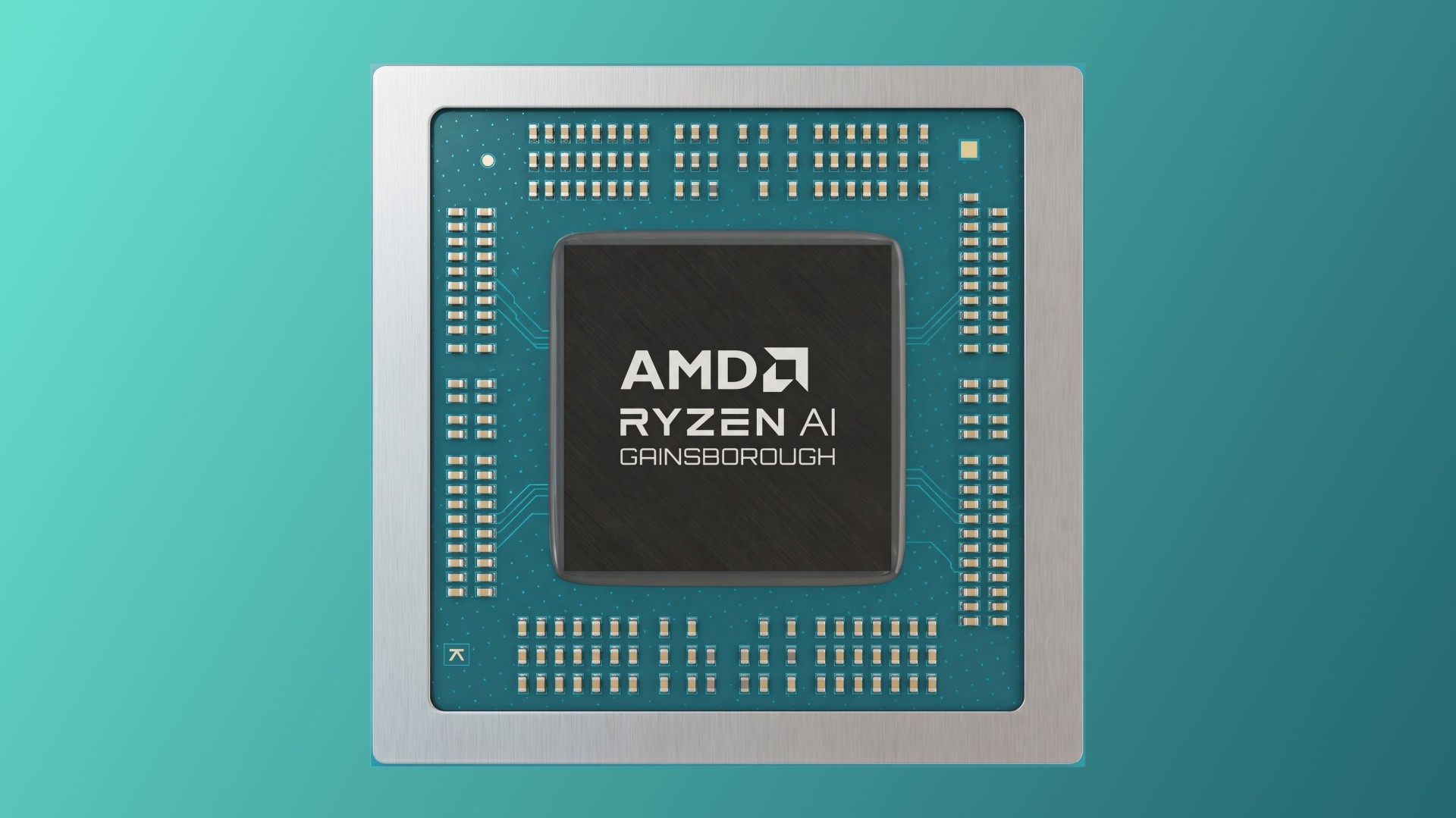
Rumours broke this week about AMD's next-gen handheld silicon, with some publications pinning the semi-custom "Gainsborough" APU to Valve's long-anticipated Steam Deck 2. However, based on what we think we know about the new chipset, it's too early to say definitively that the new chip is headed to a next-gen Valve handheld - even if some details do line up.
In short, the Gainsborough chip appears to be a customised version of the mooted Z3 and Z3 Extreme silicon from AMD, with leakers suggesting the most likely CPU configuration is a six-core design, matching four Zen 6 cores with two low power Zen 6c cores. The GPU side of the equation is reportedly a 12CU design using RDNA 4m, an architecture that adds some RDNA 4 machine learning silicon to an RDNA 3 backbone - more akin to RDNA 3.5 than full-fat RDNA 4. The entire package is built on TSMC's N3P process, with 15W and 25W power envelopes mooted.
The specs are some way from being final, but import records surfaced by Chinese technology portal IT Home suggest that the chips are being shipped, at least in small numbers - while the most recent AMD Adrenaline graphics driver also mentions the codename in its internal database. (ATLite3, rumoured by KeplerL2 to be the GPU codename for the PS6 chipset, is also mentioned.)
The excitement here is that Gainsborough is the the last name of Final Fantasy 7's Aerith - and Valve used the Aerith chip for the original Steam Deck, which was also a semi-custom design. The Steam Deck OLED, meanwhile, was powered by a chip codenamed Sephiroth. However, Sean Hollister at The Verge accurately points out that AMD, not Valve itself, was responsible for this naming convention, and indeed "Aerith Plus" was the codename of the Z2 A chip eventually used by the Xbox Ally - completely unrelated to Valve's efforts.
Hollister also highlights the chip's dimensions. At 25x25mm, Gainsborough is notably larger than the silicon housed inside both the original LCD Steam Deck and the Steam Deck OLED. A larger chip package wouldn't be impossible to include, but would necessitate a more radical internal redesign.
Perhaps more critically, Valve representatives have stated on many occasions that they're not looking to push out a Steam Deck 2 as soon as they can. Instead, they want the device to offer a genuine generational leap, and in conversations with IGN, stated that even "50 percent more performance at the same battery life" wouldn't be enough of a gain to justify a new model.
With that in mind, it's too early to definitively say that the mooted Gainsborough chip would do enough to satisfy Valve's high standards for Steam Deck 2 - even if the new model wouldn't arrive until late 2027 or early 2028, around the same rough launch window as next-gen PlayStation and Xbox consoles. Still, using the same basic silicon as the PlayStation 6 handheld would make sense for Steam Deck 2, and it'll be fascinating to see if more substantial evidence one way or another is unearthed as we hurtle towards next-gen.