
 by
by 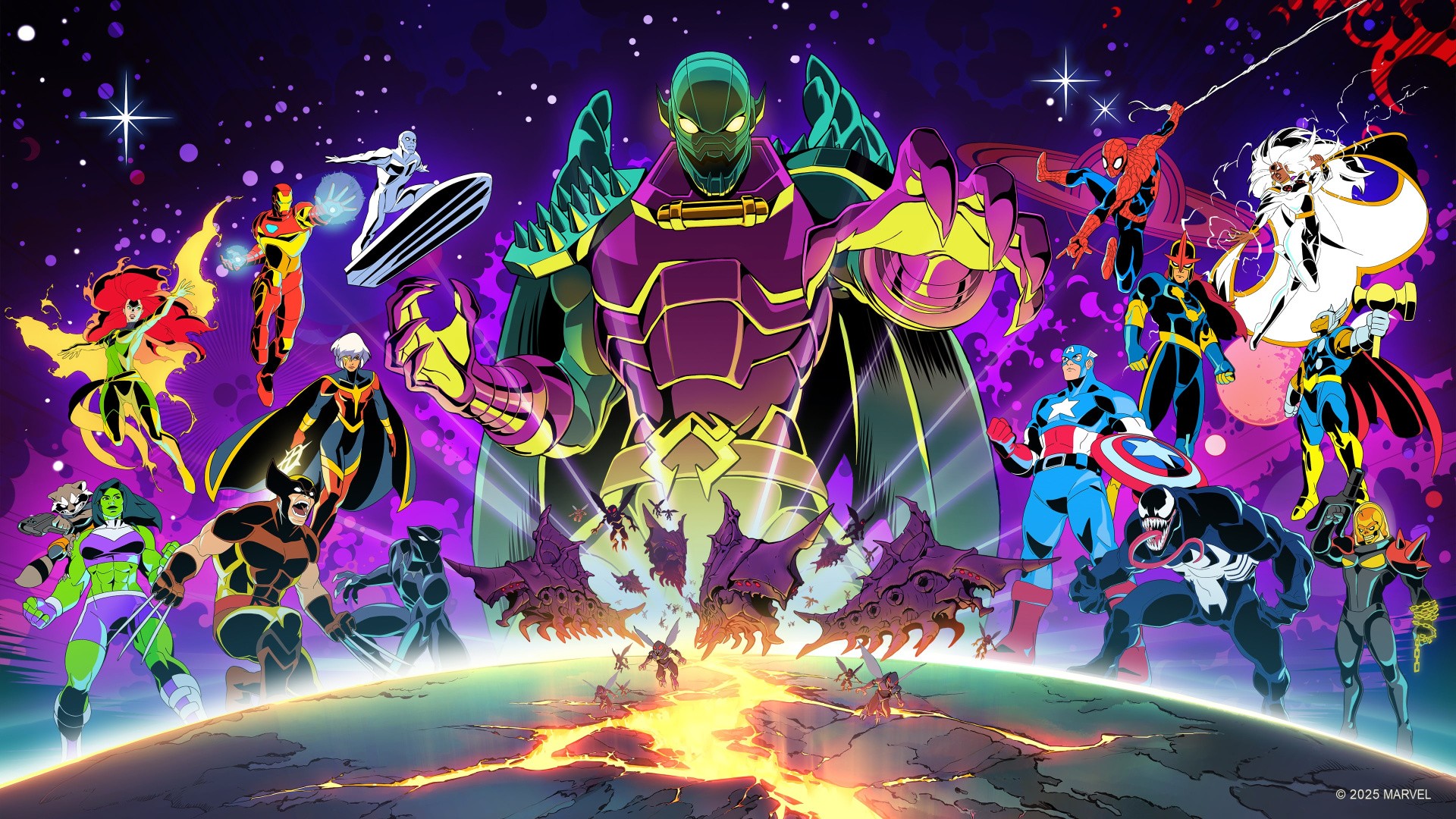
As a 2D beat-'em-up, Marvel Cosmic Invasion ticks many positive boxes. Its hand-drawn sprite artwork is impeccable, in terms of translating the ever-familiar cast of Marvel superheroes into a refreshing, semi-"chibi" style with bountiful frames of animation. Its aesthetic, both in art and sound, resembles a Sega Saturn classic and recalls equal parts X-Men Arcade and Marvel vs Capcom: Clash of Super Heroes.
And on a technology level, it bolts satisfying mechanics and increased sprite counts onto a prior game's framework. Marvel Cosmic Invasion sees the return of the Tribute Games engine that powered 2022's Teenage Mutant Ninja Turtles: Shredder's Revenge, only bigger and badder.
Out today on Windows PC, Xbox Series X/S, PlayStation 4/5, and Switch 1/2, MCI leans heavily into a nostalgia point introduced by Capcom's Marvel arcade fighting games in the 1990s: character swapping and assists. In this beat-'em-up, each player selects two superheroes from a 15-strong roster, then swaps back and forth between each in the course of a four-hour arcade-styled campaign.
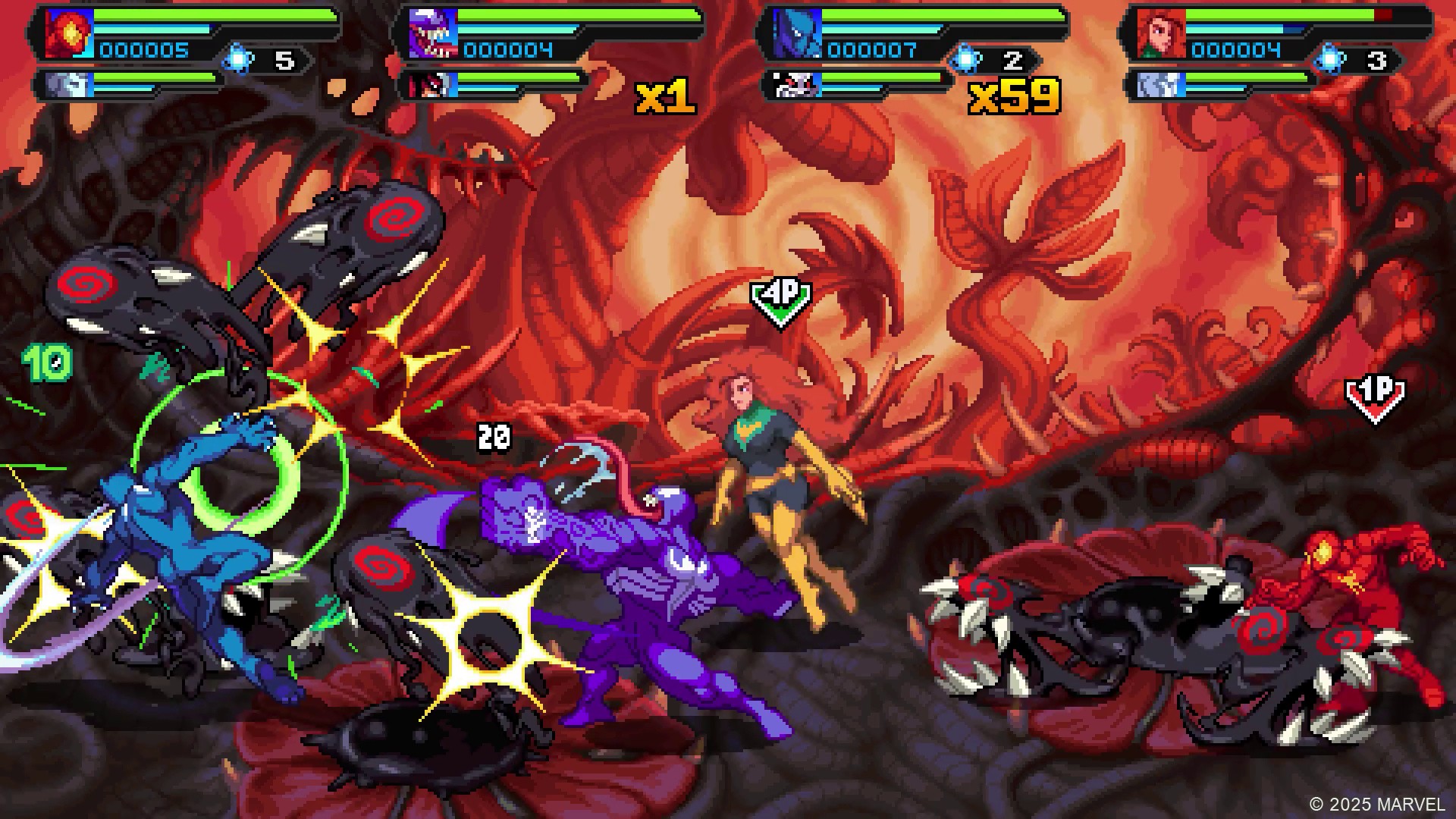
What's more, there's no limit or energy meter that restricts how often you can tag in your second hero, and the same goes for accessing their "assist" abilities. You can toggle each backup hero's basic manoeuvres by combining the "swap" button with any action button, or tap the swap button while in the middle of a melee combo to have the second hero add a few punches and then jump back out of the fray.
Tribute Games has thus cranked up the intensity on all ends of its existing engine: a larger flurry of pixel-art sprites for superhero duos, and more simultaneous enemies, threats and even foreground and background sprites to fill out the rest of the screen. Monsters, terrified civilians and environmental objects regularly speed outside the combat zone to sell a sense of superhero-battling chaos.
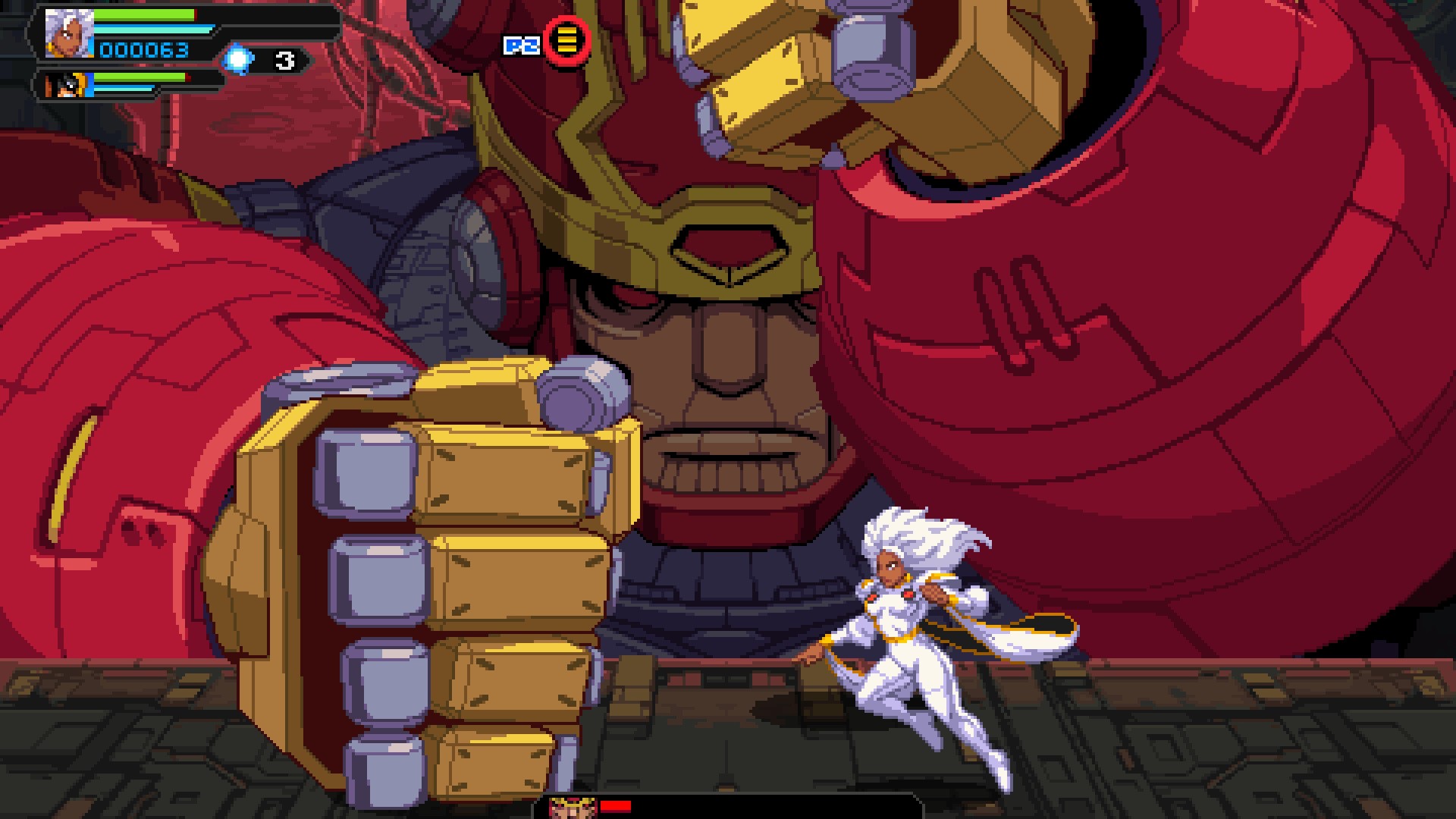
The result is somehow more frenetic than TMNT:SR, made all the more intense by each hero having their own effects-smothered superhero abilities - as opposed to each Ninja Turtle having largely similar movesets. Yet in our pre-release testing, we've only seen MCI frame-times spike when select mid-air enemies enter the action - suggesting some kind of specific sprite-loading bug that we hope is easily addressed. This may also relate to the game's new mid-air mechanic, where flying-capable superheroes like Storm and Iron Man can double-jump to hover and contend with flying foes - an interesting wrinkle that may force you to select an air-ground hybrid duo.
Our launch-day review was conducted primarily on Windows PC and PS5. We'll circle back if we uncover any particular lurches or issues on lower-end platforms like Switch 1, PS4 or Xbox Series S, and we'll keep an eye out for online multiplayer issues once the game goes live, as MCI thankfully supports cross-play across all platforms. Unlike TMNT:SR, which had co-op player maximums of six on some consoles and four on others, MCI caps its simultaneous player count at four on all systems.
The important technical note here is that TMNT:SR was already built to juggle a screen-filling onslaught of sprites, so everything you remember on a performance basis from that game seems to have returned wholesale this time around. The same goes for UI and menu structure, which adopts much of TMNT:SR's fonts and iconography.
New to this latest Tribute brawler is an added push for players to go back and replay levels. MCI organically encourages jumping around the game's full superhero roster by doling out experience-point level-ups and currency used to unlock perks like arcade mode modifiers, alternate superhero colourways and songs for the in-game music player. Those arcade mode modifiers, in particular, add life to that very challenging mode, including tweaking enemy AI to your satisfaction.
In the immediate afterglow of beating the brief campaign, this carrot-dangle made further replays through the game's "arcade" mode all the more enticing than on TMNT:SR. That game's level-specific challenges return to MCI's campaign mode, as well, only this time, each requires using specific superpowers - so Wolverine gets different blade-focused challenges than Spider-Man's web-slinging requirements.
And you'll want to put in the legwork to enjoy those songs in their dedicated player, as the game is scored by DF favourite Tee Lopes (Sonic Mania, TMNT:SR). MCI features a fascinating direction for Lopes's music, as he combines era-appropriate synths and MIDI and highly compressed organic instruments like electric guitar and drums. The space-rock result sounds like X-Men Arcade's OST as run through a rose-tinted nostalgia filter.
We're glad to see that Tribute has done enough with an existing, familiar engine to give MCI its own sense of identity and combat rhythm. The resulting package truly does for X-Men Arcade what TMNT:SR did for 1990s Ninja Turtles arcade brawlers.

Comments 3
I'd been so excited for this ever since it was announced based on just how good Shredder's Revenge played.
It sits alongside Streets 4 as a permanent install on my Switch and PS and it looks like I've got two more this year with Cosmic Invasion and Absolum!
I really enjoyed Shredder's Revenge. Might have to go ahead and pick this one up. Love the art and a good beat 'em up is always welcome.
I was so happy to see this announced, especially since its non MCU Marvel. I have uet to play any od these 2D beat em up revivals these past few years sadly, hopefully I can get my kid into them so I have a partner.
Show Comments
Leave A Comment
Hold on there, you need to login to post a comment...