Last week, Digital Foundry attended Valve's SteamVR showcase in Seattle - the chance to get to grips with the new, almost final HTC Vive virtual reality hardware, plus the opportunity to play 12 different VR games, all of which will be available when the Vive releases in a couple of months' time.
The showcase itself was remarkably well-orchestrated. Taking place in a specially designed area within Seattle's Fremont Studios, 12 different, enclosed rooms each hosted a different game, with press budgeted 15 minutes of playtime per title, followed by 15 minutes to talk with devs, gather thoughts and write up notes before the next demo kicked off. A continuous throbbing hum in the background was punctuated only by a calm, pre-recorded voice offering a 'one minute warning' of the upcoming conclusion of the current time-slot, followed by a command to move on to the next room.
The end result was an almost continuous barrage of new experiences across a six-hour period - probably the most concentrated onslaught of raw gameplay I've experienced outside of a major tradeshow. And with so much content to cover, the next challenge is conveying the entirety of that experience to you. A simple list of games and descriptions just wouldn't cut it. What I've tried to do here is gather my experiences from the length and breadth of the event, and distil them down into eight distinct impressions of what we can expect from VR once the hardware finally becomes available.
SteamVR's killer app is... VR
The SteamVR showcase revealed no big budget exclusive triple-A game that will sell the HTC Vive, but based on the titles we've played, there's a strong argument that it doesn't need one. SteamVR's killer app is the experience and the transformative effect it has on gameplay. Old games become new again, simple concepts with 21st-century visuals that are simply enthralling. The experience is everything.
What we played
12 demos, with 15 minutes of gameplay on each followed up by 15 minutes where we could gather our thoughts, write up notes and speak to developers. This is what we played, in the order we played it in. All of these titles will be available for SteamVR at launch.
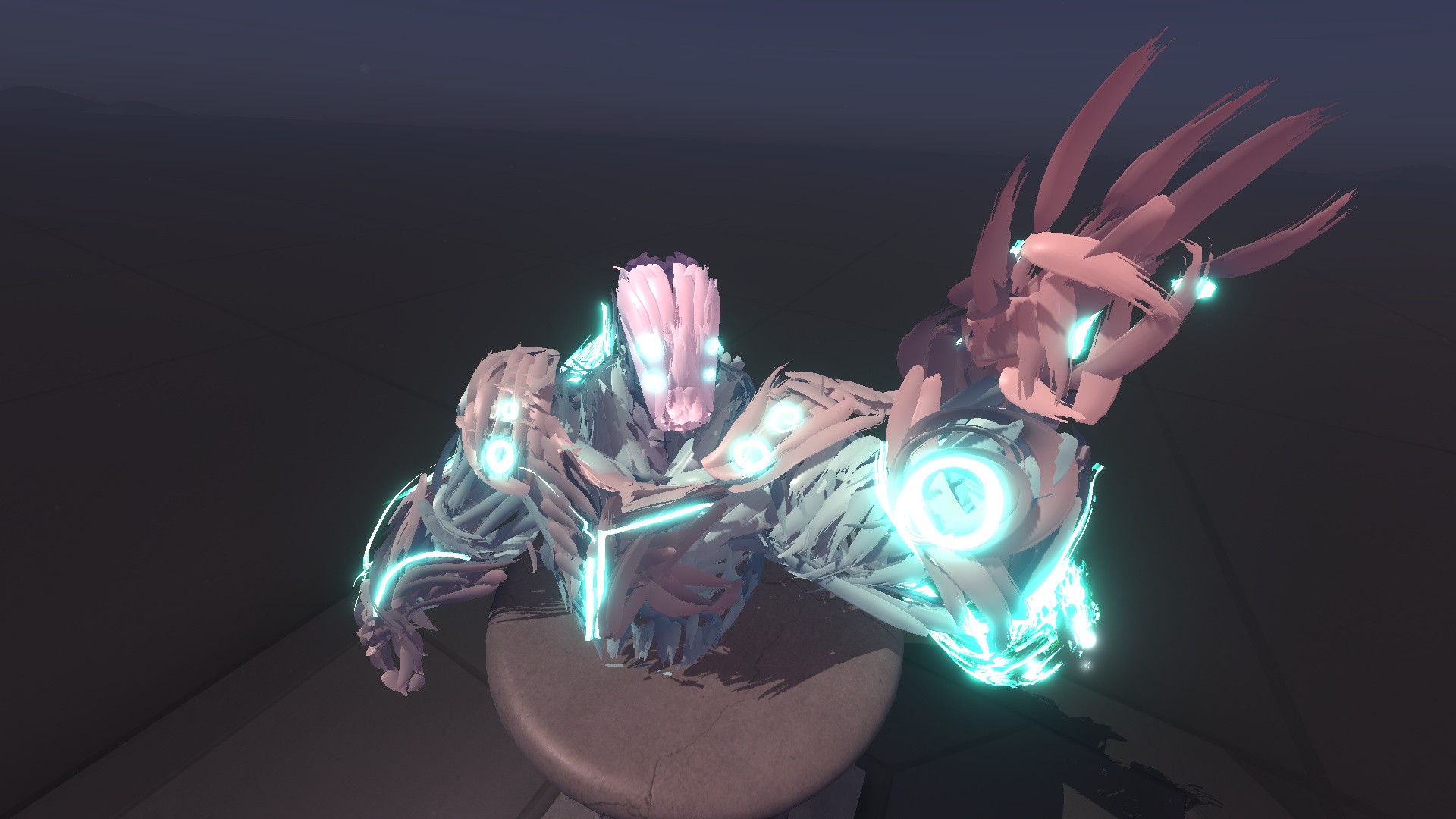
Tiltbrush
Not really a game as such, more an interactive VR art tool, created by Google. The toolbox and palette are held in the left hand, colours and creation modes selected with the right. Painting is carried out with the right hand. There's a selection of 3D environments in which to paint, plus a showcase mode that allows you to view other people's creations, and watch them take shape from scratch at 10x speed. This isn't just a VR art tool, it has the potential to be a full virtual reality art gallery.
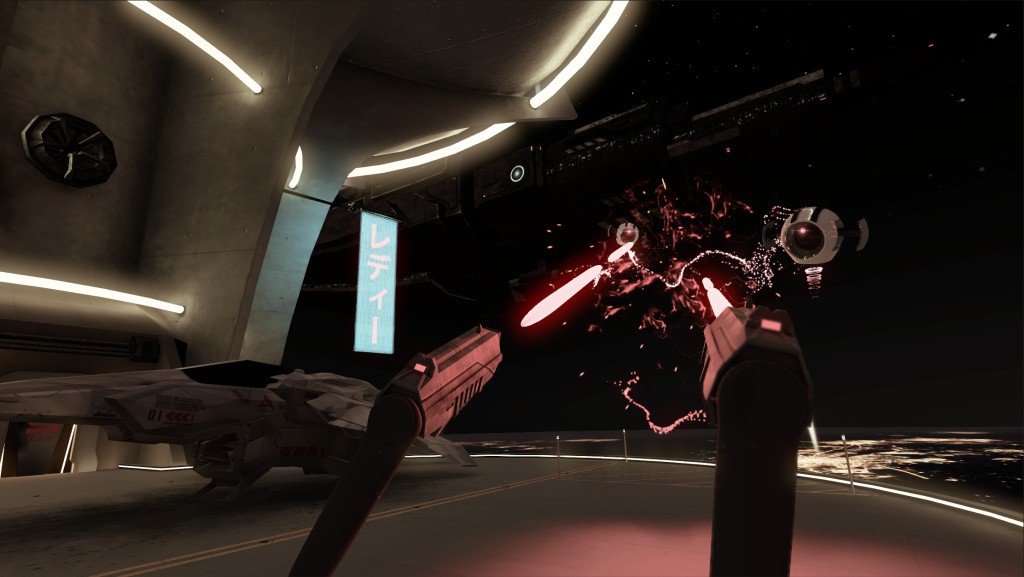
Space Pirate Trainer
At a basic level, I-Illusion's offering is Galaga in VR, with a twist - the player is situated on a dais, blasting at incoming waves of enemies, gun in right hand, shield in the left. The shield can be swapped out by reaching over your shoulder, giving you a second gun. The Vive touchpad allow you to change shooting modes - rapid fire and precision rail-gun modes are available. For those of us of a certain age, it'll take you back to 80s arcades playing Space Harrier - the gameplay is simple, but the overall experience is remarkably immersive. A great achievement for a development team of just three people.
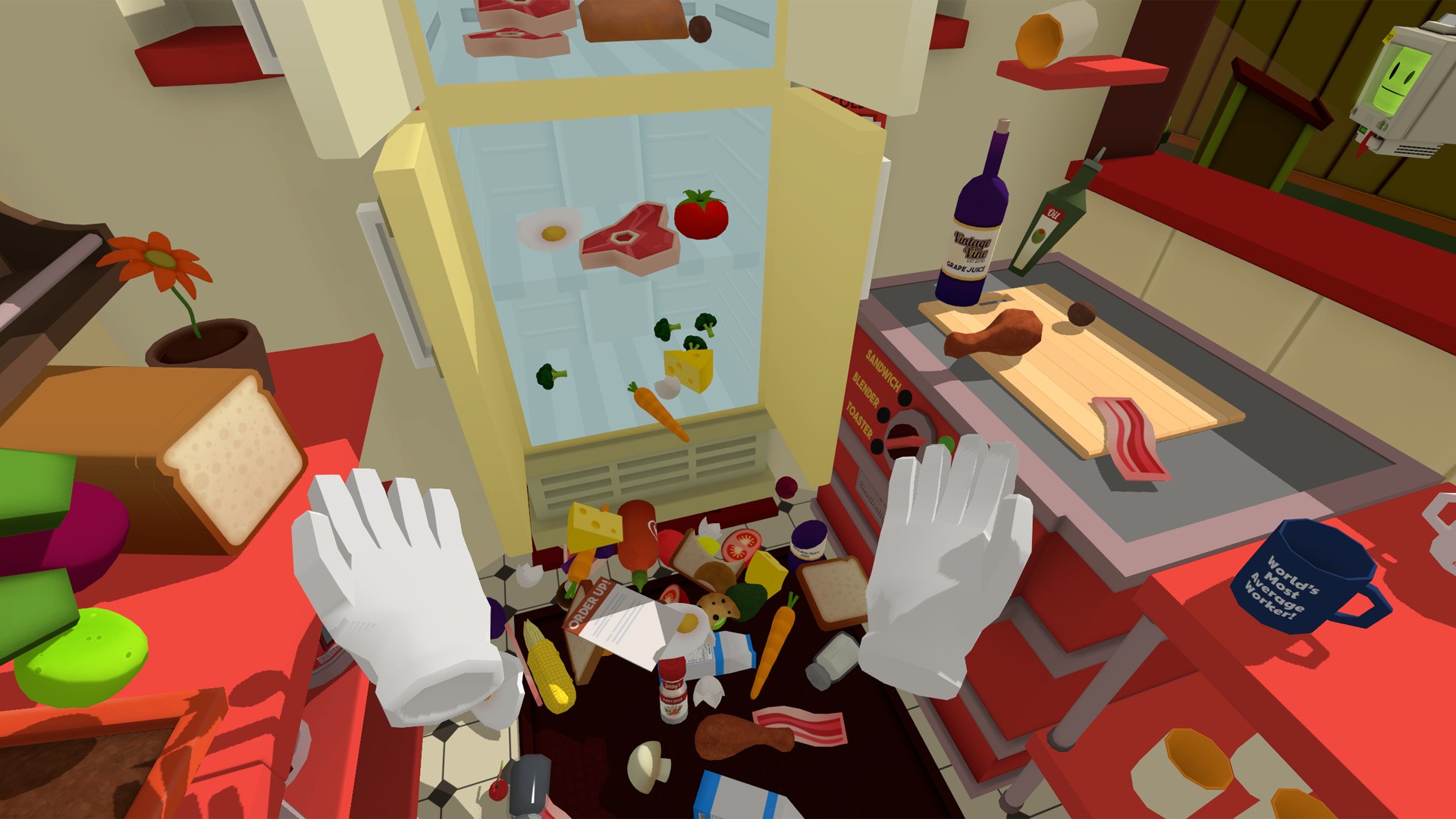
Job Simulator: the 2050 Archives
This game, created by Owlchemy Labs, can only work in VR. In the future, robots do all the hard work but the human population is bored - so they're tasked with simple, fun, slapstick jobs. I played in the kitchen, knocking up bacon and eggs, tea and crumpets and a smoothie. This game thrives on physical interaction with the environment, appliances, and ingredients. It's infectiously fun and hilarious to play.
Arizona Sunshine
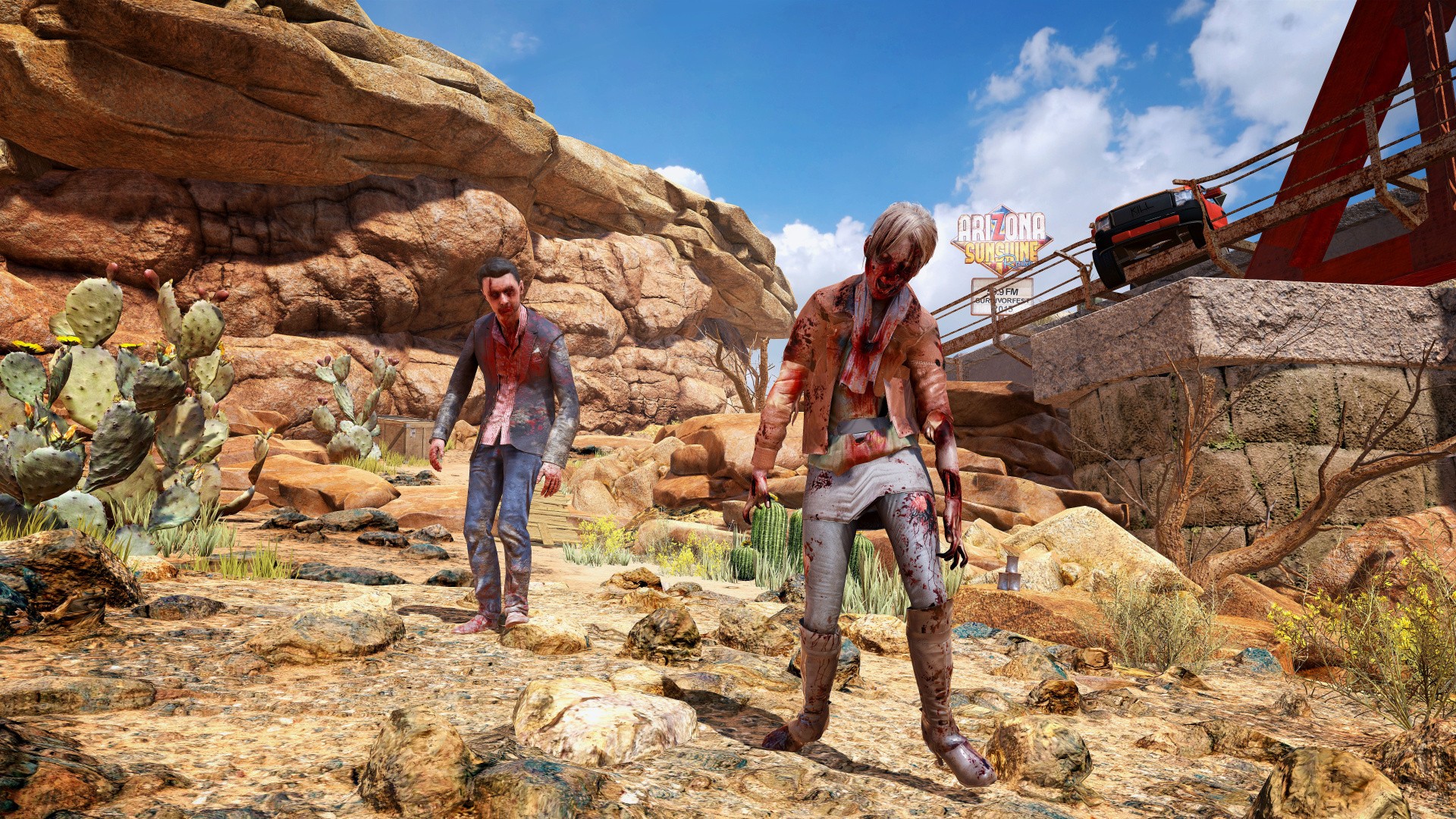
Vertigo Games' offering is effectively Virtua Cop in VR with a survival horror edge - you traverse various stages in Arizona, blasting oncoming zombies with four weapons: pistol, Desert Eagle, shotgun and Uzi. All have laser sights for precision aiming. Dual-wielding is supported, and ammo management is key here though the demo was lavish in supplying bullets. It's visually beautiful and the zombie ragdoll physics were superb. Bonus points for the flashlight you use when you venture underground - it maps perfectly to the 3D controller and enhances gameplay massively.
Final Approach
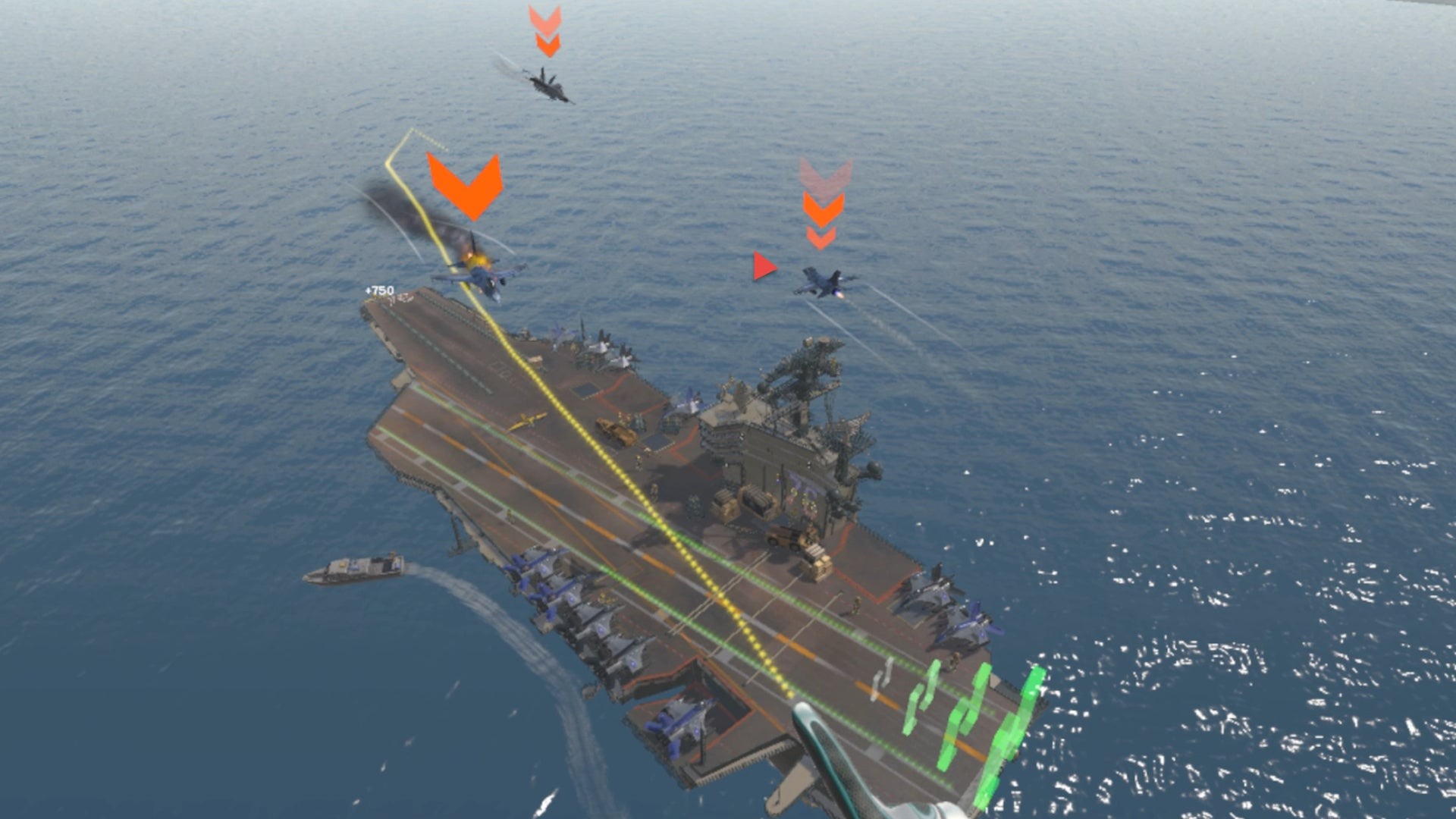
Created by Phaser Lock Interactive, this is a souped-up version of Flight Control and highlights how well god games could run in VR. There's immensely intricate detailing on the airport, aircraft carrier and city environments, where you walk around the play space, plucking planes from the air and guiding them in to land. There are focus points where you zoom in to ground level, clearing seagulls from runways, putting out fires - and even turning on air conditioning units. This was one of our favourite games at the event.
Audioshield
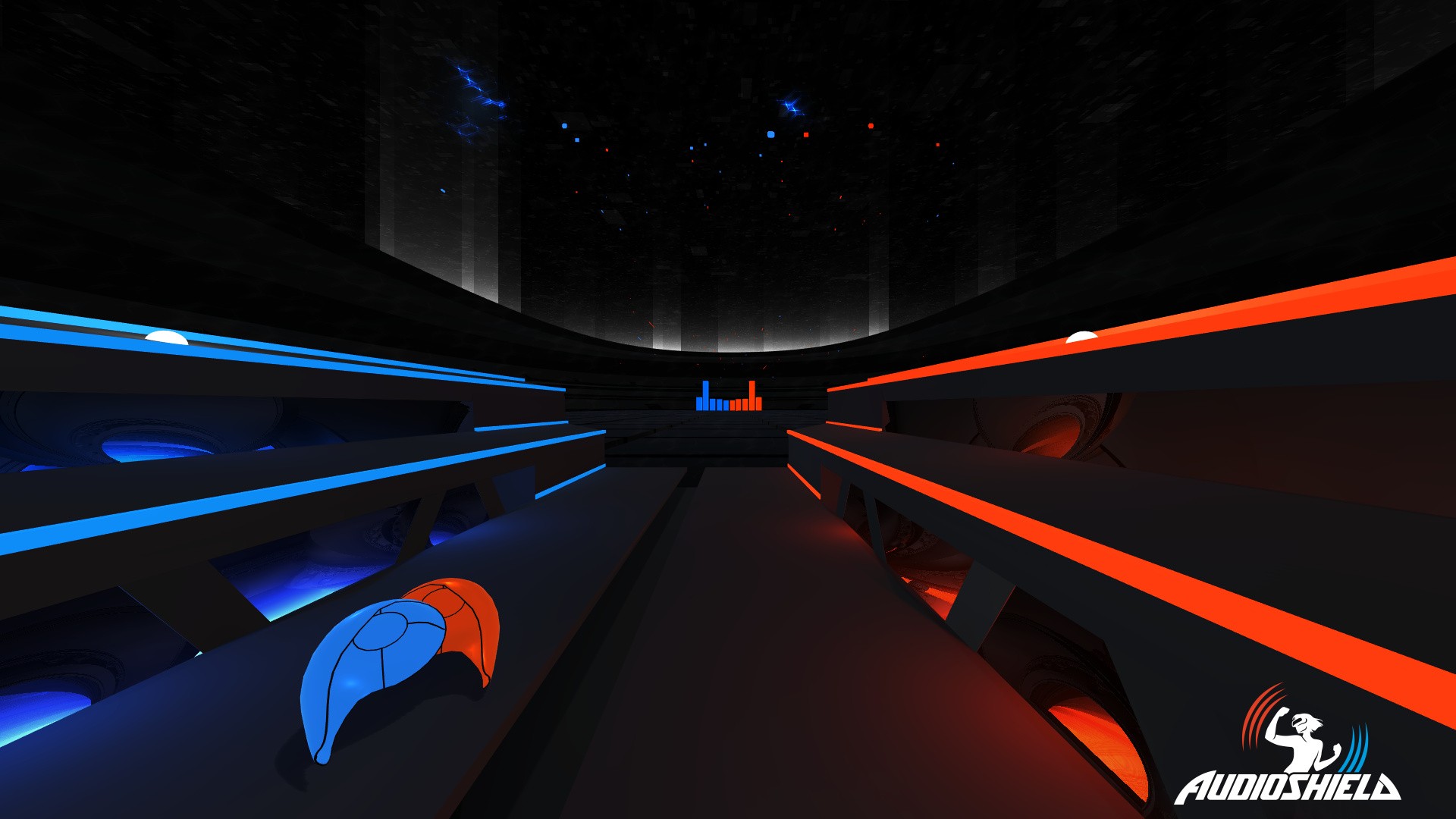
Based on Audiosurf 2, also developed by Dylan Fitterer, the gameplay here is remarkably straightforward. You have a blue shield in your left hand and an orange one in your right. Hold them up to defend yourself from barrages of procedurally generated coloured blobs that speed towards you in time with the soundtrack of your choice. Audioshield ties into Soundcloud for its music library, and the game itself is unlikely to ship with any in-built music at all.
Elite Dangerous
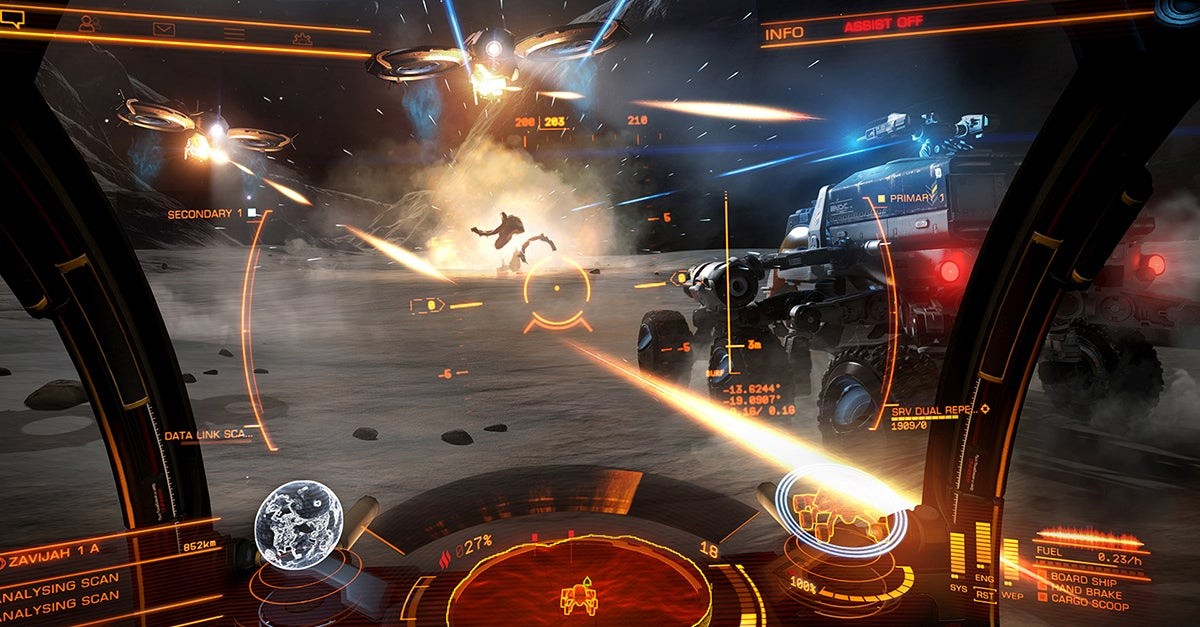
Developed by Frontier. Difficult to judge this one as the PC rig was misconfigured, causing frame-rate drops - the only title at the showcase to show this effect. Deep space cockpit combat was deeply satisfying, but exploration of the planet surface in the buggy was a deeply nauseous affair. We're not sure it's the frame-rate that's the problem here, more the careening movement that wasn't reflected in real-life. We look forward to re-testing this one. Elite Dangerous was the only seated game at the SteamVR event.
Budget Cuts
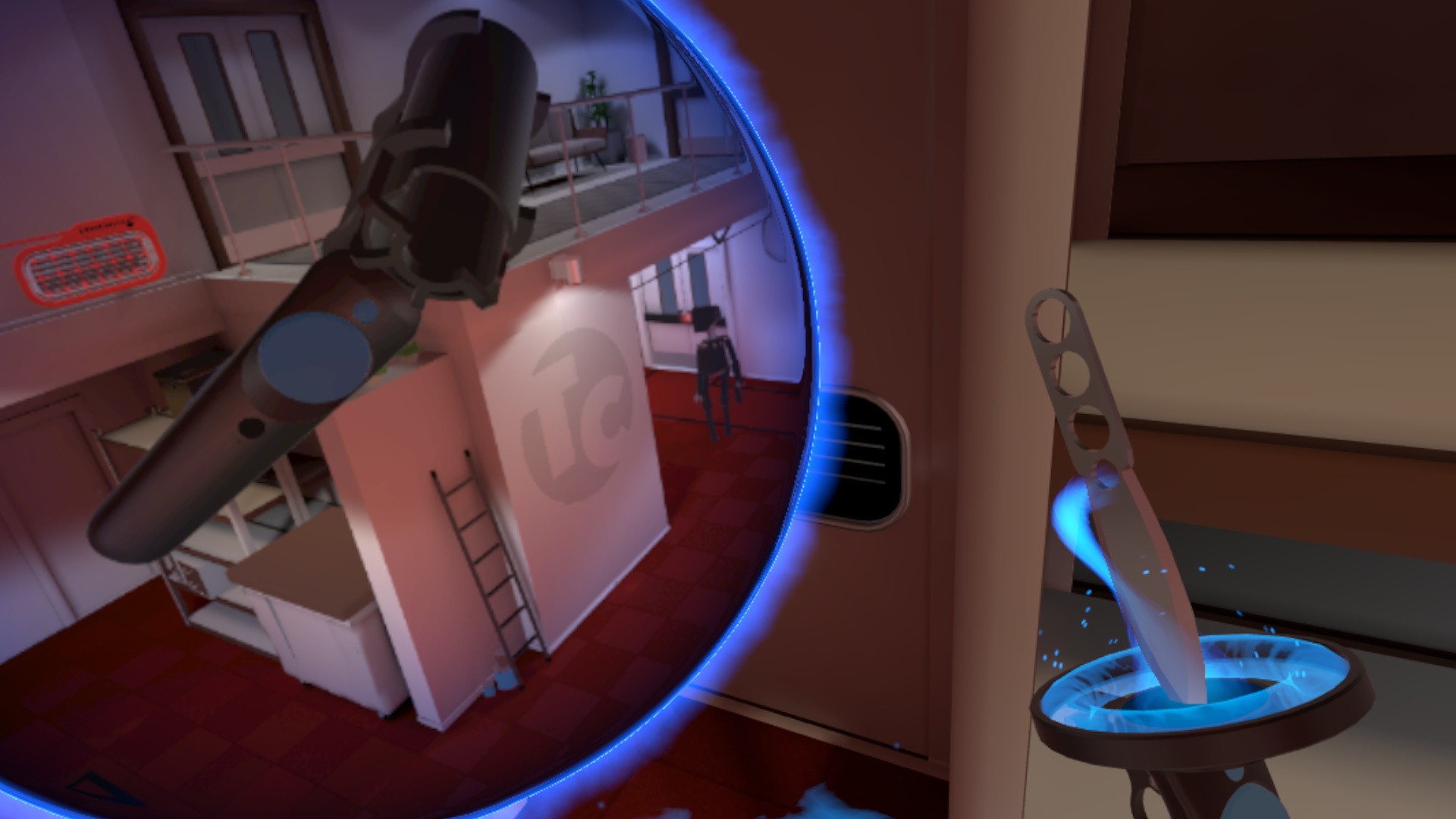
Brought to life by Neat Corporation, this is a first-person stealth infiltration title built for Vive, with heavy use of room scaling, so there are no current plans for Oculus or PlayStation VR. The idea is that you infiltrate a Mirror's Edge style office environment, using scavenged low-tech weapons to defeat sentry robots. You interact with objects using the 3D controller, but it's movement that is most fascinating here - you can duck under cover and dodge around doorways, but the main mode of transport is a tool similar to the Portal gun. Aim your weapon, fire a beacon and press the trigger to warp to that location. It's easy to use, highly intuitive and great fun. This game could be a defining VR experience.
The Gallery: Call of the Starseed
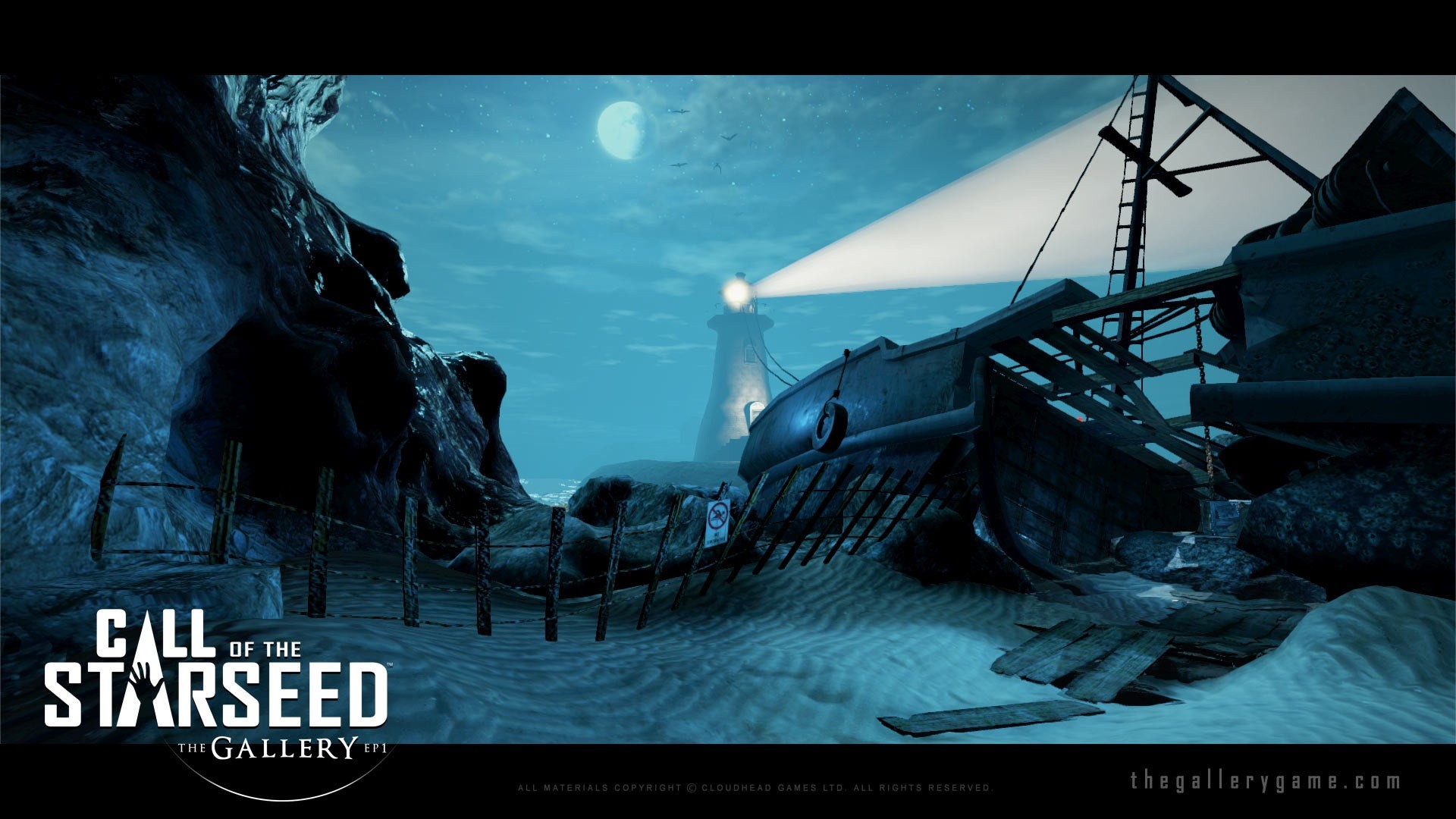
Created by Cloudhead games, this is an exploration/puzzle title similar to Budget Cuts in its movement mechanics, with a twist - you move the entire Vive play-space from point A to point B, rotating it with a deft swipe of the touchpad, and adjusting pitch on the target reticle using your head. Another highly intuitive control system where the two SteamVR controllers work as your hands in the game world - story tapes are dotted around the game world and you physically load them up into your Walkman. This seems like a big game and we barely had time to scratch its surface but the mechanics work and the visuals are beautiful.
Fantastic Contraptions
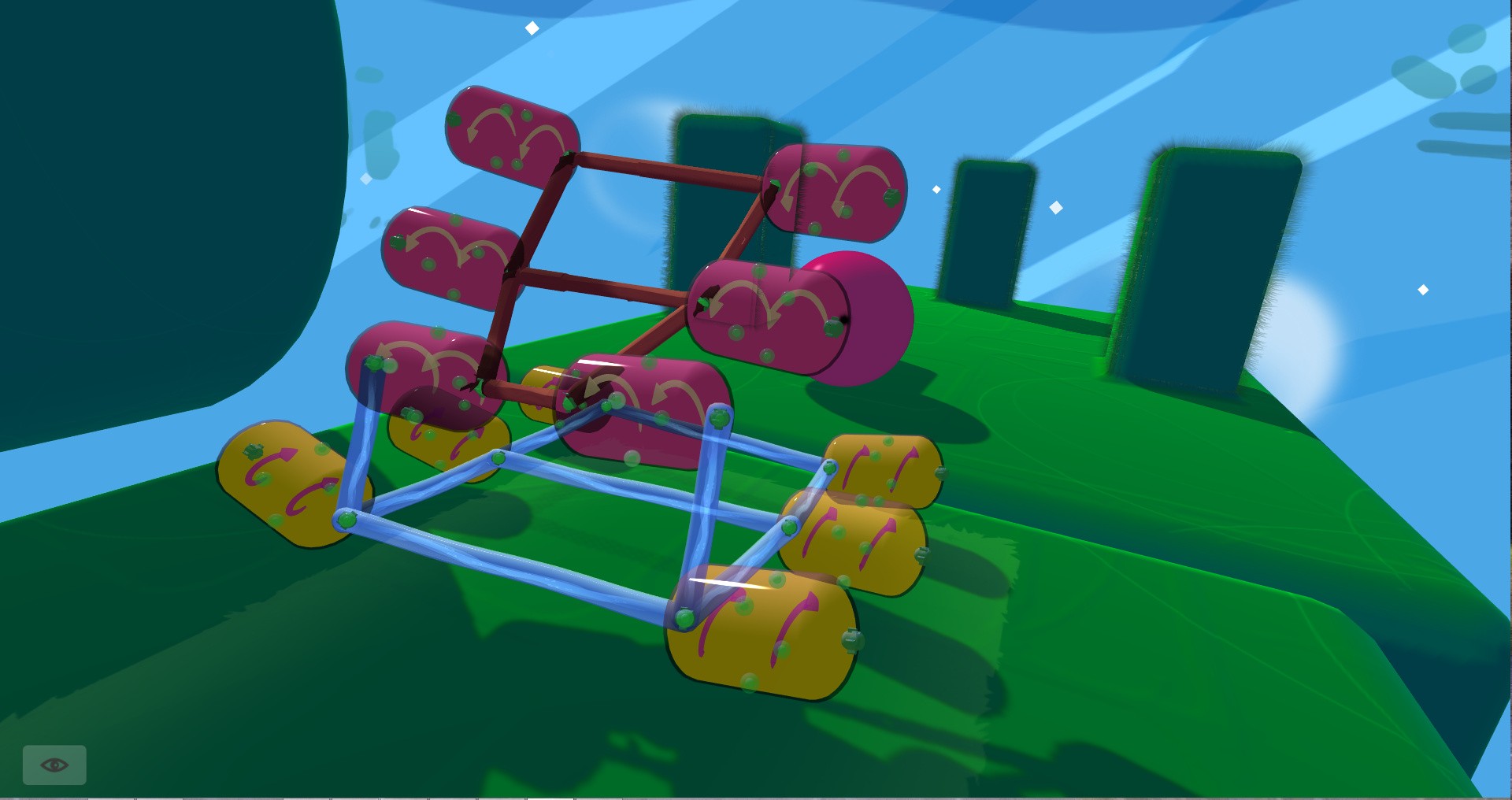
Developed by Northway Games and Radial games, this is another physics-driven puzzler, where you assemble crazy devices from components in order to complete set goals for each level. Wheels, extendable sticks and other widgets are all lashed together in order to create the titular constructions, with an ever-present VR 'cat' on standby to provide you with parts. Another game using room-scaling with Vive described as the natural home for the platform. Stuck on a particular stage? Download completed contraptions and see how they work. This is a powerful game based on logic and lateral thinking, but presented in an easily accessible, fun form.
Cloudlands: VR Minigolf
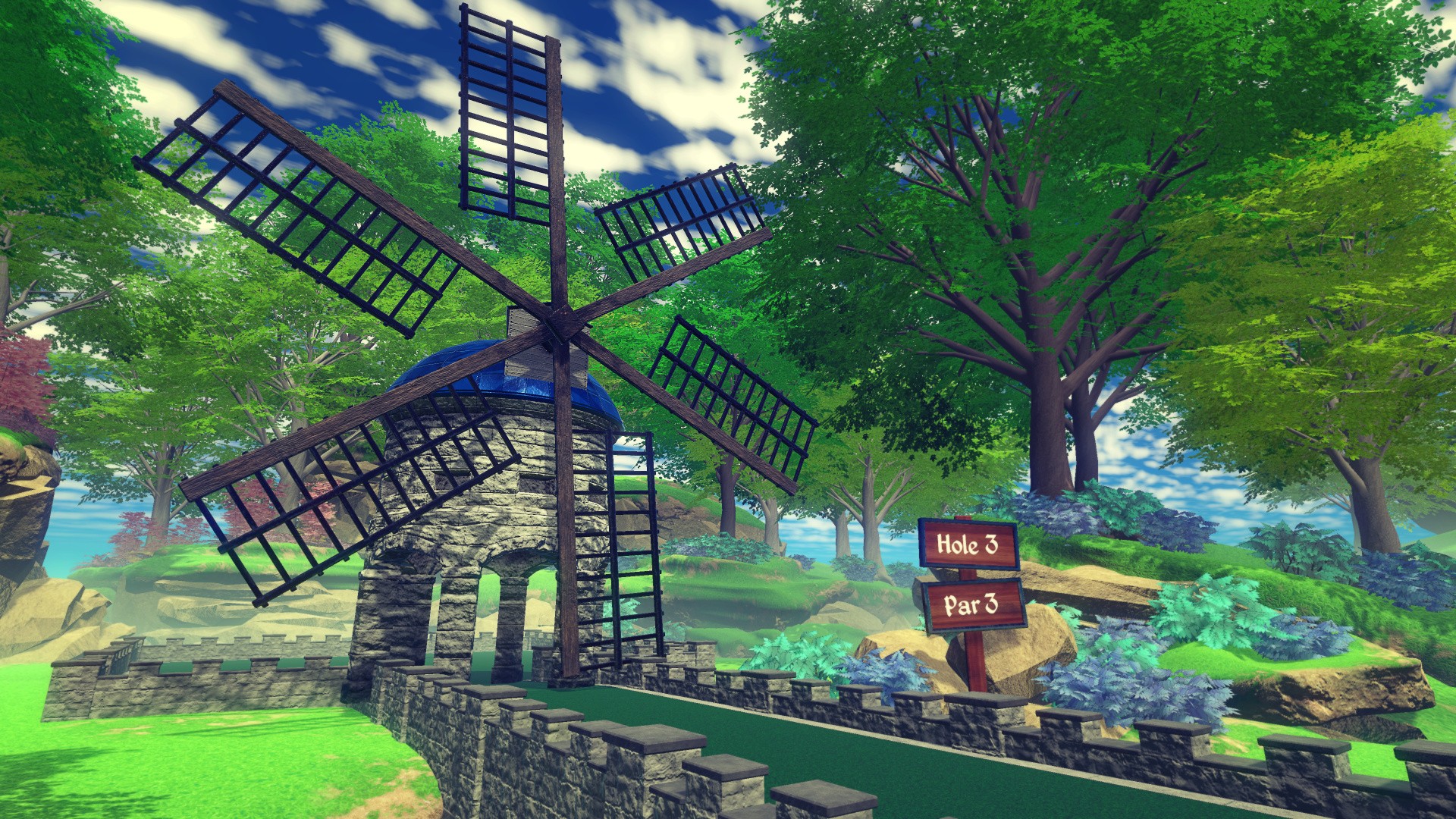
Devised by Futuretown, this is another game using the 'warp' mechanic to navigate the environment - simply pull the trigger on the Vive controller to transport yourself instantly to the position of the ball. This is VR crazy golf, with a SteamVR controller mapped to the club. The physics feel perfect, the look of the game is simple but fun and there's tons of imagination in the courses. This is a game that demands to be played in multiplayer - the question is how this will work in a VR environment.
Hover Junkers
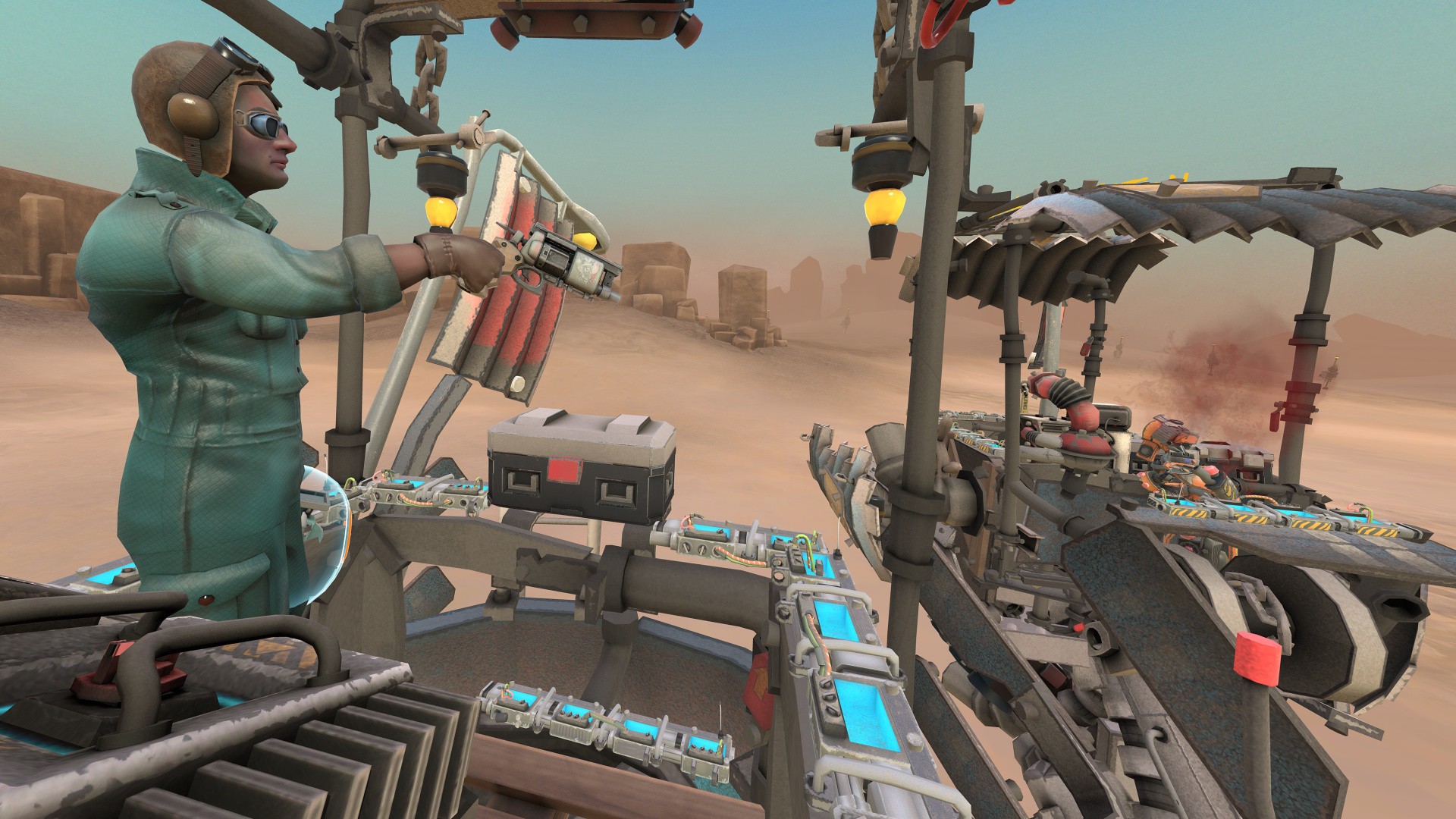
We ended on a high with this multiplayer shooter created by StressLevelZero. This is a paintball-style shooter with vehicular mechanics added in for good measure. Stalk NPCs and other players riding around the environments in their own junkers, lash up junk to the vehicle to give yourself extra cover then open fire using your pistol and shotgun. Online co-op as well as PVP is part of the package. The weapons feel great and the physics work beautifully.
In fact, the barrage of SteamVR games we experienced felt very much like the kind of assault to the senses you got when visiting the arcades as a kid. Strapping on the Vive headset transports you into an overwhelming gameplay experience - just like a tour of the massive arcade cabinets from the 80s and 90s. Vive's field of view is overwhelming, the stereoscopic 3D works in a natural, uncanny way providing unparalleled depth perception. Vive's head-tracking, response and frame-rates all work in concert to produce an effect that just works beautifully.
The arcade parallels continue in that many of the games we played were smaller games that combined SteamVR's formidable levels of immersion with fairly simple, but highly addictive gameplay concepts. Space Pirate Trainer could almost be considered a 21st century VR off-shoot of Galaga. Arizona Sunshine's zombie-blasting gunplay is highly reminiscent of 'target shooting' games like Virtua Cop. Cloudlands: VR Minigolf is exactly that - nothing more, nothing less - but the imaginative course design combined with the VR experience transform the game into something more.
Vive's 3D controllers give it a big advantage
The HTC Vive will almost certainly be the most expensive VR solution at launch, but it is also the most fully featured. Key to the experience is are the SteamVR controllers that are part of the package. Oculus Rift launches without 3D controllers, bundling a standard Xbox One pad instead. PlayStation VR has PlayStation Move, but this will almost certainly be an additional purchase too.
The problem here is that take-up of optional peripherals tends to be spotty, fragmenting the userbase - and in this case, it's crucially important. All but one of the games we played at the SteamVR developer showcase absolutely required the use of proper 3D trackable controllers. It's difficult to imagine playing any of them with a standard console joypad.
The SteamVR controllers double up as guns or golf clubs in the games we played, but more importantly, several titles give you VR hands tracked in 3D space - the basic means by which you interact with the game world. Now, there will be games where such controllers are not required - Elite Dangerous or any cockpit game, for example. Sony is also experimenting with using VR for standard games, presenting them in a kind of IMAX style. But the fact that so many SteamVR launch titles (many of which are also slated for release on Oculus Rift and PlayStation VR) use the controllers is telling. They're required kit.
Would the real VR headset please stand up?
The biggest takeaway from the SteamVR developer showcase was the fact that of the 12 games we played, 11 of them were best played - or could only be played - standing up. Elite Dangerous was the only seated experience on offer, and also the only one that caused nausea issues.
Many of the titles made good use of HTC Vive's 'room space' functionality, offering limited mobility in a holodeck-style virtual play-space. Google's Tiltbrush allows you to create art in a virtual environment, but also works as an art gallery, allowing you to wander around downloaded creations. Cloudlands: VR Minigolf, Space Pirate Trainer, Budget Cuts, Fantastic Contraptions, The Gallery: Call of the Starseed, Job Simulator, Hover Junkers - all are based on mobility in the VR space and would be difficult to translate into seated experiences.
Now, we have played several seated VR games and obviously more will arrive for the PC platforms, but for us the question is this: if Vive requires a reasonably large playspace (four square metres, let's say) to run all games, it strongly suggests that the living room is the more natural home for VR gameplay. And by extension, this has implications for the kind of PC you're likely to host there. Furthermore, this could well give Sony an advantage - even if the core hardware lacks the full feature-set offered by SteamVR.
Warping is VR's traversal method of choice
This is actually a very important topic. Vive's room-space gives you some degree of motion simply by walking about - but there's nowhere near enough travel to get from point A to point B in more expansive gameplay environments. In our PlayStation VR interview, Shuhei Yoshida talked about the trouble in mapping the right stick on a controller to a VR control method, but even the left stick is going to cause issues too. The fundamental issue is this - if the viewpoint is moving about, but you physically are remaining static, this can cause a disconnect in the experience, and nausea kicks in - exactly what we felt in a somewhat extreme form travelling over planetary surfaces in Elite Dangerous.
Three games we played offered up very similar solutions. Cloudlands: VR Minigolf warps you to the ball by pulling the trigger on the controller. It's a simple, elegant solution to the problem but not really removed from what standard golf games do any way. The Gallery: Call of the Starseed takes warping to the next level - the entire playspace is projected across the gameplay environment. Budget Cuts offers the most refined approach to warping - you carry a special Portal-style gun in your left hand that fires warping beacons. Once it's landed, the gun itself offers up a view of the portal destination and a button-press gets you there.
Several of the Vive titles we tried restrict movement to the room-scaling play-space. Fantastic Contraptions, Space Pirate Trainer, Arizona Sunshine, Job Simulator - movement is essential in all of them. At a hardware level, Vive has a key advantage here over PlayStation VR and Oculus Rift - the lighthouse trackers have more range, plus they can track you, the headset and the controllers in 3D space from all orientations. The competing platforms use a single camera, presenting possible tracking problems if the camera cannot see the 3D controllers.
Final Approach shows us how VR can revolutionise RTS and god games
On the face of it, Final Approach is very easy to explain. It's a VR take on the classic mobile title, Flight Control. Planes in the sky need to be guided in to land on specific runways. The difference here is that the environments are rendered in full 3D, you literally pluck the planes from the skies and guide them in. You have no physical form in this world, you look down on the intricately detailed airports and cities, turning and walking about. The sensation is phenomenal - akin to a grand model railway in terms of scale.
Occasionally, there are down-to-earth missions to accomplish that require you to zoom in and carry out the tasks in human form - grabbing a fire extinguisher to put out a blaze on a damaged plane, blasting an airhorn to clear seagulls from a runway, and even turning on an AC unit at the top of a skyscraper. These 'focus' tasks help to sell the sense of scale and scope.
Final Approach was our favourite title at the event. The game itself is great fun - simple but utterly compelling and visually beautiful. But over and above that, it demonstrated that the application of VR in RTS or god games could be magical.
VR gives indie developers a golden opportunity
Every single title at the SteamVR showcase came from an indie developer. The UK's Frontier Developments was the only studio present - that we're aware of - to have shipped a big-budget triple-A title. Audioshield was developed by one man, Space Pirate Trainer comes from a development team of just three. All of the games we played came from small studios, with the largest staff count rising to 15 for Cloudlands: VR Minigolf.
We will see bigger-budget VR games of course, and there will be VR modes 'grafted' onto existing titles - just as we see with Elite: Dangerous - but by and large, the best titles will be built from the ground up with VR in mind. And in that respect, the behemoth franchises dominating gaming will count for nothing - gameplay innovation is the key currency.
The SteamVR developer showcase highlighted that smaller games can provide big, compelling experiences - and what was particularly impressive was the high quality of almost every VR title present. The steep system requirements demanded by VR didn't stop the likes of Arizona Sunshine, Final Approach, or Starseed from looking beautiful. Frame-rates were rock-solid at 90fps and most tellingly of all, every game aside from Elite Dangerous was developed on the Unity engine - meaning an easier porting route for PlayStation VR.
VR needs a social screen
There was a sublime moment of absolute comedy during our playtest of Job Simulator. The round was coming to a close and the kitchen was a disaster area - smashed egg shells and empty milk containers on the floor, ingredients burning on the stove, appliances scattered on the surface. From behind my headphones I could hear the developers chuckling as they surveyed the carnage. So many of these VR games are simply pure, infectious fun. Puzzle-style games like The Gallery and Fantastic Contraptions are enhanced by having a non-HMD wearer able to view the action and offer help. Cloudlands: VR Minigolf even has a local multiplayer mode. Many of these experiences seem to be made to be shared.
This is no problem for PlayStation VR - its external processor box includes an HDMI output that plumbs in directly to your HDTV. The situation is less clear on HTC Vive and Oculus Rift. What we do know is that the PC sees the Vive HMD as another display, and it is possible to hook up a conventional monitor too to see what the player sees. We also know that several titles have overlaid UIs that allow the developers to adjust settings, change levels etc - and that UI is completely unseen by the player in VR space.
So it seems that the functionality is there with SteamVR to open up these games to an audience, and based on what we've played at the VR showcase, that's going to be absolutely essential in getting the most out of these games.
What to expect from the SteamVR launch
The big takeaway from the SteamVR developer showcase is that there will be wealth of great games to play at launch - but Elite Dangerous apart, the titles may not be quite what you expect. The lack of big budget AAA is palpable, but that is actually a good thing - the power of the franchises means nothing here, traditional games won't translate instantly into VR - new experiences need to be built from the ground up. What this means is a sudden rush of innovation paired with the incredible feeling of being inside gameplay like nothing else you've ever experienced before.
It's difficult not to be massively impressed with the way that SteamVR's launch is shaping up, but there are a number of concerns and potential issues that can only be tested once hardware is in our hands, with the opportunity for more prolonged testing. First up, there's the fact that many of these titles are concept-based and could be seen as 'bite-sized' titles. This does not detract one iota from the fun quotient based on what we've played so far, but there is perhaps a slight disconnect between the sheer investment required into a VR-capable Vive set-up and the smaller scale of the titles we played. Combine this with the living room as the preferred venue for VR gameplay, and the social screen angle, and it's all really good news for Sony with its own VR solution.
Secondly, there's the issue of Vive's room-scaling tech. Concerns are already being voiced at the set-up procedure, and there are obvious questions about the amount of room required, and the physical scalability of the software - something we're going to have to test in much more depth once we're hands-on with hardware. It's an entirely arbitrary assessment for now, but based on what I played, games that centre on room-scaling will need at least two metres by two metres of free space for the tech to be effective. Of course, there will be games that don't require so much space, there will be seated games like Elite Dangerous, but the bottom line is that you'll be missing out on some superb games if that space is not available.
We were invited to the SteamVR Developer Showcase in Seattle in order to play these games. Valve paid for travel and accommodation.
Richard Leadbetter is the founder of Digital Foundry and a former Technology Editor for Eurogamer.net. He started work in the games business in 1990 on Computer and Video Games magazine, moving online in 2004 by launching Digital Foundry. The rest, as they sometimes say, is history.

 by
by 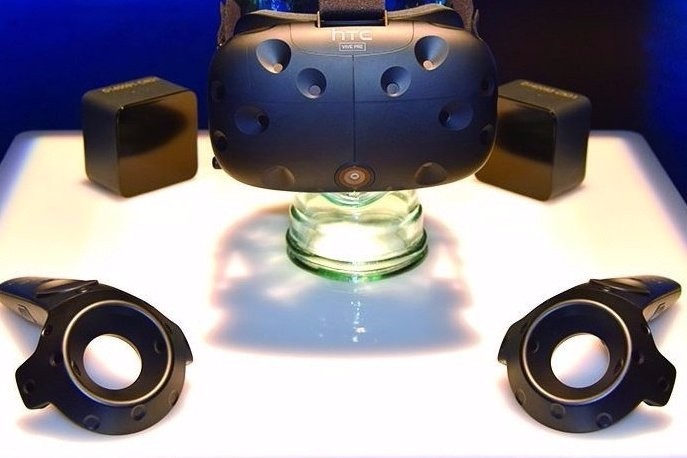


Comments 0
Wow, no comments yet... why not be the first?
Leave A Comment
Hold on there, you need to login to post a comment...