
 by
by AI-driven upscaling, denoising and frame generation methods are key to unlocking more advanced visuals while maintaining a good level of performance in modern PC and console games, so it's no surprise that the same thinking is also spreading to mobile. Arm, the British chip architecture company at the heart of Apple Silicon, Qualcomm Snapdragon and Nvidia RTX Spark, unveiled its own versions of these techniques this week - and a full-length mobile game that showcases them.
The game is co-developed with Sumo Digital and is called Neural Dawn, so it's not surprising to learn that the Arm alternative to DLSS uses the same Neural branding for the three core technologies it's unveiling here: NSS, neural super sampling; NSSD, neural super sampling with denoising; and NFRU, neural frame-rate upscaling (aka frame generation).
By having hardware acceleration for these features in the latest Arm hardware, to launch later this year, Neural Dawn is able to use significantly more advanced visual techniques than you'd expect from a mobile game. In fact, it's the first mobile title to be built with Unreal Engine 5.5's MegaLights tech, which replaces traditional direct lighting with a stochastic (probability-based) single pass.
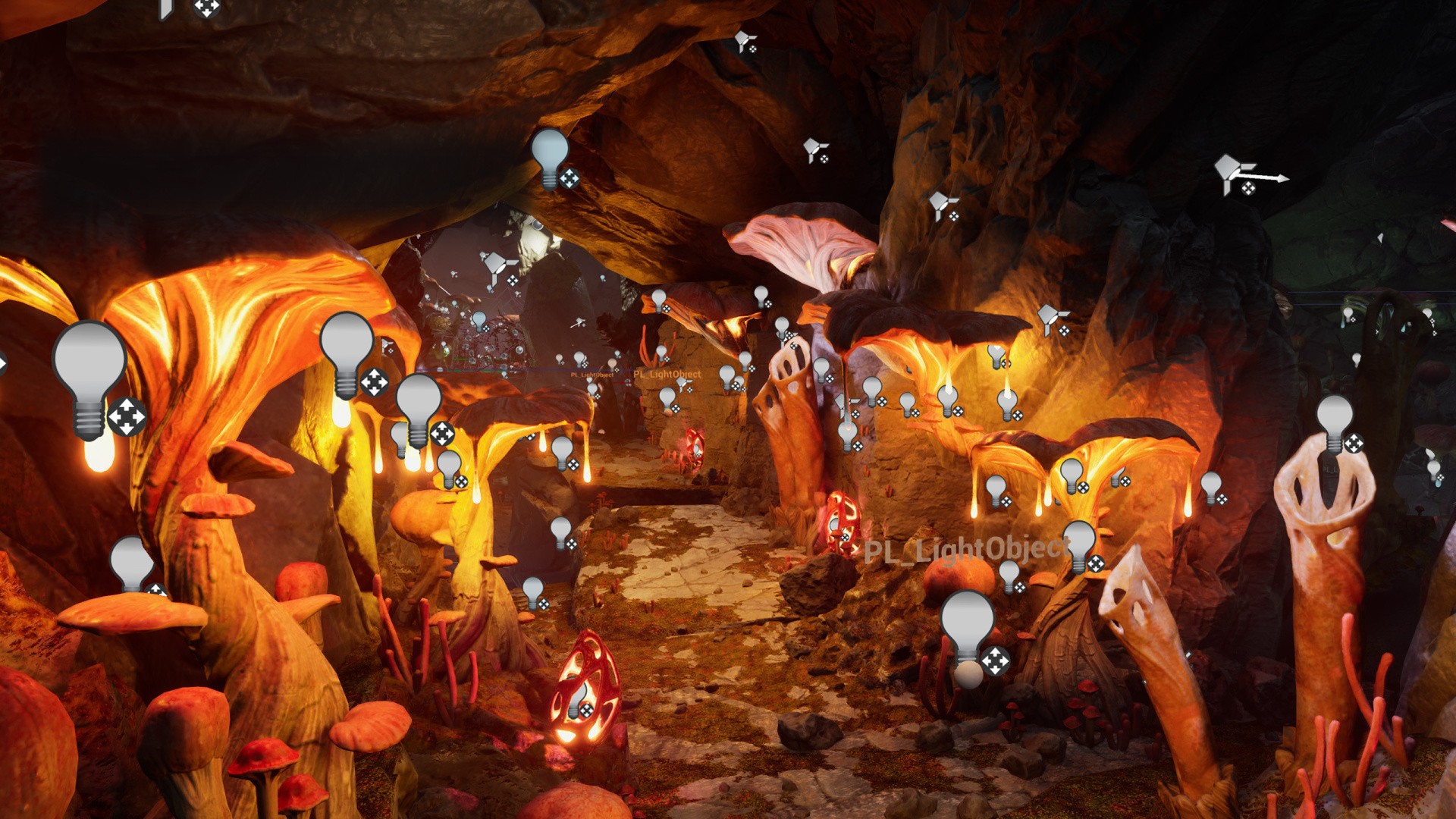
MegaLights allows developers to use as many light sources as they want at a fixed cost, allowing for the funky bioluminescent cave system seen in the Neural Dawn screenshots below. Like other real-time ray-traced lighting solutions, it also allows artists to see the results of their changes instantly, rather than waiting for a traditional bake step to be completed, speeding up development. The technique requires a good denoiser and can suffer from temporal accumulation artefacts, so it's not better than the alternatives in every respect, but the overall trade is clearly worthwhile.
Lukáš Medek, an art director at Sumo Digital, tells me that MegaLights currently takes up around 45 percent of the 33.3ms render budget for the third-person action adventure game - "roughly what you'd expect for shadowing and lighting combined when compared to a standard deferred setup". However, Sumo Digital isn't able to share how much the upscaling, denoising and frame generation portions cost, as they're still working on emulation ahead of final hardware availability.
I asked Peter Hodges, the Arm director of developer ecosystem strategy, why 2026 was the right time to add hardware acceleration for upscaling, denoising and frame generation to Arm:
"Players are demanding more from games than ever before. If OEMs and game studios are to keep players engaged for longer game sessions, they need to deploy high-end techniques. Ray tracing, dynamic lighting and AI-assisted graphics have already started to transform the desktop and console markets, so it’s natural for similar ambitions to arrive on mobile. The challenge is that it’s not just a 'lift and shift' from desktop and console, as mobile operates under fundamentally different power and thermal constraints. Neural Technologies and neural acceleration gives us a way to bring those experiences to mobile efficiently, which is why we believe this is an inflection point rather than just another graphics feature."
As well as making mobile games more attractive to players, working with ray-traced lighting has some advantages in development speed, as mentioned earlier. The entire Neural Dawn game, which reportedly runs for around two hours and comprises of four levels, was completed in around 18 months by 17 employees working part-time on the project. Here's Peter once again:
"Arm and Sumo moved rapidly from technology experimentation through pre-production and into full development, demonstrating that these technologies were not just viable in isolation, but could support the creation of a real game. For a lean team operating within a mobile power envelope, reaching that stage so quickly was a significant achievement."
Of course, just like in console and PC land, any mass-market mobile game has to consider both players on the latest hardware, and those on earlier-generation alternatives that may lack the raw compute power or hardware acceleration for ray-traced and AI-driven techniques. That somewhat ameliorates the advantages of RT-focused development workflows, as though development can be more rapid, time still needs to be spent on, for example, baked lighting for RT-incapable hardware. However, Arm sees these technologies becoming part of the standard pallet sooner rather than later, with Peter saying that "as neural graphics-capable hardware becomes more widely available, developers can increasingly target those workflows directly rather than maintaining entirely separate content pipelines."
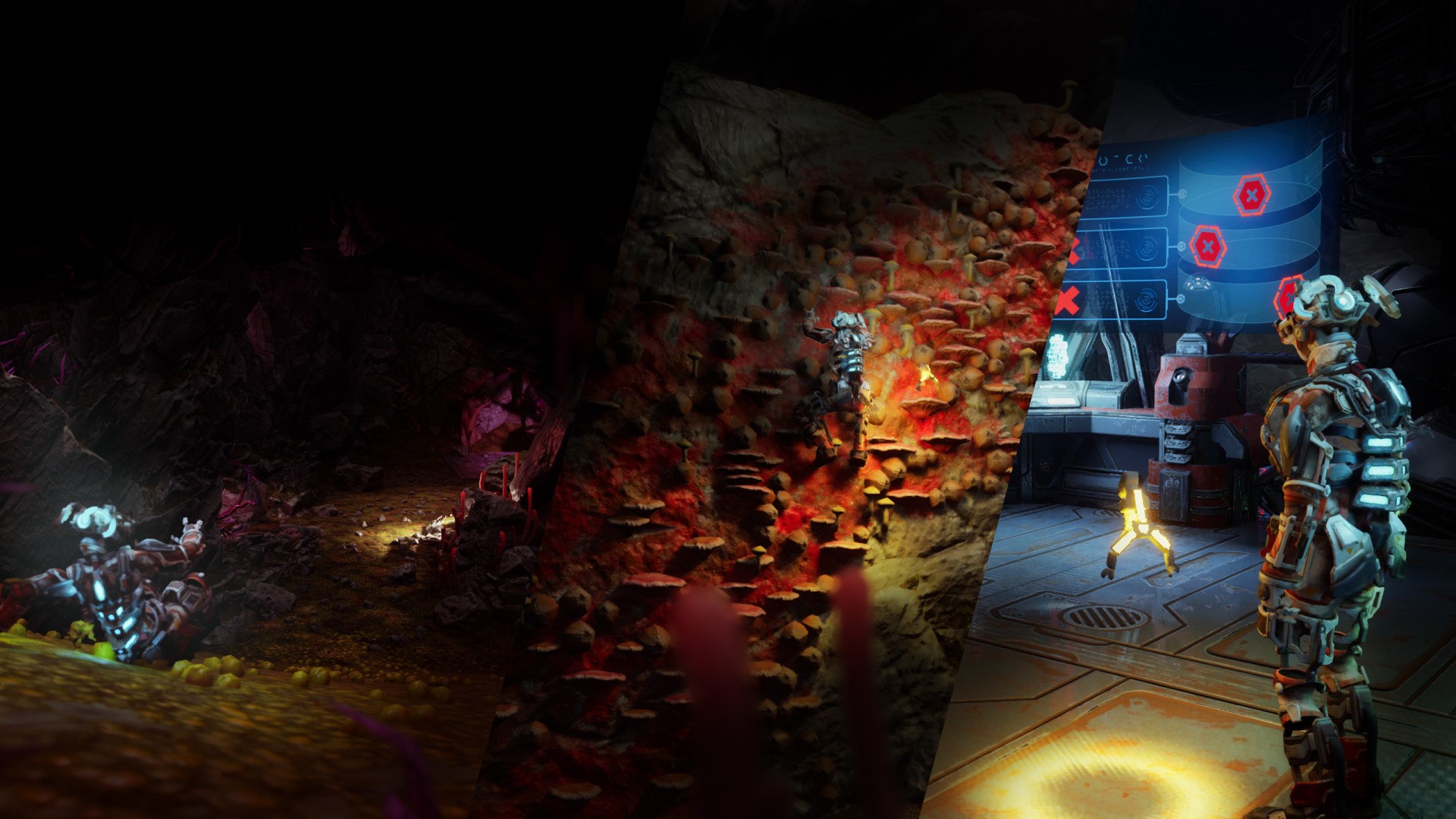
Arm's approach also differs from Nvidia's, as its models are openly published and developers are free to inspect or even retrain them against their own content to make sure the results are ones they're happy with, with the importance of artistic integrity specifically called out in Arm's briefing materials: "developers keep creative control". Arm is also publishing a development kit and a playbook that includes open-source art assets and learning materials from Neural Dawn, which should make it easier for mobile game devs to add the tech to their own projects.
Neural Dawn will launch for devices on the latest generation of ARM chipsets with Mali graphics in Q4 this year. It'll be fascinating to see how these techniques that we're very familiar with from PC and console games turn out on mobile.
[source newsroom.arm.com]
Comments 2
So, pretty bad image quality, lots of temporal instability, lots of RT noise, not that great of an upscale, bad texture quality, relatively low polygon count, but the game has lots of lights? It still really looks like a mobile game. We also don't know what this is technically running on. It's probably a dev kit with a relatively high TDP, which doesn't bode well for smartphones.
Yeah, seems like a step backwards in order to go 2 steps forwards in the future.
Show Comments
Leave A Comment
Hold on there, you need to login to post a comment...