
 by
by It’s Game of the Year season once again at Digital Foundry and, as always, I’m back with my personal list of favourite games of 2025. There were a lot of games released this year, so trimming this list down to size wasn’t easy - but I managed to come up with results I’m happy with.
As is tradition, this list is limited to games I personally played this year. Since I spent a lot of time on the road, there will be some big titles I might have missed out on. As one example, Clair Obscur: Expedition 33, after all the praise, is a game I finally started in the last couple of weeks. Seeing as I still have a long way to go, that winner of our 2025 Community Awards is not on my list despite my enjoying it thus far.
So, with the rules established, let’s jump right in.
11. Night Striker GEAR (Taito / M2)
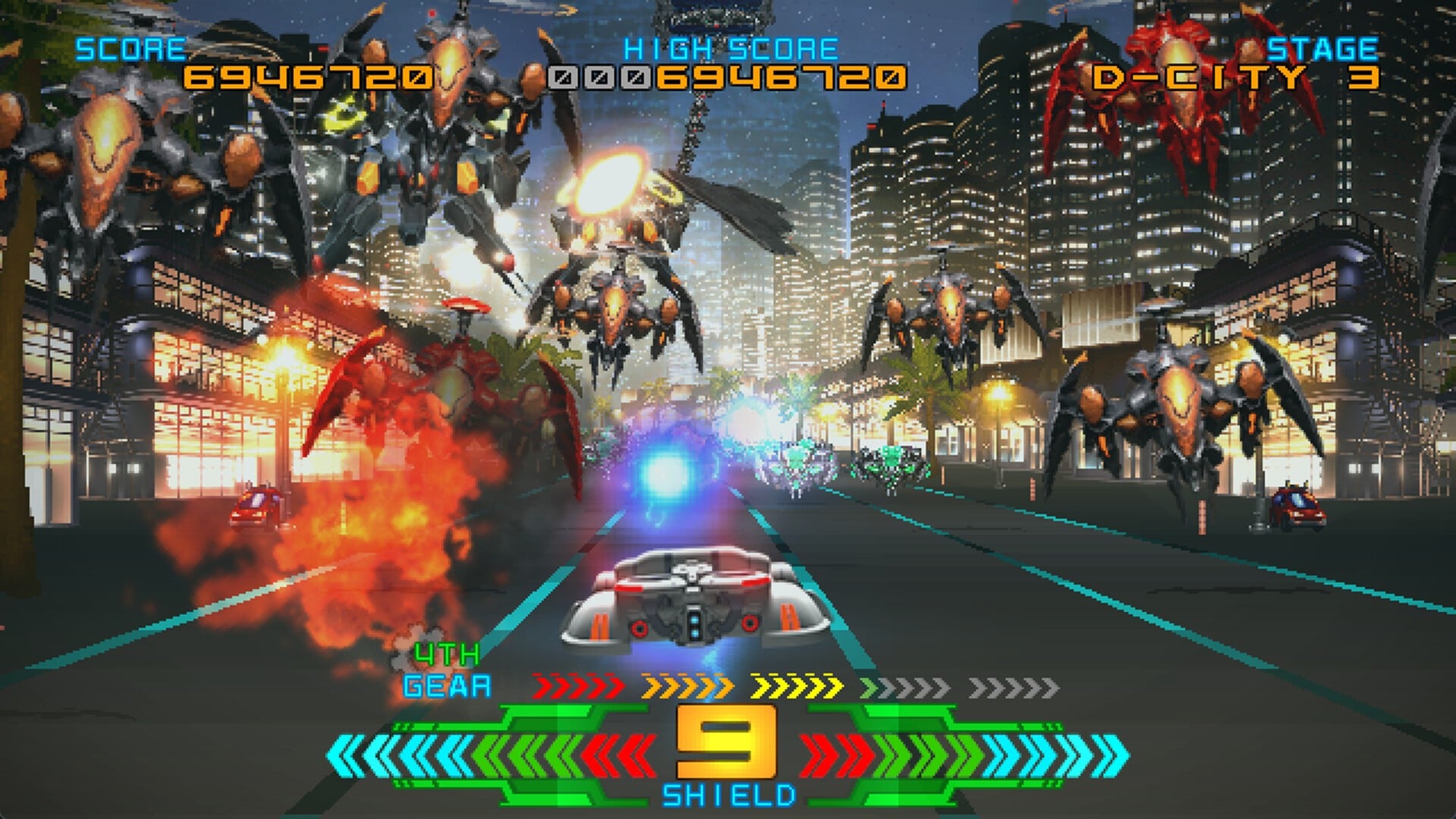
Released in 1989, Taito’s Night Striker fused Space Harrier’s speed with a late‑'80s cyberpunk aesthetic, cementing its arcade legacy despite scarce home ports. This year’s Operation Night Striker collection finally brought it to modern platforms, but the real surprise was M2’s sequel, Night Striker GEAR.
Never did I imagine that Night Striker would receive a proper follow-up, let alone one that stays true to the '80s original, but here we are. M2 just gets it, and GEAR is actually an even better game. The first thing to mention here has to be the glorious presentation. 2D assets simulate a 3D space - just like the original - but modern technology means that many more of these can be used at one time alongside more advanced effects and improved scaling. If Super Scaler style games had remained in vogue, this feels like a logical conclusion.
The audio side is equally important, and composer Yukiharu Urita did an amazing job. They’ve worked under Zuntata in the past and have successfully brought forth their spirit in this project. The mix of more synth-orchestral music with unusual vocal tracks feels like early '90s Taito in the best way.
All of this ties into the gameplay loop. Like the original, you complete a stage, then select your route via a Darius-like selector before moving on. There are fewer stages this time, but each one is longer and more complex.
While I love the original, I’ve always felt it was a bit chaotic. GEAR is a huge improvement. Bullet patterns are more legible; cheap deaths are massively cut down; the playfield itself is much wider; and there are new mechanics such as the red leaders - where destroying them kills the whole group. As a result, it feels more like a game you can master as opposed to one you just experience. It rewards skilled play - something necessary to reach the final area and true ending. As an arcade-style game in spirit, one loop of the game is not long, but it’s a game you’ll want to keep replaying as you refine your skills and unlock everything within. A slice of arcade perfection.
10. Lumines Arise (Enhance / Monstars)
Tetris is a perfect game and the ultimate puzzle game, I might argue, but if there were a number two slot, I would hand it to Lumines. Launched alongside the PSP, Lumines' combination of music and puzzle captivated me unlike any puzzle game up to that point. That formula has been given the deluxe treatment with Lumines Arise.
This is to Lumines as Tetris Effect was to Tetris, and it’s wonderful. The reason? It’s a perfect pairing of tight gameplay, gorgeous visual design and remarkable sound. These elements feed into a perfect feedback loop: you’re engaged in the gameplay, while the presentation around it creates this emotional bond that would otherwise be lacking, making it more than a simple puzzle game. The developers prove once again their specialty: creating an experience out of an existing genre - which goes a step further via the optional, full immersion of VR.
We’ve had several sequels to Lumines over the years, but none of them quite captured my attention quite like the original PSP game. Lumines Arise is the first time I’ve felt that pull since the original, as it fully evolves the concept. And the visuals are such a treat this time - a step up from Tetris Effect. So many weird shapes and background effects await you in this journey with some of them contributing to the challenge. When you’re fully engulfed in Lumines Arise, it’s difficult to stop playing.
9. Shinobi: Art of Vengeance (Sega / Lizardcube)
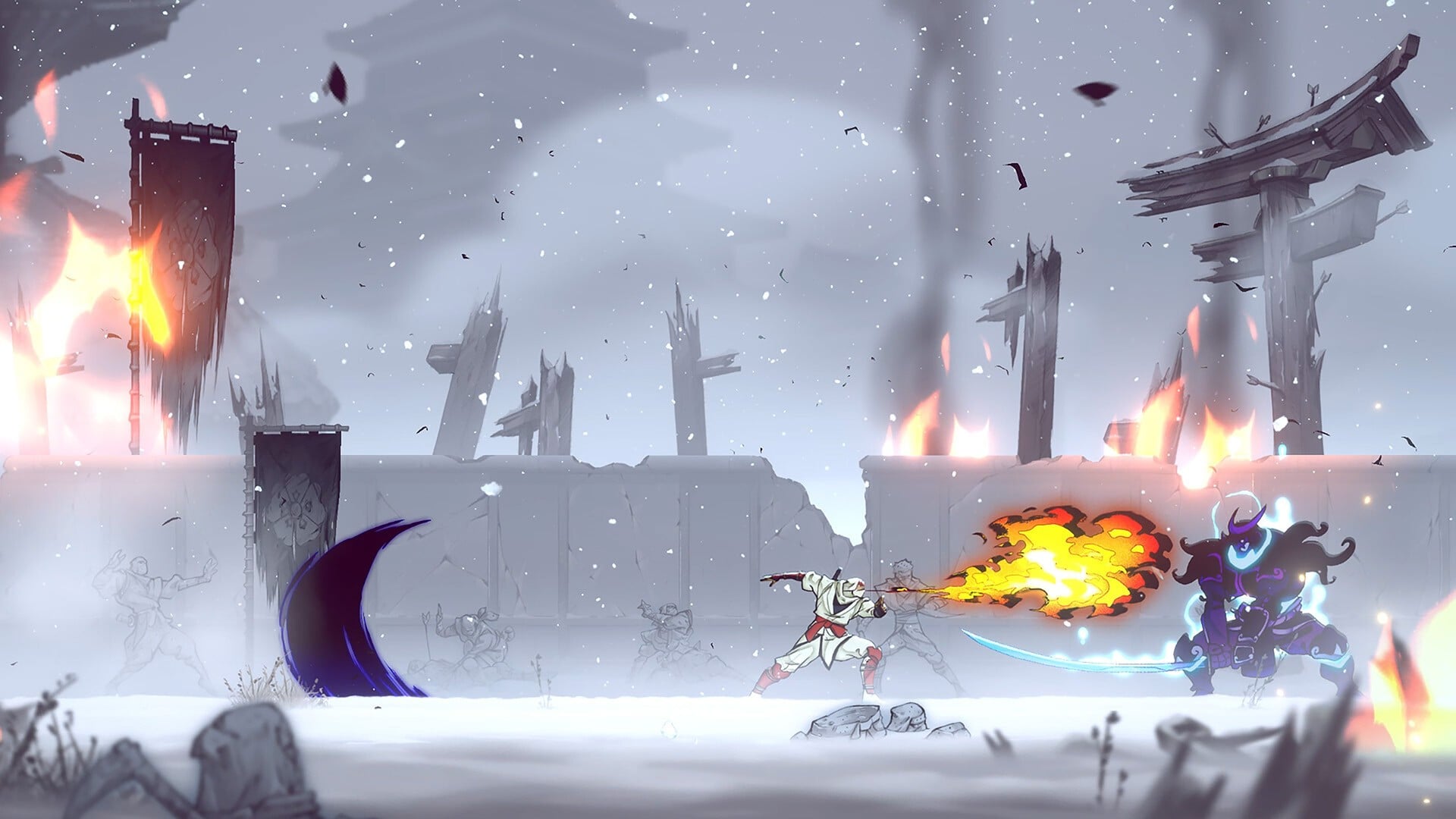
Is this the year of retro or what? I’m starting to think so! I apologize to those who only want to play the latest AAA titles but games like Shinobi: Art of Vengeance specifically serve as an example of what I love about video games in general.
I hold this series near and dear, as Revenge of Shinobi and Shinobi 3 on Sega Genesis are among my all-time favourite action games. They deliver a perfect rhythm - move, jump, attack - and reward precision in every move, which feels satisfying to master. Some of the later Shinobi sequels have also been interesting, but they never quite grabbed me in the same way.
Art of Vengeance changes that. This is an outstanding take on the franchise that both feels true to the original ethos while expanding the design outward. The key here is that it’s somehow a more open-ended game yet decidedly not a "Metroidvania." While this is a stage-by-stage action game, each stage is huge and rewards exploration and return visits, making it an interesting hybrid.
Each level is full of challenges that tie into its specific aesthetic, and the action always feels incredible. Most battles occur as you’re moving through the stage, but sometimes the game drops you into a battle arena to face off against larger groups. This fine line between the two works so well for me. The game constantly mixes things up, and that, combined with ultra-tight controls, really allows it to shine. The move set is also easy to pick up but surprisingly deep and expandable.
Game design alone doesn't carry it. Shinobi is also a gorgeous game with a very special art design. This game looks quite unlike anything else out there - aside from some of Lizardcube's prior works - but even then, it’s very unique. While I adore great pixel art, it’s neat to see this sort of game adopt such a painterly aesthetic and do it so well. Combine that with an amazing soundtrack courtesy of Tee Lopes and Yuzo Koshiro who team up to create something very memorable indeed - often bouncing between entirely different musical genres.
8. Neon Inferno (Retroware / Zenovia Interactive)
The retro assault of 2025 continues with another banger. Neon Inferno was developed by a relative newcomer to the scene with much of the staff having only worked on one prior game, Steel Assault. But a lot has been learned since then, and Neon Inferno is one of the tightest action games in recent memory.
Standing out from so many pixel-art action games in 2025 is extremely difficult. What separates this one from the pack is exceptionally good art design and rewarding, tightly designed play mechanics along with some neat stage design. It starts as a basic side-scrolling shooter - jump, dash and shoot across the first stage - until suddenly, you can shoot into the background. Players quickly face a unique combination of a run-'n-gun shooter and something similar to Natsume’s Wild Guns.
It has a similar rhythm to another genre favourite of mine, 2020's Huntdown, but ratchets up the presentation even further. There’s so much energy in every stage, and the showdowns themselves are downright epic. Combine this with a killer soundtrack and vibes for days, and you have a game that you want to keep playing.
The pixel art design is some of the best I’ve ever seen, even if the main character looks like a Jin Kazama cosplayer. Seriously, the amount of detail poured into every sprite and background is jaw dropping. There’s pixel art, and then there’s this. Basically, if you enjoy these sorts of games at all, you owe it to yourself to play Neon Inferno.
7. Earthion (Ancient)
If Neon Inferno answers the question about what’s possible with pixel art on modern hardware, Earthion takes the opposite approach by embracing the limitations of a 16-bit game console from the '80s.
The homebrew scene on Sega’s Mega Drive console has become huge in recent years, but this is among the first examples I can think of where a prominent creator from its original era has returned to create something new. That’s the case with Ancient and Yuzo Koshiro. Along with his partner, Wada-san, these guys have made arguably the best horizontal shooter on the Mega Drive - and that’s saying a lot for such a killer library of shooters.
Creating a great shooter is no easy task. Beyond the core mechanics, the flow of the stage, the scoring system and general progression need to captivate players. Earthion’s level designs, progression through its world, bullet patterns and weapons are all top-tier. You can get through by the skin of your teeth, but learning Earthion's systems yields better results - and Earthion gets stage length and complexity just right to encourage replaying and mastery. Ancient knows when to prod the player and when to ease, creating an amazing sense of flow.
Couple that with absolutely stunning visuals for the platform and a great Koshiro musical score, and you have the complete package. Only games like Thunder Force IV or Battle Mania Daiginjyou really come close to Earthion. It’s just that good.
6. Metroid Prime 4 (Nintendo / Retro Studios)
Look, I’ve read others' reviews, and I get it. Metroid Prime 4 has issues, for sure. Yet when I step back and think about my time playing through it, I can’t pretend that I didn’t love what I experienced.
The original Metroid Prime is among my favourite games of all time, and Prime 4 is not on that level. At the same time, what’s here still resonated with me in a big way. There simply aren’t many games like this, and immersing in its world and engaging with its mechanics works for me. I love the feeling of movement, the level design and the overall game flow. Even with the criticisms in mind, I found it extremely compelling all the way through.
It has made me realize how much I value things such as basic game feel – everything Samus does in this game feels great, and I loved each of the major areas I visited. Fundamentally, the combination of precise control and player movement really kept me engaged. The second I picked up the controller, it just felt right - critical to the enjoyment of a full game.
The big shift in design centres on a controversial, central-hub desert area. With distance, it reminds me of the 2008 iteration of Prince of Persia, as there’s not much to do there. But it does serve as the connective tissue. While I would have preferred something more tightly integrated, I found it to be a nice fresh-air interruption between the five zones, and the resulting pacing felt smooth and natural.
Speaking of those five main areas, they’re all excellent in terms of design. I especially loved the icy research centre which begins to melt as Samus brings it to life in dramatic fashion. While there’s nothing new about the aesthetic, the execution and scale is immense and creates a compelling atmosphere.
In addition, Retro Studios did a great job with the presentation side – the tech is rock solid delivering gorgeous visuals at either a stable 60 or 120 fps. The HDR is stunning as well, not to mention the excellent soundtrack.
I can understand why Metroid Prime 4 didn’t click for everyone, but for me, it was just what I needed in 2025.
5. Doom: The Dark Ages (id Software)
If there’s one thing I love about modern-day id Software, it’s their wiliness to evolve even within a single IP. id Software has released three Doom games over the past ten years, and while certain themes persist, these Doom games are all very different from one another.
The downside is that it can take time for a game to click if you’re accustomed to a previous entry. Such is the case with Dark Ages. When I first sampled it, I loved it, but then I spent a bit more time with it and felt some tinge of disappointment versus Doom Eternal. But then I recalled that I also felt this way about Eternal versus Doom 2016. So I returned to it again doing a full Nightmare-difficulty run. While it didn’t quite match the adrenaline of Eternal, I’m happy to say that I’ve come back around and absolutely love The Dark Ages.
The mechanics have shifted towards more of an up-close-and-personal ground game as opposed to Eternal's high-flying antics. It rhythm focuses on shields - both the player's shield and those of the enemy. Wearing down foes by tossing the shield is great. Locking on and flying across the map to slam someone with the shield is even better. And juggling the weapons is always a blast. Dark Ages presents new types of enemy patterns versus other Doom games, but the size of the groups marks the first time we’ve seen horde sizes similar to the original '90s Doom games. Learning how to effectively and quickly destroy the hordes is where the fun lies.
This is then combined with a huge array of levels with so many different visual themes, all rendered in exquisite quality. It’s a gorgeous game from top to bottom and runs like a dream, too. It’s a game you can load up for short or long sessions and have an equally great time. Even the dragon and giant robot stages are fun diversions that I’ve come to enjoy.
The only real complaint I have with the game is the soundtrack, which just isn’t on par with the prior titles. Alas - can’t have it all, I guess.
Still, when I look back across my PC library I maintain a handful of classic shooters on my drives that I often load for a quick round. Doom, Quake, Blood, Duke Nukem 3D, Doom Eternal and the like. I’ve now added Doom The Dark Ages to that rotation, which says a lot.
4. Death Stranding 2: On the Beach (Kojima Productions)
I’ve always been a sucker for the works of Hideo Kojima. From his early adventure games through Metal Gear and beyond, something there always resonates with me. The same is true with Death Stranding and now its sequel, On The Beach. Strange title aside, DS2 ended up becoming one of the coolest games of the year, expanding on everything I loved in the original while amping it up in fun, new ways. Some of those ways may have turned off original fans even but that’s what I love about Kojima games: the surprise!
At its core, DS2 is a continuation of the original but with expanded mechanics and arguably improved level design. You’re still playing the role of a porter, crossing huge swathes of land to deliver goods while dealing with threats and challenges along the way. The challenge of the terrain itself - the need to prepare for your journey and handling any unexpected encounters - really defines the fun. I talked about this in my review, but there are missions where things play out in emergent ways. Those moments when you run out of fuel, with no way to recharge, and you have to devise your own way to get the cargo across the finish line feel magnificent.
It’s true that some of the mystery of the original game is absent, due to this being a sequel, but that’s where the over-the-top storytelling comes into play. Narrative moments are even wilder this time around. While it has its shortcomings, the storytelling remains a strong point here that grabbed me through the whole game.
The presentation features stunning art direction, excellent technical execution and a brilliant soundscape. Everything supporting the experience simply elevates it creating something that sticks with me.
3. Ninja Gaiden: Ragebound (DotEMU / The Game Kitchen)
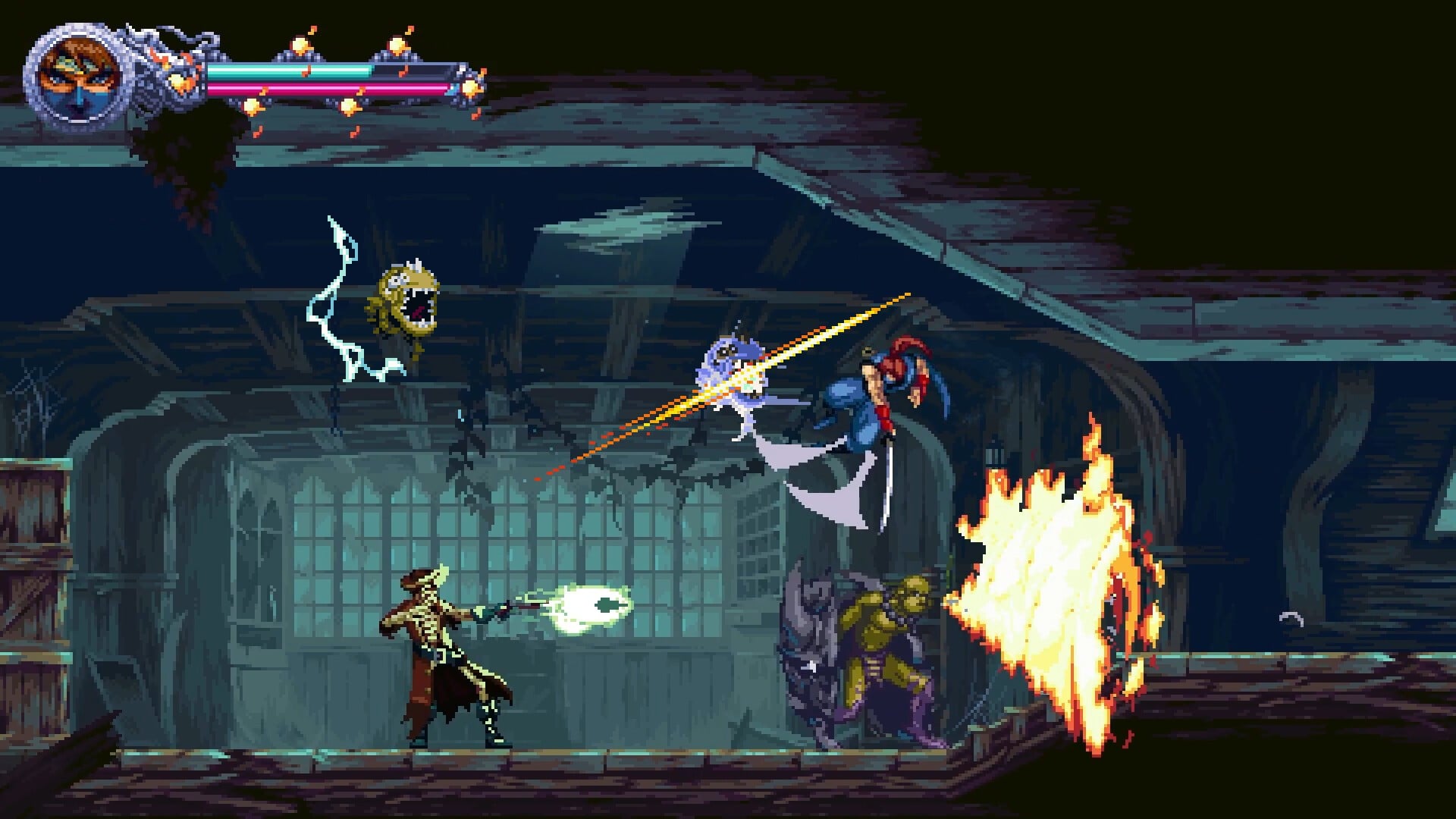
Between Shinobi and three Ninja Gaiden games, 2025 is packed with ninja action in a big way. What I didn’t expect is that my favourite Ninja Gaiden game of the year would be its 2D side-scrolling entry. Yet, here we are.
Ragebound is, quite honestly, one of my favourite side-scrolling action games of the last decade. The Game Kitchen has seriously cooked with this one creating something that feels like a perfect fusion of classic and modern game design. Like Shinobi, Ragebound is not a Metroidvania, instead focusing on individual stages selectable from a world map. What’s extra interesting here is the way in which it progresses adding in new characters and manoeuvres as you play.
It starts simple enough with basic action moves, but eventually, you take control of another character - only for the two to merge and granting players the abilities of both in the process. Level design is expanded to demand the player to learn all the mechanics and execute on them.
A new twist on the double-jump works by connecting with projectiles, effectively extending your jump. And a new enemy-based power-up works by killing a gleaming foe, which lends you extra power for your next attack - requiring planning to take out enemies in the most efficient way possible. These two novel mechanics combine with tremendous action - arguably the best side-scrolling Ninja Gaiden game ever made - and perfectly-built level design to emphasise these skills.
Plus, the visuals - my goodness. I expected no less from the team behind Blasphemous, but seriously, this is just perfection. Some of the best-looking pixel art I’ve ever seen. The combined result is a near-perfect action game - a peak of the genre. Anyone who enjoys classic action games needs to try this for themselves.
2. Donkey Kong Bananza (Nintendo)
This list has a lot of 2D platform games on it already, so about some 3D action? That’s where Donkey Kong Bananza comes in. This is the latest from the team behind Super Mario Odyssey and it’s a banger. As one of this year’s biggest titles for Switch 2, DK Bananza delivers a unique fusion between classic Nintendo platforming action and fresh new ideas courtesy of its voxel-driven destruction engine.
DK punches, pummels and digs deeper into the planet, stopping at different layers along the way with each one representing a specific world type. From traditional to unique locations, all of them share one attribute: they’re extremely destructible. Using voxelised terrain, DK can rip and tear through the world, revealing the underlying skeleton within. I was concerned this might result in an unfocused experience, but that’s anything but the case.
Each level is a joy to play - and that's no small feat. The player can destroy most of the visible level and climb any surface, a level of freedom that risks making the stages boring. But the design is handled in just the right way to ensure that levels stay coherent and interesting even after they're torn apart. In addition, the game is rich in atmosphere, something the DK series became known for thanks to Rare, and Pauline as a constant companion is delightful. Conceptually, I love the idea of diving ever-deeper into the planet’s core, and the late-game reveals are excellent.
It also looks and sounds great. Running at a mostly stable 60fps, the stages are huge and nicely designed with appealing colours and strong silhouettes. The music too doesn’t disappoint - not an easy thing given the quality of the music in DK’s prior adventures.
1. Absolum (DotEMU / Guard Crush)
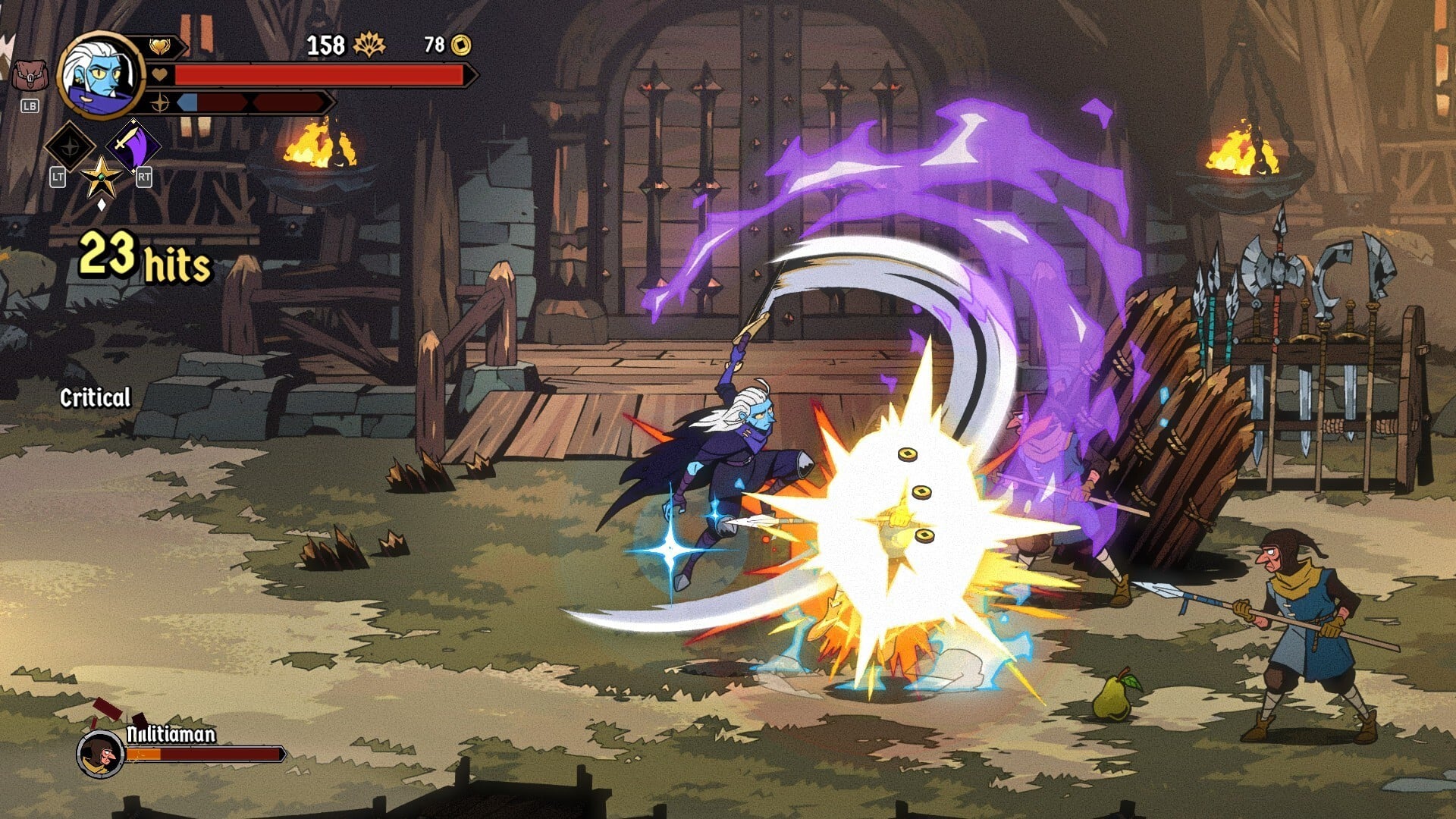
When I learned that the next game from Guard Crush - creators of Streets of Rage 4 - would be a roguelike, I was disappointed. Once I sat down with the game, I quickly realized this is a masterpiece. It’s not just that Absolum is a great game. Rather, this is the next step in the brawler genre.
Conceptually, we’ve seen elements from this game before, of course, as brawling is what these guys do best. Absolum also features elements reminiscent of Vanillaware’s Dragon’s Crown Supergiant's Hades. What defines this game's quality is how these combined aspects come together.
At its core, there’s the brawling mechanics themselves, an aspect where an action-RPG like Dragon’s Crown, as good as it is, falls short. In my opinion, Streets of Rage 4 is the best technical brawler ever made, and Absolum is built on that foundation to ensure that its key actions are remarkably satisfying. The hits, grapples and special attacks stand tall next to the best games in the genre. On that determination alone, this would be a killer brawler.
What won me over, surprisingly, is the roguelike implementation. Firstly, it solves one of my main issues with the genre: credit feeding your way through. In Absolum, each attempt is basically one life. Fail, and your journey starts over. This ensures that you play seriously each time, learning the mechanics in the process. With multiple routes available for each die-and-retry, I found this quite enjoyable. The addition of safe areas along the route also expand the world and make it feel like taking a journey each time.
This is where the roguelike stuff comes in, as rolling different results can alter your build each time. I found this adds a nice spice that complements your own skills more than anything, though admittedly, some builds might fare better against later foes. The key here is that it all works so darn well in a way I wasn’t prepared for.
The cherry on top is the presentation. As per the pillars of brawling, you need an appropriately meaty impact and animation set, which is beautifully executed here, along with, of course, a gorgeous art style to go with it. The backgrounds and designs are universally awesome - super sharp and clean with excellent use of colour and shadow. Plus, it runs on Guard Crush's in-house engine and is totally performant.
The soundtrack too satisfies another of the beat-'em-up design pillars. This time, Guard Crush worked with Gareth Coker, composer of the Ori series, to bring the soundscape to life.
Absolum is the real deal. If you enjoy brawlers but aren’t especially into roguelikes, do not worry: this is absolutely worth your time. At the beginning of 2025, I had never heard the name Absolum and, even at release, I was in no rush to play it. That was a mistake. Absolum reaches new heights for the brawling genre and is just a brilliant video game all around. That’s why it’s my number one pick for 2025.
I'll conclude by confirming this video doesn't include a full segment about my retro game of the year. For more on my choice there - the third Goemon game on the Super Famicom - you can hear me talk all about that and more on the year-end episode of the DF Retro Super Show, coming soon to all of our channels.

Comments 13
Hey, John! I would like to ask, if I completely hate roguelikes for their repeatativity and I completely hate when the game asks me to choose a skill every 1 minute, as many roguelites do, should I play Absolum?
Solid selection, John.
@stoper I agree for the most part) I share the love for DOOM: The Dark Ages and retro-styled games.
Pleased to see so many of my wish-listed games on this list I must have played the shinobi and Neon Inferno demos to pieces by now. And looking forward to adding death stranding, donkey kong, metroid, Absolum and doom to my back log after Christmas!
Om the DF Graphics of the Year article I commented how I was disappointed at the lack of variety and non-AAA games, but until this article I forgot that I conflated John's list with the overall list. Happy to see John keeping the spirit of retro and 2D games alive.
I don't think John talking so defensively about how much he enjoyed Metroid Prime 4 paints the game in a good light. Stand by your choice and talk about why you chose it. Don't waste words on opinions to the contrary.
Great list, John. And I won't lie, I did a little "yessss!" when I saw who won top spot. I've been in Absolum at launch, at the time it was between that or the Ninja Gaiden: Ragebound and for whatever reason, I went for Absolum. And I've never looked back. So, so, rare for me to have a sense of wonder and, honestly?, gratitude when playing a game. Sitting saying to myself "wait a minute, I get to discover all of this? And it's only going to get better the more I play? And I've still so much to see?" It was honestly mind blowing. Such a wonderful game.
I started thinking that it might have the absolute best side scrolling combat ever seen in a game. At first I thought id be laughed out the room for suggesting such things, but as more and more people get into it and talk about it, like yourself, I'm now thinking it may well be the case. Now my mind turns to DLC/update possibilities. Would love to see Absolum get regular updates in the vein of something like Dead Cells. More worlds, characters and weapons etc. Would love to see it.
Anyway, thanks again for the list and have a great 2026!
This is why I love personal lists more than group voted ones, we get a lot of variety! While my list bears little resemblance to yours I only see this as a positive as it puts more games on my radar.
Re: Metroid Prime 4 I lean more towards your view here than others, but am a bit in between. It’s a good game with some great moments, but also has some terrible ones too. But I liked it overall.
@JustMK Have you played Hades? As Absolum is very, very, VERY heavily inspired by it. And by inspired, I mean they've basically copied Hades in many ways, and that includes getting some largely meaningless new perk or skill every minute or so.
I like John's stuff and I often agree with him, but he's so retro focussed now I wonder for how much longer he'll stay with DF. The sole purpose of DF is analysing and explaining cutting edge tech, which doesn't really include pixel art games made in Unity or new games for a 1980s console.
Not that I want him to go, but I think he's very much heading in that direction.
@ramu-chan I think it's weird to put DF solely into the "cutting edge tech" box, when they have a whole section devoted to retro games and have repeatedly talked in their podcast about wanting to branch out. There's plenty of overlap between people who like cutting edge tech and people who like to learn about retro tech and what was cutting edge in the past.
I wanted to love prime 4, but the story and writing being so poor really killed the game for me. This was the last Nintendo IP I cared about, and at this point I'm just gonna skip their consoles and go the emulation route for their older games.
@SteamyDeck Sure, talking about retro tech is fine, but just reviewing retro inspired games as IGN etc would seems a bit pointless. There are countless game review sites and they all blend together. DF stands out because of the tech focus.
But it's Rich's call, if he's fine with DF basically becoming Eurogamer that's for him to decide.
Show Comments
Leave A Comment
Hold on there, you need to login to post a comment...