
 by
by 
It's no secret that flash memory supplies are extremely limited right now due to the AI boom - and that's had a huge knock-on effect on the prices of gaming staples like DRAM, SSDs and memory cards. That's made speccing out a new PC or upgrading an existing one challenging, with many gamers choosing to delay purchases or accept a lower-spec build to stay within budget. However, it turns out that PC builders are much more willing to sacrifice on some spec points than others.
That's according to Lexar Europe General Manager Grace Su, who I spoke to while on a media tour of their Chinese operations in Shenzhen, Suzhou, Zhongshan and Shanghai. According to Su, Lexar moved to secure lower density flash memory for smaller capacity Micro SD cards, RAM kits and SSDs once it became clear that the flash memory shortage wasn't likely to wind down any time soon - and customers and distributors alike complained that prices were quickly becoming unmanageable.
However, the company was surprised to find that while smaller capacity RAM kits and memory cards sold as predicted, sales demand for smaller 256GB and 512GB SSDs only reached a fraction of what was expected. When it comes to these sub-terabyte SSDs, "the end user just doesn't buy." Essentially, most users (and retailers) would rather wait and make do with what they had - at least if the alternative was buying a 512GB SSD in the year of our lord 2026. In fact, Su reported that some users said that they would rather swap back to hard drives (!) than pay over the odds for a new SSD.
What's the minimum SSD size you'd consider buying for a gaming PC? (366 votes)
- 256GB
- 512GB
- 1TB
- 2TB
- 4TB or more
I feel there's some logic to that mentality. Psychologically, 1TB feels like more than twice the size of 512GB - it's got a whole new suffix! - and practically, a 512GB SSD is in danger of being mostly consumed by a single "forever game" like Call of Duty: Warzone. Interestingly, the same isn't true in the memory card space, where users started asking Lexar for 32GB and 64GB cards again rather than the 128GB and 256GB cards that dominated sales charts in early 2025.
While individual users and retailers are clearly very married to the 1TB minimum for SSD purchases, system integrators and B2B have proven more flexible. For them, the goal is to deliver a complete laptop or desktop system at a certain price point - like $1000 - and they're willing to ship systems with 512GB SSDs to hit that target. As a buyer, that's not something I really mind either, because SSDs are significantly easier to replace or augment than most other PC components, even for beginners.
Lexar representatives also had interesting information on PCIe generations, with PCIe 5.0 SSDs being seen as too expensive (less than 10 percent), PCIe 4.0 being the standard choice for most people and older NVMe drives not really getting a look in. That's despite the fact that PCIe 3.0 NVMe SSDs are arguably the best value option for the vast majority of use cases, given that game load times don't drop massively even comparing NVMe vs SATA SSDs.
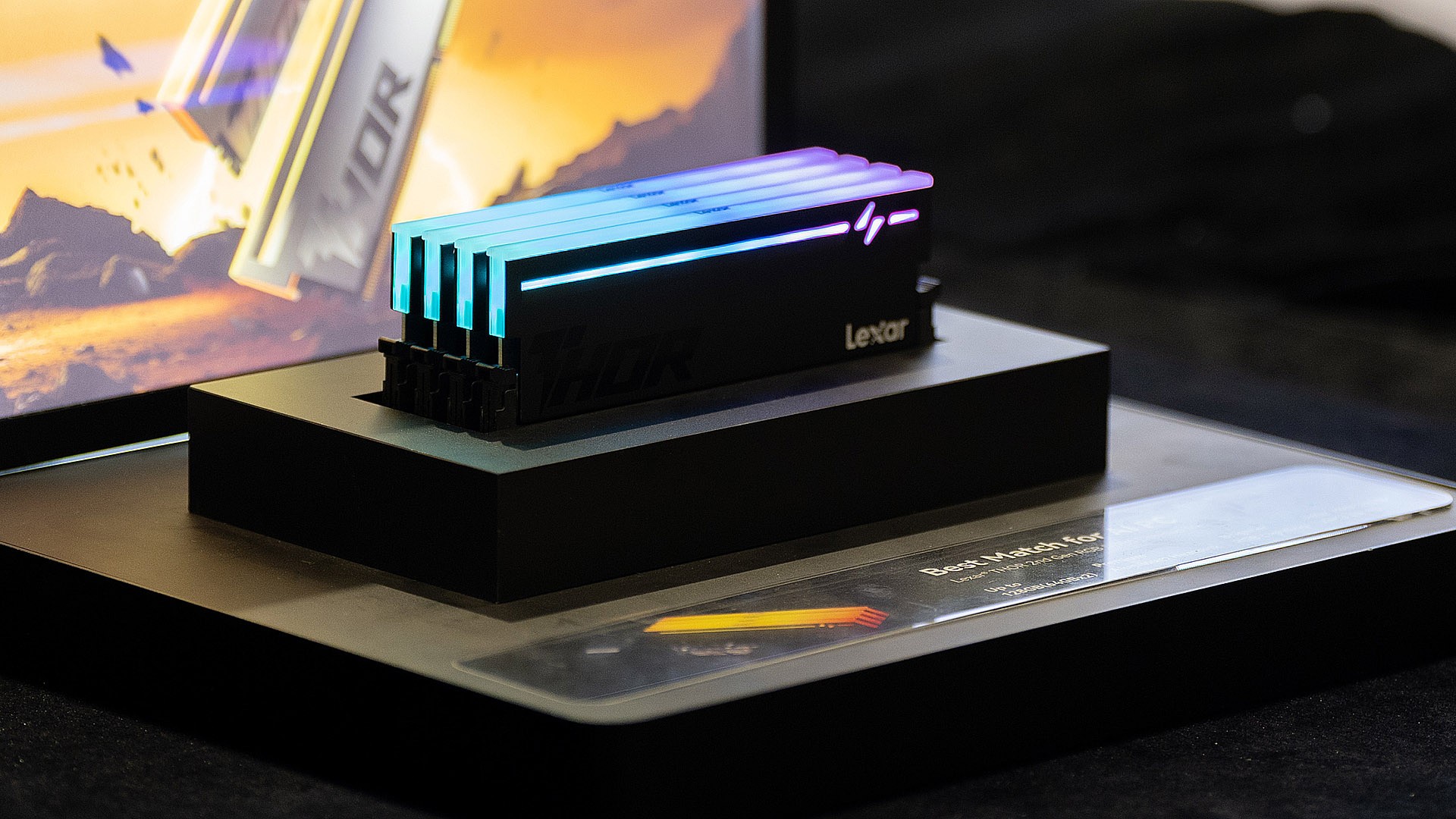
Still, it's clear that Lexar was caught out, and it's interesting to learn that SSDs are in some way prioritised over RAM, even though the latter has a more direct impact on PC performance. After all, modern PC games can be quite RAM-heavy, as can Windows 11 itself, and even with DDR5's generational improvements it's best to ensure you're running a dual-channel 16GB or ideally 32GB setup. That hasn't stopped companies like V-Color selling "1+1" RAM kits that pair a real stick with a cheap light-up replica to ensure your RAM slots don't look weird with only a single stick inserted, of course.
It doesn't look like the current shortages are likely to stop any time soon either, with Su stating that they expect the market conditions to remain for the long term and that the entire storage industry has shifted into a "new era".
That's a pain for gamers in particular - but there are still some interesting products in the pipeline that could make the most of a bad situation, and for folks that are working with local AI, there are some interesting new innovations too. We'll have more to share on those subjects from the Lexar trip in the coming days, so stay tuned.
Have you made any difficult decisions following the flash memory crisis? Let us know in the comments below.