
 by
by Our ongoing look at the 20th anniversary of the Xbox 360 continues with a comprehensive look at every game that launched alongside the console in November 2005. We have fixed Digital Foundry's modern frame-rate analysis tools onto original, non-updated Xbox 360 hardware without a single downloadable patch applied to the system or any of its games.
The global launch featured over 20 games per region, and in this first DF Retro video about the full launch lineup, we've broken that selection into two halves. This time, we're taking on first-party games, Japanese-developed titles and PC ports, while the next episode will feature sports of both traditional and extreme varieties, XBLA-exclusive titles and ports from the OG Xbox and PlayStation 2.
As a companion to John Linneman's excellent video, we provide a handy list of the games featured in this week's installment along with some technical notes for each. Additionally, if you were wondering. we have confirmed that the original "blades" interface runs at a smooth, unblemished 60fps frame-rate.
Project Gotham Racing 3: The launch's visual standout, PGR3 exhibits generational-leap visuals thanks to details and effects up and down. Of particular note is the game's novel implementation of per-pixel motion blur, which makes the game appear smoother than its equivalent-performance prequel on the original Xbox, and an internal "HDR" implementation that calculates and then tone maps a more realistic luminance range into a final SDR image.
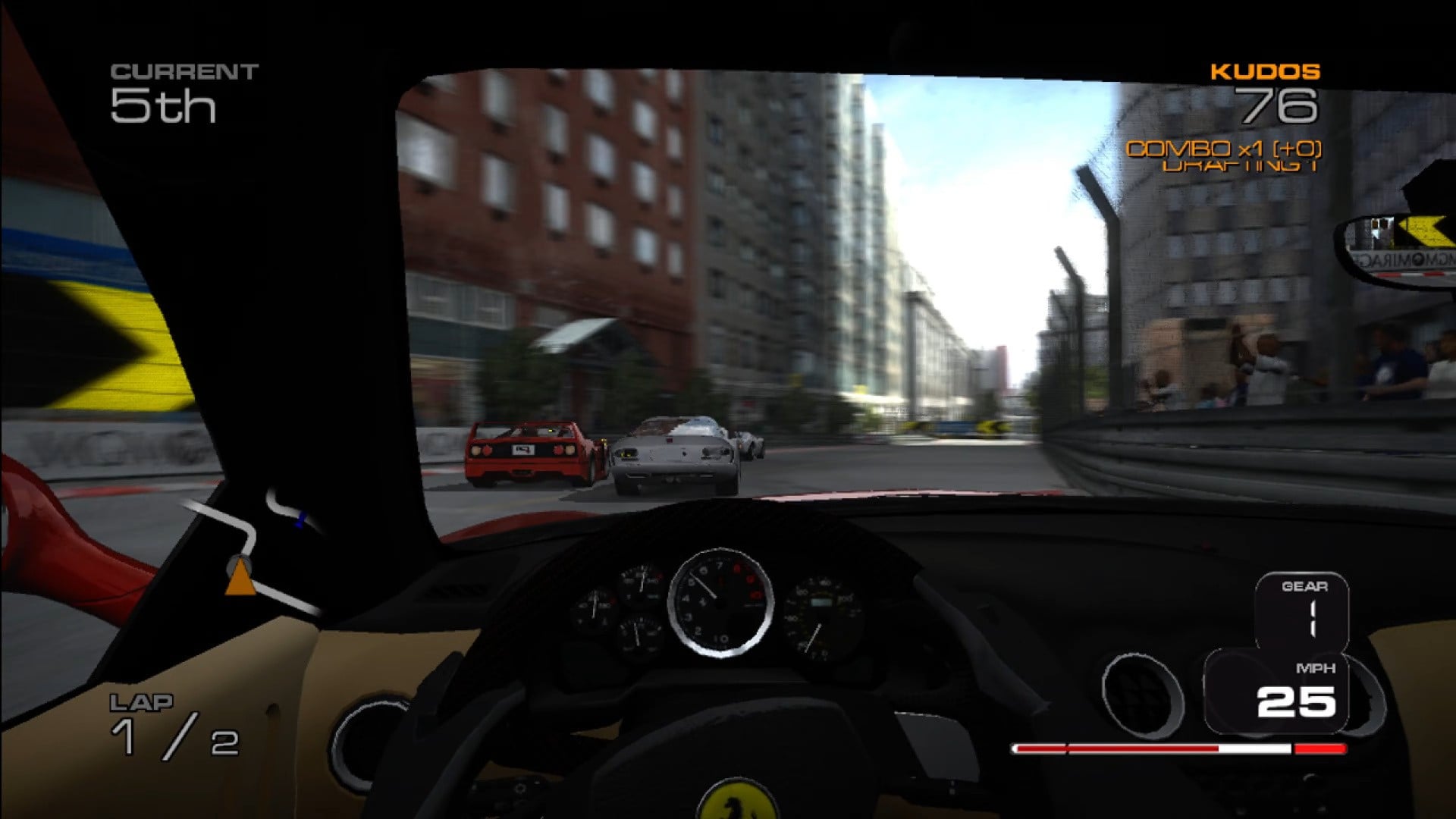
Its lock to a 30fps frame-rate falls short of pre-release trailers' suggestions of a full 60fps, while its resolution falls short of an expected 720p at only 1024x600.
Perfect Dark Zero: Despite its underwhelming gameplay, PDZ stood out by emphasising parallax mapping, a technique used to give the appearance of depth to otherwise flat surface textures like bricks and concrete. Pixel shader effects glistened and added a further sense of depth to these surfaces, and god rays approximated volumetric lighting. But performance was rough here, with frame-rates regularly slipping beneath a 30fps cap and producing screen-tearing, while its resolution maxed out at only 648p.
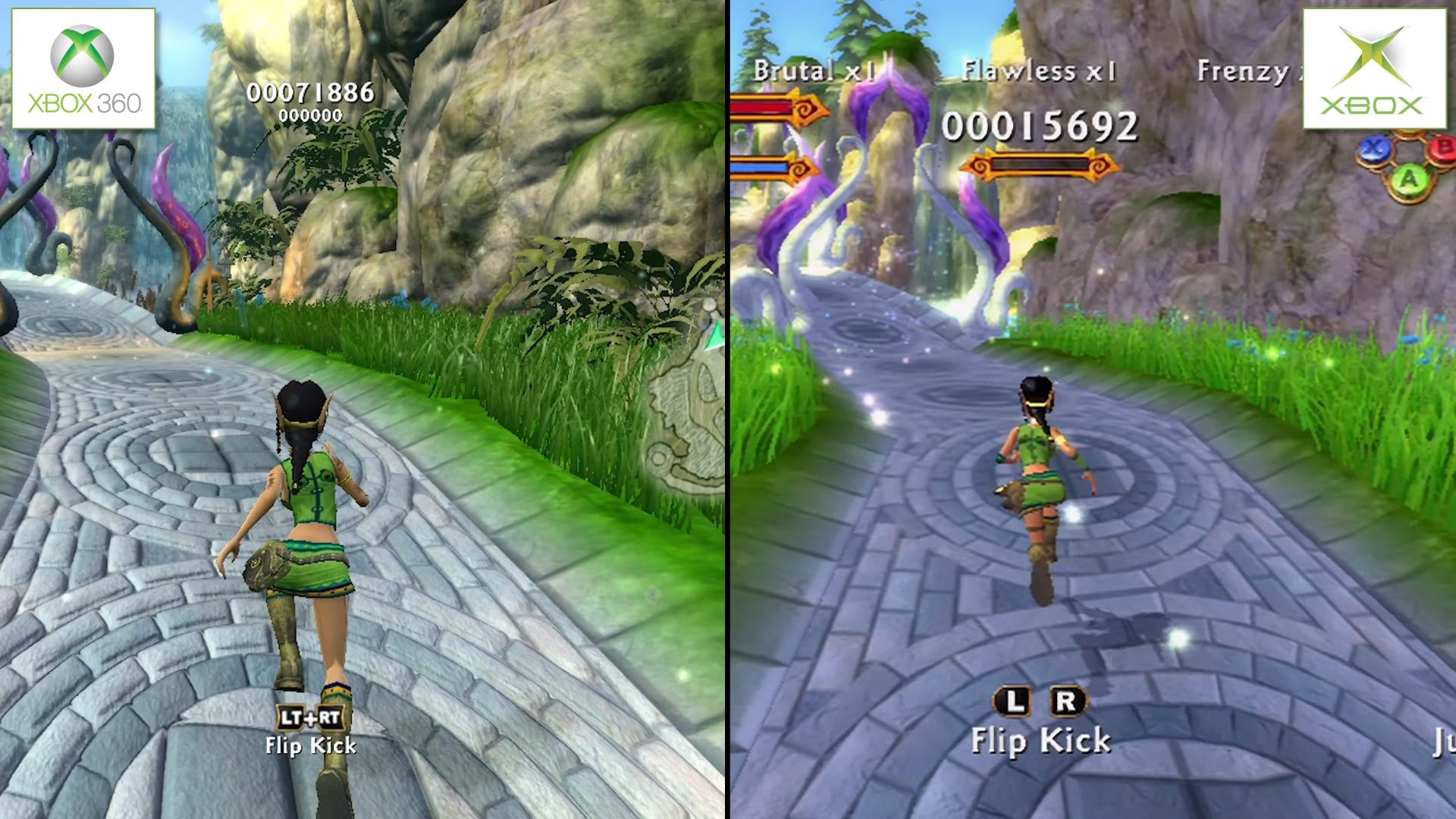
Kameo: Rare's other 360 launch-day game turned in a far smoother 30fps frame-rate, but that's arguably because it didn't advance its technology core much beyond the near-final version made for the original Xbox, which we've been able to test. Its bump to the 360 adds parallax mapping, higher enemy counts in wide-open fields and a higher 720p resolution - and when we look at both side-by-side, we see enough boosts in detail to appreciate the Xbox 360 difference here.
Every Party: This Japan-exclusive, Microsoft-published game comes courtesy of Game Republic, a studio founded by ex-Capcom producer Yoshiki Okamoto. This mini-game-filled board game mostly stands out because of its manga-styled 2D and 3D assets, with visual design led by the creator of famed manga series Chibi Maruko-chan. Its 720p resolution is matched with a rare combination of full MSAA and a locked 60fps frame-rate - a rarity for a disc-based Xbox 360 game at launch.
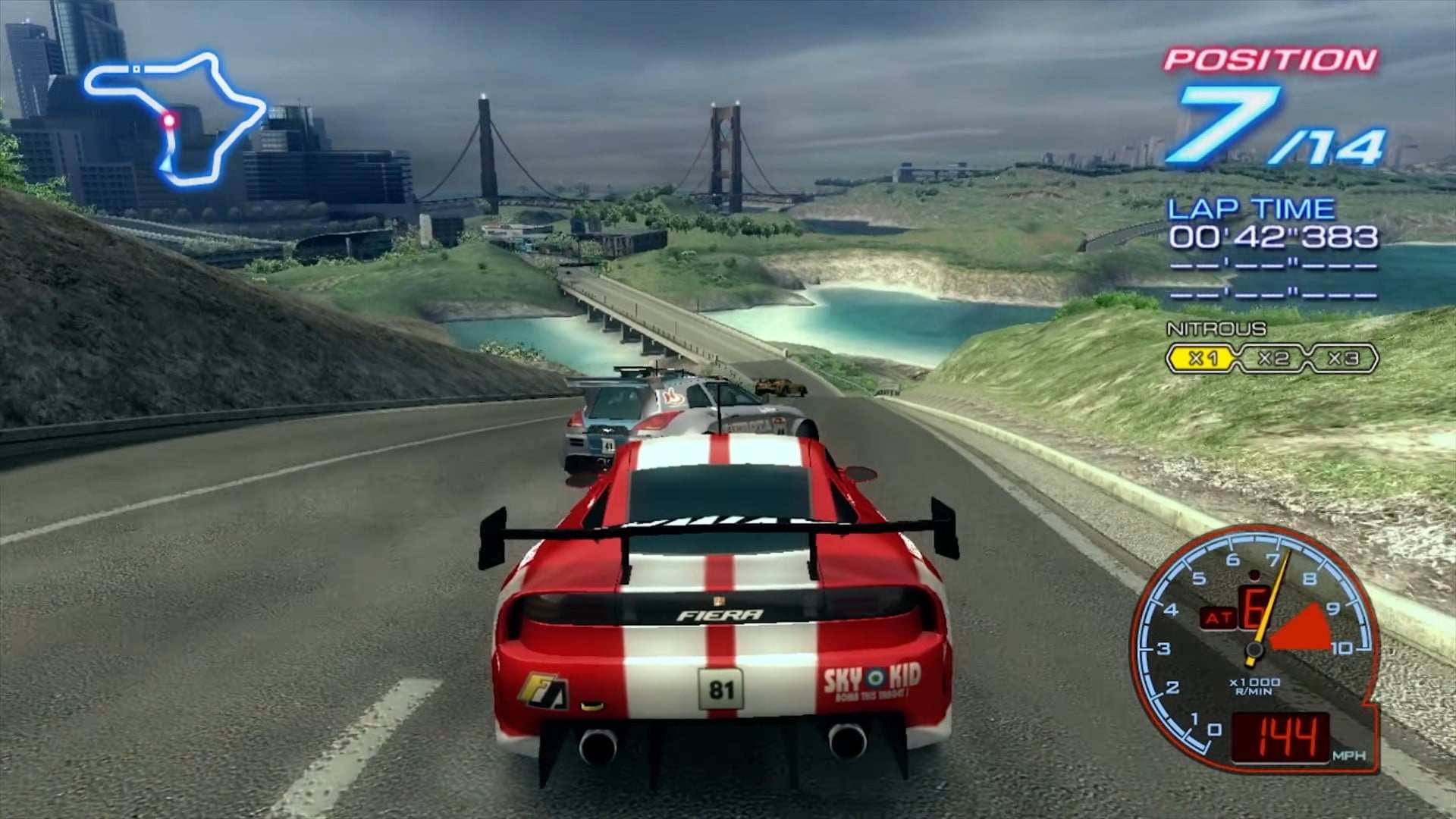
Ridge Racer 6: One of the 360 launch's highest-resolution games, RR6 actually reaches an 810p resolution - higher than the "HD" 720p standard of its era - while hitting a locked 60fps frame-rate.
Tetris: The Grand Master Ace: The first-ever home console port of the Grand Master arcade series, this game is based on the TGM3 arcade launch from earlier in 2005. However, its changes to that arcade version left some series diehards underwhelmed - enough so that an eventual downloadable patch was issued to offer an optional change to how tetrads rotate.
Call of Duty 2: The first CoD game on consoles was 2004's Call of Duty: Finest Hour, which was a stripped-down side-story version of the power-hungrier series debut on PC in 2003. CoD2, on the other hand, simultaneously launched on PC and Xbox 360, and the console port delivered both visual parity and identical level layouts.
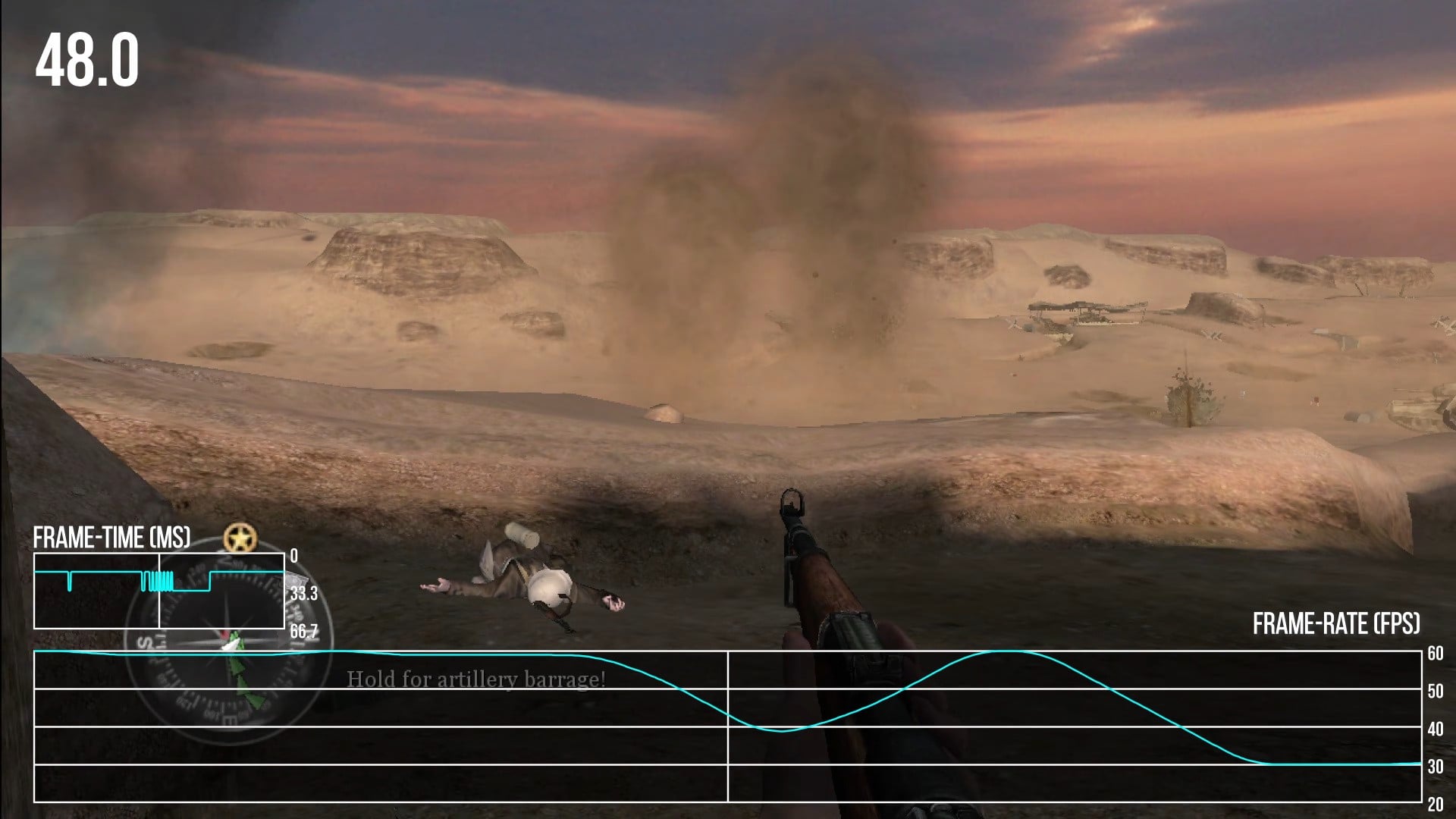
But its visual demands proved too much for Xbox 360, and thanks to its use of double-buffered v-sync, CoD2's frame-rate frequently dipped from a 60fps maximum to only 30fps. PC players admittedly had their own tough time reaching 60fps on even high-end systems of the time. Developer Infinity Ward famously solved for 60fps gameplay in future, mega-popular sequels on Xbox 360.
Quake 4: Coming only one month after its PC version, Quake 4 employed the same unified lighting model and real-time stencil shadows seen in 2004's Doom 3 - and its PC-equivalent visuals at 720p resolution proved too demanding for stable Xbox 360 performance. Running fully unlocked with a double-buffered v-sync, Quake 4's frame-rate frequently bounces above and below the 30fps line, including significant dips into the 10s.
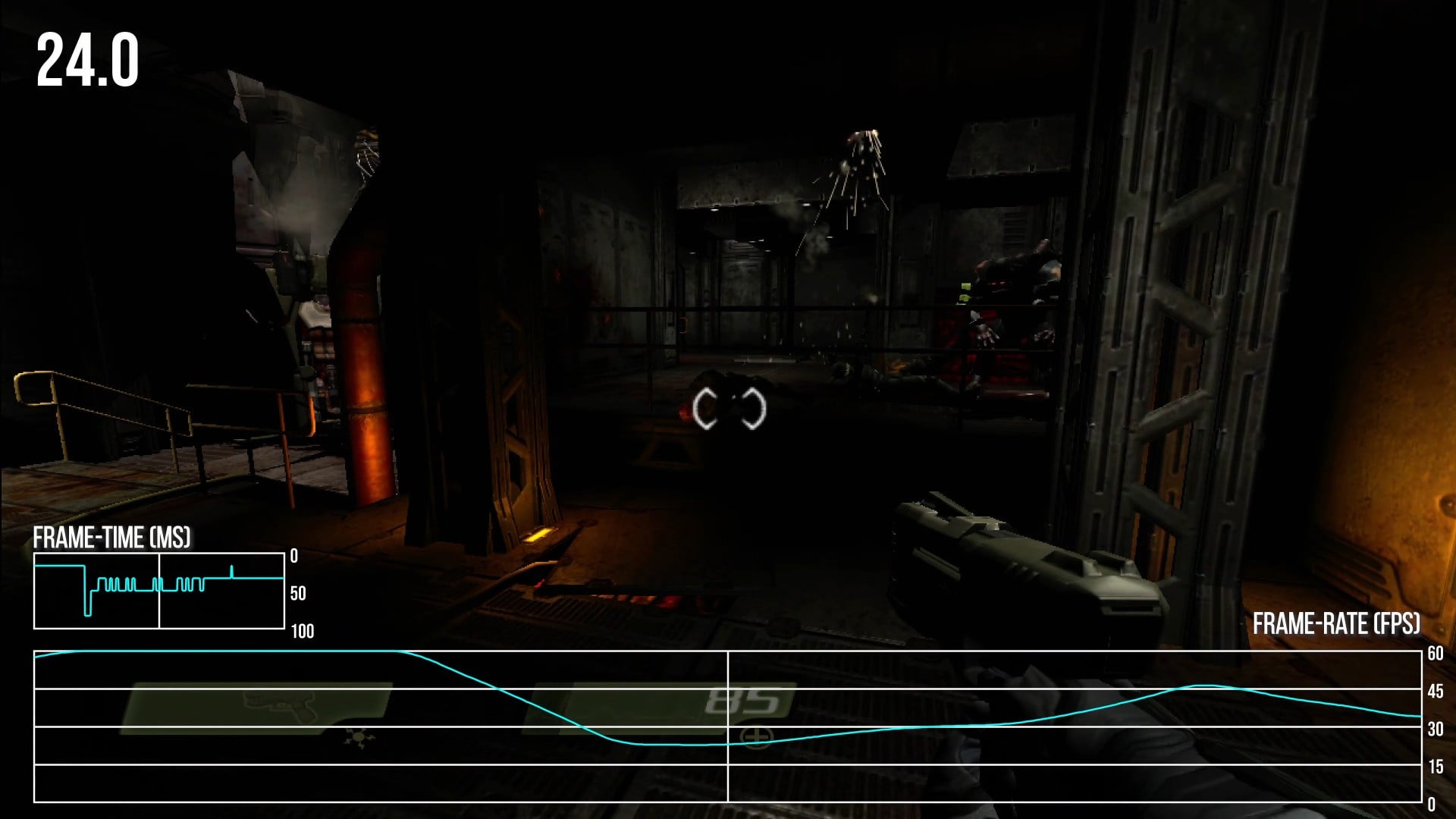
Later idTech 3 games on Xbox 360 ran more efficiently, suggesting that Quake 4 may have benefited from more development time and optimisation. Having never received an Xbox backwards-compatibility patch to help its unlocked frame-rate reach 60fps on modern Xboxes, we suggest playing this solid FPS on a modern PC if you can.
Quake 2: Exclusively available on the Quake 4 bonus disc, this Quake 2 port was the first 360 game to inherently support 1080p resolution. However, Xbox 360 did not support 1080p output at launch. Fans had to wait for a 2006 console firmware update which added 1080p resolution support to discover that Quake 2 had hidden such a perk all along. Read more about this in our 2017 look back at Quake 2 on Xbox 360.
Condemned Criminal Origins: Monolith Productions' boundary-pushing Jupiter EX upgrade to its in-house LithTech engine debuted late in 2005, premiering in October's PC version of F.E.A.R. before being followed one month later by Condemned as an Xbox 360 launch title. Full dynamic lighting, post-processing, parallax occlusion maps and volumetric lighting add up for an dimly lit horror-melee experience. However, its lack of a frame-rate cap leads to occasional dips beneath 30fps and even surprising spikes up to 60fps - uneven, but still far smoother than the likes of Quake 4, so it remains fun and playable on original 360 consoles to this day.
The game's PC version launched six months later, with its only significant difference being more issues with black crush on 360 - an issue with poor handling of dark-image shading that plagued the 360 generation. Flat-panel HD-compatible LCD displays of the era struggled to properly display black levels, as well, which made Condemned and other 360 horror games harder to visually parse.
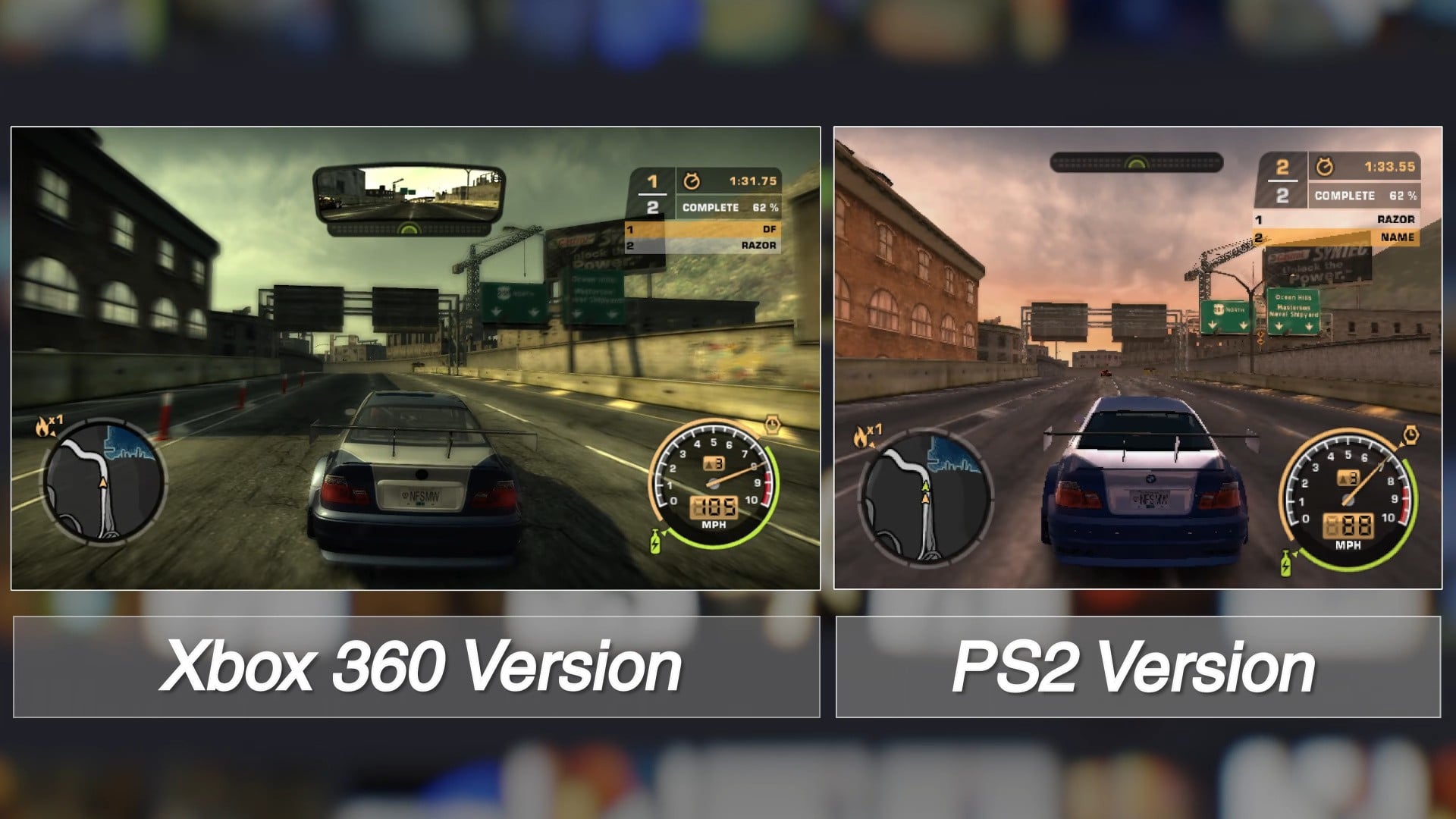
Need for Speed: Most Wanted: While this Need for Speed sequel launched on a ton of platforms, including PC, prior-gen consoles and handhelds, this Xbox 360 version sported unique effects like a HDR lighting pipeline, more advanced shaders and higher-fidelity shadows. This unfortunately resulted in a visual profile affected by a harsh yellowing effect, something we would see in other 360 games over the course of its lifespan. Even the default PC version lacks some visual flair seen on the 360 version - though modders have restored the 360's edge to the PC version in the years since.
Without a 30fps cap, the game's unlocked frame-rate generally runs in the 40fps range with significant screen tearing... at least, when the console is set to 720p output. Change that in system menus to 480p, and NfS:MW drops its resolution in kind - a rare resolution-downgrade option for 360 games that brings the frame-rate closer to a 60fps lock.
For more about the Xbox 360's 20th anniversary, check out our unboxing of an original Xbox 360 "Arcade" console that had somehow never been removed from its box. That console has been used for all of our testing, and so far, we've successfully avoided any red-ring tragedies with it.


Comments 3
Looking forward to watching this tonight. Will remind me of getting my debug unit and review console and going through all the games. Great times.
Loved the video. Very excited for the second part. Hope that unused 360 lasts at least a year.
Watching the video ASAP!
Show Comments
Leave A Comment
Hold on there, you need to login to post a comment...