
 by
by 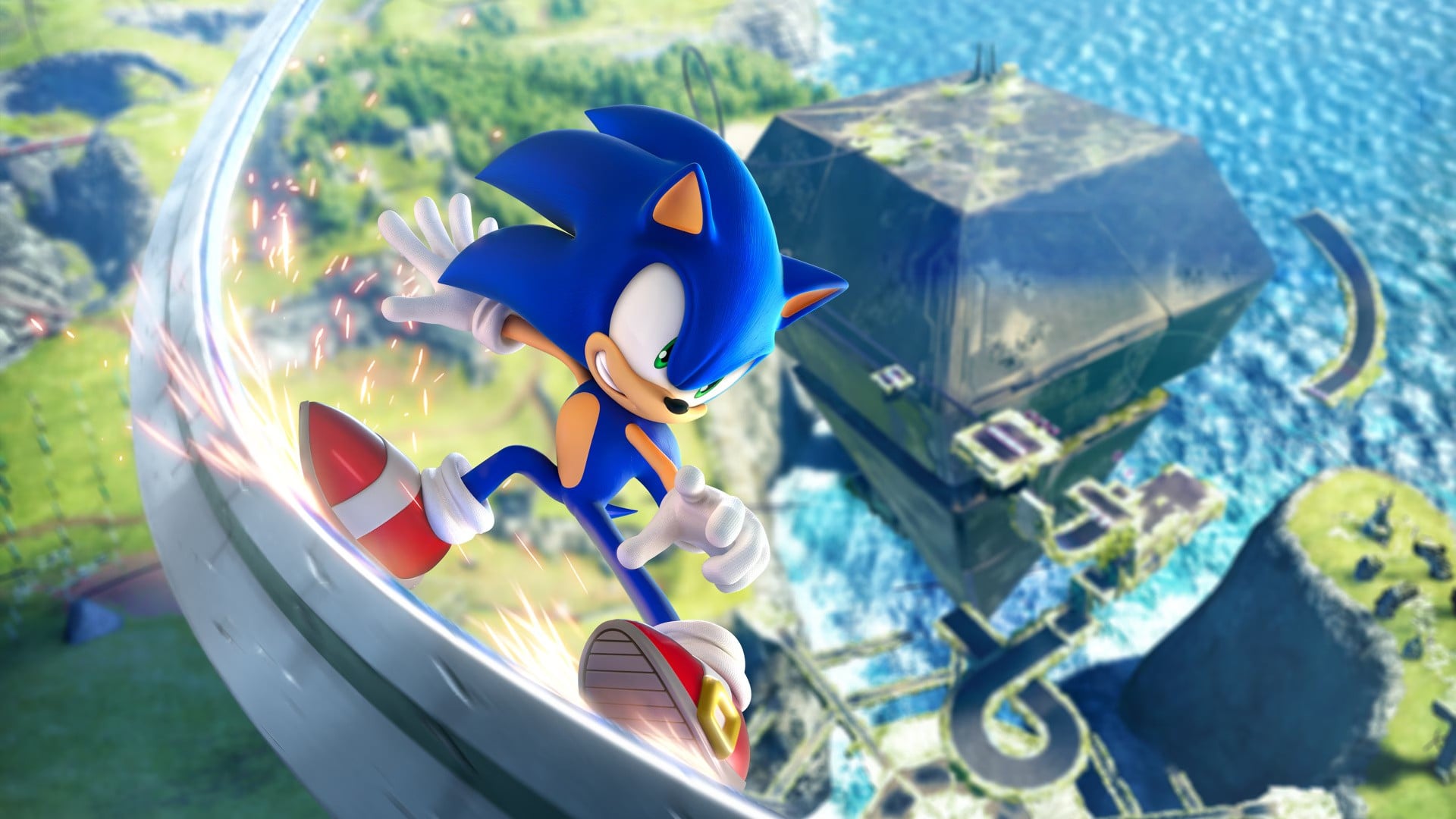
Sonic Frontiers: Definitive Edition arrives on Switch 2 as a comprehensive - yet controversially full price - upgraded reissue of the Switch original, bundling in more content and improved visuals that take advantage of the console's extra horsepower. However, the value proposition for owners of the original game is distinctly sub-par, given that there's no discounted upgrade path available - the only choice is buying the Definitive Edition at full price. You can at least resume your progress from your existing save, and the Final Horizon story campaign is included plus digital extras, but the offer feels a lot kinder to new players than it does to existing ones.
Thankfully, the technical improvements are substantial. Looking back at the original Switch release, the game suffers from poor image quality, significant pop-in and blocky shadows. Despite these glaring faults, that original version did at least feature screen space reflections (SSR), dynamic weather and time-of-day, though performance was another weak spot at an unstable 30fps.
Switch 2 addresses these issues by introducing two distinct visual modes, tucked away at the bottom of the options menu. The default setting prioritises performance at 60fps, while the graphics mode targets higher fidelity at 30fps. It is worth noting, however, that the majority of cut-scenes remain locked to 30fps, regardless of which mode is active.
As you'd expect, resolution and some graphics settings change between the two modes to make that frame-rate difference workable. The graphics mode pushes a native 1080p resolution, compared to the 720p output of the performance mode. Crucially, the graphics mode retains SSR on water - the standout visual flourish from the original Switch release - which is understandably sacrificed to maintain the higher frame-rate in performance mode. The original Switch release, by contrast, ran at an internal resolution of the original Switch version's docked 576p-720p range.
Switch 2 players also benefit from higher-quality shadows, better texture filtering, and improved levels of detail for trees, grass, and geometry, alongside a noticeable increase in plant density across the open world compared to the original Switch version.
Despite these upgrades, the game is not without its visual blemishes. Pop-in remains highly distracting, even in the graphics mode, with environmental elements failing to render until the player is quite close. Furthermore, the port misses out on premium features found on more powerful consoles, such as screen motion blur - despite an option for it in the menu - plus advanced water ripple physics and high-end global illumination settings.
Performance is the real highlight for the franchise on this hardware. The 30fps graphics mode is generally stable, though it does suffer from some uneven frame-pacing. Conversely, the 60fps performance mode feels much more responsive for gameplay. While the open world sees slight dips during intense boss encounters or heavy particle effect sequences, the traditional Cyber Space levels remain rock-solid.
Portable play presents its own unique challenges, with more frequent performance dips in the open world, though the Cyber Space levels manage to maintain a smooth 60fps. By using dynamic resolution scaling, the game retains a largely playable experience when taken on the go, though internal resolutions are relatively meagre in performance mode - just 480p to 720p. Quality mode is more agreeable, at 720p to 1080p.
Ultimately, while it is not a perfect port, the Definitive Edition provides a far more robust experience for Switch 2 owners than its predecessor.