
 by
by 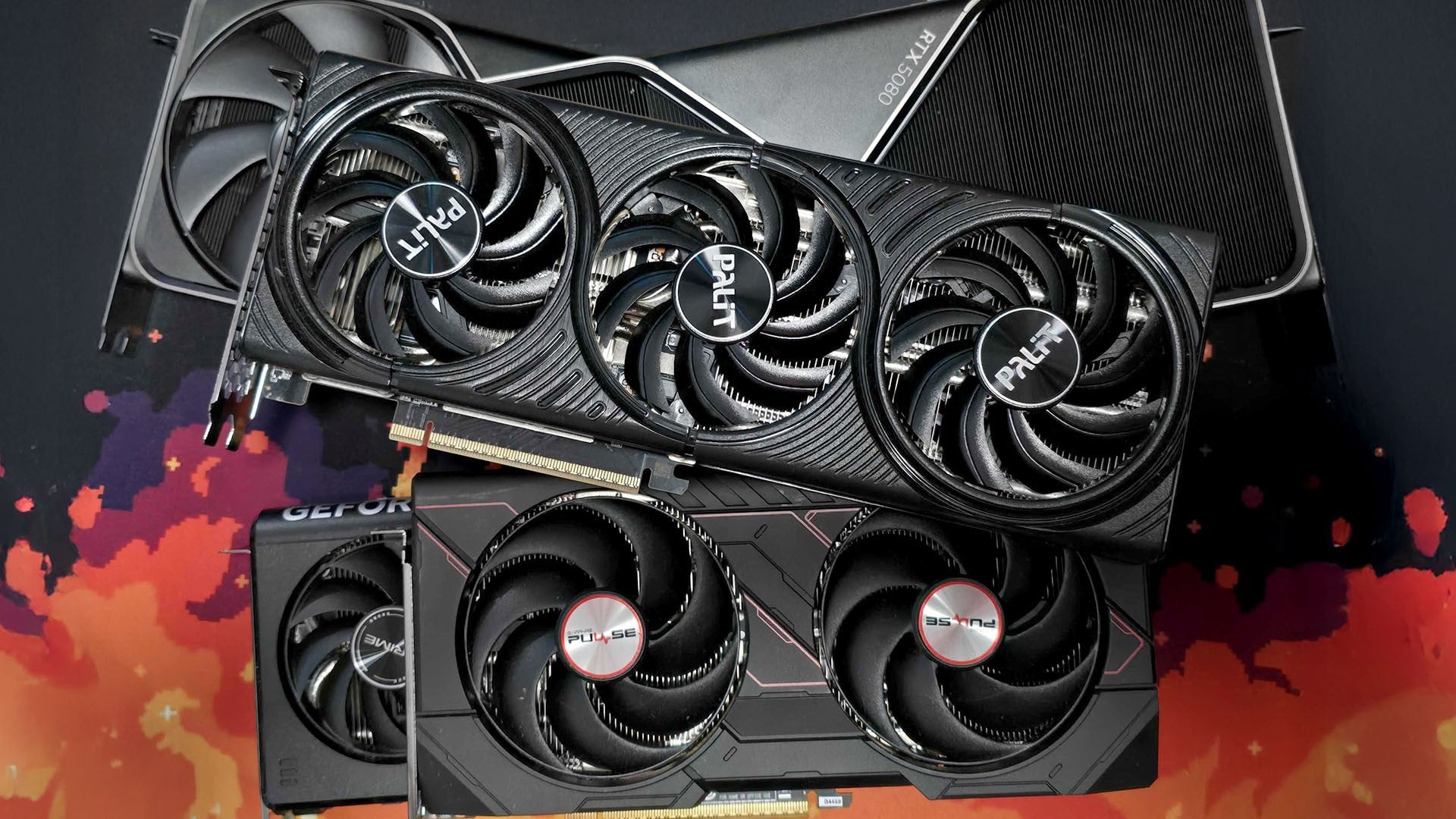
It's official: RAM prices are on an upward trend, one that appears poised to rock the computer market for the foreseeable future. The worldwide economy has incentivised data centre construction to such a degree that some of the world's biggest memory makers have had their full capacity bought out through the entirety of 2026 by businesses that specialise in artificial intelligence, cloud computing and other high-demand computing industries.
We can't help but look at the knock-on effects. While such centres demand high-bandwidth memory chips (HBM) in their orders, such massive orders have the unfortunate effect of crowding out memory manufacturing facilities.
This is already leading to jumps in prices for consumer-grade computer RAM, and we expect future sticker shock on other consumer-grade products that rely on cutting-edge RAM of their own, like smartphones, consoles and computer graphics cards.
We have many thoughts on how this affects devices and prices in 2026, particularly the possible impact to or delay of an expected RTX 5000 Super series of GPUs. But in the here and now, these developments have prompted GPU makers like PowerColor to warn their customers: if you're in need of a new graphics card, this "Black Friday" week of shopping deals might be your last good chance.
Sure enough, we've noticed deals that have come and gone already, with more to come as each online and brick-and-mortar retailer jostles with the next to clear out existing inventory and meet quarterly sales targets between now and Cyber Monday. So we're here to gently and reluctantly echo such "buy now" messaging, with the caveat that these recommendations are really for those who have put off GPU upgrades for whatever reason and are eager for a GPU that ticks future-proofed boxes.
Please note: We are not chasing affiliate revenue in providing these suggestions and there are no affiliate links within this article. As such, we understand prices may be incredibly volatile this week wherever you may search and recommend combining search engines, social media discount-hunting account follows and insight from fellow Digital Foundry readers, either in the comments below or at our Patreon-exclusive Discord.
For starters, however desperate you may be for a GPU, we cannot recommend models with 8GB VRAM or less unless you only play titles that are not VRAM-limited and have no interest in triple-A gaming. Too many modern PC games continue to struggle with such a low VRAM count, sometimes even with modest texture settings enabled. Plus, as more games shift into ray tracing, the requirement for more memory rises still further.
On the tightest of GPU budgets, you'll have a better future-proofed experience if you start with either the Intel Arc B570 or Arc B580 at no less than 10GB of VRAM. Though we were not fond of its higher-than-MSRP prices at launch earlier this year, our cursory look at GPU prices this Black Friday week have turned up 10GB B570s at the $199 mark.
Driver stability compared to AMD and Nvidia remains an iffy Intel proposition for newer titles, but we do know Intel has someone on the Arc case, thanks to a better-late-than-never October update that reduced the issue of bizarrely CPU-limited performance with either Arc B500 series GPU. And boy, do these GPUs punch above their lowest-prices weight. MSRP on these cards is $220 and $250 for the B570 and B580 respectively, but cheaper still can be possible.
Going up the ladder, we see AMD's Radeon 9060 XT with 16GB VRAM, seen recently for as low as $350, delivering power that compares to the PlayStation 5 Pro and compatibility with everything the RDNA 4 platform offers, particularly the upcoming AMD FSR Redstone suite of features. We are compelled to point to the Radeon 9070 XT as a better price-to-power option than its non-XT 9070 sibling, but our real concern with RDNA 4 is that the leaks for RDNA 5 are so much more compelling. Beyond that, our other worry with an AMD purchase is the firm's apparent willingness to abandon GPU line support more quickly than its biggest rival in the past few years.
Speaking of, if you might favour Nvidia for its RTX-exclusive versions of similar GPU features, you're looking at either the 16GB variant of the Nvidia RTX 5060 Ti (seen recently for $410) or the 12GB RTX 5070 (seen recently for $490). You generally get more bang-for-the-buck from the latter GPU, but at that price, getting only 12GB of VRAM isn't what we'd call an easy choice.
Earlier this year, we called out Nvidia's bizarre decision to frame the RTX 5070 as an equivalent to the incredible RTX 4090 - a claim based entirely on DLSS 4 frame generation. We like frame generation but it shouldn't be compared to baseline performance, meaning that sales pitch didn't pan out in our testing, but it remains a solid GPU at its best Black Friday prices and feels all the more attractive as we peer into an unclear GPU pricing future.
Finally, if your budget stretches to the 16GB RTX 5070 Ti, you get both excellent performance and 16GB of RAM, while delivering RTX 4080-level performance generally - and sometimes faster than that when overclocked. However, we'd recommend looking for a very good deal there: based on our testing, it's around 25 to 30 percent faster than the RTX 5070, but with a 50 percent increase on MSRP.


Comments 3
Well this sucks! I have been putting off building a new rig for several years now and was thinking of building a new one soon, but was holding out for RDNA 5 or next Nvidia offering. Maybe i'll build everything else and find a stop-gap GPU.
It's hard out there for a GPU, first they got snatched up by bitcoin miners, and now they're getting hit with this AI crap.
My current PC build (with a RTX 4090, that I bought from a friend), might be the last, unless prices goes back to "normal" again...
I miss the pre-covid era, when even high-end, was afforable, and great bang for the buck.
I just feel a bit burned out, by the hobby.
Show Comments
Leave A Comment
Hold on there, you need to login to post a comment...