
 by
by 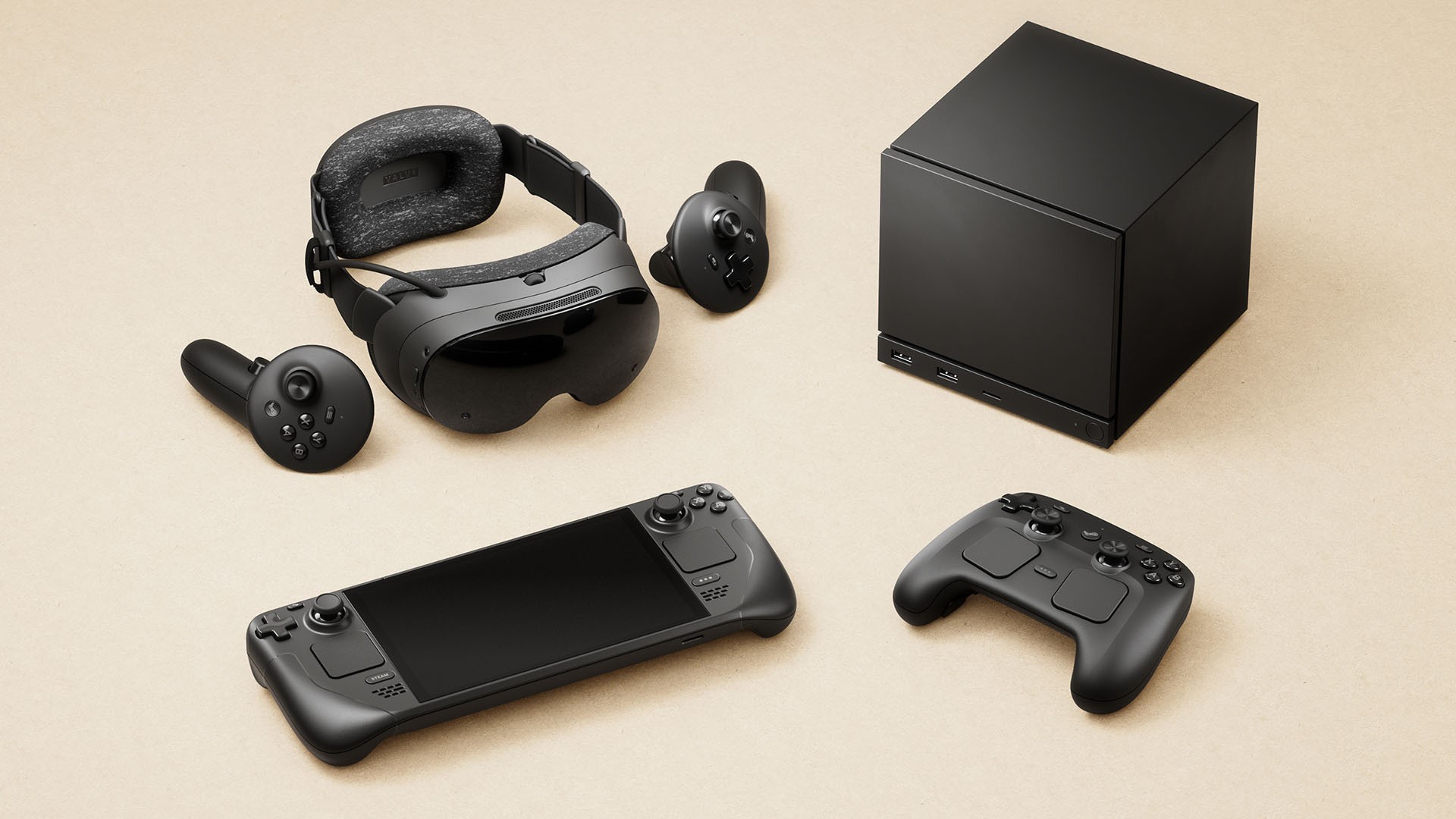
After visiting Valve's headquarters in Bellevue, Washington, earlier this month and going hands-on with the new Steam Frame, Steam Machine and Steam Controller, we came away with a massive number of impressions. Each of the company's three new hardware initiatives has been given a feature-length treatment in their own respective Digital Foundry articles and video segments:
Steam Frame VR Hands-On: Quest 3's Biggest Competition Yet
Hands-On with Steam Machine: Valve's New PC/Console Hybrid
But we thought as a service we'd also provide a top-of-line summary. Do give the longer articles and videos a click and a glance for further context on our findings.
We don't yet have prices or release dates for anything. Valve has suggested "Q1 2026" as a possible launch window for any or all of today's announced devices, and the term "affordability" came up frequently when discussing design decisions and engineering tradeoffs.
Steam Frame is an inside-out tracked, untethered VR system. It resembles Meta Quest 3, only slightly slimmer, with a clever shift of its battery and other components into the headband. It is designed as much to play traditional VR fare as it is to project your favorite 2D games from Steam on a virtual projector.
The new Fex translation layer is megatonne. While Steam Frame is designed around an expectation that you'll stream games, VR and otherwise, from a nearby PC, it can also pass both types of games' x86 code to Frame's ARM64 APU. It may do for a future ecosystem of ARM64 systems what SteamOS did for gaming on Linux.
Steam Frame's power needs more time to examine. On paper, its Snapdragon 8 Gen 3 chipset is a significant jump from Quest 2, but Valve didn't offer a native Half-Life: Alyx build to test on Frame; we had to stream it from a PC. That makes us wonder about its overall VR-rendering headroom for people who want to play fare like Alyx without a gaming PC available.
Steam Machine is a living room PC. Its small cuboid chassis has been engineered with an expectation of minimal airflow in an entertainment centre. It runs SteamOS and feels much like Steam Deck plugged into an HDMI dock. It looks attractive, has lots of useful ports for PC peripherals and supports replaceable face plates.
Steam Machine is a bit weaker as a living room PC than we'd hoped. "Semi-custom" AMD parts include an RDNA 3 GPU that appears to be a cut-down version of the RX 7600. Its 8GB of VRAM is our biggest sticking point, enough so that we wish Valve had offered another SKU with more VRAM to let consumers future-proof their purchases.
Each system has storage-specific SKUs. 256GB and 1TB as Steam Frame options; 512GB and 2TB as Steam Machine options. Both support microSD hot-swapping from other SteamOS devices, meaning, they each accept a Steam Deck microSD card with existing game installations.
Steam Controller is nice. Its TMR thumbsticks feel fantastic, and its new "Grip Sense" feature helps with gyroscopic control. One Steam Controller is bundled with every Steam Machine. It may not replace your favourite existing PC gamepad, but it already feels like a nice new option.
No sign of Half-Life 3. Valve did not show off any new games at all. Not even hints to device-specific updates to existing games.


Comments 6
I'd buy one in a heart beat...
Seeing a steamdeck in the picture gave me hope of a refresh of the steamdeck APU but too bad that doesn't seem like it's happening now.
Great that you got to see it. Well deserved
half-life 3 boxed in with the machine at launch would certainly sell a few id have thought
Any hints on price or release date of prices? (UK)
@Nebatunia MooresLawIsDead has a good video about pricing, Tom over there reckons $400–$600 for the Steam Machine.
Show Comments
Leave A Comment
Hold on there, you need to login to post a comment...