
 by
by 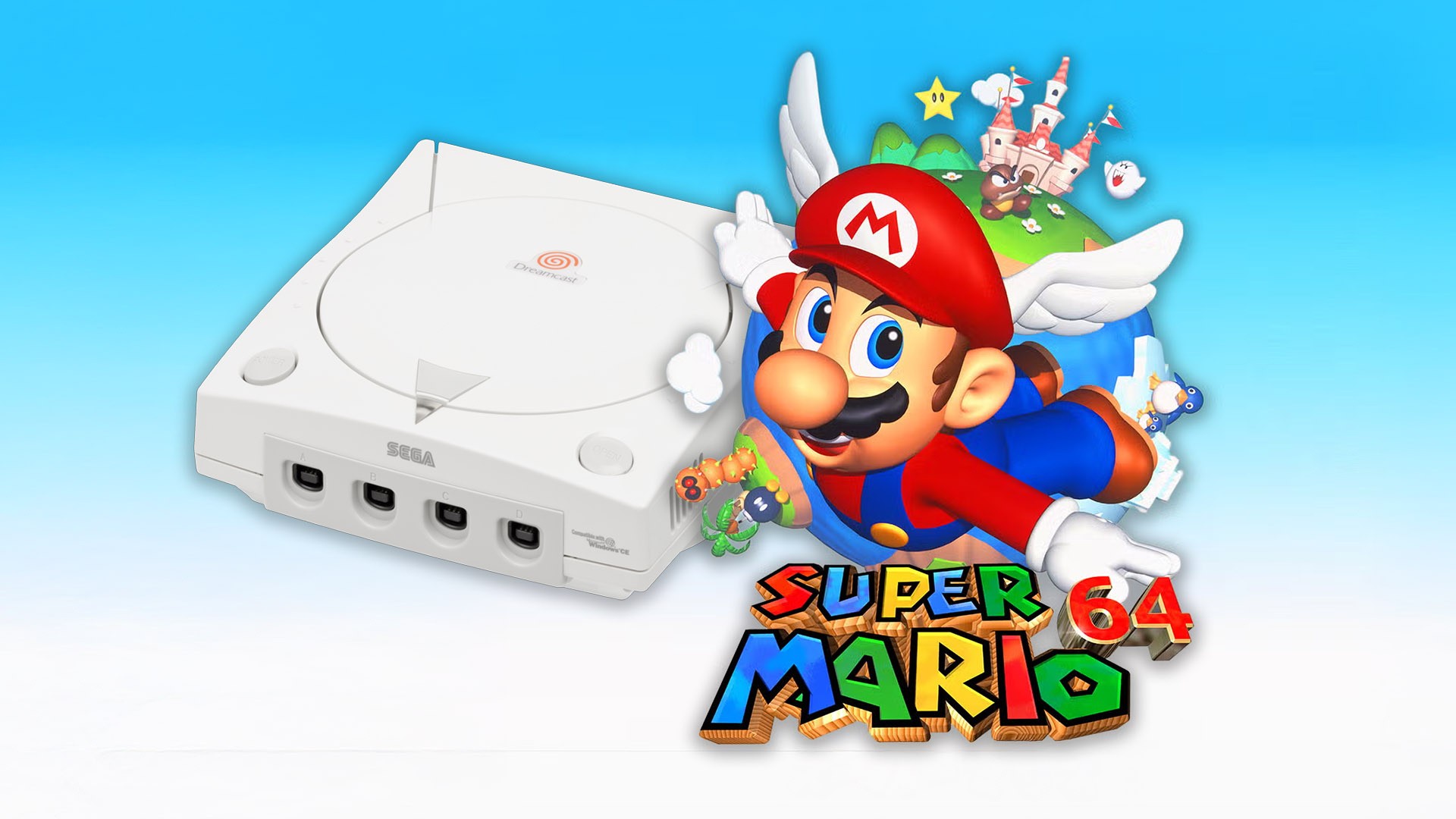
We're going to be talking a lot more about decompilation projects in future, but there's one in particular that caught our eye: Nintendo 64 launch classic Super Mario 64, running beautifully on Sega's Dreamcast. The notion of an enhanced port to the Sega system is extraordinary enough, but the story behind it is equally fascinating.
First up, a quick primer on decompilation as a concept. Put simply, retro video games are reverse engineered and re-coded from the ground up. You'll get the same visual results as the original game, but the code itself is brand-new, fresh and typically open source. That in turn opens the door for these projects to be ported to other platforms, often with custom code for new options that fit those other platforms - or in this case, customising game systems to optimise for the Dreamcast's specific architecture. Copyright problems? Typically they are not an issue as the decompilations ship without assets, which you need to provide from your own copies of the original game.
The end result? This is a higher resolution version of the Nintendo classic essentially running on contemporary Sega hardware: Dreamcast launched a couple of years after the N64, after all. It runs at 480p up against the original's 240p, looking a good deal crisper - and while HUD elements and textures are still of the same quality, the game looks good on the Sega console. Also interesting is that while the original ran from cartridge, we ran from a burned CD-R and the experience remained as seamless as the original despite what we'd imagine to be slower access times.
The port runs at the same 30 frames per second as the original, so resolution is the only boost. In theory, the Dreamcast could push it higher, but the game code itself is hardwired for 30fps and interpolating to 60fps isn't an option as resources on Dreamcast aren't available.
One of the more interesting technical feats involves audio. Nintendo's N64 mixed audio on specialised hardware - the RSP - which had to be emulated completely in software for the Dreamcast's SH4 CPU. This was initially taxing, but a solution emerged through creative vectorisation of mathematical operations. Veteran Dreamcast developer John Brooks jumped in to advise on the port, helping them micro-optimise for the SH4's floating-point unit, speaking to the level of cooperation and passion invested in these projects by the community.
While the Dreamcast can't replicate the N64’s unique tri-point texture filtering or some of its original quirks, the essence of Super Mario 64 survives on the system. The Dreamcast controller, in particular, feels surprisingly at home with Mario's movements. Given the choice of decompilation projects, PC may offer the most options, but the Dreamcast port is certainly cool. However, original hardware remains the best way to play. The granularity of the N64 analogue stick and the way those low-resolution textures are filtered always feels just right.

Comments 4
This is so fascinating, just like Sonic The Hedgehog on SNES.
The passion and skill in the retro community is incredible.
It's also great to see projects like Earthion or GG Aleste 3, that use old hardware as base for completely new projects.
There's some excellent ports of Super Mario 64 on Android and other weakish retro handheld systems that can run at 60fps uprezzed. Also recommend checking out the 3DS port with stereoscopic 3D for modded 3DS's.
Very cool, awesome they were able to compensate for the both potential loading times and the music implementation. People are so passionate in this hobby
Mantap keren
Show Comments
Leave A Comment
Hold on there, you need to login to post a comment...