
 by
by 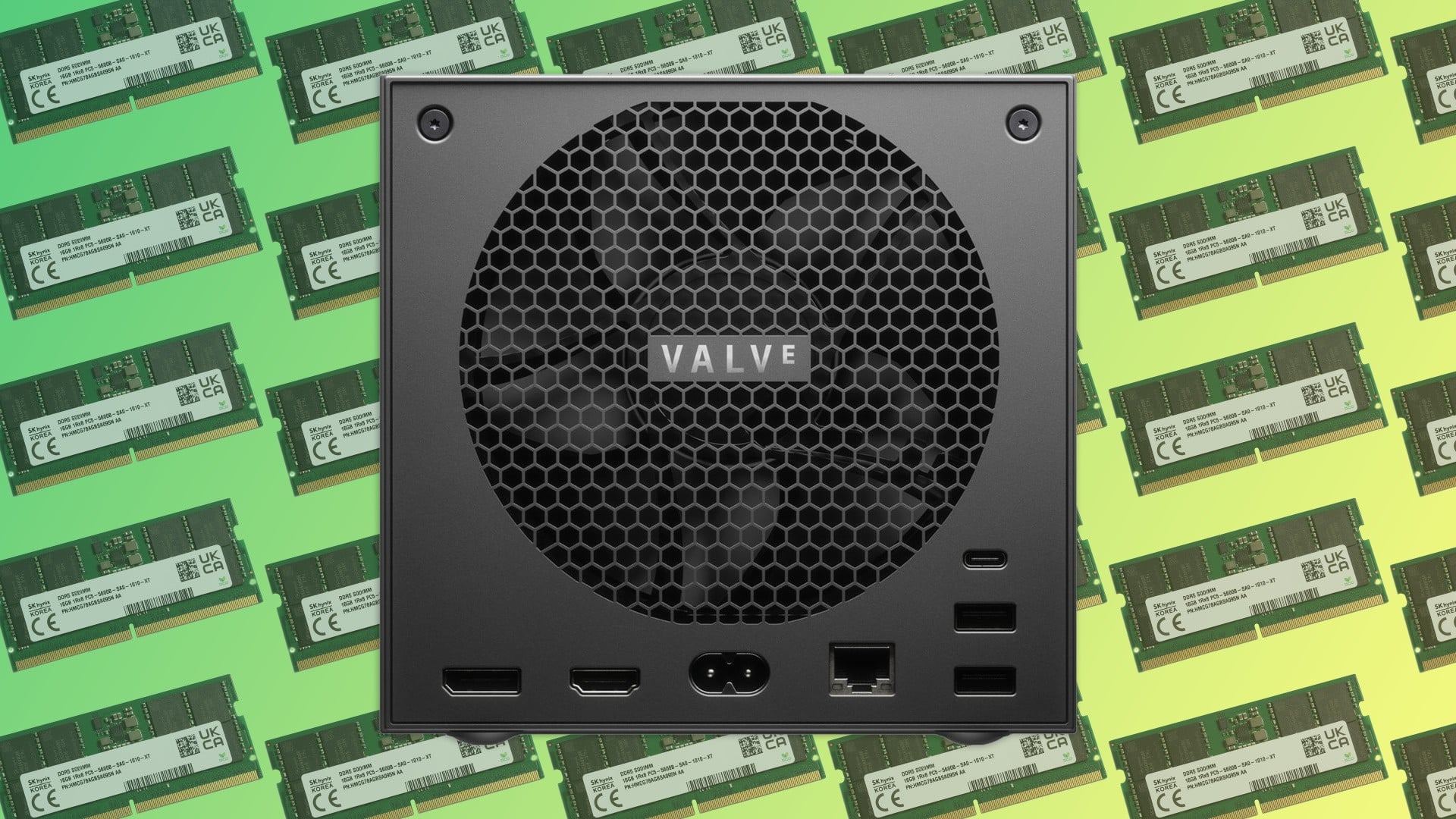
As Valve announced back in November, the Steam Machine launches with 16GB of DDR5 memory and a choice of a 512GB or 2TB SSD. These two components have become many times more expensive than they were just nine months ago, so it's no surprise that the Steam Machine is pricey too. What I didn't expect until we spoke to Steam Machine engineers Pierre-Loup Griffais and Yazan Aldehayyat was that those price increases nearly scuppered the entire Steam Machine project - which would have been a shame, given how well this mini PC turned out.
The core issue was that 8GB sticks of DDR5 memory in the laptop-friendly SODIMM form factor became unobtainable by the time Valve came to secure the quantities needed for the project. Here's Aldehayyat:
"It was quite literally impossible to buy 8GB [sticks], at least at the quantities we're looking to buy mostly because everybody wants higher storage, and that's more profitable, so all the capacity shifted to that."
Are you going to upgrade your Steam Machine's RAM? (612 votes)
- Yes, I'll upgrade it immediately
- Maybe I'll upgrade at some point
- No, I don't think it's worthwhile for me
That meant the firm had little choice in switching to a single 16GB stick of DDR5-5600, as these sticks were produced in greater quantity. That does mean that the Steam Machine is essentially paying a performance penalty for the decision, though Aldehayyat notes that the two configurations are "pretty comparable" in actual games, less so in CPU-specific or memory-specific benchmarks.
In our testing on Steam Machine and elsewhere, that bears out. If you're GPU limited, as you are likely to be when targeting 4K resolution in many games, then there's no difference due to the single-channel memory setup employed by the Steam Machine. However, there are a growing number of CPU-heavy titles, especially RPG or simulation titles like Crimson Desert, Baldur's Gate 3, Dragon's Dogma 2, Factorio, Cities: Skylines and so on, which can easily show CPU differences - even at 4K.
We haven't had time to do proper dual-channel versus single-channel tests on the Steam Machine just yet, as removing the existing RAM and replacing it with two 8GB sticks requires significant disassembly of the machine - a much harder task than upgrading the SSD, for instance. Still, by doing so you can essentially improve the CPU performance of what is otherwise a fixed platform, so it may well be worth doing.
As it did with the Steam Deck, Valve is producing its own guides for opening up the Steam Machine, and is also working with iFixit to produce repair manuals and offer replacement parts as needed, which is always good to see.
If you're planning to get a Steam Machine, would you be willing to take it apart to give it a memory upgrade - either right away or somewhere down the line? Let us know in the comments below.