
 by
by 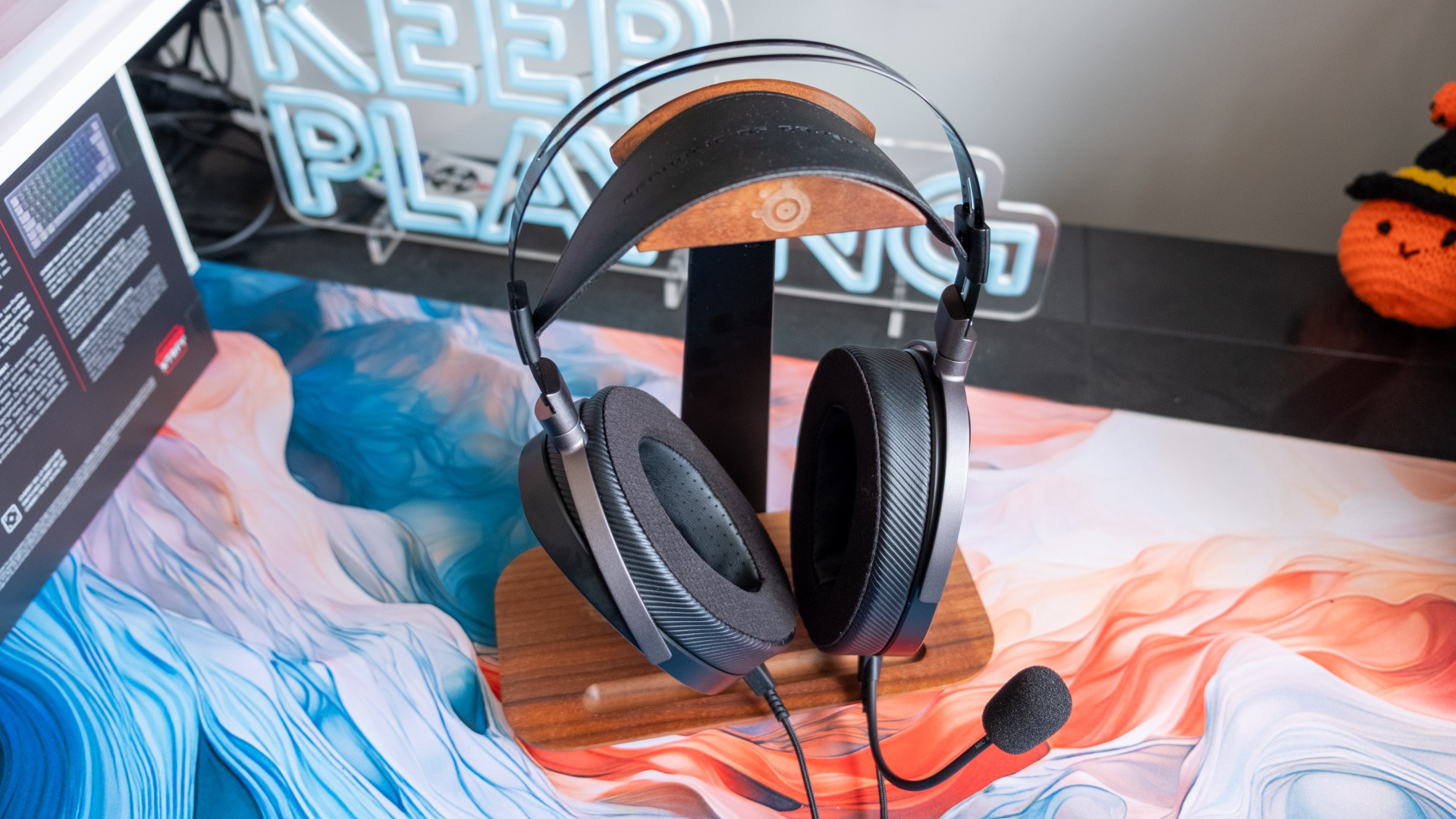
SteelSeries' Arctis Nova Pro Omni is in many ways the ultimate high-end gaming headset: light, wireless, hi-res certified and paired with a powerful control pod for use with multiple consoles and/or PCs. The £284/$248 Asus ROG Kithara is part of the same category, but takes a radically different approach, with massive 100mm planar magnetic drivers, an open-back design and wired-only connectivity for a single machine. It's a fascinating reflection of almost opposing design philosophies, and though SteelSeries' approach is more crowd-pleasing, the Kithara is a more interesting headset that will no doubt strike a chord with audiophiles.
The Kithara gets its unique planar magnetic drivers and audio tuning from Hifiman, a Chinese audio company that has been a key player in "chi-fi" movement. The difference with the Kithara compared to its normal fare is that this is a proper gaming headset, with a microphone, USB-C dongle and (of course) prominent ROG branding. Despite that though, the Kithara is still recognisably Hifiman in silhouette, thanks to those massive planar magnetic drivers, and the sound quality feels similar too - without the noticeable treble (and often bass) bumps that typically accompany gaming headsets.
The Kithara is far better built than the average bear too, with metal used on the exterior of the ear cups, the yokes and the frame. Combined with the removable dual 3.5mm connections and both athletic fabric or velour ear cushions, the Kithara ought to be quite robust - not to mention repairable and upgradeable. The headband is interesting too, with what looks to be vegan leather up top and athletic fabric on the underside, with a clicky eight-notch mechanism for adjusting the fit. Comfort is generally excellent, with the huge ear cups, good balance and relatively light weight for a planar magnetic headset (420g) contributing to a headset that feels less bulky than it looks. I still found my ears getting pretty hot in the velour pads - thanks, UK heatwave(s) - but the design still surprised and impressed me.
The MEMS microphone is a little less convincing, with a fairly basic design that neither retracts nor detaches, though you do at least have the option of a cable without the mic attached that can terminate in 3.5mm, 4.4mm or 6.3mm connections to suit PCs, consoles, mobiles and hi-fi equipment. (Additionally, you can use the dual 3.5mm to USB-C dongle to connect the headset to PS5, Switch and Switch 2, though not Xbox.) The mic quality is fine for a wired headset, with decent detail at the expense of background noise, but I generally prefer to use a separate mic for podcast appearances and the like.
Thankfully, audio quality from the planar magnetic drivers is excellent, with smooth and balanced treble, extremely rich and detailed mids and fractionally under-emphasised but well-controlled bass. The warm sound signature is also helped by a wide soundstage and excellent directionality. That's a good combination for competitive gaming and single-player content alike, though the most bombastic cinematic experiences can feel a bit more exciting on more noticeably v-shaped headsets compared to the flatter tuning here. The Kithara also worked well enough on the USB dongle, though owners of fancier DAC/AMPs will no doubt appreciate higher volumes and a bit more presence. At a rated 16Ω impedance, driving the headset isn't too challenging either.
It probably goes without saying, but as an open-back headset, the Kithara leaks sound in both directions - so others around you will be able to hear what you're listening to, and you'll be able to hear what they're saying about what you're listening to. This is great for carrying out quick conversations or listening for the doorbell, but it does mean that the Kithara is far less suitable for crowded, shared spaces than something like the Arctis Nova Pro Omni, with its closed-back design, passive noise isolation and active noise cancellation.
As this is a passive headset as well, all of the controls are on your DAC/AMP or the USB dongle, obviating the need to grapple with headset buttons. Similarly, there's no software to install, which is a rare comfort in the year of our lord 2026 - though it does mean I need to find something else to break up the blocks of text in this section of the review.
Ultimately, the Kithara succeeds in making a case for a very different kind of premium gaming headset, one that is as comfortable for critical listening as it is for perceiving your opponents' footsteps in Counter-Strike. The simplicity of a headset without software to run or a battery to recharge has honest appeal, as does the flexibility of a wired 3.5mm connection that can be plugged into a current-gen PC or console controller as easily as a stereo from decades ago.
The headset mic could be a touch better, and Xbox compatibility is limited to headphones only, but besides that it's really hard to find much to complain about here - especially in the US where the Kithara is more reasonably priced (£284/$248). Either way, if you're in the lucky position of having this much cash to spend on your gaming headset of choice, this is a distinct proposition well worth knowing about.