
 by
by 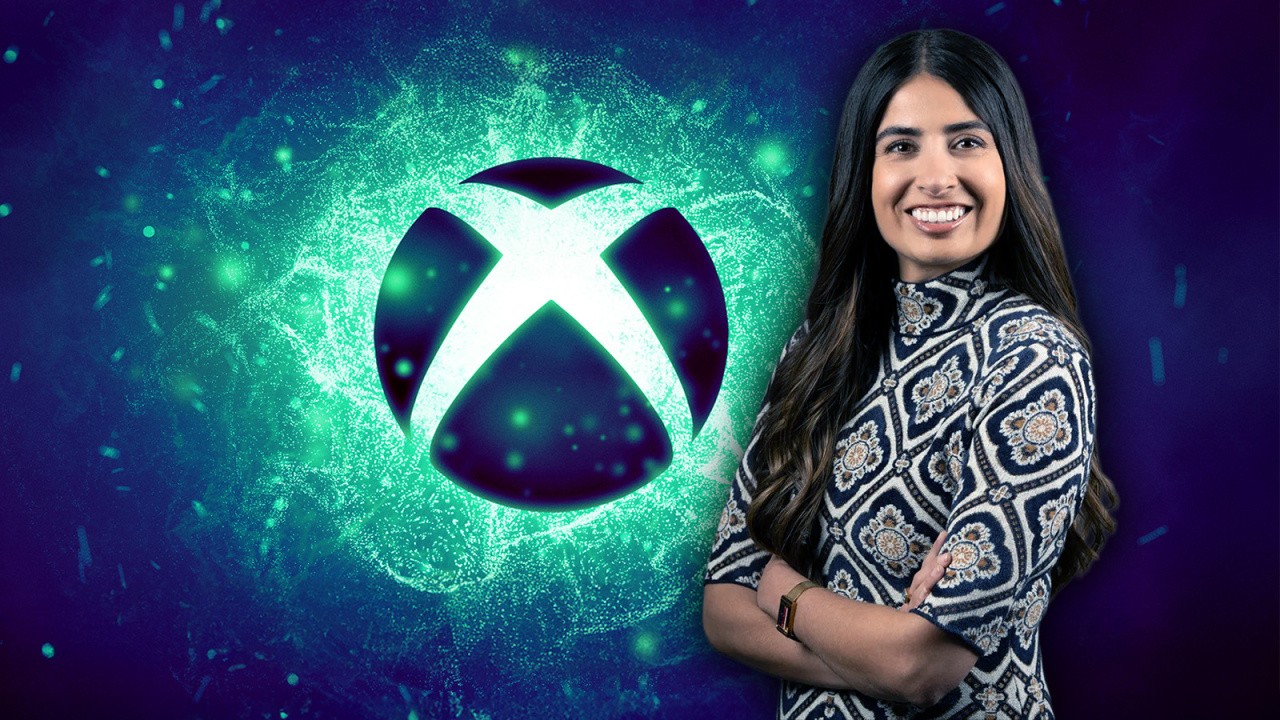
We're a few days on from the announcement of Phil Spencer's retirement, Sarah Bond's exit, and the debut of Asha Sharma as the new EVP and CEO of the Xbox games business - and it's fair to say that we're short on concrete strategy on the way forward. In fact, all we have to go on is Sharma's blog post, its three commitments and a smattering of replies to Xbox users via X.
Meanwhile, a report from Tom Warren on The Verge blames Xbox's woes on Sarah Bond under Phil Spencer's "direction" but from my perspective, what's done is done. What I'm more interested in are the actual, viable options open to Microsoft as it moves into its next era and the extent to which Asha Sharma's three commitments are actually anything new or game-changing. After all, these commitments serve as the yardstick by which her performance will be judged.
It begins, so we're told, by prioritising great games, investing in iconic franchises and backing bold ideas. The question is the extent to which this is already not happening, since I'd describe the Microsoft slate as impressive, expansive and stacked with quality. On top of that, if there is to be some kind of change in direction, we must remember how long it takes to effect actual change in a world where it's taken six years to deliver Fable. This commitment is laudable but really it's all about the execution - an area where Microsoft has made plenty of mistakes over the years.
We'll talk about the second commitment momentarily, but the final commitment on the future of play also looks light on detail - style over substance - except for one line that caught my eye: "a shared platform and tools that empower players and developers to create and share their own stories". This sounds far less like a new SDK and more like something akin to Fortnite and Roblox. This is an incredibly ambitious objective, but to talk about it now does suggest that development would have already begun under the current regime. Building something similar is a massive, multi-year endeavour, after all.
There are welcome assurances that Xbox's endeavours will be human-driven, not "AI slop", but it's hard to reconcile that commitment with the reality that the parent company itself is all-in on the tools that create said "slop" and where none other than Satya Nadella himself rails at the very term itself. Bearing in mind Sharma's AI background, this is an area where Xbox needs to build trust under the new leadership.
But it's the second commitment that is catching the attention of the Xbox audience. In talking about "the return of Xbox", Asha Sharma is explicitly suggesting that Xbox has somehow gone away and must come back, which could be taken to mean that the firm is backing away from its "Xbox Everywhere" multi-platform strategy. However, at the same time, there also appears to be affirmation of the existing strategy: "Gaming now lives across devices, not within the limits of any single piece of hardware. As we expand across PC, mobile, and cloud, Xbox should feel seamless, instant, and worthy of the communities we serve."
My take on this? Chances are this is about re-establishing brand identity as opposed to making truly fundamental change. That said, there may be more focus on the next generation Xbox as the centrepiece of the ecosystem - perhaps more so than originally planned - but the fact is that the strategy laid out by Phil Spencer and Sarah Bond, currently being executed by head of next-gen Jason Ronald, has yet to be fully revealed. And because it hasn't, it's effectively a blank canvas for the new leadership.
What we do know is that there will be a 10th generation console, it will be immensely powerful in console terms, and there will be Xbox backwards compatibility baked into a "portfolio of devices". Those are the words of the outgoing Sarah Bond but I don't think there'll be any dramatic changes to next-gen policy: the decisions have been taken, the partnerships forged and the investments made. In terms of hardware, next-gen is mostly a done deal.
There seems to be hope from some quarters that the "return of Xbox" could mean a reaffirmation of the established console model, built on the idea of subscriptions services and game licensing fees subsidising cost-reduced consoles. The problem with this thinking is that everything that we do know about the 10th generation console - and even Microsoft's official statements about "the biggest technological leap ever in a generation" - suggests a machine that's simply too expensive to be subsidised in this manner, especially in a world where Microsoft's attempts to deliver exponential growth in its subscriber numbers have failed.
Course corrections on the console's design are possible, but the costs involved in creating new silicon are off the charts and timelines on production would be reset. The only options available are mild tweaks to the existing design. Alternatively, perhaps more could be made of the "portfolio of devices" that Sarah Bond talked about which remain a bit of a mystery. It's perhaps fruitless to speculate when only fragments of the scope of the next-gen strategy have been shared.
For the record, focusing on the new console itself, the idea of an open box based on Windows, capable of running other PC stores, with a price to performance ratio that compares very favourably to PC prebuilts still seems like the optimal strategy in a world where both Xbox One and Xbox Series consoles failed to change the landscape. The challenge there will be in convincing owners of any PC, including the next-gen Xbox console, not to use Steam.
The latitude in which Asha Sharma and the revamped Xbox team can operate is limited then, certainly in terms of next generation hardware, but there is the question of exclusivity for its games. The received wisdom is that consoles are built around exclusives - which is a problem for Microsoft. First of all, there's little doubt that taking its games multi-platform has been a big success that will be difficult to fully roll back. Then there's the reality that its acquisitions have been multi-platform-based studios, where the economics of game development only really make sense if as many people can play those games as possible - Call of Duty being the classic example.
On the flip side, Microsoft now has a wealth of data on a number of different scenarios: it's tried exclusivity within the established, subsidised console model. It's tried timed exclusives with varying amounts of "wait time" between Xbox and, say, PlayStation releases. It's also tried full day-and-date launches. And it's still experimenting. Fable launches simultaneously across platforms this year, but Forza Horizon 6 does not - it's a PC/Xbox exclusive for a timed period.
Where Microsoft does have latitude is in deciding which of these strategies works best - and if that means an Xbox console exclusive for a timed period, perhaps it might consider a bold statement that would apply across the board. Titles like Call of Duty and Minecraft would remain multiformat, of course.
Ultimately, the short term outlook into 2027 and the launch of the next-gen console may just be an execution of existing strategy with minor course corrections and visibly different marketing ("This is an Xbox" really has to go). The good news for the revamped management team is that the major, painful, underlying changes to the Xbox business have already happened - but there are still challenges to come. Nevermind "this is an Xbox", what's really at stake is "what is an Xbox?"
In changing Xbox so fundamentally so quickly, there's an identity problem that Microsoft has to overcome. And maybe that's what the "three commitments" are actually about. Perhaps it's less about the specifics on strategy and more about re-engaging with the community and trying to re-establish the core identity of the brand and what it actually stands for.


Comments 12
Perhaps Xbox would be much happier being a publisher at the end of the day.
I would say that's all extremely charitable of you to say all that Rich. In terms of, "re-engaging with the community and trying to re-establish the core identity of the brand and what it actually stands for" I would hope that's what the new management is trying to do there, but I feel if they wanted to really take that direction, why is the press release a bunch of garbage corporate words that have nothing of value attached to them? Why not even a simple, "We hear you and we understand. I'll try to make the best possible Xbox for you, than fans."? If she actually cared she would say as much.
Not only that, but when you look at her background, it's 100% on the software side of things with basically no experience on the hardware side at all. Satya obviously made this decision and it clearly shows that Microsoft wants to go hard into software much more so than the hardware side of things. After all, they're MicroSOFT not MicroHARD. I wouldn't be surprised at all if it turns out that Asus is the one actually putting the Xbox SoC in a console and sell it, much like how they produce the ROG Ally X. With Phil & Panos gone, I fully expect the hardware side of things to fall by the wayside.
I feel change in leadership is clear statement of intent, to make Xbox the AI gaming platform. As with all these things, it’s a move to cut cost, reduce headcount, and increase profitability. So when we’re all out of work, who will be able to buy this stuff?
I don't think you make a change like this without changing strategy again so i'd expect some pretty major changes in the next 12+ months. Maybe it will work out, but also: Be careful what you wish for / better the devil you know and all that.
The problem is that Microsoft have damaged the Xbox brand and reputation with too much interference from the higher ups. They've diluted the brand to the point where I no longer see Xbox as a console worth owning but as a publisher of the handful of decent games each year that I can buy on my PC.
Long gone are the exciting Wild West days of the original Xbox and the excellent (if somewhat unreliable) Xbox 360. Xbox One should have been the next step in console gaming dominance but instead it flopped with a disastrous TV! TV! TV! unveilling and Xbox has never really recovered since. The hardware isn't selling and as a result Game Pass subscriptions have stagnated.
Can Xbox come back from this?
It would be sad to see it go completely - Sony need competition - but at the same time it is hard to see anything positive from all the years of mismanagement, u-turns and lies. I would not be at all surprised if Microsoft switch Xbox over to just being a games publisher over the next few years and abandon the hardware market completely.
Whatever they do, I will not be buying future Xbox hardware.
Sadly, my personal belief is that Satya Nadella has absolutely no interest whatsoever in XBox. In fact, as far as I can tell, he has no interest in anything other than AI. See the current state of Windows for evidence.
In my personal opinion, Asha (and her inevitable sucessor in 2 or 3 years) has been assigned to oversee a managed retreat, with the eventual intention of exiting the gaming business completely.
The "three commitments" were written by an AI chatbot. Microslop have shown where they think the future is. I don't see why their Xbox strategy would be any different.
@stoper The Windows Central interview today suggests that the new strategy has yet to be made and it's basically business as usual.
The discourse about 'AI slop' is designed to rub certain ppl the right way but that ship has sailed. They'll still push for AI ofc but in a sneakier manner, trying to aim for 'just palatable'. Unfortunately for them, that technology is brain dead, everything it touches that requires higher order thinking is dead. On the hardware front, I really don't see them pulling a 180.
@themightyant I think you're right - if the intent was to continue with the existing strategy then I expect they'd have promoted Sarah Bond. Just by virtue of who they chose to hire, they are communicating intent to pivot. We just don't yet know how.
@Someguyperson I believe the corpo language means we are not the audience for the pitch. She is addressing her boss (so that she won't be fired at the next reorg) and the shareholders (so that the board doesn't fire her boss).
American corpo culture is now pervasive, please upstairs, talk the talk regardless of the walk, and don't get attached to anyone at the the working level because you will have to sacrifice them to maintain profit when the hyper growth slows down a bit.
It's eat or be eaten to the bone, with a glossy, flawless cover.
My biggest concern is Microsoft hasn't released anything close to the promises they have made. If anything they have reversed course. Acquiring all those studios in the name of preservation just to let them die. I don't think they are capable in the hardware or software development. The age old tactic empty promises of games to come and then capitulating to Sony. Yet things are more expensive and games are getting cancelled faster than ever.
Show Comments
Leave A Comment
Hold on there, you need to login to post a comment...