
 by
by 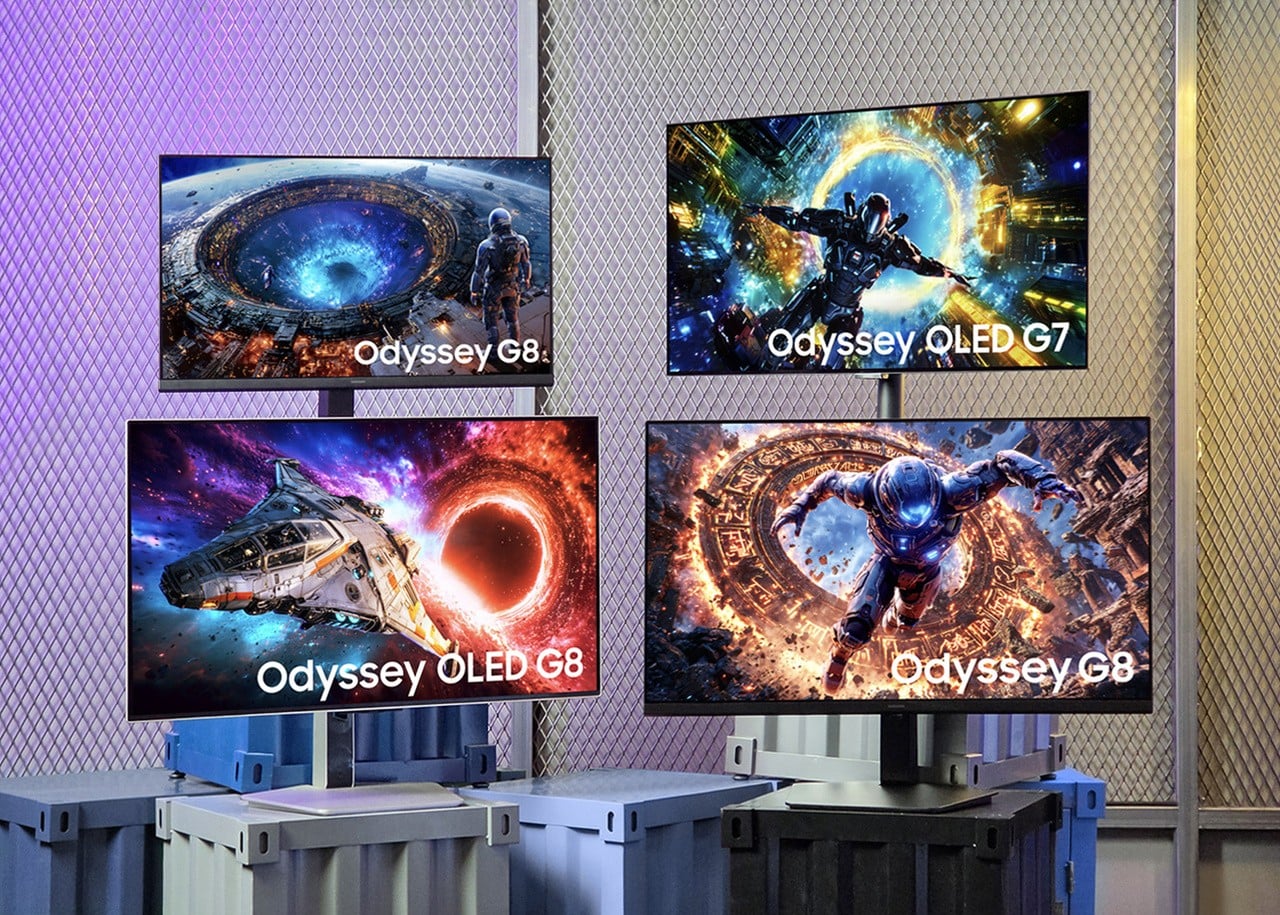
Hot on the heels of LG unveiling the first 1080p 1000Hz monitor, Korean chaebol rival Samsung has announced the industry's first 6K gaming monitor - and three more models split across QD-OLED, W-OLED and IPS LCD panel types.
The flagship Odyssey G8 G80HS is a 32-inch Fast IPS monitor with a 6144×3456 resolution, while its refresh rate is 165Hz - significantly faster than the 60Hz office monitors previously produced at this resolution. If you want a higher refresh rate, eg for hitting Counter-Strike 2 with the gang after your work day is over, the monitor can also run in dual mode at a 3K resolution and 330Hz refresh rate.
This looks like the ultimate monitor spec sheet for me - though it doesn't use a Mini LED backlight, and therefore its HDR performance isn't likely to impress versus the 4K 240Hz QD-OLED I'm using now, with peak brightness only around 400 nits and a 1000:1 contrast ratio. Still, depending on the panel and how infrequently I actually use HDR for PC gaming, perhaps I'll be able to live without those inky OLED blacks.
What monitor should we test from these new Samsung releases? (93 votes)
- Odyssey G8 (32" 6K 165Hz IPS)
- Odyssey G8 (27" 5K 180Hz IPS)
- Odyssey OLED G8 (32" 4K 240Hz QD-OLED)
- Odyssey OLED G8 (27" 4K 240Hz QD-OLED)
- Odyssey OLED G7 (32" 4K 165Hz W-OLED)
There's also a more affordable 27-inch Odyssey G8 G80HF model which supports a dense 5K (4120x2880) resolution at 180Hz or 2560x1440 at 360Hz in dual mode. This one is also an IPS panel.
If QD-OLED is more your thing, then Samsung has the OLED G8 G80SH in 27 and 32-inch sizes, both of which promise a 4K 240Hz pairing that works well for gaming and content creation alike. This one supports single-cable connections with up to 98W charging via USB-C, and uses fourth-generation OLED "penta tandem" technology. This panel gets its name from its five-layer design, which ought to last for longer than earlier OLED panel types while hitting slightly higher brightness levels. Its DisplayHDR True Black 500 certification suggests something in the 500+ nits range.
Finally, there's also a more affordable 4K 165Hz monitor, the Odyssey OLED G7 G73SH, which is a W-OLED instead of Samsung's usual QD-OLED. That means it gets access to a dual mode, giving users the option of a 1080p 330Hz mode for faster-paced games.
| Samsung Model Name | Panel | Size | Native | Dual Mode | Equivalent Price |
|---|---|---|---|---|---|
| Odyssey G8 G80HS | IPS | 32-inch | 6144x3456 165Hz | 3072x1728 330Hz | ~£940 |
| Odyssey G8 G80HF | IPS | 27-inch | 5120x2880 180Hz | 2560x1440 360Hz | ~£590 |
| Odyssey OLED G8 G80SH |
QD-OLED |
32-inch |
3840x2160 240Hz |
- |
~£870 |
| Odyssey OLED G8 G80SH |
QD-OLED |
27-inch |
3840x2160 240Hz |
- |
~£770 |
| Odyssey OLED G7 G73SH |
W-OLED |
32-inch |
3840x2160 165Hz |
1920x1080 330Hz |
~£690 |
The table above summarises the whole announcements, complete with the Korean Won price converted into British pounds. I would expect at least around a 20 percent premium to these to account for VAT and other costs.
The Odyssey G8 and Odyssey G7 are now on sale in some regions (likely South Korea, as I don't see them on the Samsung UK or US sites), with the Odyssey OLED models to follow later this year.
The 6K flagship would be an interesting one to test, I think - but what do you reckon? Let us know in the comments below.