
 by
by At the end of its week scouring the Consumer Electronics Show 2026 show floor, the Digital Foundry crew has returned to review its Las Vegas convention findings, cataloguing a variety of new technologies that range from intriguing to overwhelming.
We've already covered presentations, demos, and interviews with three of the biggest players in PC and gaming technology at CES, including Nvidia, AMD and Intel. Additional articles dig further into impressions of Nvidia's newly announced DLSS 4.5 technologies and Intel's impressive Panther Lake line of mobile-minded systems - which, based on our on-site captures, brings integrated graphics performance into the lower-end desktop space.
Some of our findings can be found below for easy consumption. Our panel's longer conversation about CES 2026 is embedded above and includes more anecdotal impressions - including peculiar devices like articulated robots and Razer's Project AVA "hologram" standee for your home or office desk.
New monitor- and TV-specific buzzwords floated around CES 2026, and one of the big ones we saw from competing vendors had varying names, including RGB MiniLED and MicroRGB, with the same implementation. The core idea: a MiniLED panel with an RGB backlight. This matters because - at least in test patterns we saw with our own eyes - colour-matched backlighting can deliver far more vibrant colour information in a screen's pixels.
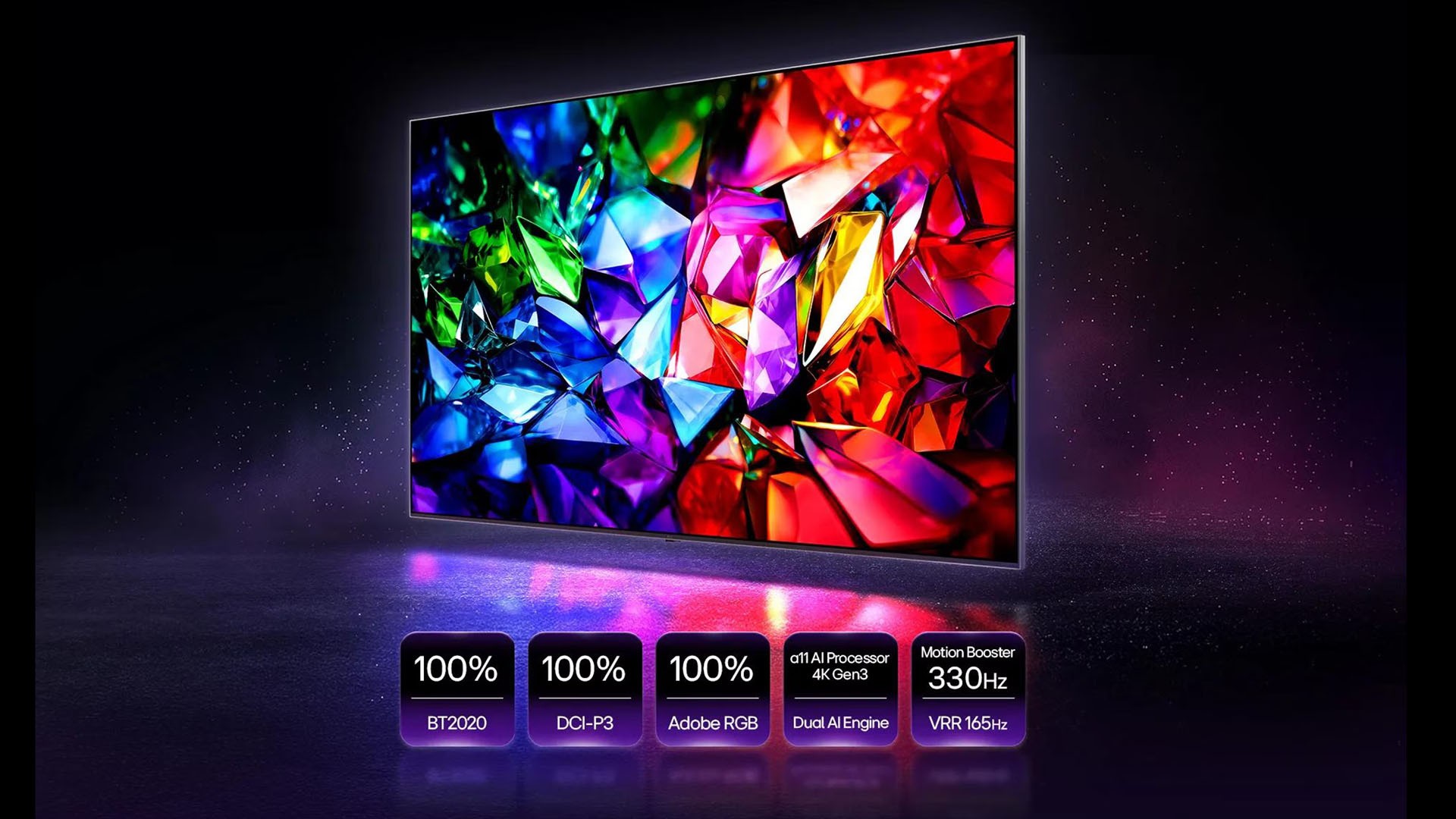
We don't know how real-world content, with limited numbers of dimming zones, may compare on a saturation and intensity level, but ideally, the concept will deliver something approaching full BT.2020 colour presentation.
HDMI 2.2 standard cables, aka HDMI "Ultra96" cables, finally debuted at CES 2026, and as the HDMI Forum announced last year, this new cable standard will double effective bandwidth above the current HDMI 2.1b standard, from 48Gbps to 96Gbps. As this even exceeds the bandwidth of DirectPort 2.1, this is an ideal upgrade not just for arguably unattainable 10K resolution TVs but also to drive higher frame-rates and richer colour and luminance data streams.
Chroma sub-sampling is an unfortunate compromise to push HDR and Dolby Vision metadata at higher resolutions and frame-rates on PCs via all current standards, so we are pleased to see this boost - though, sadly, this only came in the form of new cables at CES, not HDMI 2.2-compatible displays. And we're not confident that we'll see HDMI 2.2 panels anytime soon.
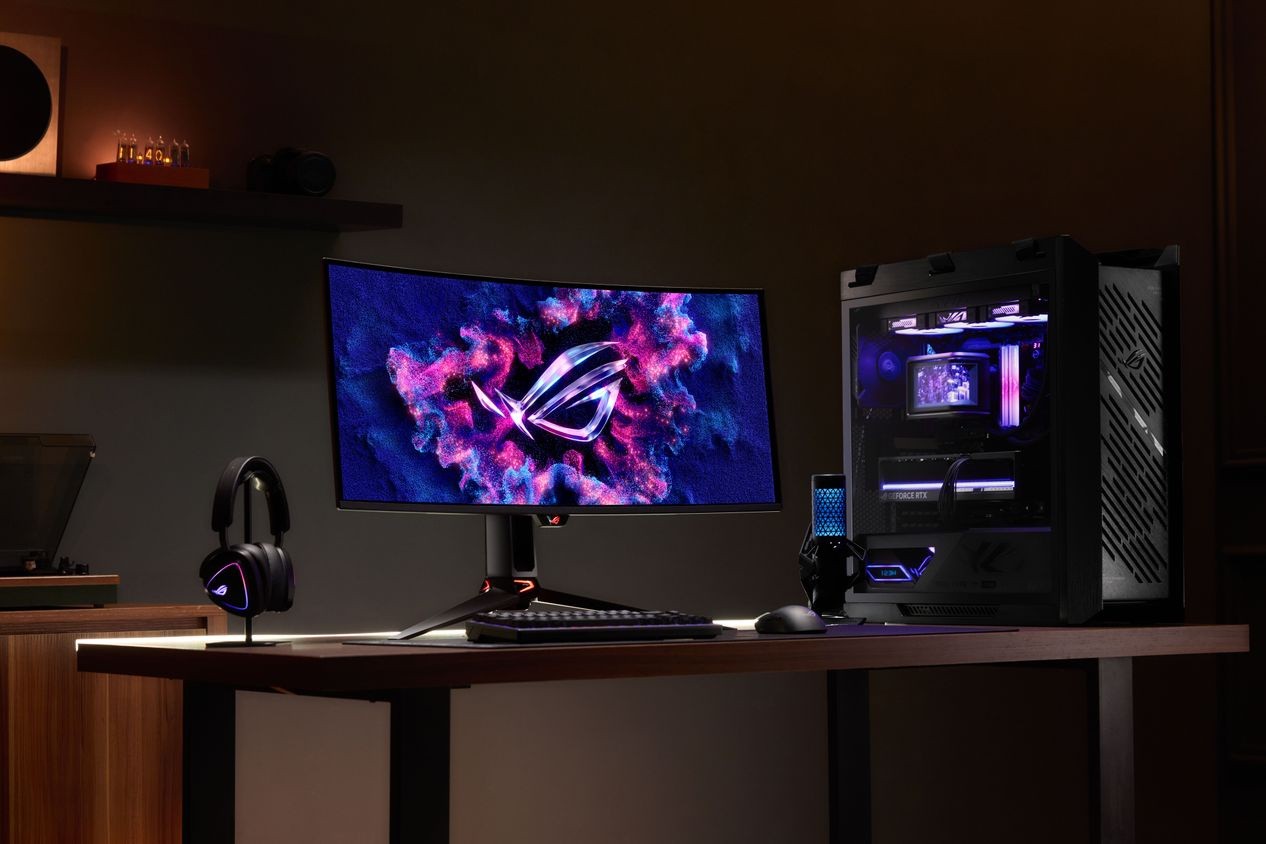
CES 2025 had a noticeable emphasis on 4K 240Hz monitors, and that product category's return to CES 2026 only had one particularly noticeable upgrade, as demonstrated by Asus: a trademarked "BlackShield" coating that we can confirm captures fewer diffuse reflections from nearby lighting and thus delivers richer contrast ratios and colour presentation.
However, we're not sure how much of a difference the coating makes for average home lighting, as opposed to the well-lit environs of a convention hall - and the QD-OLED monitors we saw with this coating still suffered from colour-fringing.
Other monitor demonstrations were more disappointing. Our CES attendees noticed colour-fringing on a new "RGB OLED" panel from LG - a designation that, according to LG, should reduce the issue of colour-fringing. Also at LG's booth, the company demonstrated a multi-monitor setup, with three 5Kx2K panels attached to a simulation driving rig, where the combined pixel resolution was so large that the racing game in question maxed out at an apparent 40fps.
One of the DF team's more striking takeaways came from a PC game running at AMD's booth, Crimson Desert, that ran on a system with a brand-new Ryzen 7 9850X3D CPU and a RX 9070XT GPU. This was our first time to get a good look at the first new game from South Korean studio Pearl Abyss since its launch of the 2017 MMO Black Desert, and it appears to supercharge that game's third-person combat with further upgrades to its in-house engine, BlackSpace.
A rep for the game described the final tech we should expect when Crimson Desert launches on March 19th, including diffuse and specular path-traced global illumination, far-stretching level-of-detail (LOD) geometry, ray-traced reflections and "local RT lights" - though we are unsure whether this phrase from AMD's marketing team refers to shadows or direct lighting. The demo we saw ran at full 2160p resolution with an apparent TAA treatment at roughly 40-50fps, and this months-old build did not include the final game's advertised full support for the full FSR Redstone feature suite, including MLFG and ray regeneration.
We have questions about some of the promised tech - particularly path traced lighting - and will be sure to take a firmer look at Crimson Desert's full feature set when the game launches in roughly two months.

Comments 1
Sounds like Alex won't be happy until his Shader Butler can also clean his flat.
Make it so, massive multinational companies.
Show Comments
Leave A Comment
Hold on there, you need to login to post a comment...