
 by
by 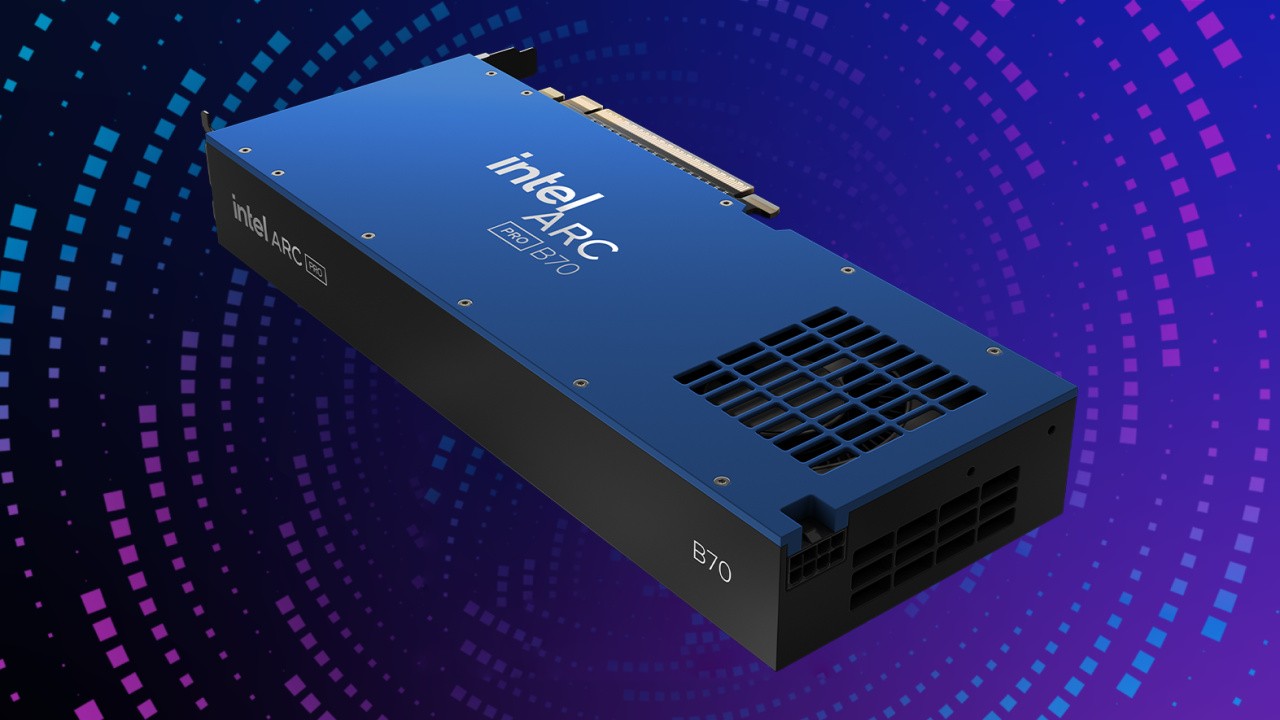
German outlet PCGamesHardware recently got their hands on Intel's Arc Pro B70 graphics card, a $1000 workstation card that uses the full-size G31 Battlemage die that was meant to be the basis of the Arc B770 - but never arrived due to soaring VRAM prices. However, it's still possible to use the B70 for gaming with the right drivers installed, and that's exactly what PCGH has done with the results published today.
It turns out that the B70 is a respectable performer in the mid-range bracket, beating the B580 into a cocked hat while fractionally outperforming the RTX 5060 Ti and RX 9060 XT in most games - though it's some distance from the RTX 5070 and RX 9070. Still, the inclusion of Intel's XeSS upscaling and an extremely hefty VRAM allocation give the card a bit more staying power, and it's interesting to click through the results and see how the GPU fares. It looks most comfortable at 1080p and 1440p, though with XeSS upscaling in play then a 4K output is certainly possible too.
Across PCGH's normalised performance chart, which takes into account gaming at 1080p, 1440p, 4K and an ultra-wide 3440x1440, the Arc Pro B70 scores 36.8fps on average, just ahead of the RTX 5060 Ti 16GB (36.4fps) and RX 9060 XT (35.0fps). Meanwhile, the RTX 5070 is the next performance tier up, at 50.0fps, with the RX 9070 at 54.6fps.
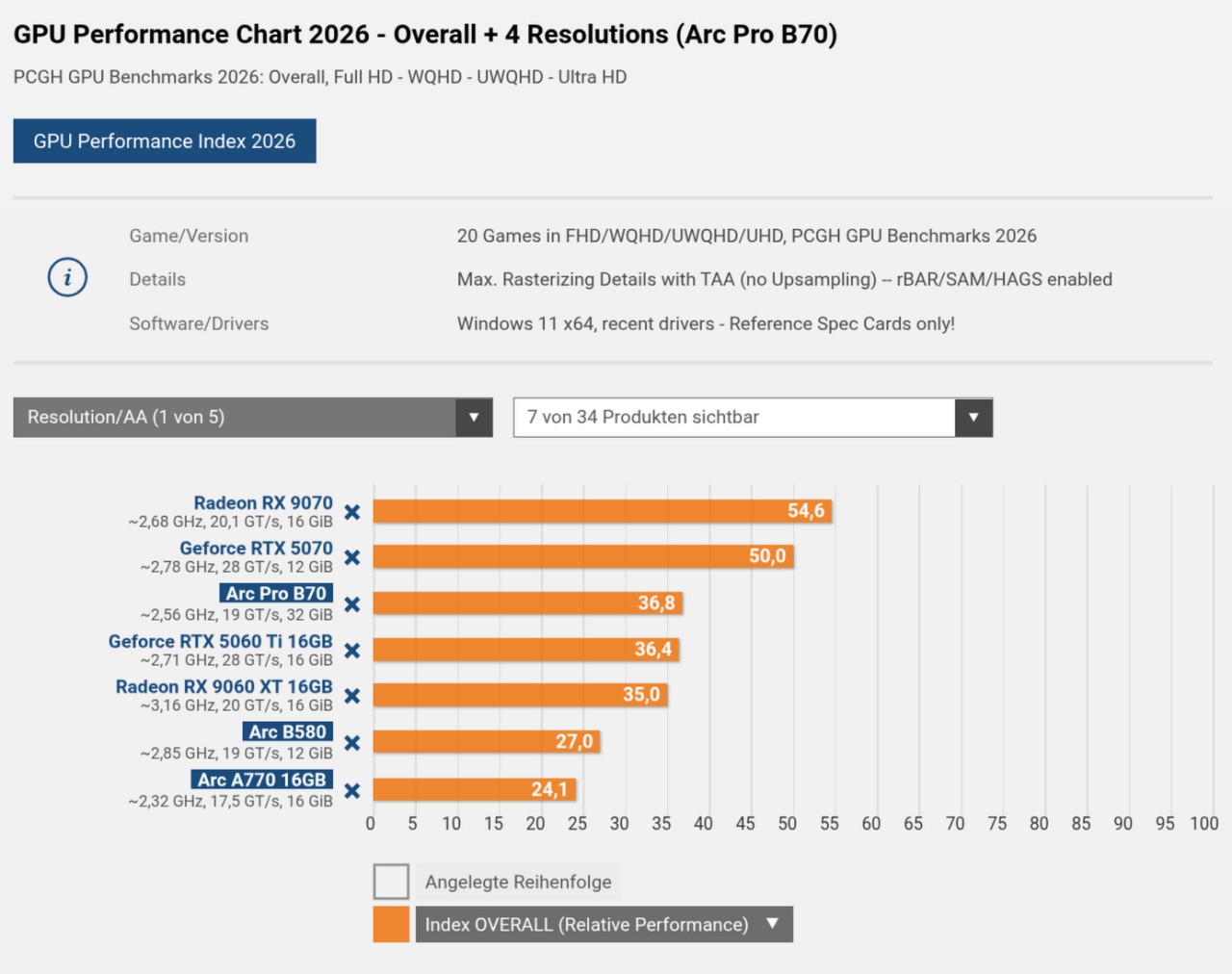
It's fascinating to see the B70 outperform the best consumer Intel GPU, the B580, by a fairly significant ~36 percent margin, though that's some distance behind the 60 percent boost across specs like ROPs and RT units. Still, given the relatively minor boosts elsewhere - 33 percent to memory bandwidth, 21 percent more power - that's still a pretty good margin of performance.
Given that the Arc Pro B70 was almost always power-limited in PCGH's testing, it seems likely that a higher TDP, a dual 8-pin power connector and more robust GPU-style cooling would unlock at least a few percentage points of extra performance in a hypothetical B770 model.
With Intel's Celestial series of desktop graphics cards reportedly shelved (despite convincing integrated results) and its Druid series still up in the air, it's possible that the Arc Pro B70 represents the pinnacle of Intel discrete GPU achievement. That would be a shame, given all of the work Intel has put in to make its Arc GPUs at all competitive with Nvidia and AMD, so I hope that B70's workstation success convinces them to continue the project - gamers only stand to benefit from greater competition.